Cost of Living in Busan
Real market data
Source: Numbeo · August 2026
$1,400/moSolo nomad1-bed centre + living costs
$1,990/moCoupleshared 1-bed + costs
$1,070/moLean / localcheaper area + costs
- 1-bed rent, city centre$670₩965,714
- 1-bed rent, outside centre$340₩489,750
- Monthly costs excl. rent (1 person)$730₩1,051,240
- Meal, inexpensive restaurant$7₩10,000
- Monthly transit pass$56₩80,000
- Buy price, per m² (centre)$9,730₩14,002,039
Prices are from Numbeo (August 2026), converted to USD at $1 = ₩1439.43 (01 Aug 2026). The monthly living-costs figure is our transparent one-person basket, groceries, a few meals out, utilities, phone, internet, transport and essentials, priced from those figures. Solo adds central rent; couple and lean are estimates from the same numbers.
Busan is meaningfully cheaper than Seoul but more expensive than most of Southeast Asia. Budget around $1,040 to $1,950 per month depending on your lifestyle and accommodation choices.
Rent: A one-bedroom in central Seomyeon or Gwangan runs $625 to $1,040 per month on a standard monthly lease. Haeundae and Marine City command a premium: expect $835 to $1,250 for anything decent near the beach. Cheaper inland areas like Dongnae or Sasang bring that down to $345 to $555 for a studio, though you trade convenience for cost.
Groceries: A week of groceries from a local mart (Home Plus or Emart) runs $56 to $83, so roughly $210 to $315 monthly. Imported goods cost noticeably more.
Eating out: A gukbap (rice soup) or bibimbap lunch costs $5 to $6.50. A sit-down dinner at a mid-range Korean restaurant runs $8.50 to $17 per person. Western food in Haeundae pushes higher: $14 to $28 per meal.
Coworking: Pathfinder Coworking, the most nomad-oriented option, has hot desks from about $63 a month at its four Busan sites.
Transport: The metro and bus system uses a T-money card. A single journey costs $1 to $1.50. Monthly transport spending for an active commuter typically lands around $35 to $56.
Total range: A lean but comfortable month runs around $1,040 to $1,250. A comfortable mid-range lifestyle in a central neighborhood with occasional restaurants and coworking costs $1,390 to $1,950.
Where to Work
Busan has fewer dedicated coworking spaces than Seoul, but the ones that exist are reliable. Pathfinder Coworking operates four Busan sites with 24-hour access: in Choryang (the Busan YMCA building), in Nampo, and two near Pusan National University, one of them a maker space. WeWork BIFC in Munhyeon-dong is a polished option if you need meeting rooms or want a corporate address. Nomad Work at Centum City targets longer-staying professionals with private offices and monthly contracts.
Cafe culture fills the gap effectively. Korea has an unusually strong cafe-work culture: large, well-lit spaces with multiple outlets and high-speed WiFi are the norm rather than the exception. Seomyeon and Gwangan have the highest concentration of laptop-friendly cafes. The unwritten rule is to buy something every hour or two, particularly during peak hours.
WiFi speeds are genuinely excellent throughout the city, in cafes and coworking spaces alike. Korea's broadband quality reaches even small neighborhood cafes. Video calls and large file transfers are not a concern.
Getting Around
Busan's metro system has four lines and connects the major neighborhoods reliably. A T-money card works across metro, bus, and intercity rail and gives you a small per-journey discount. Buses fill in the gaps and run frequently, but navigation in English is harder than on the metro.
Walkability varies sharply by neighborhood. Haeundae Beach, Gwangan, and Seomyeon are all very walkable within their own areas. The city is hilly, so some neighborhoods require more elevation change than a flat-city nomad expects.
Gimhae International Airport (PUS) is about 30 to 40 minutes from central Busan by the Busan-Gimhae Light Rail Transit, which connects to Sasang metro station. A taxi from downtown costs $17 to $28 depending on traffic. For travel to Seoul, the KTX high-speed rail between Busan Station and Seoul Station took 2 hours 48 minutes on average in January to August 2026 (Korail data), and is far more convenient than flying.
Sorting transport? Book an airport transfer, or compare car rental on Auto Europe and QEEQ.
Visas and Staying Long-Term
South Korea offers visa-free entry for citizens of most Western countries. US, UK, EU and Australian passport holders can enter without a visa and stay for 90 days, and Canadians for up to six months. K-ETA (the electronic travel authorization) is currently suspended for most of these nationalities through the end of 2026, so no pre-authorization is needed at the time of writing.
South Korea's F-1-D digital nomad visa, piloted from January 2024, became a permanent category on 30 June 2026. It is for people employed by a company outside Korea who have at least a year in the same field. The income floor is a multiple of Korea's gross national income per head, set by age and region. Outside Seoul, Incheon and Gyeonggi, which includes Busan, applicants aged 18 to 34 need one times GNI, about $36,400 a year, and applicants 35 and over, or anyone bringing a spouse or children, need one and a half times, about $54,600; the lower tier asks for proof you will live outside the capital region, such as a lease of a month or more. In the capital region the same tiers are about $54,600 and $72,800. Permits are issued a year at a time up to three years, private health insurance must cover at least about $69,500 for treatment and repatriation, and visitors already in Korea on a B-1, B-2 or C-3 entry who meet the rules can switch to the visa without leaving. Working for a Korean employer or earning locally is not allowed.
There is no straightforward path to extending a tourist stay beyond 90 days without departing and re-entering or switching to a different visa category.
Best Time to Visit
Spring and autumn are the most comfortable seasons for remote work in Busan. April through early June brings mild temperatures (14 to 23 degrees C / 57 to 73 degrees F), clear skies, and lower humidity. The cafes and beaches are uncrowded and the city is genuinely pleasant to walk around.
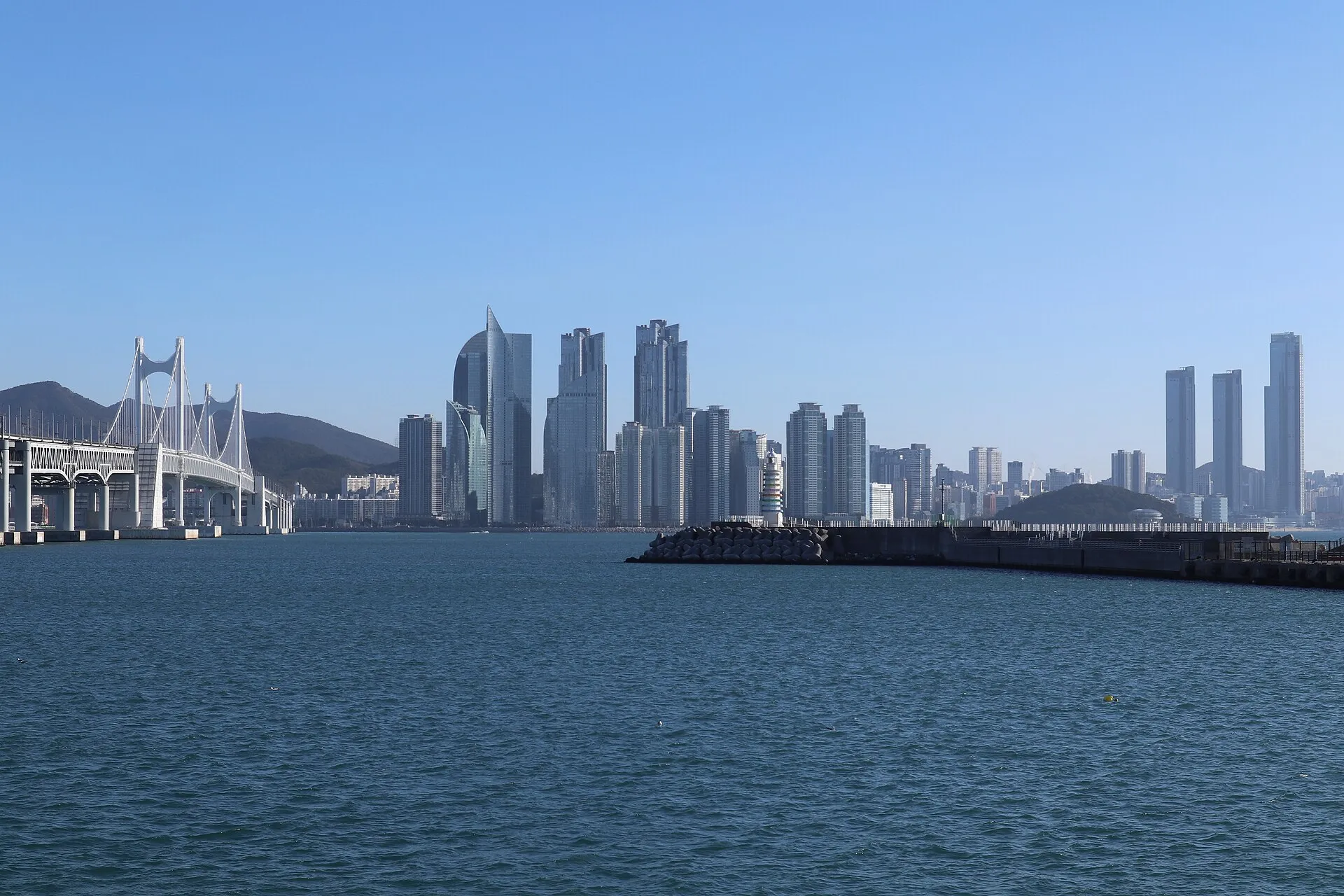
October is equally good: the typhoon season, which peaks in August and early September, is over, rain drops to around 40mm for the month, daytime highs sit near 21 degrees C (70 degrees F), and autumn light over the harbor and Gwangan Bridge is hard to beat. September is still warm and wet, with typhoons possible in its first half.
Summer brings the jangma rains from late June into July, Busan's wettest month, then the typhoon weeks, with humidity above 80%, heat around 28 to 32 degrees C (82 to 90 degrees F), and large domestic tourist crowds at the beaches. It is manageable but not comfortable for sustained outdoor time or commuting. Coworking spaces and cafes are heavily air-conditioned.
Winter (December through February) is the least appealing for most nomads: cold (often near or below freezing at night), dry, and with limited outdoor appeal. Busan is warmer than Seoul in winter and rarely sees significant snow, but it is still cold enough to affect day-to-day comfort.
Spring yellow dust (hwangsa) from China occasionally affects air quality in March and April. On affected days, AQI can spike significantly. An N95 mask and the AirKorea app are worthwhile during that window.
Pros and Cons
- Exceptional internet infrastructure: cafe and coworking WiFi is fast and reliable everywhere
- Beach access within the city: Gwangan and Haeundae beaches are metro-accessible
- Very safe: low violent crime, well-lit streets, active public spaces at night
- Excellent and affordable food scene: Busan has a distinct culinary identity from Seoul, particularly strong for seafood
- Well-connected transport: metro, bus, KTX to Seoul, and a functional international airport
- Lower cost than Seoul: rents and daily expenses are noticeably cheaper
- Limited English: outside Haeundae's tourist strip and a handful of expat venues, most interactions require Korean or translation apps
- Few dedicated coworking spaces: the city has a small number of nomad-oriented spaces compared to Bangkok, Lisbon, or even Seoul
- Small international community: the nomad scene is growing but remains thin; meeting other remote workers requires active effort
- Yellow dust in spring: air quality dips noticeably in March and April
- Hot, humid summers: July and August are uncomfortable for outdoor-heavy lifestyles
- More expensive than Southeast Asia: cost of living is roughly double that of comparable Thai or Vietnamese cities
Who Busan Is Best For
Busan works well for nomads who want a genuinely livable city rather than a purpose-built nomad hub. If you value safety, world-class internet, a distinct food and cultural scene, and the ability to swim or hike within 30 minutes of your desk, Busan delivers consistently. It suits solo travelers comfortable navigating in Korean (or comfortable with translation apps and patient gesturing), and pairs particularly well with a longer Korea itinerary that starts or ends in Seoul.
It is a good fit if you are on the F-1-D Digital Nomad Visa and want a more relaxed pace than Seoul offers, or if you are a first-time visitor to Korea who wants to experience the country outside its capital.
Skip Busan if your priority is a large English-speaking nomad community, an abundance of coworking options, or a budget tighter than around $1,200 per month. Southeast Asian hubs like Chiang Mai or Da Nang will serve those priorities better. Also think twice if you are visiting in July or August and planning to spend most of your time outdoors.