Cost of Living in Rennes
Where this figure comes from. No cost survey covers Rennes, so the $1,750 a month above is our own estimate rather than a measurement. On 416 of our 999 city guides the figure is built from a published Numbeo basket, a one-bedroom rent in the centre plus one person's monthly costs without rent, converted to USD; this city is not one of them. How we source everything.
Budget roughly $1,750 a month as a solo remote worker in Rennes, which is moderate for France and well below Paris or the Riviera. A one-bedroom apartment near the centre or in Thabor runs about $700 to $950, and the outer districts drop that to $560 to $720. Rennes has around 70,000 students, so small flats turn over constantly and September is the crunch. Groceries land around $320 to $400. A formule lunch is $13 to $17, a restaurant dinner with wine $28 to $40, and a galette-saucisse from a market stall, the Breton street food, about $4. A monthly transit pass is roughly $52. Utilities add $120 to $210. Housing benefit through the CAF is open to residents including many foreign students and workers, and it covers a meaningful slice of a small rent, which is the thing newcomers most often fail to claim. Agency fees on a signed lease are capped by law and charged once. The residence tax on a main home has been abolished, so the recurring local charge people expect from other countries simply does not arrive.
Where to Work in Rennes
Rennes has a genuine technology sector, historically in telecoms and now in cybersecurity and digital media, anchored by the university, INSA and a cluster of research institutes, and the coworking supply reflects it at roughly $170 to $280 a month. French fixed-line internet is excellent and among the cheapest in Europe, with fibre widely available; mobile data is generous and inexpensive. The cafes around Place Sainte-Anne and in the half-timbered lanes of the old town are used to students with laptops. English is common in the technology and student worlds and thinner elsewhere, and French remains the language of all administration. Anyone invoicing locally registers as an auto-entrepreneur, a simplified regime with a turnover ceiling and contributions taken as a share of what comes in, which is why so much freelance work in the country runs through it. Social contributions rather than income tax are the larger line on a small income. Fixed-line contracts usually bundle internet, a mobile line and television at a price that makes separating them pointless.
Getting Around Rennes
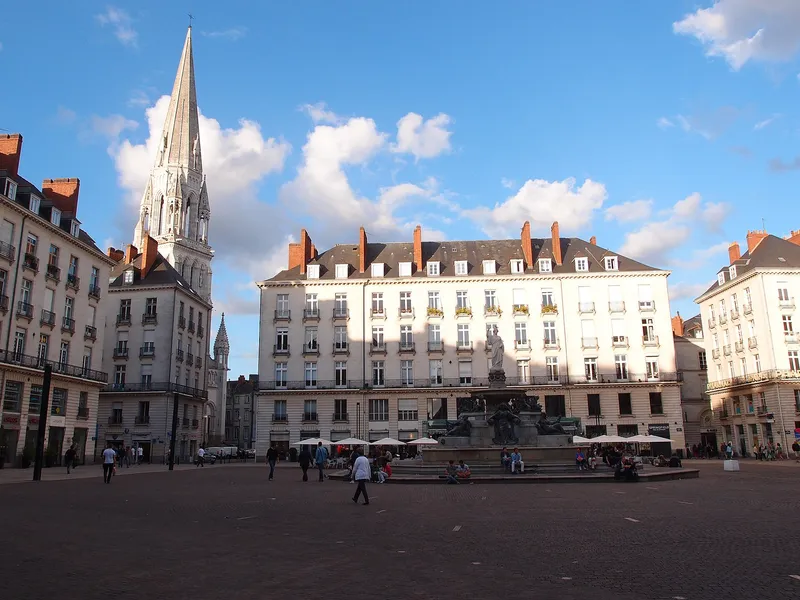
Rennes is compact and its medieval centre is walkable in twenty minutes, with the half-timbered streets around Place Sainte-Anne and Place du Champ-Jacquet closed to traffic. The city has two automated metro lines, which is remarkable for 220,000 people and makes it one of the smallest cities in the world with a metro, plus a bus network; a monthly pass is around $52. Cycling is easy on the flat. The TGV reaches Paris Montparnasse in an hour and a half, which is the single most useful fact about living here. Saint-Malo and the north coast are an hour by train, Mont-Saint-Michel about the same by road. Rennes airport has a modest list of routes. The second automated line opened in 2022 and crosses the first at the central station, which turned the network from a single spine into something genuinely useful. Bike share docks sit at most stops and the flat ground makes that the quickest way across town in practice. Regional services out to the coast are cheap and frequent enough that a car is unnecessary rather than merely optional.
Sorting transport? Book an airport transfer, or compare car rental on Auto Europe and QEEQ.
Visas for Rennes
France is in the European Union and the Schengen area, so EU and EEA citizens may live and work here freely and most other Western passports get 90 days in any 180. France has no digital nomad visa by that name, but the long-stay visitor visa, the VLS-TS visiteur, is the route many remote workers use: it requires proof of sufficient income, health insurance and accommodation, and prohibits working for French clients, which suits foreign-employed remote work. There is also the passeport talent for qualifying founders, employees and researchers. Applications are made at a French consulate abroad and validated online after arrival; the process is bureaucratic but well documented. The visa has to be validated online within three months of arrival, and a medical appointment with the immigration office may follow: this is the step people forget, and missing it invalidates the permit. Renewal happens at the prefecture, where the appointment system is the usual bottleneck, so the file wants starting two months before expiry rather than two weeks. A bank account and a proof of address are needed for almost everything else. Arrive by Brittany Ferries from Portsmouth and the external border is the quay at Saint-Malo, where French police register non-EU passengers in the Entry/Exit System with biometrics on arrival.
Best Time to Visit Rennes
May to September is the best stretch in Rennes, with warm days in the low twenties, long evenings and Brittany at its most inviting. The city is famous for two things in the calendar: the Transmusicales festival in December, which has launched a long list of careers, and Les Tombées de la Nuit in July. Summer is mild rather than hot, which is the Breton compensation for the rest of the year. Autumn is wet. Winter is mild, rarely freezing, and persistently grey and rainy: Brittany's weather is the standing joke of France and the reality is a lot of drizzle between November and March rather than cold. Fest-noz, the night dance held in village halls across the region through the year, sits on the UNESCO intangible heritage list rather than being a revival staged for visitors. Long evenings this far northwest run past ten o'clock in June, which is the real compensation for the winters. The coastal towns an hour away shut a good deal of their capacity between November and March.
Pros and Cons of Rennes
Rennes offers a great deal for its size: a metro, a TGV that reaches Paris in ninety minutes, a serious technology and research sector, 70,000 students, and a genuinely beautiful half-timbered centre, at rents around half of Paris. Brittany's coast is an hour away and the food, particularly the seafood and the cider, is excellent. Fibre is fast and cheap. Rain is a constant here and the winter light is poor for months. The city is French through and through, with a small international community and no nomad scene, so daily life requires French. It is quiet compared with Paris or Lyon, and the airport is minor, so most international travel routes through Paris. A fire in 1720 burned for the best part of a week and took most of the medieval town, which is why the centre is two cities at once: surviving half-timbered lanes on one side, and the grid of grey granite the reconstruction imposed on the other. The old parliament building burned a second time in 1994, during a protest by fishermen, and was rebuilt again.
Who Rennes Is For
A well-connected French city with real infrastructure at a price that is not Paris, for people who either speak French or intend to. Cybersecurity and digital media have a genuine cluster here, which is the professional reason to look. Brittany's coast and Mont-Saint-Michel are close enough to be weekends, and a ninety-minute train suits people who want Paris available without paying to live in it. This is a straightforward place to be a couple or to raise a family. Brittany rations its sunshine, French is required rather than optional, the foreign population is students passing through, and the airport handles a short list of domestic routes. Nantes is an hour south and larger; Bordeaux and Lyon are the sunnier French alternatives. The student calendar decides the flat market, so September is the worst month to arrive and June the best by a wide margin. Anyone coming for the technology sector should know that the cybersecurity cluster is tied to defence and public research, which pushes hiring towards people who already hold the right to work here, and that the recruitment runs in French even where the engineering does not.
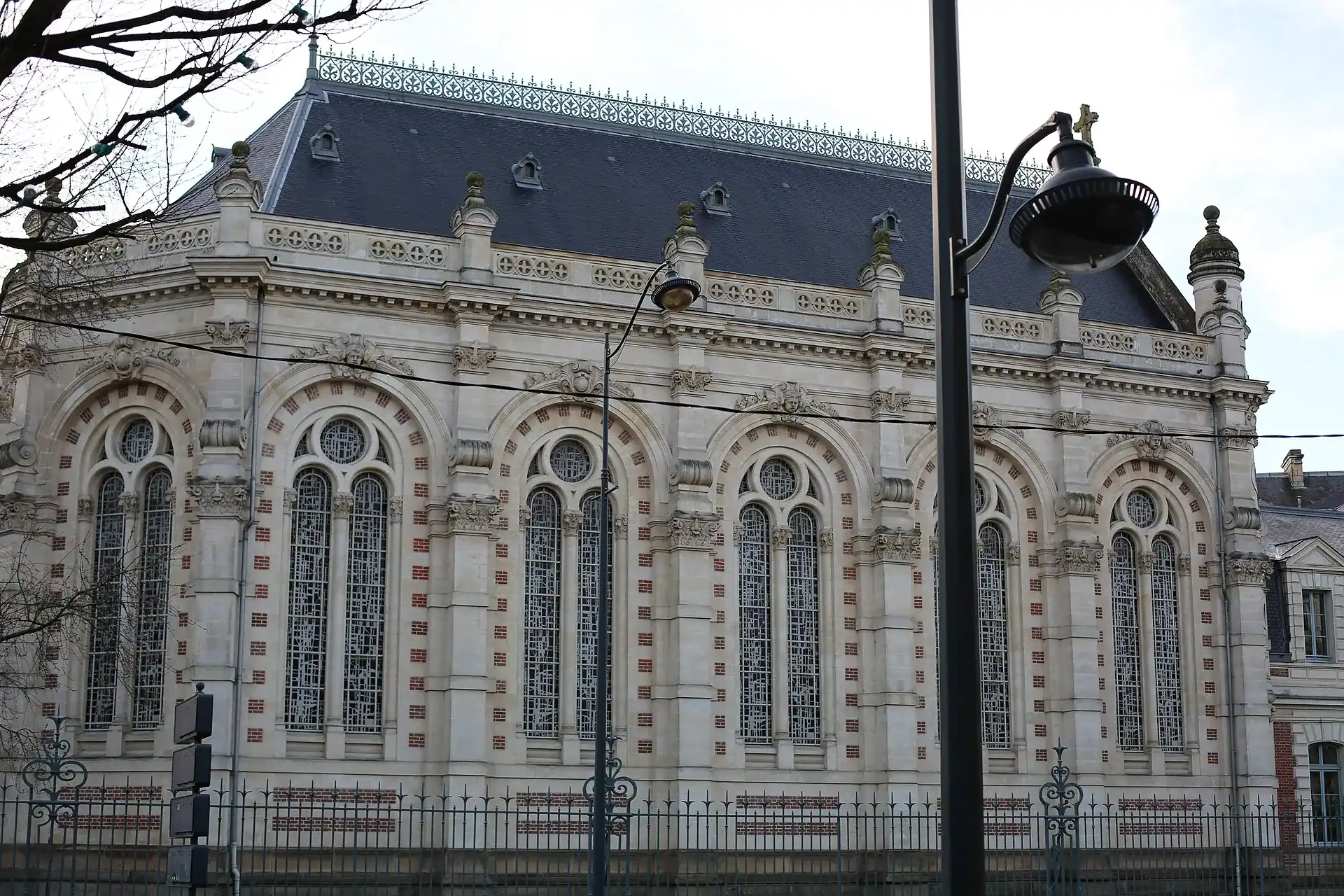 Photo: Pymouss / Wikimedia Commons (CC BY-SA 3.0)