Cost of Living in Jericoacoara
Where this figure comes from. No cost survey covers Jericoacoara, so the $900 a month above is our own estimate rather than a measurement. On 416 of our 999 city guides the figure is built from a published Numbeo basket, a one-bedroom rent in the centre plus one person's monthly costs without rent, converted to USD; this city is not one of them. How we source everything.
Jericoacoara is a remote resort village, so prices sit above rural Brazil but stay modest by Western standards. A comfortable solo nomad month typically lands between $800 and $1,500, depending heavily on the season and how much you lean on tourist-facing pousadas versus longer monthly rentals. High season (roughly July to January) pushes lodging up sharply, while the quieter, wetter months bring real bargains. Eating at simple local spots, cooking some meals, and booking a monthly pousada rate rather than nightly stays are the biggest levers on your budget. Kitesurf gear, tours, and buggy trips add up fast if you indulge often. One line most budgets forget is the municipal tourism tax: Jijoca de Jericoacoara charges visitors a fee for each day of their stay, issued online through the town hall's site before arrival, and over a month that becomes a real item rather than small change.
- Budget month: around $800 to $1,000 with a monthly rental and mostly local food.
- Comfortable month: roughly $1,100 to $1,500 with a nicer pousada and frequent dining out.
- Monthly pousada or apartment: often $350 to $800 depending on season and standard.
- A meal at a local restaurant: roughly $6 to $12; beachfront dining costs more.
Where to Work in Jericoacoara
Arrive knowing that Jeri is a beach village built around wind and sand, and that it has never pretended to be a productivity hub. There is no true coworking space, and wifi is variable across pousadas, so heavy deadline work can be frustrating. Your best bet is a pousada with a reliable connection, backed by a strong Brazilian SIM for hotspot tethering. Vivo, Claro, and TIM all have coverage in the area, though speeds fluctuate. Cafes and beachfront bars offer pleasant, laptop-friendly corners for lighter tasks and calls, especially in mornings before the wind and crowds pick up. Treat Jeri as a place for async work, short focused sessions, and a slower pace rather than back-to-back video meetings.
- Prioritize a pousada with tested, reliable wifi.
- Buy a local SIM (Vivo, Claro, or TIM) and carry it as a backup hotspot.
- Work mornings when the internet is less congested and the village is calm.
- Download offline files and keep expectations realistic for large uploads or calls.
Getting Around Jericoacoara
The village itself has no paved roads and no cars in the center: streets are soft sand you cross on foot, and that is a big part of Jeri's charm. To reach the dunes, lagoons, and outlying beaches you hire buggies or 4x4 tours, which run daily to spots like Lagoa do Paraiso, Lagoa Azul, and Pedra Furada. Getting to Jeri is the adventure: most travelers fly into Fortaleza and take a 5 to 6 hour transfer, ending with a jardineira (open 4x4) ride over the dunes from Jijoca. The newer Jericoacoara airport (JJD) near Cruz shortens things considerably, with a shorter final transfer into the village. The rules on vehicles are written into the place: paving of any kind is prohibited and access across the dunes is limited to authorised four-wheel-drive transport, which keeps the lanes free of traffic and makes a rolling suitcase the wrong luggage to bring.
- On foot: the sand-street center is fully walkable in minutes.
- Buggy and 4x4 tours: the standard way to reach dunes, lagoons, and Pedra Furada.
- Jardineira transfer: the classic open-4x4 hop over the dunes from Jijoca.
- Arriving: fly to Fortaleza (long transfer) or the closer JJD airport at Cruz.
Sorting transport? Book an airport transfer, or compare car rental on Auto Europe and QEEQ.
Visas for Jericoacoara
Jericoacoara follows Brazil's national entry rules, so your paperwork depends on nationality. Many travelers from Europe and elsewhere enter visa-free for tourism, typically for up to 90 days. US, Canadian and Australian passport holders are no longer among them: their exemption ended on 10 April 2025, and a Brazilian e-visa now has to be arranged online before departure. Brazil also offers a digital-nomad visa aimed at remote workers employed by a foreign company, which allows longer legal stays and can usually be renewed, subject to minimum income proof and documentation.
- Tourist entry: visa-free or e-visa depending on your nationality, commonly up to 90 days.
- Digital-nomad visa: for remote workers with foreign income, allowing longer stays.
Best Time to Visit Jericoacoara
The dry, windy season from roughly July to January is Jeri at its best: reliable trade winds, sunny skies, and warm temperatures that make it one of the world's premier kitesurf and windsurf destinations. Peak wind runs from about August to December, when the kite scene is buzzing and the Sunset Dune fills with travelers each evening. The wetter season, around February to May, brings more rain, calmer winds, and lower prices, plus a lusher, quieter village that suits budget-minded slow travelers. If wind sports are your reason for coming, aim for the high-wind window; if you want tranquility and savings, the shoulder and green season reward you. For a few weeks around July the sun sets inside the arch of Pedra Furada, the rock formation a walk east along the beach at low tide, and that alignment draws a crowd every clear evening.
- July to January: dry, sunny, and windy; the prime all-round season.
- August to December: peak kitesurf and windsurf winds.
- February to May: wetter, calmer, cheaper, and much quieter.
Pros and Cons of Jericoacoara
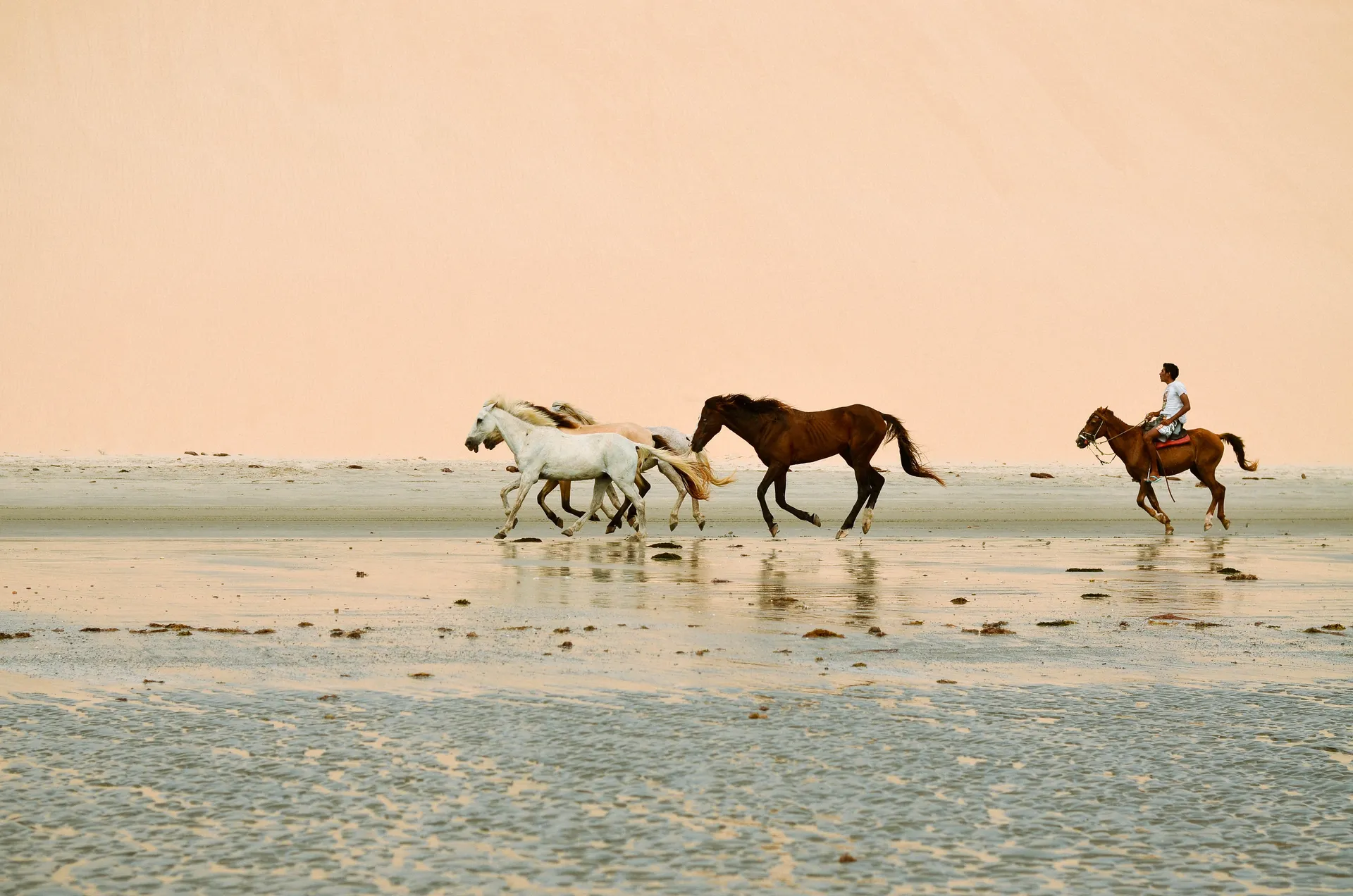
Jeri is a genuinely special place, but it rewards the right kind of traveler. The upside is a stunning natural setting: sand streets, turquoise lagoons, dramatic dunes, and world-class wind for kitesurfing, all wrapped in a laid-back, sociable village atmosphere. The trade-off is remoteness and modest infrastructure. Wifi wobbles, the long transfer tests your patience, English is limited, and medical or logistical needs can mean a trip out of town. For a nomad who values beach life, outdoor sport, and a slower rhythm over reliable connectivity and convenience, the pros easily win. For someone juggling heavy deadlines and constant calls, the cons will bite. The village's success is also its risk. The national park around it limits building, yet visitor numbers have grown fast enough that the best-known lagoons fill with tour buggies by late morning, so the quiet Jeri in the photographs belongs to early starts and the rainy months.
- Pros: spectacular nature, top-tier kitesurfing, walkable sand-street charm, warm sociable vibe.
- Pros: affordable in the off-season and refreshingly car-free.
- Cons: variable wifi and modest infrastructure make heavy deadline work hard.
- Cons: remote location, long transfer, and limited English and services.
Who Jericoacoara Is For
Jericoacoara suits the nomad who treats work as something to fit around a life outdoors, not the other way around. If you kitesurf, windsurf, or simply love long beach days, sunset climbs up the dune, and slow evenings over caipirinhas and forro music, Jeri can feel close to perfect. It fits location-independent people with flexible, async schedules, light connectivity needs, and a taste for adventure over convenience. It is a poor fit for anyone tethered to constant video calls, large uploads, or a rigid corporate rhythm, and for travelers who dislike remoteness or basic infrastructure. Come for a season, embrace the pace, and let the wind set your calendar. Beginners do well here too: kite schools in the village teach complete novices over several days, and the flat water of the lagoons inland toward Jijoca is a gentler place to learn than the open sea.
- Great for: kitesurfers, windsurfers, and beach-loving slow travelers.
- Great for: flexible, async workers who value nature over convenience.
- Less ideal for: call-heavy, deadline-driven roles needing rock-solid wifi.