Cost of Living in Huacachina
Where this figure comes from. No cost survey covers Huacachina, so the $800 a month above is our own estimate rather than a measurement. On 416 of our 999 city guides the figure is built from a published Numbeo basket, a one-bedroom rent in the centre plus one person's monthly costs without rent, converted to USD; this city is not one of them. How we source everything.
Huacachina is cheap by Western standards, but it is a tiny tourist oasis rather than a place people settle into, so genuine long-stay budgets are unusual. A realistic monthly figure for a nomad who insists on basing here runs roughly $700 to $1,300, largely because you are paying hostel and small-guesthouse rates rather than local apartment prices. The oasis itself has no supermarkets or long-term rentals to speak of, so for real living the nearby city of Ica, a ten-minute taxi ride away, is meaningfully cheaper and better stocked. Most visitors treat Huacachina as a fun two-to-three-night stop, not a base. Budget separately for the dune tours, which are the reason you came and the line that grows fastest if you ride more than once, and for the taxi runs into Ica for groceries and cash.
- Hostel dorm bed: roughly $8 to $15 per night; private rooms $25 to $50.
- Dune buggy and sandboarding tour: around $12 to $20 per person.
- A casual meal at an oasis restaurant: roughly $5 to $10.
- Taxi or mototaxi to Ica: a couple of dollars each way.
- Cheaper groceries, laundry and services: found in Ica, not the oasis.
Where to Work in Huacachina
Huacachina runs on dune buggies and hostel bars, which makes it a fine place to play and a poor place to get serious work done. There is no coworking space, wifi is basic and often shared across a busy hostel, and the general rhythm of the oasis is buggies at sunset and bars afterward. If you need to get a few hours of work done, plan around a hostel cafe or a lagoon-side restaurant during quieter daytime hours, and carry a local SIM with mobile data as a backup, since coverage is generally usable. For anything serious, such as calls, uploads or a full workday, the city of Ica offers more cafes, faster connections and everyday services a short taxi ride away.
- Hostel common areas and cafes offer the most reliable oasis wifi.
- A Peruvian SIM with mobile data is a sensible fallback for calls.
- Ica has more cafes and better connectivity for a real workday.
- Expect noise and a social atmosphere, especially in the evenings.
Getting Around Huacachina
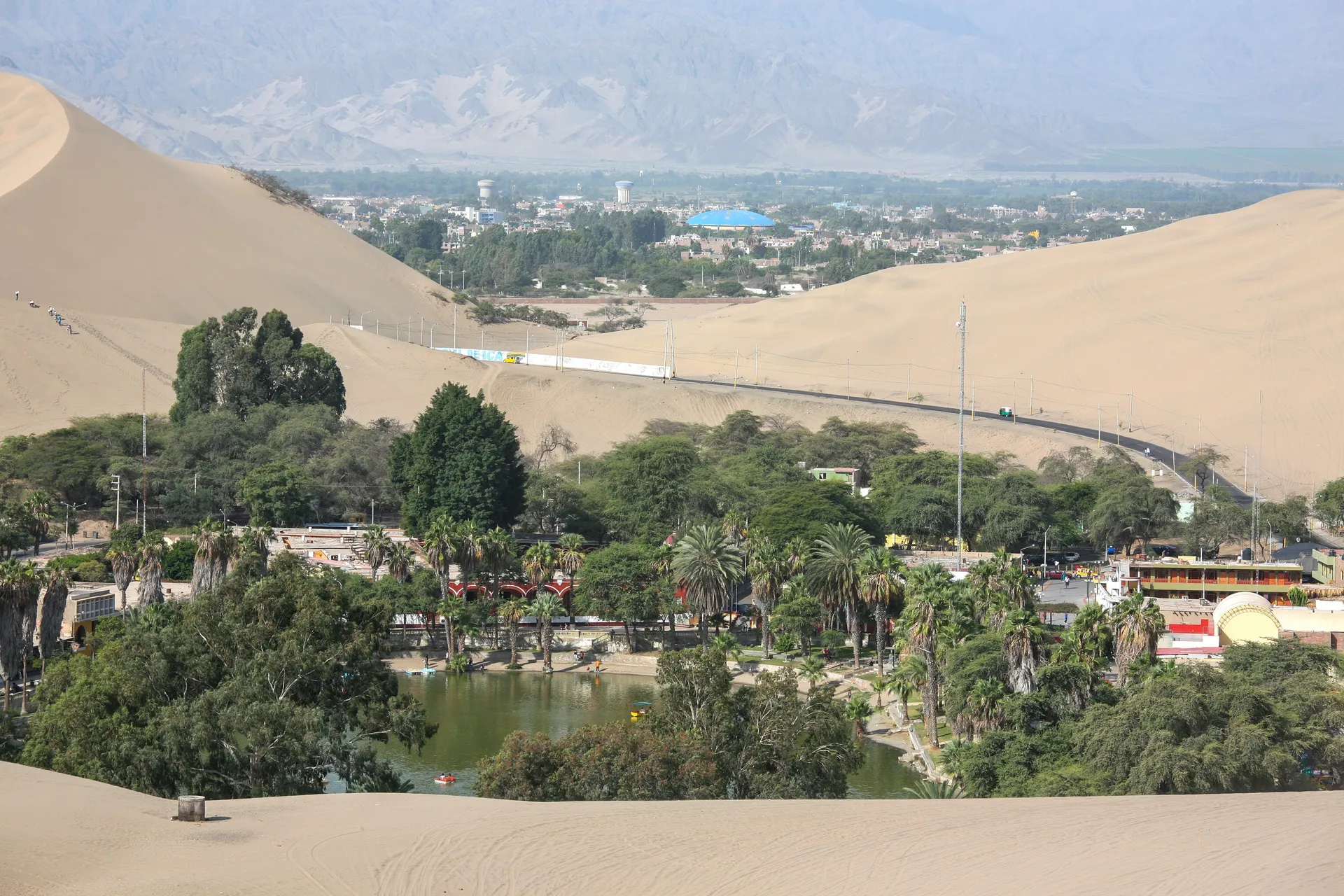
You can walk the entire oasis in a few minutes; it is essentially one loop of hostels, bars and buggy operators around a small lagoon, so nothing here requires transport. The dunes that surround the village are explored on foot or, far more commonly, aboard the roaring dune buggies that also drop you at sandboarding runs and sunset viewpoints. For anything beyond the oasis you rely on Ica: taxis and mototaxis shuttle the short distance for a couple of dollars. From Ica's bus terminals you can reach Lima in roughly four to five hours, along with Paracas and Nazca, making Huacachina a natural pause on the classic gringo-trail route down the coast.
- The whole oasis is walkable in minutes; no local transport needed.
- Taxis and mototaxis connect to Ica in about ten minutes.
- Buses from Ica reach Lima in roughly four to five hours.
- Paracas and Nazca are easy onward hops from Ica.
- Dune buggies are the way to explore the surrounding sand.
Sorting transport? Book an airport transfer, or compare car rental on Auto Europe and QEEQ.
Visas for Huacachina
Huacachina follows the same rules as the rest of Peru, since it is simply a village outside Ica. Travellers from many countries, including the US, UK, EU, Canada and Australia, generally enter Peru visa-free as tourists, with stays commonly granted for up to 90 days and, in some cases, longer periods up to 183 days within a year, at the discretion of the immigration officer on arrival. The length you receive is stamped or recorded at entry, so it pays to confirm your permitted stay rather than assume the maximum.
- Many nationalities enter Peru visa-free as tourists.
- Stays are commonly up to 90 days, sometimes longer, officer's discretion.
- Your permitted duration is set at the point of entry.
Best Time to Visit Huacachina
Sitting in a coastal desert, Huacachina is warm and dry essentially year-round, so there is no bad season for buggies, sandboarding and sunsets over the dunes. The main variation is temperature and sky. Roughly December to March is the hottest and sunniest stretch, with strong afternoon heat on the sand and lively, busy nights in the oasis. From about May to September conditions are cooler and can turn grey, when the coastal garua mist rolls in and days feel overcast, though rain is still rare. Shoulder months balance pleasant warmth with thinner crowds. Whenever you come, bring sun protection and plan dune activities around the cooler morning and late-afternoon light. The one weather hazard is wind. From July to September the Paracas wind can whip up sandstorms across the Ica region, mostly between midday and late afternoon, so book sandboarding for the morning in those months and keep a buff for your face.
- Warm and dry weather is the norm all year.
- December to March: hottest, sunniest and busiest.
- May to September: cooler and sometimes overcast with garua mist.
- Sunrise and sunset are the best times on the dunes.
Pros and Cons of Huacachina
Huacachina's appeal is almost entirely about spectacle and fun: a palm-fringed lagoon ringed by towering golden dunes, adrenaline buggy rides, sandboarding and some of the most photogenic sunsets in Peru, all wrapped in an easygoing backpacker social scene. The trade-off is that it is minuscule and thoroughly touristy, more a cluster of hostels and bars than a functioning town, with basic wifi, limited services and little reason to linger beyond a few days. As a scenic, sociable break it delivers; as a place to actually live and work it simply is not built for that, which is why Ica handles the practical side of life next door. The oasis is partly artificial these days: wells across the Ica Valley drew down the water table that fed it, and since 2015 the lagoon has been topped up with pumped water to stop it shrinking, which is worth knowing before you picture a natural spring.
- Pros: stunning dune scenery, buggies and sandboarding, great sunsets.
- Pros: cheap, sociable and easy to slot into a coastal Peru trip.
- Cons: tiny, touristy and short on real amenities.
- Cons: basic wifi and no genuine work infrastructure.
- Cons: can feel repetitive after a couple of nights.
Who Huacachina Is For
Huacachina is for travellers chasing a short burst of desert fun rather than nomads hunting a productive base. It suits backpackers on the gringo trail, adventure seekers who want dune buggies and sandboarding, photographers drawn to the oasis-and-dunes contrast, and anyone happy to trade wifi and comfort for a memorable two-or-three-night stop between Lima, Paracas and Nazca. It is a poor fit for remote workers needing reliable connectivity, long-stay renters, or anyone seeking calm and everyday city services, all of which are better found in Ica. Come for the scenery, the sunsets and the social energy, enjoy it fully, then move on down the coast. Wine drinkers have a reason to linger too, since the Ica valley is the heart of Peru's pisco and wine country and its bodegas, from family stills to large estates, sit a short taxi ride from the dunes.
- Great for backpackers and adventure travellers.
- Great for photographers and short scenic stopovers.
- Poor fit for remote workers needing strong wifi.
- Poor fit for long-stay or quiet, service-heavy living.