Cost of Living in Gangtok
Where this figure comes from. No cost survey covers Gangtok, so the $550 a month above is our own estimate rather than a measurement. On 416 of our 999 city guides the figure is built from a published Numbeo basket, a one-bedroom rent in the centre plus one person's monthly costs without rent, converted to USD; this city is not one of them. How we source everything.
Budget around $550 a month as a solo remote worker in Gangtok, which makes Himalayan living remarkably affordable. A one-bedroom apartment or a long-let room runs roughly $150 to $300, with the areas near MG Marg at the upper end. Local food costs very little, with a full thali or a plate of momos a couple of dollars, and the markets are cheap. Imported goods carry a premium given the distance from anywhere. Fibre runs about $10 to $20 a month where it reaches and a mobile data bundle rather less. Heating is the seasonal line that surprises people: buildings here have no insulation and no central heating, so a room heater through December to February adds $30 to $60 a month and a good sleeping bag is not a joke. Rents drop noticeably away from MG Marg, and a room in Development Area or Tadong costs a third less for a longer walk uphill.
Where to Work in Gangtok
Gangtok has no meaningful coworking and remote work happens from accommodation or cafes along MG Marg. Connectivity is the weakest part of the case: fibre reaches parts of the town at modest speeds, mobile data is usable but inconsistent, and both suffer during the monsoon when landslides can cut the physical links to the rest of India for days. Power cuts are common enough that a backup matters. Anyone with a demanding video schedule should test carefully and plan around interruptions rather than assume they will not happen. Most people who stay any length of time end up with two mobile providers, since coverage gaps rarely overlap. Sikkim lies well east of the meridian that sets Indian Standard Time, so in June the sun is up by twenty to five and gone by half past six, and much of the morning light arrives before anyone is at a desk. Landslides on the NH10 through the Teesta valley are the recurring risk to both the road and the fibre running beside it, and a bad monsoon week can sever both at once.
Getting Around Gangtok
Gangtok is built on a steep ridge and walking means stairs, though MG Marg itself is a pleasant pedestrianised stretch. Shared jeeps and taxis cover the town and the state cheaply and are the normal way to move. There is no railway; the nearest station is at New Jalpaiguri, about four hours down the mountain, and Bagdogra is the nearest airport at a similar distance. Pakyong airport nearby has intermittent service. Roads into Sikkim are mountain roads and the monsoon closes them regularly with landslides, which is a genuine planning constraint. Nathu La on the Chinese border and Gurudongmar lake in the north both require permits arranged through a registered agent and are closed to foreign nationals entirely in some cases, which is worth checking before building a trip around them. Shared jeeps to Pelling, Lachung and the west of the state leave early from the taxi stands and fill by seven, so an afternoon departure usually means hiring the whole vehicle.
Sorting transport? Book an airport transfer, or compare car rental on Auto Europe and QEEQ.
Visas for Gangtok
India requires a visa in advance from almost everyone, with the e-Tourist visa the usual route, available for thirty days, one year or five years, the longer two capped at 180 days in India per calendar year. Sikkim additionally requires foreign nationals to hold a Restricted Area Permit, and places near the borders such as Tsomgo Lake and the Lachung and Yumthang valleys need a further Protected Area Permit arranged through a registered agent. There is no Indian digital nomad visa and working remotely on a tourist visa sits in a grey area India has not clarified. Plan the paperwork well ahead. The Restricted Area Permit is free, issued at the Rangpo and Melli check posts, the Pakyong and Bagdogra airports, the Siliguri tourist office, Sikkim House in Delhi or any Indian mission abroad, and it runs thirty days, extendable inside the state to sixty in total. Permits are checked at the state boundary rather than at the airport.
Best Time to Visit Gangtok
March to May and October to early December are the two clear windows. Spring brings rhododendrons and the best chance of seeing Kanchenjunga before the haze builds, and autumn after the monsoon gives the clearest mountain views of the year. The monsoon from June to September is heavy, with landslides closing roads and the mountains hidden for weeks. Winter from December to February is cold, with nights around six or seven degrees and snow on the passes above town, but the air is clear and the views are excellent on a good morning. Anyone coming specifically for the mountain views should favour late October and November, when the post-monsoon air is at its clearest. Kanchenjunga is the third-highest mountain in the world and is visible from Gangtok itself on a clear morning, most reliably in the two or three weeks after the monsoon breaks in October. Losar, the Tibetan new year, falls in February and is the main festival at the monasteries around the town.
Pros and Cons of Gangtok
Gangtok gives you a Himalayan state capital with Kanchenjunga visible from the town on a clear morning, Buddhist monasteries within easy reach, and Sikkim's genuine reputation as India's cleanest and most orderly state, including a ban on single-use plastics that is actually enforced. Costs are very low and English is widely spoken. Connectivity is unreliable, monsoon landslides can cut the state off entirely, the terrain means stairs everywhere, permits add friction of their own, and there is no foreign community at all. The state also restricts access to several border areas entirely, so some of the most striking parts of Sikkim need permits arranged in advance through an agent. Sikkim became the world's first fully organic state in 2016, phasing out chemical fertilisers and pesticides across all its farmland, which is a genuine policy rather than a slogan and shapes what is grown and sold here. The state has no railway and one small airport with unreliable service.
Who Gangtok Is For
The Himalaya draws people, and this is the base with services attached rather than a trekking village, provided the work survives an unreliable connection. Tibetan Buddhist culture is the substantial reason to come, and trekkers use the town as a staging point for everything above it. It is an Indian city that feels nothing like the plains, which is either the appeal or the problem. A demanding remote schedule will lose to the connection sooner or later, level ground does not exist in a town built down a ridge, and the permit system is a recurring piece of administration rather than a one-off at the border. Sikkim offers India without the parts of India that defeat people. The heat, the noise and the sheer scale of the plains are genuinely absent here, and that is the whole of the appeal for a good many visitors. Tibetan Buddhism is a serious reason to be here rather than a passing curiosity. Rumtek outside the town is the seat of the Karma Kagyu lineage in exile, and it operates as a working monastic institution with resident monks rather than as a museum with a ticket desk. Put it beside Darjeeling and Gangtok is cleaner, better organised and considerably less atmospheric.
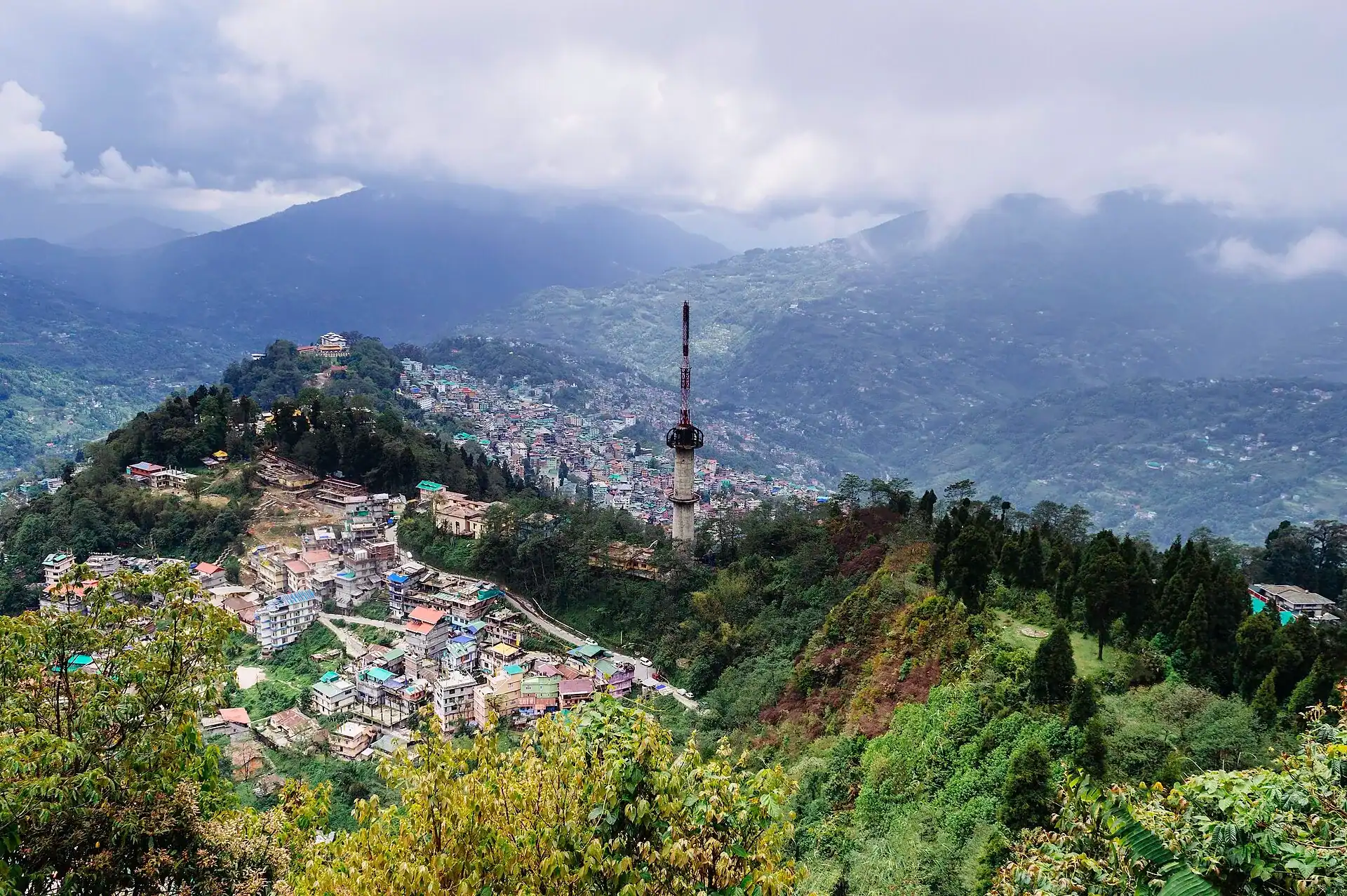 Photo: Subhrajyoti07 / Wikimedia Commons (CC BY-SA 4.0)