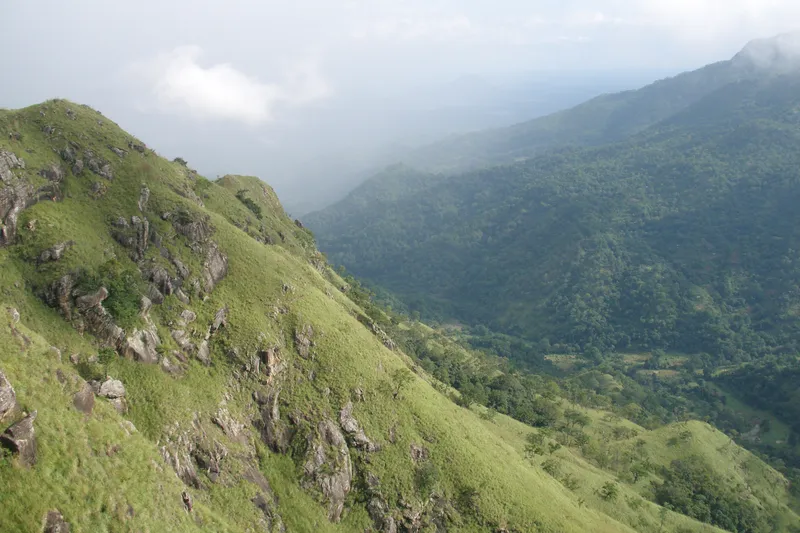
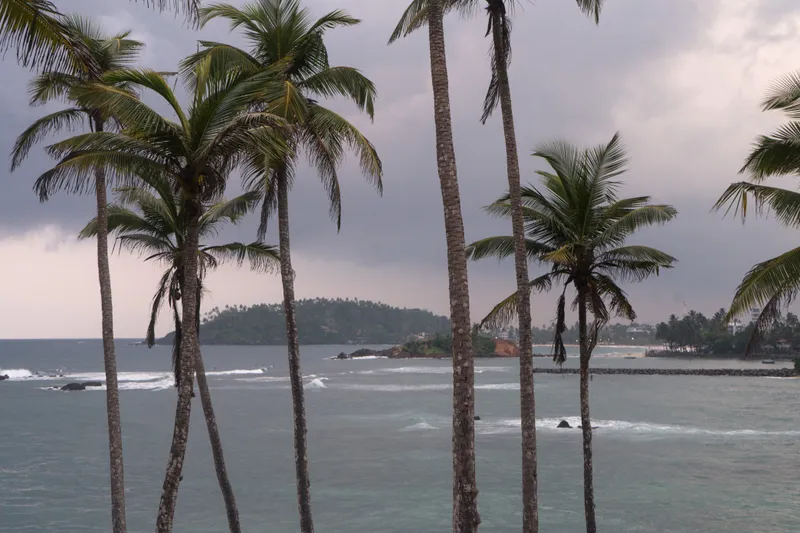
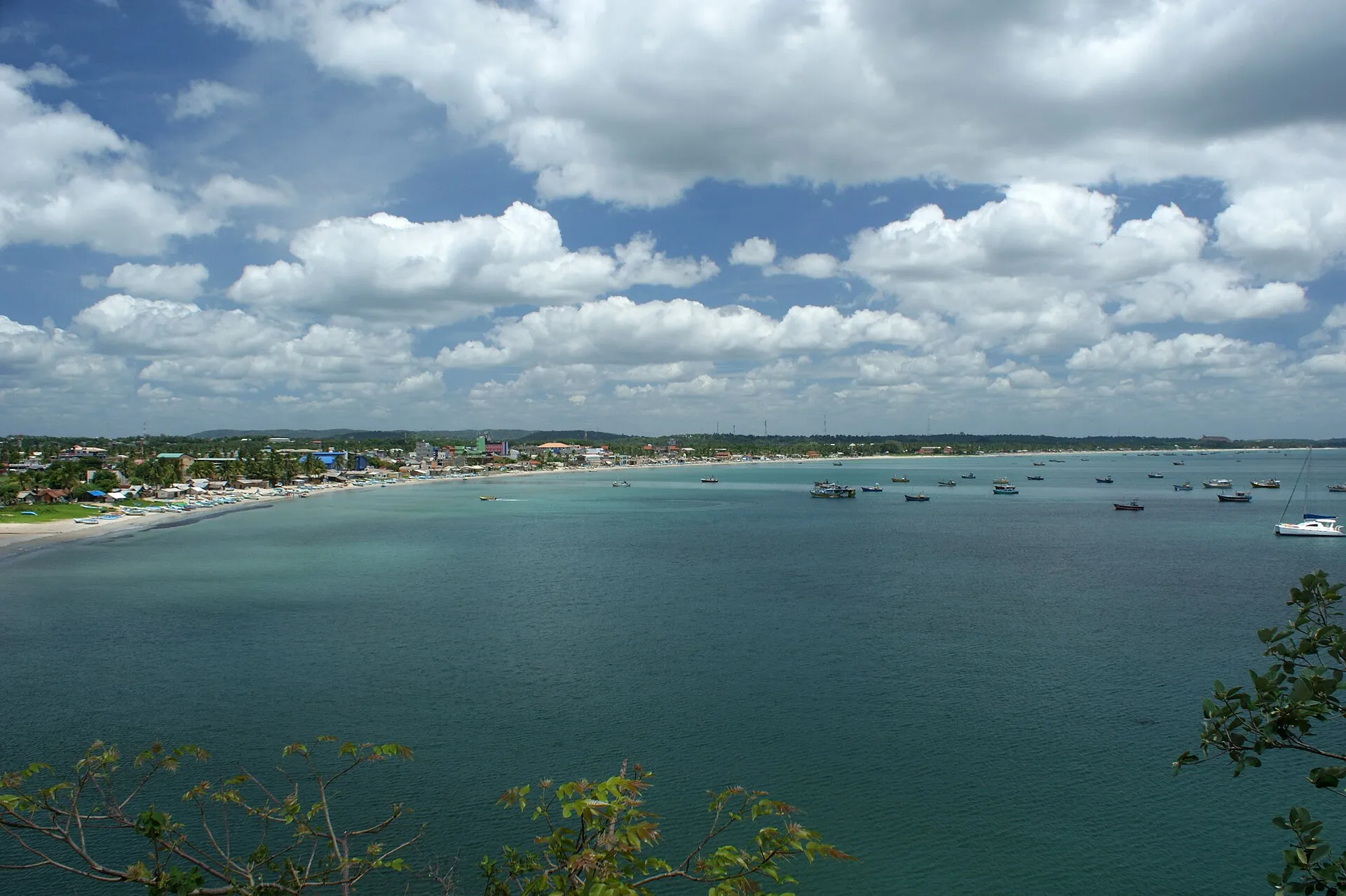
The turquoise water of Trincomalee bay
Photo: Kondephy / Wikimedia Commons (CC BY-SA 4.0)
Sri Lanka flag

Trincomalee

Sri Lanka

One of the world's great natural harbours, with whale season and empty northern beaches.

$650
Monthly Budget
--
Current Weather
Tropical
Climate Type
5/10
WiFi Score
7/10
Safety Score
UTC+5:30
Timezone
0
Nomad Score

Setting Up as a Nomad in Trincomalee

One of the world's great natural harbours, with whale season and empty northern beaches. What pulls nomads here is nature, backed by low costs and clean air. Budget around $650 a month. The size of the nomad scene is the weak spot.

Nomad Facts at a Glance

The practical basics for Trincomalee, Sri Lanka

CurrencyRupee (Rs, LKR)
LanguageSinhala, Tamil, English
Plugs & powerType D/G/M · 230V / 50Hz
Tap waterBottled or filtered
Tipping10% often added
Ride-hailingPickMe, Uber
Emergency119
Mobile dataeSIM: Airalo / Holafly
Driving sideLeft
Dialling code+94
Time zoneUTC+5:30
Best time to visitFeb, Mar, Apr

Country-level guidance to get you oriented, not a substitute for checking locally. Numbers and norms can change; 112 reaches emergency services from most mobiles worldwide.

Category Breakdown

How Trincomalee scores across all 13 factors

Trincomalee's Nomad Score is 6.9 out of 10, from 13 category ratings (each out of 10): Climate 7, Cost of Living 8, WiFi 5, Nightlife 3, Nature 9, Safety 7, Food 7, Nomad Community 3, English 7, Visa Ease 7, Culture 7, Cleanliness 6, Air Quality 8.

Weather in Trincomalee

30-year monthly averages (1991-2020) from a local weather station, and the best time to visit

29°
24°
Jan
30°
24°
Feb
32°
25°
Mar
33°
26°
Apr
35°
26°
May
35°
26°
Jun
35°
26°
Jul
35°
26°
Aug
35°
25°
Sep
32°
25°
Oct
30°
24°
Nov
29°
24°
Dec
Daily high & low (°C)Rainfall (mm/month)Best months to visit

The best time to visit Trincomalee for comfortable weather is Feb, Mar, Apr. The warmest month is May (around 35°C by day), and the wettest is Nov (about 376mm of rain).

Chasing good weather? See other cities that are warm in Feb, or plan a multi-city route around the seasons, or search flights when you are ready to move. Staying a while in Trincomalee? Check visa options, your time-zone overlap and how far your budget stretches, or find it on the world map.

Climate normals for 1991-2020 measured at the Trincomalee weather station, 4 km away. Historical averages, not a forecast. Source: WMO climate normals, published by NOAA NCEI.

Best Neighborhoods in Trincomalee

Where to base yourself for the perfect nomad experience

Trincomalee Town and Fort Frederick

$
Historic & Working

The old town on the headland, under the fort and the temple

The town itself on the promontory, with Fort Frederick's walls enclosing Swami Rock and the Koneswaram temple above the sea. Below it are the market, the banks, the bus stand and the ordinary business of a Tamil and Muslim provincial town.

Best for: Anyone who needs banks, the market and buses, with the temple a short walk
Pros
  • Koneswaram temple and the fort on the headland
  • Market, banks and transport connections
  • The lowest costs in the area
Cons
  • Congested and hot with little shade
  • Very few tourist services
  • Beaches are a ride away

Uppuveli

$$
Beach & Low-key

The nearest beach, six kilometres north

The first beach strip north of the town, with a run of guesthouses and small hotels behind a stretch of sand, a handful of restaurants and enough infrastructure to be comfortable without being developed. It is the practical base for most visitors to Trincomalee.

Best for: Most stays, for the balance of beach, services and proximity to town
Pros
  • Sandy beach with swimmable water in season
  • Guesthouses, restaurants and dive operators
  • Ten to fifteen minutes into town
Cons
  • Largely closes during the northeast monsoon
  • Beach debris after heavy rain
  • Limited shopping

Nilaveli

$$
Beach & Spacious

The long white beach further north, and the boats to Pigeon Island

The wide sand beach about twelve kilometres north, quieter and more spread out than Uppuveli, with the boats to Pigeon Island national park leaving from the shore. The reef there holds blacktip reef sharks and good coral, and the beach itself is largely empty.

Best for: Stays that want the widest beach and the reef trips
Pros
  • A long, wide and largely empty white beach
  • Boats to Pigeon Island and its reef from the shore
  • Quieter than Uppuveli
Cons
  • Twenty to twenty-five minutes into town
  • Very limited services and no real shops
  • Shuts down almost entirely out of season

Inner Harbour and China Bay

$
Harbour & Functional

Around the deep-water anchorage, naval and quiet

The southern side of the harbour, one of the largest natural deep-water anchorages in the world and long a naval station, with the airport at China Bay and a scatter of residential settlement. It is quiet, functional and has the harbour views without the beach.

Best for: Practical stays near the airport with harbour views rather than a beach
Pros
  • Views over one of the world's great natural harbours
  • Airport and transport links close
  • Very low costs
Cons
  • No beach and limited swimming
  • Naval restrictions on parts of the shore
  • Few restaurants or services

Kanniya and the Inland Villages

$
Rural & Traditional

The hot wells and the dry-zone country west of town

The area inland around the Kanniya hot wells, seven natural springs enclosed in a temple compound, with dry-zone scrub, ancient irrigation tanks and Tamil farming villages. It is rural, quiet and entirely away from the coastal economy, ten minutes from town.

Best for: Stays that want dry-zone countryside and village life over a beach
Pros
  • The Kanniya hot wells and the irrigation tanks
  • Genuine village life at the lowest cost
  • Birdlife around the tanks
Cons
  • No beach and a ride to everything
  • Almost no services or connectivity
  • Very hot in the dry season

Cost of Living in Trincomalee

Where this figure comes from. No cost survey covers Trincomalee, so the $650 a month above is our own estimate rather than a measurement. On 416 of our 999 city guides the figure is built from a published Numbeo basket, a one-bedroom rent in the centre plus one person's monthly costs without rent, converted to USD; this city is not one of them. How we source everything.

Budget roughly $650 a month as a solo remote worker in Trincomalee, which is among the cheapest coastal bases anywhere. A room or small apartment in town or out at Uppuveli and Nilaveli runs about $180 to $320 on a long stay, with beachfront guesthouses negotiable outside the season. Groceries land around $120 to $170, with the town market very cheap for produce and fish. A rice and curry lunch is $2 to $3, a beachside dinner $6 to $12, and a beer about $2.50. A scooter rental is $60 to $90 a month. Sri Lanka's economic difficulties since 2022 have made prices and supply less predictable than they once were, so budget with some margin. The economic crisis of recent years is still the backdrop to every price here, and the tax rise that followed it pushed anything imported well above what the exchange rate alone would suggest. Electricity tariffs went up sharply in the same period and did not come back down, which is why a guesthouse quoting a monthly rate usually caps air conditioning hours rather than absorbing them. Fish, fruit and rice from the town market are the part of the budget that stayed cheap, and a stay built around them costs a fraction of one built around imported food.

Where to Work in Trincomalee

Trincomalee has no coworking space and its remote-work infrastructure is what a guesthouse provides. The connection is the central practical question: fixed-line internet in the town and along the Uppuveli and Nilaveli beach strip is variable, and this is not a place to depend on a fixed line. Mobile data is cheap in Sri Lanka and 4G coverage in Trincomalee town and the nearby beaches is generally reasonable, so most people work off a local SIM with a large data package. Power cuts have been a recurring feature of Sri Lankan life since the economic crisis and a battery backup for a router is a sensible precaution rather than a luxury. Tamil is the language of the town and Sinhala the language of the national administration, and the gap between the two is a live fact rather than a historical one, so a form filled in the wrong language goes to the back of the queue. The harbour is the reason the town exists, and the navy's eastern command sits on it beside an oil tank farm dating from the war years that governments are still negotiating over. None of that employs foreigners, which is why the working people you meet will be in tourism or in aid.

Getting Around Trincomalee

Trincomalee town is small and walkable around the harbour, the fort and the Koneswaram temple on Swami Rock. The beaches most people stay at, Uppuveli and Nilaveli, are six and sixteen kilometres north respectively, and a tuk-tuk or a scooter is how you cover that. Tuk-tuks are everywhere and cheap. Buses run along the coast and inland. The railway connects Trincomalee to Colombo in around eight hours, and buses do it in six to seven; the road across the island via Habarana and Dambulla passes the cultural triangle, which makes breaking the journey attractive. There is a small domestic airport at China Bay with limited seaplane and light aircraft service. Ride-hailing apps that work perfectly in the capital are thin to useless here, so a tuk-tuk fare is agreed before setting off and the going rate is better asked of a guesthouse than of a driver. Boats out to the island national park leave from the beach north of town in the morning and turn round in the early afternoon, and the park charges its own entry fee on top of the crossing. Long-distance buses are cheap and frequent, but the seats and the road together make an overnight journey a poor substitute for a night of sleep.

Sorting transport? Book an airport transfer, or compare car rental on Auto Europe and QEEQ.

Visas for Trincomalee

Sri Lanka requires most visitors to obtain an Electronic Travel Authorization online before arrival, which normally grants 30 days and can be extended in-country to 90 days and in some cases longer through the Department of Immigration in Colombo. The visa system, its fees and the list of eligible nationalities have changed repeatedly in recent years, including a temporary free-visa period for selected countries, so the current position should be checked directly rather than taken from older sources. Sri Lanka now issues a Digital Nomad Visa, a year at a time, to remote workers who remit at least $2,000 a month, though most visitors to Trincomalee still arrive on the tourist ETA and extend it.

Best Time to Visit Trincomalee

Trincomalee is on the east coast and runs on the opposite season to Colombo and the south. The best months are roughly May to September, when the southwest monsoon leaves the east dry, sunny and calm, and this is also whale watching season: blue whales and sperm whales pass offshore between roughly May and October and Trincomalee is one of the better places in the world to see them. Diving and snorkelling at Pigeon Island are best in the same window. The northeast monsoon brings rain from November to February, when the sea is rough and much of the beach tourism pauses. March and April are transitional and can be very hot. The monsoon is not the only reason to avoid the end of the year: the Bay of Bengal cyclone season is at its worst from October into December, and this coast lies directly in front of it, which is a different order of weather from rain. The tsunami of December 2004 came ashore hardest along exactly this shoreline, and the memorials and the rebuilt villages north of town are part of the landscape now. Outside the May to September window half the beach businesses simply shut, which is the practical constraint on a long stay.

Pros and Cons of Trincomalee

Trincomalee has one of the finest natural harbours in the world, long empty beaches at Nilaveli, Pigeon Island national park offshore, and whale watching that rivals anywhere. It is extremely cheap, the food is excellent, and the east coast sees a fraction of the visitors the south does. The town itself has genuine depth, with a Tamil and Muslim character quite different from southern Sri Lanka and a temple on a cliff that has been a pilgrimage site for two thousand years. Infrastructure is limited: internet is the weak point, power is unreliable, and healthcare beyond the basics means a trip to Colombo. The season is half the year, and Sri Lanka's economic situation remains difficult.

Who Trincomalee Is For

Empty beaches for almost nothing, if a phone tether will carry your work and your timing matches the eastern season from May to September. Divers, snorkellers and whale watchers have the clearest reason to come. Beyond that, this is a part of Sri Lanka shaped by Tamil and Muslim history instead of by the Sinhalese south, which makes it a different country in practice. This rewards people who make their own entertainment, alone or in a pair, because very little here is laid on. Dependable connectivity, services that stay open through the year, decent healthcare and a community of any kind are the four things this town cannot offer a long-stayer. Colombo has the infrastructure and Galle and Weligama have the busier, better-served south coast scene.
Where to Stay in Trincomalee

Top neighborhoods and accommodations for digital nomads

We have not yet verified specific places to stay in Trincomalee. When we list one it will name the source we checked it against, the same as every other figure on this page, and until then we would rather show nothing than a name we have not confirmed. The neighbourhood guide above says which parts of the city to look in, which is the more useful half of the answer anyway.

Best Coworking Spaces

Where nomads get work done in Trincomalee

We have not yet verified specific coworking spaces in Trincomalee. When we list one it will name the source we checked it against, the same as every other figure on this page, and until then we would rather show nothing than a name we have not confirmed. The guide sections above cover what working from Trincomalee is actually like, including connection speeds and cafe culture.

Where to Eat & Drink

Best food and drink spots in Trincomalee

We have not yet verified specific places to eat in Trincomalee. When we list one it will name the source we checked it against, the same as every other figure on this page, and until then we would rather show nothing than a name we have not confirmed. The guide sections above cover what eating in Trincomalee costs and what the city is known for.

Cities with a Similar Vibe to Trincomalee

Different places that score alike across our 13 categories, if you like Trincomalee, these tend to feel similar.

In the rankings

Trincomalee in our rankings

  1. Best cities in Asia→

A comfortable solo budget in Trincomalee is about $650/mo, one of the more affordable bases for nomads.

Frequently Asked Questions About Trincomalee

How much does it cost to live in Trincomalee as a digital nomad?

A comfortable nomad budget in Trincomalee is around $650 a month, covering a furnished rental, food, coworking, and getting around. You can spend less by living outside the center and eating local, or more in the most popular neighborhoods.

Is the internet fast enough for remote work in Trincomalee?

Trincomalee rates 5 out of 10 for WiFi in our scoring, so connectivity is average for video calls and everyday remote work. A local SIM with a data plan is a smart backup for cafes, coworking, and travel days.

Is Trincomalee safe for digital nomads?

Trincomalee scores 7 out of 10 for safety in our ratings, which is good for solo travelers and long stays. Use the usual precautions with valuables and at night, and favor well-reviewed neighborhoods when you choose where to stay.

Is Trincomalee a good city for digital nomads overall?

Trincomalee stands out for nature and the outdoors and affordability among remote workers. With a typical budget near $650 a month and a growing nomad scene, it is worth a look if those priorities match what you want from a base.