Cost of Living in Gorkha
Where this figure comes from. No cost survey covers Gorkha, so the $500 a month above is our own estimate rather than a measurement. On 416 of our 999 city guides the figure is built from a published Numbeo basket, a one-bedroom rent in the centre plus one person's monthly costs without rent, converted to USD; this city is not one of them. How we source everything.
Gorkha is cheap by any nomad benchmark, but it is cheap because it is basic, not because it is a bargain version of a polished destination. A simple guesthouse room in the bazaar runs roughly $5 to $13 a night, and a step up to a hotel with hot water and a decent mattress, like Hotel Gorkha Bisauni or Gorkha Garden Hotel, lands around $16 to $29. Monthly furnished rentals are not really a market here the way they are in Pokhara; most people who stay longer simply negotiate a long-stay rate at a guesthouse, which can bring nightly costs down by a third or more. Food is where Gorkha shines financially: a full dal bhat set at a local eatery costs $1.50 to $2.50, momos run $1 to $1.50, and a milk tea is under $0.50. Eating at hotel restaurants aimed at trekkers and pilgrims (The Gorkha View, Gurkha Inn) roughly doubles those prices but still stays well under $5 a plate. Budget $500 to $700 a month for a comfortable if unglamorous stay covering lodging, food, and local transport; there is little to spend money on beyond that since Gorkha has no boutique shopping, no craft coffee scene, and no coworking membership fees.
Where to Work in Gorkha
Gorkha disappoints as a work base, and for three plain reasons: no coworking space exists, no cafe culture has grown up around laptops, and the wifi drops in and out even at the better hotels. What passes for "remote work infrastructure" here is a handful of hotel lounges and terrace restaurants, Hotel Gorkha Bisauni, Gurkha Inn, Gorkha Garden Hotel, and Hotel Vision among them, that offer wifi to guests and diners, with speeds generally adequate for email, messaging, and light browsing but unreliable for video calls, especially during power cuts or monsoon storms. Many travelers carry a local NTC or Ncell SIM with a data package as backup, and 4G coverage in the bazaar itself is usually decent even when hotel wifi drops. There are no meeting rooms, no printing services, and no IT support to speak of. The realistic approach is to treat Gorkha as a low-output, low-connectivity stop: batch your deep work before you arrive, plan for asynchronous communication, and schedule any calls that truly cannot slip for the mornings, when wifi tends to be most stable and the town is quietest.
Getting Around Gorkha
Gorkha bazaar itself is compact and entirely walkable, a cluster of shops, guesthouses, and eateries along a few sloped streets, but reaching it and moving beyond it takes real effort. From Kathmandu, tourist and local buses run to Gorkha in about 4 to 5 hours (roughly $2.50 to $4), most routing via the Prithvi Highway and the junction town of Abu Khaireni before climbing north; from Pokhara the trip is similar in length via the same junction. A private jeep or taxi cuts the time somewhat and costs considerably more, typically negotiated at $39 to $59 one way. Once in town, everything in the bazaar is a short walk, but the signature challenge is the climb to Gorkha Durbar itself: a steep stone staircase of several hundred steps rising roughly 200 meters above the bazaar, taking most people 30 to 45 minutes at an unhurried pace, with no vehicle access to the top. Local buses and shared jeeps connect Gorkha to surrounding villages and to Manakamana, but schedules are informal and infrequent, so budget extra time and expect to ask around rather than rely on an app, since ride-hailing services do not reliably operate this far from Kathmandu or Pokhara.
Sorting transport? Book an airport transfer, or compare car rental on Auto Europe and QEEQ.
Visas for Gorkha
Nepal's visa system applies the same way in Gorkha as anywhere else in the country. Most nationalities can get a visa on arrival at Kathmandu's Tribhuvan International Airport or at land border crossings, paying in cash (US dollars preferred) or by card at the airport kiosks: 15 days for $30, 30 days for $50, or 90 days for $125, all extendable at the Department of Immigration in Kathmandu for roughly $3 per day beyond 150 days total in a visa year. There is no immigration office in Gorkha itself, so any extension or paperwork issue means a trip back to Kathmandur before your current visa lapses; do not assume you can sort this out locally. Nepal has no separate digital nomad visa, and working for a foreign employer while on a tourist visa exists in the same legal gray area it does across the country, tolerated in practice but not formally sanctioned. Bring passport photos and keep photocopies of your passport and visa, since Gorkha's few internet or photocopy shops are not always reliable if you need something reproduced in a hurry.
Best Time to Visit Gorkha
October through November is Gorkha's high point: post-monsoon skies are clear, temperatures at this ~1,135 meter elevation sit comfortably in the high teens to low 20s Celsius by day, and on a good morning you can see Manaslu and Himalchuli rising to the north from the Durbar ridge. March and April are the second good window, warmer and hazier from pre-monsoon dust and occasional agricultural burning, but still generally clear enough for mountain views and pleasant for the climb up to the fort. December through February is cold, especially at night and up on the ridge, but dry and workable with the right layers. Avoid June through September if mountain views and dry paths matter to you: the monsoon brings heavy, sustained rain, the stone steps to the Durbar turn slick and treacherous, cloud cover erases the Himalayan panorama for days at a stretch, and landslides can disrupt the highway routes in from Kathmandu and Pokhara.
Pros and Cons of Gorkha
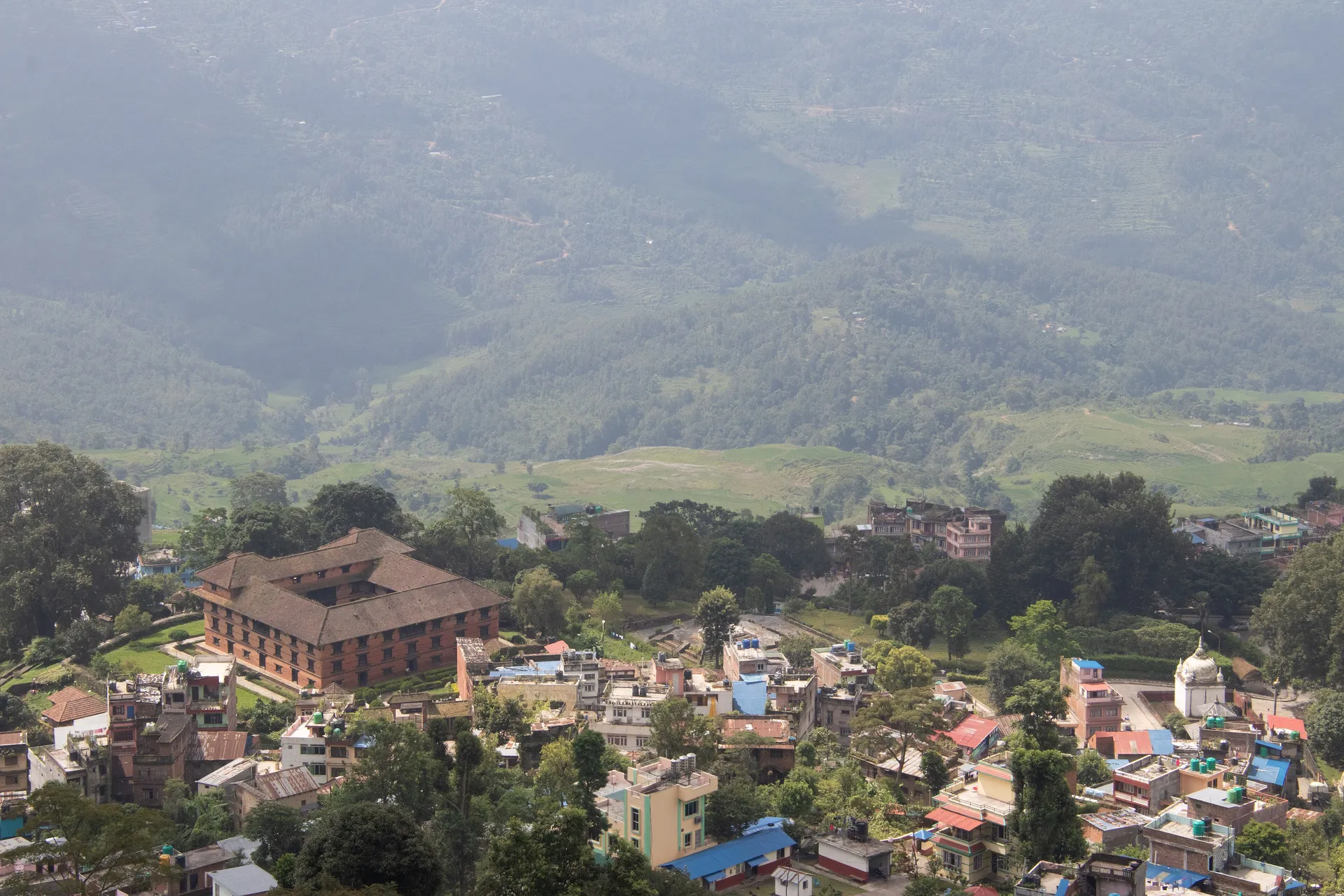
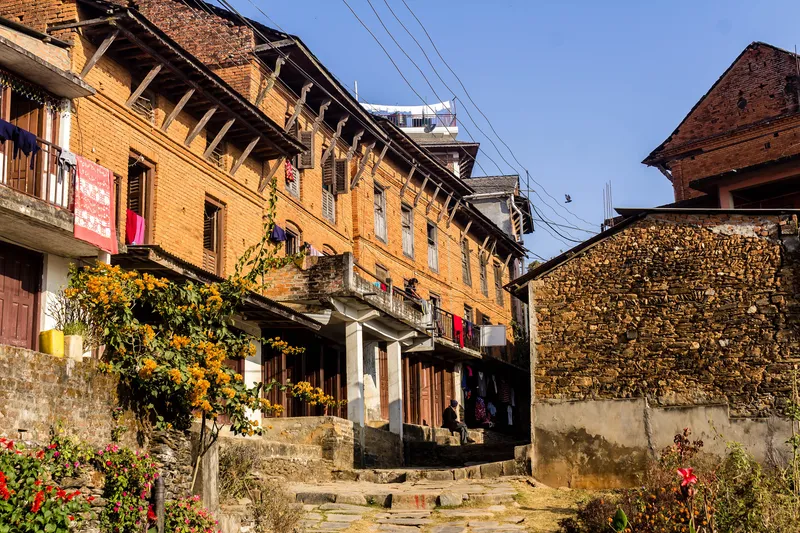
The case for Gorkha rests entirely on what you cannot get elsewhere: the Gorkha Durbar is a genuinely striking fortress-temple complex with real historical weight as the ancestral seat of Prithvi Narayan Shah, the unifier of modern Nepal, and the ridge it sits on delivers Himalayan views without the crowds or infrastructure of Pokhara or the Annapurna trailheads. The bazaar retains a lived-in Newari and Gorkhali character that has not been rebuilt for tourists, costs are genuinely low, and the pace is slow in a way that some people find restorative. The case against is just as concrete. Wifi is patchy and cannot be counted on for real work. Nightlife is essentially nonexistent past early evening. The town remains off the main tourist trail, which means fewer services, fewer English speakers, and less redundancy if something goes wrong. Infrastructure is basic: expect intermittent power, simple plumbing, and limited healthcare options, with anything serious requiring travel to Pokhara or Kathmandu. It is also worth remembering that the April 2015 earthquake's epicenter was near Gorkha district; much of the town and the Durbar complex have been carefully restored, but this is not a place where you can be complacent about infrastructure or building age without asking around.
Who Gorkha Is For
Gorkha suits travelers and slow-travel nomads chasing history and mountain scenery who are willing to trade connectivity and convenience for authenticity, ideally people who have already banked their deep-focus work elsewhere and are using Gorkha as a two-to-four-day cultural detour rather than a base. It works well for anyone combining it with Pokhara or a Manaslu-region trek, for photographers and history enthusiasts drawn to the Durbar and its unification-era story, and for budget travelers who genuinely do not mind basic rooms and irregular wifi in exchange for low costs and few other foreigners around. It is a poor fit for anyone who needs dependable video-call connectivity, for people prioritizing nightlife or a built-in expat community, and for remote workers on tight deadlines who cannot absorb a few unpredictable, low-bandwidth days. Treat Gorkha as a deliberate, short cultural stop inside a broader Nepal itinerary, not as a place to set up a laptop and grind through a normal work week.