Cost of Living in Shillong
Where this figure comes from. No cost survey covers Shillong, so the $560 a month above is our own estimate rather than a measurement. On 416 of our 999 city guides the figure is built from a published Numbeo basket, a one-bedroom rent in the centre plus one person's monthly costs without rent, converted to USD; this city is not one of them. How we source everything.
Budget around $560 a month. A one-bedroom runs roughly $150 to $350, with Laitumkhrah and the areas near the golf course at the top and the outer neighbourhoods considerably cheaper. Market produce at Iewduh, one of the largest markets in northeast India, is cheap and the region grows excellent oranges, pineapple and the fiery bhut jolokia chilli. Eating out is inexpensive and Khasi cooking, which uses a great deal of pork and rice, is quite different from mainland Indian food. Utilities are modest, though a small heater earns its place on December and January nights. Fibre runs about $10 to $15 a month where it reaches, and an inverter is a normal household purchase rather than a contingency. The road dependency on Guwahati is the structural cost driver: everything from cement to imported groceries comes up the same three-hour highway, and a landslide closing it in the monsoon moves prices within days. Renting is also the only way in for an outsider. A 1971 state law restricts the transfer of land from tribal owners to anyone else, so almost every flat belongs to a Khasi family, the national property portals list very little here, and most lets are found through word of mouth.
Where to Work in Shillong
Connectivity is adequate. Fibre reaches parts of Shillong at reasonable speeds and mobile data from Jio and Airtel covers the city and the main roads, though the northeast is served by fewer routes than the rest of India and outages happen. Power cuts are common. There is a small coworking presence aimed at the local student and startup population. Shillong was the capital of undivided Assam until 1972 and has been the capital of Meghalaya since, so a city of about 350,000 people carries a state secretariat, the North-Eastern Hill University and an IIM campus. The student population that brings is large, and the cafés of Laitumkhrah, the college district, are the first place to try for a table to work from. India keeps one clock, five and a half hours ahead of GMT, across nearly thirty degrees of longitude, and Shillong sits far enough east that the June sun is up by half past four and down soon after a quarter past six, so the light arrives hours before the working day does. There has been a long-running campaign in the northeast for a separate time zone precisely because of this.
Getting Around Shillong
Shillong is hilly and spread across ridges, so walking works within neighbourhoods and not between them. Private taxis and ride-hailing exist, but shared taxis are how almost everyone moves. The city has no railway and no working airport for most purposes, so the road down to Guwahati, about three hours through the hills, is the practical connection to the rest of India. Cherrapunji and Mawlynnong are day trips. Shared taxis are the thing to learn on day one: you flag one going your direction, say where you are headed and pay a fixed few rupees, and the driver fills the car. The Nongriat double-decker root bridge is a 3,000-step descent and climb from Tyrna and is a serious half-day rather than a viewpoint. The road down to the plains carries all the freight for the state as well as its people, and a landslide or a convoy of trucks can turn three hours into six with no warning, so an early start is the local habit rather than an eccentricity.
Sorting transport? Book an airport transfer, or compare car rental on Auto Europe and QEEQ.
Visas for Shillong
India's e-Visa applies here as elsewhere, issued for thirty days, one year or five years depending on the option chosen and applied for online before travel. Meghalaya has no Inner Line Permit system, unlike several neighbouring states, so a standard Indian visa is enough to stay here. There is no remote work visa and working on a tourist visa is not permitted. Hotels file the standard foreigner registration on your behalf, and anyone continuing to Arunachal Pradesh, Nagaland or Mizoram needs a separate permit arranged in advance. The Bangladesh border is under two hours south and the crossing there is open to foreigners, though an Indian visa specifying a land exit is needed and a standard electronic one may not permit it, so the port of exit has to be confirmed before relying on that route.
Best Time to Visit Shillong
October to April is the dry season and the best window, cool at around twenty degrees by day and genuinely cold at night in December and January, which is why Shillong was built as a hill station. May to September is the monsoon, and Shillong itself gets about two metres of rain a year. The waterfalls are extraordinary in the monsoon and the roads are difficult. Autumn, after the rains stop, is when the hills are greenest and clearest. Mawsynram averages around 11,800 millimetres of rain a year and Cherrapunji holds the records for the wettest month and the wettest year ever measured anywhere, both close enough to visit as a day trip from the city. Visiting in the monsoon means seeing the waterfalls at full force and accepting that the roads and the views will both be unreliable. The Nongkrem dance at the Khasi royal seat outside town each autumn is the state's principal traditional festival, several days of ritual and dancing that is a religious occasion rather than a performance, and visitors are welcome on exactly those terms.
Pros and Cons of Shillong
A cool hill climate in the tropics is the start of it, along with a Khasi culture quite unlike the rest of India, the best live music scene in the northeast by a wide margin, and access to landscapes with no equivalent anywhere: living root bridges grown from rubber fig over generations, the wettest places on the planet, and clear rivers in limestone gorges. Everything comes through Guwahati, which is the isolation in one sentence, the monsoon is less a season than a condition here, and the infrastructure lags the rest of the country. Khasi society is matrilineal, with children taking their mother's clan name and ancestral property passing to the youngest daughter, which is genuinely unusual in India and shapes everything from inheritance to how households are organised, and it is worth reading about before arriving rather than discovering as a curiosity.
Who Shillong Is For
Anyone drawn to northeast India, which is culturally and visually a different country from the plains, along with hikers, cavers and musicians, since the local rock scene is a genuine phenomenon and English-language music has been part of Khasi life for generations. It suits English speakers particularly, because Meghalaya is one of the more anglophone states in India. Getting anywhere quickly is impossible when the road to Guwahati is the only way out, and five months of rain in a region that holds the world's rainfall records is a genuine test of temperament rather than a statistic. It also suits cavers specifically: Meghalaya's limestone holds the longest cave systems in the subcontinent, including Krem Liat Prah at over thirty kilometres, and expeditions run here most years with a genuine international caving community behind them.
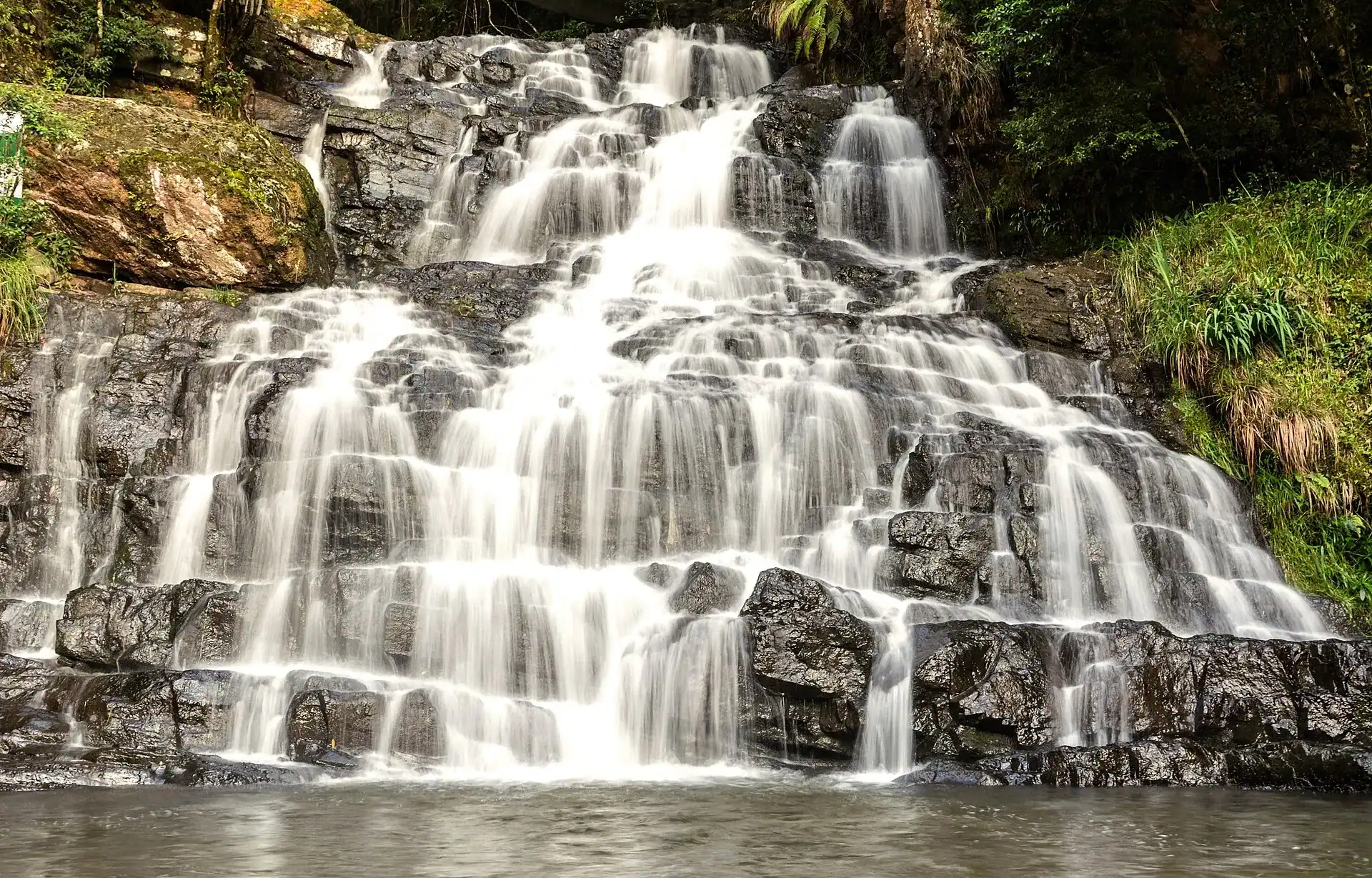 Photo: Prasanta Kr Dutta / Wikimedia Commons (CC BY-SA 4.0)