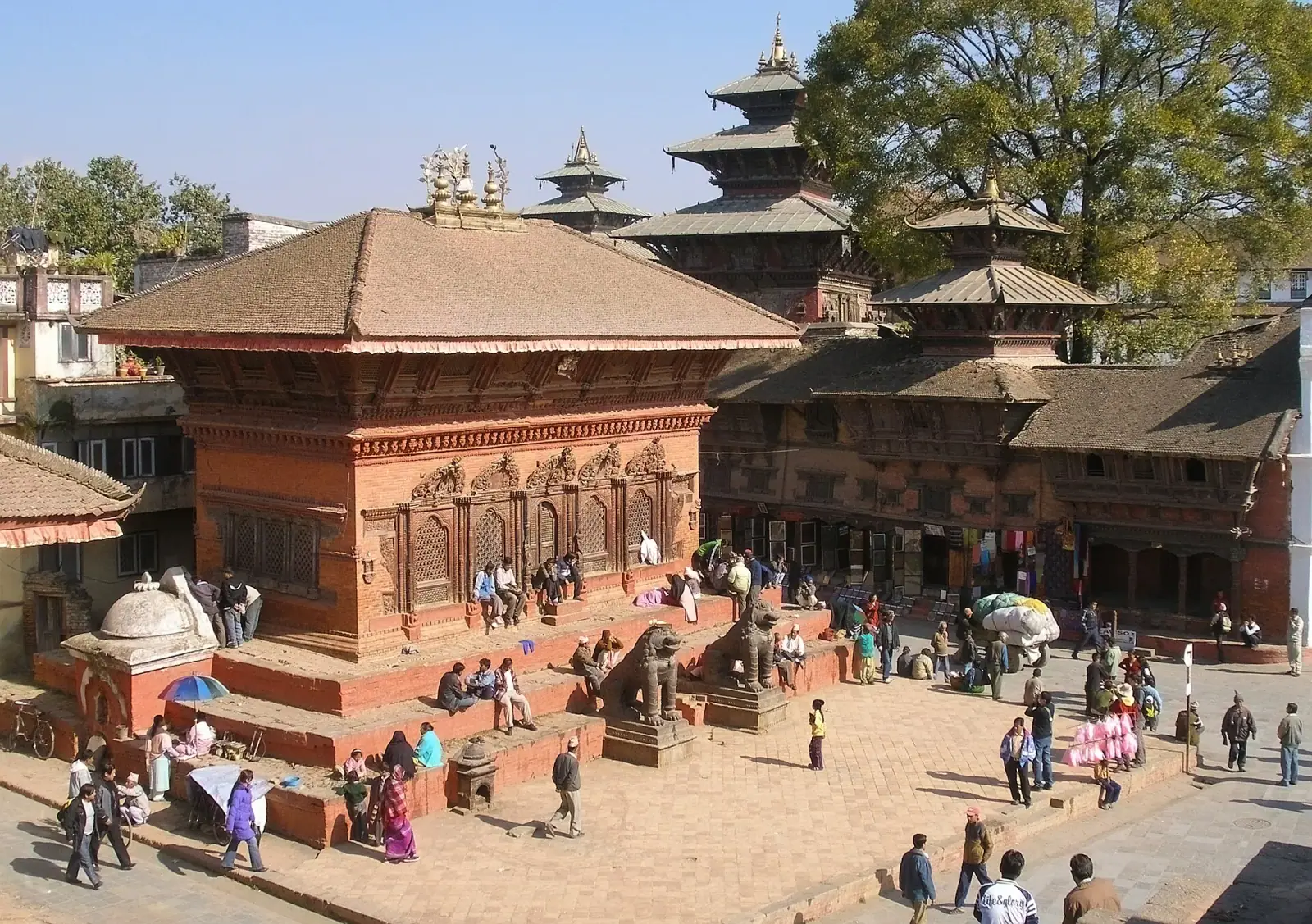
Kathmandu Durbar Square with the Shiva Parvati Temple and pagoda temples
Photo: Vyacheslav Argenberg (original), UnpetitproleX (derivative) / Wikimedia Commons (CC BY 4.0)
Nepal flag

Kathmandu

Nepal

Gateway to the Himalayas with spiritual vibes and mountain adventures.

$1.000
Monthly Budget
--
Current Weather
Humid Subtropical
Climate Type
40 Mbps
Avg. WiFi Speed
5/10
Safety Score
2,000+
Active Nomads
--
Time Difference
Scroll
0
Nomad Score

Living in Kathmandu as a Digital Nomad

Gateway to the Himalayas with spiritual vibes and mountain adventures. What pulls nomads here is low costs, backed by culture and nature. Budget around $1,000 a month. Air quality is the weak spot.

Compare Kathmandu vs Pokhara →

Category Breakdown

How Kathmandu scores across all 13 factors

Weather in Kathmandu

Monthly averages from 2019-2023 (Open-Meteo), and the best time to visit

17°
Jan
18°
Feb
22°
10°
Mar
25°
14°
Apr
25°
16°
May
26°
19°
Jun
26°
20°
Jul
27°
20°
Aug
26°
19°
Sep
24°
15°
Oct
21°
10°
Nov
18°
Dec
Daily high & low (°C)Rainfall (mm/month)Best months to visit

The best time to visit Kathmandu for comfortable weather is Apr, Oct, Nov. The warmest month is Aug (around 27°C by day), and the wettest is Jul (about 970mm of rain).

Chasing good weather? See other cities that are warm in Apr, or plan a multi-city route around the seasons. Staying a while in Kathmandu? Check visa options, your time-zone overlap and how far your budget stretches, or find it on the world map.

Historical monthly averages, not a forecast. Source: Open-Meteo.

Best Neighborhoods in Kathmandu

Where to base yourself for the perfect nomad experience

Thamel

$$
Tourist & Backpacker

Nepal's tourist heart with trekking shops and rooftop bars

Thamel is Kathmandu's famous tourist hub - narrow streets packed with trekking gear shops, restaurants, and rooftop bars. It's where every traveler passes through, with full infrastructure for nomads including cafes and coworking spaces.

Best for: Travelers, trekkers, and nomads seeking full tourist infrastructure
✓ Pros
  • Full services
  • Great food
  • Social scene
  • Trekking gear
✗ Cons
  • Very touristy
  • Pushy vendors
  • Noisy
  • Crowded

Patan (Lalitpur)

$
Cultural & Artisan

Ancient Newari culture in the artisan city

Patan is Kathmandu Valley's artistic heart - ancient temples, traditional Newari architecture, and artisan workshops. Patan Durbar Square is UNESCO-listed, and the pace is slower than Thamel. Culture over convenience.

Best for: Culture lovers, artists, and nomads seeking authentic Newari heritage
✓ Pros
  • Stunning temples
  • Artisan culture
  • Less touristy
  • Beautiful squares
✗ Cons
  • Limited cafes
  • Basic infrastructure
  • Far from Thamel

Boudha

$$
Spiritual & Tibetan

Tibetan Buddhism around the great stupa

Boudha centers on the magnificent Boudhanath Stupa - one of Buddhism's holiest sites. Tibetan monasteries, meditation centers, and spiritual seekers create unique atmosphere. Growing cafe scene serves the mindful nomad community.

Best for: Spiritual seekers, meditators, and nomads seeking peaceful Buddhist atmosphere
✓ Pros
  • Spiritual atmosphere
  • Great cafes
  • Peaceful
  • Tibetan culture
✗ Cons
  • Far from center
  • Limited nightlife
  • Tourist crowds at stupa

Jhamsikhel / Sanepa

$$
Expat & Modern

Kathmandu's expat enclave with modern cafes

Jhamsikhel and Sanepa have become Kathmandu's expat hub - modern cafes, international restaurants, and a growing coworking scene. It's where NGO workers and long-term expats live, offering Kathmandu comfort.

Best for: Long-term expats, professionals, and nomads seeking modern Kathmandu
✓ Pros
  • Modern cafes
  • Expat community
  • Good restaurants
  • Quieter
✗ Cons
  • Expensive for Nepal
  • Less character
  • Need transport

Bhaktapur

$
Medieval & Traditional

Medieval city frozen in time

Bhaktapur is a living museum - medieval Newari architecture, traditional pottery squares, and minimal motorized traffic. It's 45 minutes from Kathmandu but feels centuries away. For those seeking complete cultural immersion.

Best for: History buffs, photographers, and nomads seeking complete cultural immersion
✓ Pros
  • Incredible heritage
  • Car-free areas
  • Traditional crafts
  • Peaceful
✗ Cons
  • Far from Kathmandu
  • Very basic infrastructure
  • Limited services

Cost of Living in Kathmandu

Kathmandu is one of the cheapest capitals in Asia for remote workers. A comfortable monthly budget looks roughly like this:

  • Rent (central, Thamel or Lazimpat): NPR 20,000-40,000 / $150-300
  • Rent (cheaper area, Boudha or Patan outskirts): NPR 12,000-20,000 / $90-150
  • Groceries (cooking at home): NPR 10,000-18,000 / $70-130
  • Eating out (local dal bhat, momos): NPR 200-600 per meal / $1.50-4.50; mid-range restaurant NPR 800-1,500 / $6-11
  • Coworking hot desk: NPR 4,500-10,000 / $35-75 per month depending on space
  • Local transport (taxis, Pathao rides): NPR 3,000-6,000 / $20-45
  • Total comfortable range: $500-900/month; $800-1,200 if you want a nicer apartment and eat out often

The exchange rate sits around 1 USD = 135-140 NPR. Imported goods, cheese, and wine are expensive relative to local staples. Cooking your own food and eating at local restaurants keeps costs very low.

Where to Work

Kathmandu has a small but functioning coworking scene. Impact Hub Kathmandu in the Sanepa area is the most established, with backup power, high-speed fiber, and a community of entrepreneurs. RayaSpace near Thamel is centrally located and popular with nomads for its flexible day passes and reliable connectivity. Hub108 in Golfutar offers a daily pass for around NPR 500, useful if you want to try before committing monthly. Innovation Hive in Patan (Lalitpur) is the premium option, with private offices and 12 meeting rooms, used mostly by startups.

Cafe work culture is well-established in tourist neighborhoods. Himalayan Java on Tridevi Marg in Thamel has consistent WiFi and good espresso. Pumpernickel Bakery (also Thamel) is quieter with garden seating and outlets at most tables. Near Boudhanath, several smaller cafes cater specifically to nomads and resident monks. Expect speeds of 20-70 Mbps in decent cafes and coworking spaces. Load-shedding (scheduled power cuts) was mostly resolved by 2018, but brief outages still occur; coworking spaces run UPS systems or generators.

Getting Around

Kathmandu is not walkable in a Western sense. Footpaths are narrow, uneven, and frequently blocked. Traffic is dense and there are no bike lanes. That said, many nomads base themselves in Thamel, Boudha, or Patan, where daily needs are within walking distance within those neighborhoods.

For cross-city trips, ride-hailing apps are your best tool. Pathao and InDrive are the most popular; motorbike rides start around NPR 150-200 and car rides NPR 400-600. Standard taxis are metered but drivers often negotiate fixed fares; settle the price before you get in. Local microbuses are extremely cheap (NPR 20-30) but crowded and routes are hard to figure out without local knowledge.

Tribhuvan International Airport is about 5 km east of the city center. A prepaid taxi from the airport costs NPR 700-900 to Thamel, taking 20-40 minutes depending on traffic. App-based rides (Pathao car) cost slightly less if you have a Nepali SIM set up already.

Visas and Staying Long-Term

Most nationalities, including US, UK, EU, Canadian, and Australian passport holders, receive a tourist visa on arrival at Tribhuvan Airport or at land borders. You can choose 15, 30, or 90-day entries; a 30-day single-entry costs $30, a 90-day multi-entry costs $100. The total allowable stay is 150 days per calendar year.

Extensions are processed at the Department of Immigration in Kathmandu (or Pokhara for tourist visas). Regular processing takes 1-2 business days; same-day service costs an extra $25. Overstaying incurs a $5/day penalty up to the 150-day cap.

Nepal announced a digital nomad visa in late 2025, expected to launch in 2026, requiring proof of $1,500/month income and $100,000 health coverage, valid for up to 365 consecutive days within a 5-year window. Confirm the latest rules at the official Nepal Immigration Department site before travel, as rollout timelines have shifted.

Best Time to Visit

The best windows for remote work align with the trekking seasons: October to November and late February to April. October and November bring clear skies, stable temperatures (15-25 degrees C in the day), and the city at its most vibrant after the monsoon washes everything clean. Visibility of the Himalayan range from the valley is at its peak.

The monsoon (June to September) is actually underrated for staying in the city. Rain clears the air pollution dramatically, greenery is at its most lush, and it is low season with fewer tourists. WiFi and power hold up fine indoors. The main downside is heavy rain in the evenings and occasional flooding in low-lying areas.

Avoid December through February if air quality is a concern. Winter brings a thermal inversion that traps pollution in the valley, pushing PM2.5 to unhealthy levels for weeks at a time. March to May can also be heavily polluted before the monsoon begins. If you are sensitive to air quality, the October-November window is the clear winner.

Pros and Cons

  • Very low cost of living, one of the cheapest capitals in Asia
  • Rich culture and history right on your doorstep, including UNESCO World Heritage Sites
  • Trekking and Himalayan access unmatched anywhere in the world
  • Warm, welcoming locals with high English proficiency among younger generations
  • Improving internet infrastructure with fiber speeds of 50-100 Mbps available
  • Growing nomad and expat community with regular events and meetups
  • Air pollution is serious in winter and spring months, not suitable for people with respiratory conditions
  • Traffic and noise in central areas is constant and stressful
  • Working on a tourist visa is technically illegal and the digital nomad visa is not yet fully operational
  • Healthcare lags behind Western standards; serious medical issues require evacuation
  • Power and internet can be unreliable outside of dedicated coworking spaces
  • Bureaucracy and scams in tourist areas require patience and research

Who Kathmandu Is Best For

Kathmandu suits remote workers who are genuinely curious about South Asian culture and do not need a polished, predictable city environment. If you want to spend weekends hiking to Himalayan viewpoints, eat adventurously for under $5 a meal, and live comfortably on $700-900 a month, it delivers exceptionally well. It works especially well for people based in Thamel or Boudha who can establish a settled routine with a reliable coworking space.

Skip Kathmandu if clean air is a health requirement, if you need the reliability of Western-standard internet everywhere you go, or if you are easily frustrated by traffic, noise, and chaotic infrastructure. It is not a good fit for people who want to work from random cafes with consistent power and fast WiFi: you need to be intentional about where you plant yourself. Those who thrive here tend to be seasoned travelers who treat the chaos as part of the appeal.
Where to Stay in Kathmandu

Top neighborhoods and accommodations for digital nomads

Tiny Living Apartments

Serviced apartments
Putalisadak

Design-led studios with fibre Wi-Fi, inverter backup, full kitchen, and a 12-minute walk to Thamel.

Check availability →

Feel Like Home Nepal

Aparthotel
Lazimpat

Spacious furnished apartments with full kitchen, balcony, and free Wi-Fi in a quiet embassy-district neighborhood.

Check availability →

Nomad Hotel Lazimpat

Boutique hotel
Lazimpat

Stylish 4-star boutique with serviced apartment options, fast Wi-Fi, two restaurants, and a walkable location near Thamel.

Check availability →

Newa Suites by Maison Artelier

Guesthouse
Patan

Heritage Newari guesthouse steps from Patan Durbar Square, offering serene suites ideal for focused remote work.

Check availability →

Checkpoint KTM

Hostel
Paknajol

Boutique urban hostel with a dedicated co-working space, fast Wi-Fi, and a social cafe just steps from Thamel.

Check availability →

Browse apartments, aparthotels and hotels across Kathmandu. Compare prices and book a base that suits a remote-work stay.

See available stays in Kathmandu →

Affiliate link. See our disclosure.

Best Coworking Spaces

Where nomads get work done in Kathmandu

Impact Hub Kathmandu

Coworking space
Sanepa

Female-led nonprofit coworking hub with fiber internet, backup power, a cafe, and a strong community of entrepreneurs and changemakers.

Visit website →

RayaSpace

Coworking space
Thamel

Central coworking space with flexible day passes, excellent internet, and staff known for going above and beyond for remote workers.

Visit website →

Innovation Hive

Premium coworking
Patan

High-standard coworking in the Movers and Shakers tower in Patan, with 12 meeting rooms and a seminar space for up to 70 people.

Visit website →

Hub108

Budget coworking
Golfutar

Affordable coworking space open seven days a week with daily passes from NPR 500, colorful design, and a quiet residential area feel.

Visit website →

Himalayan Java

Laptop-friendly cafe
Thamel

Kathmandu's most established specialty coffee chain with consistent WiFi, quality espresso drinks, and multiple city-center locations.

View on Maps →

Pumpernickel Bakery

Bakery cafe
Thamel

Long-standing Thamel bakery with garden seating, power outlets, reliable WiFi, and a menu of fresh pastries and light meals.

View on Maps →

Where to Eat & Drink

Best food and drink spots in Kathmandu

Thamel House Restaurant

Nepali cuisine
Thamel

Traditional Newari architecture venue serving authentic Nepali thali and momo platters in a heritage building in central Thamel.

View on Maps →

Roadhouse Cafe

Wood-fired pizza
Thamel

Popular Thamel restaurant widely rated for the best wood-fired pizzas in Kathmandu, with a lively atmosphere and solid cocktail list.

Visit website →

OR2K

Middle Eastern vegetarian
Thamel

Cozy Thamel spot with low wooden tables and cushions serving hummus, falafel, shakshuka, and other Middle Eastern dishes at fair prices.

View on Maps →

Fire and Ice Pizzeria

Italian restaurant
Thamel

Italian-owned Thamel institution open for over 25 years, known for thin-crust pizzas with quality imported ingredients and homemade pasta.

View on Maps →

Krishnarpan

Fine dining Nepali
Lazimpat

Multi-course Nepali fine dining experience in Lazimpat, winner of Nepal's Best Restaurant 2025, serving regional dishes in a heritage setting.

View on Maps →

Tom and Jerry's Pub

Sports bar
Thamel

Long-running Thamel bar with cold beers, live sports, pool tables, and a lively crowd of travelers and expats most evenings.

View on Maps →

What Do Nomads Say?

Vote on how accurate these scores are based on your experience

Cities with a Similar Vibe to Kathmandu

Different places that score alike across our 13 categories, if you like Kathmandu, these tend to feel similar.

Frequently Asked Questions About Kathmandu

How much does it cost to live in Kathmandu as a digital nomad?

Budget roughly $1,000 a month in Kathmandu for a furnished place, food, coworking, and transport. The most popular central areas cost more; suburbs and local spots cost noticeably less.

Is the internet fast enough for remote work in Kathmandu?

Kathmandu rates 4 out of 10 for WiFi in our scoring, so it handles video calls and daily remote work patchy. Carry a local SIM with data as a backup for cafes and travel days.

Is Kathmandu safe for digital nomads?

Our safety score for Kathmandu is 5/10, workable for nomads. As anywhere, watch your belongings, favor busier streets after dark, and research neighborhoods before you book.

Is Kathmandu a good city for digital nomads overall?

Kathmandu stands out for low costs and culture among remote workers. With a typical budget near $1,000 a month and a growing nomad scene, it suits anyone whose priorities line up with those strengths.