Cost of Living in Bhaktapur
Where this figure comes from. No cost survey covers Bhaktapur, so the $700 a month above is our own estimate rather than a measurement. On 416 of our 999 city guides the figure is built from a published Numbeo basket, a one-bedroom rent in the centre plus one person's monthly costs without rent, converted to USD; this city is not one of them. How we source everything.
Bhaktapur is one of the most affordable bases a nomad could pick, though the trade-off is modest infrastructure rather than polish. A comfortable solo budget runs roughly $500 to $1,000 a month, with the lower end very achievable if you rent locally and eat Newari food. Guesthouses and simple apartments in or near the old town are inexpensive, and daily costs for food, tea, and transport are low by any standard. Splurges are cheap too: a full Newari feast, a taxi across the valley, or a temple guide barely dents a Western budget. Factor in the one-time foreigner entrance fee to the walled heritage core, occasional Kathmandu trips, and a data-heavy SIM if your wifi disappoints. The heritage-zone ticket rose in July 2025 to $15 for visitors from outside South Asia and China, and it is valid for a single day; show your passport at the counter and it can be extended for a week at no charge, which makes it the first errand of any longer stay.
- Budget guesthouse or room: roughly $120 to $300 per month
- Local Newari or dal bhat meal: often under $3
- Ncell or NTC SIM with a generous data pack: a few dollars monthly
- Taxi to central Kathmandu: around $8 to $15 one way
Where to Work in Bhaktapur
Bhaktapur rewards a slow cultural stay and frustrates anyone who arrives expecting a productivity hub. There is no real coworking scene, and wifi is variable while mains power can still flicker despite big improvements in recent years. Your single most important move is to test the actual connection in your accommodation before committing, and to carry an Ncell or NTC SIM with a large data pack as a backup, since 4G in the valley is often steadier than a guesthouse router. A handful of rooftop and courtyard cafes around the squares are pleasant for a few hours of light work with a coffee and a temple view. The traffic-free heritage core is gorgeous but basic for serious deep work, so anyone on heavy calls or large uploads may prefer basing in Kathmandu and visiting Bhaktapur for atmosphere.
- Buy a local SIM with data as a reliable tethering fallback
- Scout rooftop cafes near Taumadhi and Durbar Square for short sessions
- Keep offline copies of anything you cannot risk losing to an outage
Getting Around Bhaktapur
Inside the old city you simply walk. The brick-paved lanes are largely free of traffic, and the whole historic core is compact enough to cross on foot in well under an hour, wandering between squares, courtyards, and workshops. For trips beyond the walls, taxis, local buses, and microbuses run to Kathmandu, typically 40 to 60 minutes depending on the valley's notorious traffic. Tribhuvan International Airport sits about 30 to 45 minutes away, again traffic-dependent. Foreign visitors pay an entrance fee to the walled heritage zone, so keep your ticket, as it can be checked at the gates. A local guide is genuinely worth it for the temples and iconography, turning carved struts and shrines into stories you would otherwise miss.
- Explore the traffic-free core entirely on foot
- Take taxis or microbuses for Kathmandu and the airport
- Keep your foreigner entrance ticket handy at the gates
- Hire a guide to decode the temples and Newari craft
Sorting transport? Book an airport transfer, or compare car rental on Auto Europe and QEEQ.
Visas for Bhaktapur
Most travelers enter Nepal on a tourist visa, commonly available on arrival at Tribhuvan International Airport and at land borders for many nationalities. Tourist visas are typically issued in 15, 30, or 90 day options and can usually be extended in country up to the annual limit, with fees rising for longer stays. Bring passport photos or use the airport kiosks, and carry the fee in accepted currency to smooth the process. There is no digital-nomad-specific visa, so plan around the standard tourist entry and extensions. Extensions now begin online: the form is filled in on the Department of Immigration's website before the visit to its office, and an overstay adds a daily late fine on top of the extension rate, so apply while the current visa still has days left.
- Tourist visa commonly offered for 15, 30, or 90 days
- Extensions generally possible in country, up to the yearly cap
- Have photos and the correct fee ready on arrival
Best Time to Visit Bhaktapur
Autumn, roughly October to November, is the classic window: skies clear after the monsoon, mountain views sharpen, and festival season is in full swing. Spring, around March to April, is the other sweet spot, with warm days, blossoms, and the spectacular Bisket Jatra chariot festival that fills the squares in April. The June to September monsoon brings warm, wet, and humid weather that can wash out sightseeing and slow travel, though the valley turns lush and green. Winters are cool and can be foggy, and this dry season is also when valley air quality is typically at its worst, with dust and haze settling over the Kathmandu bowl. For clear air, comfortable temperatures, and living culture, aim squarely for autumn or spring.
- October to November: clear skies, mountain views, festivals
- March to April: warm days plus the Bisket Jatra celebration
- June to September: warm, wet monsoon and lush green valley
- Winter: cool and foggy, with the worst valley air quality
Pros and Cons of Bhaktapur
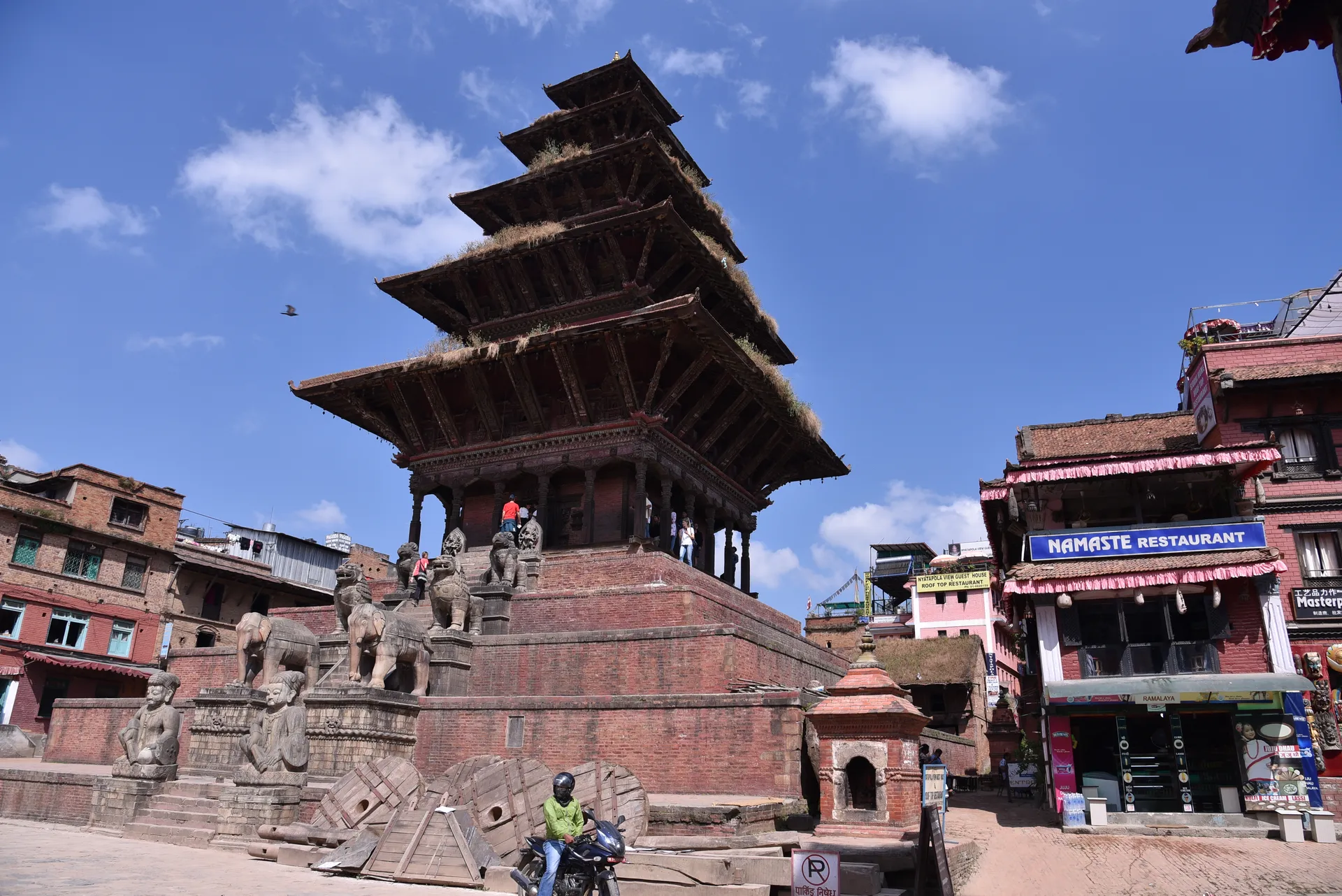
Bhaktapur's appeal is singular and hard to overstate: it is a living UNESCO World Heritage city where potters still shape clay in Pottery Square, five-storey pagodas rise over car-free brick lanes, and Newari culture is woven into daily life rather than staged for tourists. It is extraordinarily affordable, deeply atmospheric, and rewarding for a slow, immersive stay. The honest downsides are real, though. Infrastructure is modest, wifi and power can be inconsistent, the valley suffers dust and air pollution, and nightlife and the nomad community are nearly nonexistent. Anyone needing bulletproof connectivity, a social scene, or a big-city support network will feel the gaps quickly, which is exactly why most nomads base in Kathmandu or Pokhara instead. Much of what looks ancient has been carefully rebuilt. The 2015 earthquake damaged more than 30,000 houses in Bhaktapur and destroyed the Vatsala Durga temple on the palace square, which was raised again between 2017 and 2021 using traditional masonry.
- Pro: world-class living heritage and Newari culture up close
- Pro: very low cost and a walkable, traffic-free old town
- Con: variable wifi and power, plus modest infrastructure
- Con: valley air pollution, tiny nomad scene, minimal nightlife
Who Bhaktapur Is For
Bhaktapur suits the culturally curious slow traveler far more than the always-online remote worker. If you are the kind of nomad who wants to wake to temple bells, sketch carved windows, learn a few Newari dishes, and treat a city as an ongoing lesson in history and craft, it can be one of the most memorable stays in Asia. It rewards flexibility, light workloads, and patience with imperfect infrastructure. It is a poor fit if you run heavy calls, need reliable high-speed uploads, crave a busy coworking and social scene, or are sensitive to dust and air pollution. Many people get the best of both worlds by basing in Kathmandu or Pokhara and giving Bhaktapur a focused week or a series of unhurried day and overnight visits.
- Great for slow, culture-first travelers on light workloads
- Great for lovers of history, craft, and Newari cuisine
- Poor fit for heavy calls, uploads, or a social nomad scene
- Consider basing in Kathmandu or Pokhara and visiting often