Cost of Living in Thimphu
Where this figure comes from. No cost survey covers Thimphu, so the $2,500 a month above is our own estimate rather than a measurement. On 416 of our 999 city guides the figure is built from a published Numbeo basket, a one-bedroom rent in the centre plus one person's monthly costs without rent, converted to USD; this city is not one of them. How we source everything.
Budget around $2,500 a month as a solo remote worker in Thimphu, and understand that the figure is dominated by one line rather than by rent. Bhutan charges most foreign visitors a Sustainable Development Fee of $100 per person per night, reduced from $200 in September 2023, which is roughly $3,000 over a thirty-day month before accommodation, food or anything else. Discount structures for longer stays have been introduced and changed more than once. Rent and food are cheap by comparison: a flat runs a few hundred dollars and eating locally costs very little. Indian, Bangladeshi and Maldivian nationals pay a far lower fee. This is our own estimate rather than measured data. Nothing about how somebody chooses to live here changes that number. Taking a cheaper room or eating locally moves a monthly total by a few per cent, because the largest single line is charged by the day regardless of anything else. A month here costs more in fees than three months in most of the countries on this site cost in total, and any planning has to start from that number rather than from rent. Accommodation and food are genuinely cheap and almost irrelevant next to the nightly fee, which is the whole arithmetic of a Bhutanese stay.
Where to Work in Thimphu
Thimphu's connectivity is adequate rather than good: fibre reaches parts of the city at modest speeds, mobile data from Bhutan Telecom and TashiCell covers the valley, and the whole country runs on a limited international link routed through India. Outages happen. There is no coworking. English is a language of instruction in Bhutanese schools and is widely spoken in the capital, which makes Bhutan far easier to operate in than its isolation suggests. The country runs six hours ahead of London and thirty minutes ahead of India, which is one of the world's few half-hour offsets. Bhutan's international bandwidth is routed through India, so an outage or a disruption on that link affects the whole country at once. The half-hour offset from Indian Standard Time is a deliberate marker of independence rather than a geographic necessity, and it catches out anyone scheduling across the border. Coworking does not exist and hotel wifi is the practical desk.
Getting Around Thimphu
Thimphu is the only national capital in the world with no traffic lights: an intersection in the centre is directed by a policeman in a decorated booth, and an attempt to install lights was abandoned because people disliked them. The city sits in a north-south valley and the central grid is walkable. City buses and shared taxis are cheap. Paro, with the country's only international airport, is an hour away on a mountain road, and the approach into it is among the most demanding commercial landings anywhere, flown only by a small number of certified pilots. Roads elsewhere are slow and winding. Paro's approach threads between mountains and requires a manual visual approach with no instrument landing, which is why only a few dozen pilots worldwide are certified for it and why flights are cancelled readily rather than attempted in poor visibility. Punakha, the old winter capital with its dzong at the confluence of two rivers, is three hours east over the Dochula pass.
Sorting transport? Book an airport transfer, or compare car rental on Auto Europe and QEEQ.
Visas for Thimphu
Bhutan does not operate an ordinary tourist visa in the way other countries do. Almost every foreign visitor needs a visa applied for online through the Department of Immigration, costing around $40, and must pay the Sustainable Development Fee for every night of the stay. Independent travel has been permitted since 2022, so a guide is no longer mandatory outside protected areas, which was a substantial change. Indian nationals enter under a separate arrangement with a much lower fee. There is no remote work visa and no framework for long stays outside employment or study. The fee has moved twice since 2022, from $200 to $65 as a temporary measure and then to $100, and discounts for longer stays have been introduced and withdrawn, so the current published rate is the only one worth planning against. The fee is paid in advance with the visa application rather than on arrival.
Best Time to Visit Thimphu
March to May and September to November are the two good windows. Spring brings rhododendron across the hills and clear mountain views; autumn is drier still and holds the tsechu festival season, when masked dances are performed in the dzongs and the Thimphu tsechu fills the capital for three days. Thimphu sits at around 2,300 metres, so summers are mild rather than hot, reaching the mid twenties, and the monsoon from June to August brings cloud that hides the mountains. Winter is cold, dropping below freezing at night, with occasional snow and the clearest air of the year. Tsechu dates follow the Bhutanese lunar calendar and shift each year, so the Thimphu and Paro festivals move by weeks between one year and the next and need checking against the current calendar rather than a fixed month. Winter is the clearest season for mountain views and the cheapest for accommodation, though the fee does not move with the season.
Pros and Cons of Thimphu
Bhutan is the only country that measures itself on Gross National Happiness rather than output, the only one that is carbon negative, and the only one whose constitution requires that sixty per cent of its land stay forested. The dzongs, the Tiger's Nest monastery above Paro and the Buddha Dordenma above Thimphu are genuinely extraordinary, and the country is safe and orderly. The Sustainable Development Fee makes a long stay expensive in a way that no other country matches, the internet is middling at best, there is no nomad presence, and nightlife is essentially nonexistent. Bhutan absorbs more carbon than it emits, largely because of the forest cover requirement and hydropower exports, and it is one of very few countries anywhere that can make that claim on a measured rather than an offset basis. Television and the internet were legalised only in 1999, which is recent enough that many people here remember the change.
Who Thimphu Is For
A deliberate, budgeted few weeks in a country that has decided not to compete on price, for Himalayan trekking and living Buddhist practice rather than a cheap base. Anyone interested in how a small state manages tourism deliberately will find Bhutan the case study. Anybody counting costs will find the daily sustainable development fee dwarfs rent, food and everything else combined. A long stay is not merely expensive but structurally discouraged, since the system was designed to limit visitor numbers rather than to welcome residents. Do the arithmetic on the fee before anything else. Anyone hoping to trek the Snowman Trek or the Trans Bhutan Trail should build the fee into the trip length from the start, since both take weeks. The Trans Bhutan Trail reopened in 2022 after sixty years closed, and it runs four hundred kilometres across the country. Most people walk it in sections rather than end to end, which makes it a reason to base here rather than to pass through. Measured against Nepal, Bhutan costs many times more per day and delivers a fraction of the crowds.
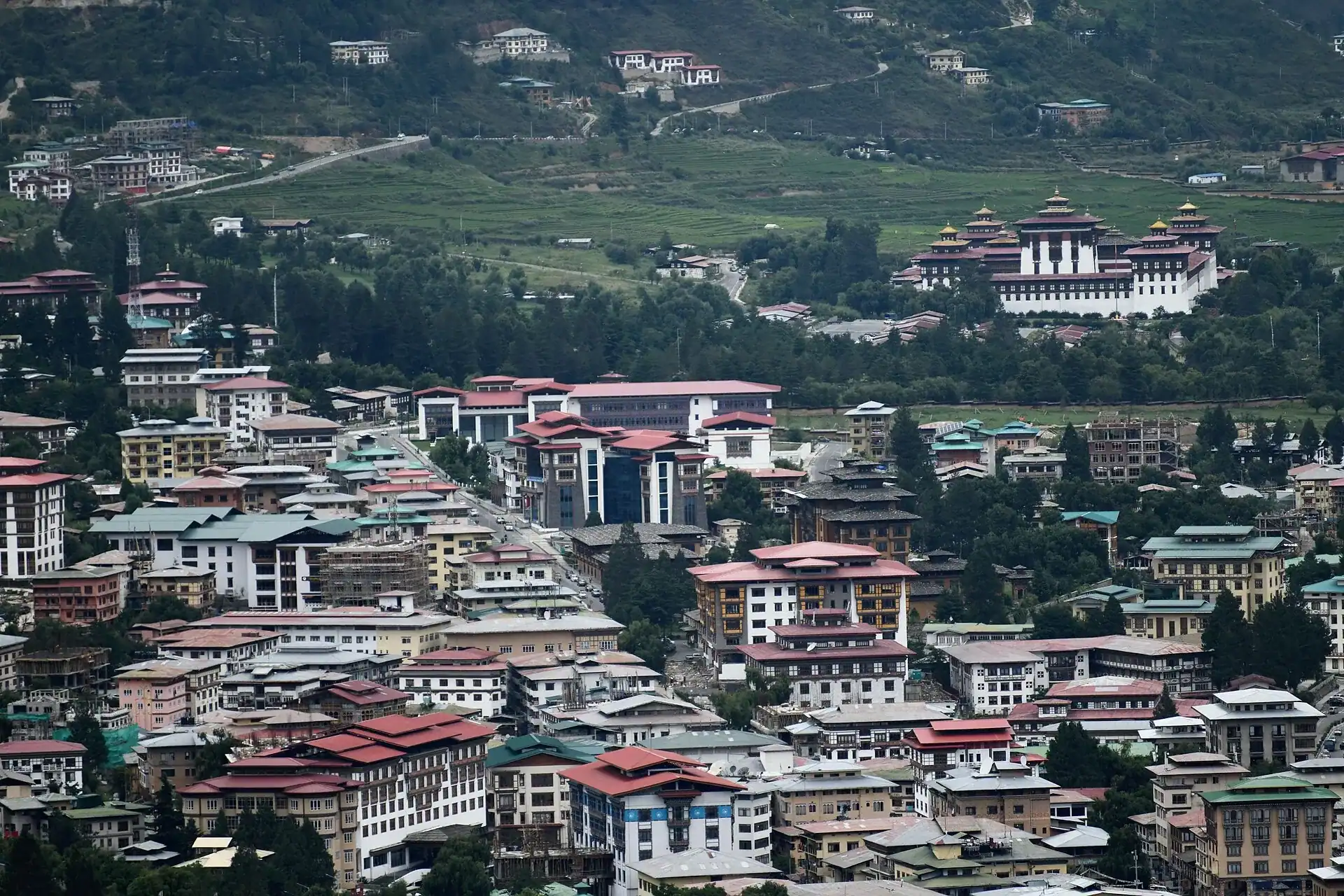 Photo: Christopher J. Fynn / Wikimedia Commons (CC BY-SA 4.0)