Cost of Living in Alappuzha
Where this figure comes from. No cost survey covers Alappuzha, so the $600 a month above is our own estimate rather than a measurement. On 416 of our 999 city guides the figure is built from a published Numbeo basket, a one-bedroom rent in the centre plus one person's monthly costs without rent, converted to USD; this city is not one of them. How we source everything.
Alappuzha is genuinely affordable, and for a nomad living simply it is one of the cheaper places you can base yourself in coastal India. A realistic monthly budget runs from around 600 to 1,100 US dollars, depending heavily on where you stay and how often you eat out or splurge on a houseboat day. Long-stay homestays and modest apartments are cheap, local Kerala meals cost very little, and transport is inexpensive. Costs climb if you want reliable air conditioning, faster internet, or beach-facing rooms at Marari, which draw higher rates in peak season. Budget more in the November to February high season when houseboats and better rooms fill fast.
- Homestay or simple long-stay room: roughly 200 to 450 US dollars monthly, more for beachfront.
- Local vegetarian thali or fish curry meal: often 1.50 to 4 US dollars.
- Air conditioning and reliable power backup push electricity and rent noticeably higher.
- A shared houseboat day trip is a treat, not a daily cost, and is worth budgeting once.
Where to Work in Alappuzha
Arrive knowing what this is, a slow town on the backwaters rather than a nomad hub, because dedicated coworking spaces are essentially absent here. Most remote workers set up from their homestay, a cafe, or a beach guesthouse with a desk. Wifi is the real variable here. It can be perfectly workable at a good property and frustratingly patchy elsewhere, especially during heavy monsoon rain when power and connectivity wobble. The dependable move is a local SIM with a generous data plan and mobile hotspotting as your primary or backup connection. A few cafes and cafe-restaurants in town and near the beach tolerate laptop sessions over coffee, but expect ambience over infrastructure.
- Buy a Jio or Airtel SIM on arrival and load a large data pack for reliable hotspotting.
- Marari and Thumpoly beach guesthouses often have quieter, more workable setups than the town centre.
- Carry a power bank; monsoon-season outages are not unusual.
Getting Around Alappuzha
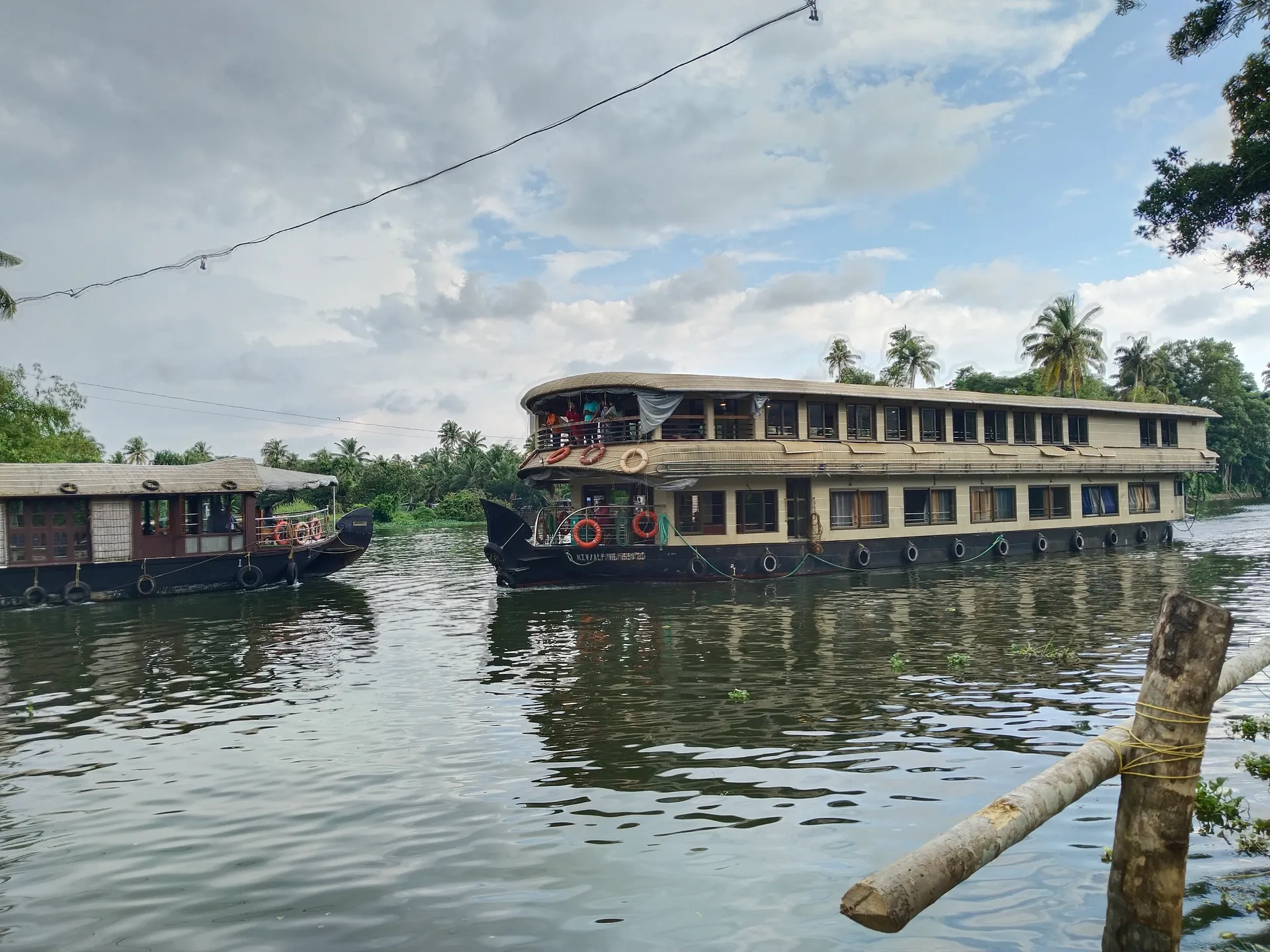
Alappuzha is compact and walkable in its core, and most short hops are easiest by autorickshaw, which are plentiful and cheap once you agree the fare. The town's real signature, though, is water: public backwater ferries connect Alappuzha with Kottayam and villages across Vembanad Lake, and the famous houseboats, or kettuvallam, offer slow overnight cruises through the canals of Kuttanad. KSRTC buses link the town to the rest of Kerala, and Alappuzha railway station sits on the coastal line with frequent trains north and south. For flying, the nearest airport is Cochin International (COK) near Kochi, roughly 75 kilometres away, about a two-hour drive or an easy train plus taxi combination. The cross-lake government boat leaves from the jetty opposite the state bus stand, costs well under half a dollar and needs between two hours and two and a half, calling at dozens of village landings on the way. It now terminates at Kanjiram, about 7 km short of the town centre at the far end, where buses and autos cover the last leg.
- Autorickshaws for in-town trips; agree the price or ask for the meter first.
- Public ferries are a scenic, very cheap way to see the backwaters like a local.
- Trains from Alappuzha station reach Kochi, Kollam, Thiruvananthapuram and beyond.
- Cochin airport (COK) is about 75 kilometres north; plan two hours by road.
Sorting transport? Book an airport transfer, or compare car rental on Auto Europe and QEEQ.
Visas for Alappuzha
Most visitors enter India on a tourist visa, and the electronic e-Visa system covers many nationalities for tourism, offering short-stay options that are convenient for a Kerala trip. India also issues longer multi-entry tourist visas valid for extended periods, useful if you plan to move slowly through the country over months. Business visas exist for work-related visits but carry their own eligibility and documentation requirements. Remote work on a tourist visa sits in a grey area, so understand the terms of whatever visa you hold. The e-visa does not cover India's restricted areas, and the one that tempts people from this coast is Lakshadweep, reached by air or sea from Kochi: foreigners may visit only Agatti, Bangaram and Kadmat, on a permit arranged through a registered tour operator that can take a month or more, and airline staff at Kochi refuse boarding without it.
- The e-Visa is the simplest route for short tourism stays for eligible nationalities.
- Longer multi-entry tourist visas suit slow travellers spending months in India.
- Business visas have separate requirements and are not a substitute for a work permit.
Best Time to Visit Alappuzha
The clear sweet spot is the dry, cooler season from roughly November to February, when humidity eases a little, skies are mostly clear, and the backwaters look their best. This is peak season for a reason, so book houseboats and beach rooms ahead. The southwest monsoon from around June to September is intense and dramatic, drenching the region for long stretches; it is beautiful and green but can disrupt travel, wifi, and beach plans. Heat and humidity are a year-round reality here, and even the good months feel warm and sticky by northern-hemisphere standards. If you want the famous Nehru Trophy snake-boat race, that spectacle falls in August, squarely in the wet season.
- November to February: driest, most comfortable, and busiest; book early.
- June to September: heavy monsoon, lush scenery, but frequent rain and disruption.
- August brings the Nehru Trophy snake-boat race, a major local spectacle.
- Expect heat and high humidity in every season; pack light, breathable clothing.
Pros and Cons of Alappuzha
Alappuzha rewards the slow traveller and the nature lover far more than the productivity-obsessed nomad. The backwaters, canals, and Vembanad Lake are genuinely special, the food is superb, the pace is calming, and daily costs are low. Against that, the infrastructure is modest: wifi is inconsistent, the nomad community is thin, nightlife is quiet, and the humid tropical climate is relentless for those unused to it. Cleanliness varies around the town and canals. If your work can flex around occasional connectivity hiccups and you value scenery and calm over a buzzing scene, the trade-offs are very worthwhile. If you need guaranteed fast internet and a social remote-work crowd, temper your expectations. Kuttanad, the rice country around the lake, is farmed below sea level on land reclaimed behind dykes, the only system of its kind in India and one the FAO lists among its Globally Important Agricultural Heritage Systems, and a walk along its canal banks is a landscape no beach town elsewhere in the country can offer.
- Pros: outstanding backwater nature, low cost, excellent Kerala food, safe and friendly.
- Pros: high English literacy across Kerala makes daily life easy.
- Cons: variable wifi, tiny nomad scene, limited nightlife.
- Cons: humid year-round climate and inconsistent cleanliness in places.
Who Alappuzha Is For
Alappuzha is for the nomad who treats a place as somewhere to live slowly rather than sprint through deadlines. It suits nature lovers, writers, photographers, and anyone whose work is flexible enough to absorb the occasional patchy connection or rainy afternoon. It is a wonderful base for a few restorative weeks of backwater cruises, beach mornings at Marari, unhurried village walks, and extraordinary food. It is a poor fit for anyone who needs reliable high-speed internet every hour, a large coworking community, or a nightlife scene. Come here to recharge, to write, to slow down, and to soak in one of India's most atmospheric landscapes, not to grind.
- Great for: slow travellers, nature and photography lovers, writers seeking calm.
- Great for: anyone wanting affordable, restorative time near the backwaters and beach.
- Less ideal for: deadline-heavy workers needing guaranteed fast wifi.
- Less ideal for: those wanting a big nomad social scene or busy nightlife.