Cost of Living in Dunedin
Where this figure comes from. No cost survey covers Dunedin, so the $1,900 a month above is our own estimate rather than a measurement. On 416 of our 999 city guides the figure is built from a published Numbeo basket, a one-bedroom rent in the centre plus one person's monthly costs without rent, converted to USD; this city is not one of them. How we source everything.
A budget of $1900 a month covers a single nomad in Dunedin, though it demands discipline by New Zealand standards. A furnished one-bedroom flat near the Octagon or in Roslyn runs roughly $850 to $1200; a room in a shared student-era villa in North Dunedin costs $400 to $650. Groceries at Countdown or the Saturday Otago Farmers Market come to $300 to $420, with cafe brunches around $15 to $22 and pub mains $20 to $30. A prepaid SIM from One NZ, Spark or 2degrees costs $15 to $28 monthly for 10GB to 40GB. Hot-desking at Petridish sits near $150 to $260. Power is the hidden cost: older uninsulated villas push winter bills to $110 to $170, with fibre broadband at $50 to $65. Bus fares are about $2 with a Bee Card. Verdict: cheap for New Zealand, expensive for the world.
Where to Work in Dunedin
The compact centre around the Octagon and Vogel Street is the natural base, with Roslyn and Maori Hill quieter and North Dunedin loud during term time. Petridish on Vogel Street is the established coworking space, a converted warehouse popular with startups and researchers spilling out of the University of Otago. Cafe work is the cheaper default: Vanguard Specialty Coffee, Mazagran Espresso Bar, Morning Magpie and the cluster along lower Stuart Street all tolerate laptops outside the brunch rush. Fibre is widespread thanks to New Zealand's ultrafast broadband rollout, and fast connections are typical in flats and in most cafes. Practical caveats: many venues close by 4pm, Sunday hours are thin, seating vanishes when students return in late February, and heating rather than bandwidth is the real limiting factor between May and September. The country's oldest medical school is here, and the health research attached to it is the largest professional employer in the city after the university itself. The chocolate factory that defined the place for a century closed a few years ago and the site became a hospital, which says plainly enough which way the local economy has moved. Neither of them hires from abroad casually.
Getting Around Dunedin
Dunedin's centre is walkable in about twenty minutes end to end, but the city is famously hilly and Roslyn, Maori Hill or Northeast Valley involve serious climbs. The Orbus network covers the city and the harbour road to Port Chalmers; fares are roughly $2 to $3 with a Bee Card and about double in cash, with day caps keeping costs low. Uber does not operate here, so Dunedin Taxis, Blue Star and Southern Taxis handle late nights at around $10 to $20 for a cross-town trip. Dunedin Airport sits 30km south at Momona; a shuttle costs about $25 to $35 and a taxi $70 to $90, so pre-booking matters. Rail is scenic only, running the Taieri Gorge and coastal excursions rather than commuter services. A car helps for the Otago Peninsula and Central Otago, but a scooter is not essential and the weather discourages it.
Sorting transport? Book an airport transfer, or compare car rental on Auto Europe and QEEQ.
Visas for Dunedin
New Zealand grants visa-waiver entry to most Western passport holders, generally 90 days, with British citizens receiving six months. Travellers must buy an NZeTA online before boarding, valid two years, costing around $10 plus the International Visitor Levy of roughly $60. Since 27 January 2025 New Zealand has explicitly permitted visitors to work remotely for an overseas employer while on a visitor visa, provided the work is not for a New Zealand company or the New Zealand market, so nomads no longer occupy a grey zone. There is no dedicated digital nomad visa. Visitor visas can be extended in-country to a maximum of nine months within any eighteen-month period, and immigration officers expect proof of onward travel and funds of about $1000 per month. Longer stays require a work, student or Working Holiday visa, the last available to under-30s or under-35s from selected countries. Any stay that will add up to more than six months triggers a medical requirement, a chest x-ray included, which has to be done by a panel physician rather than an ordinary doctor and takes time to arrange. Biosecurity at the border is the strictest anywhere: boots, tents and food all get declared, and an undeclared apple carries an instant fine.
Best Time to Visit Dunedin
Dunedin has a cool oceanic climate with no genuinely hot season. December to February is the peak window, with daytime highs of 18C to 22C, long southern daylight until nearly 10pm, and the beaches at St Clair and Aramoana at their best. March and April are the connoisseur's months: settled, golden, and quieter once summer visitors leave. May through August is the low point, with highs of 9C to 12C, frequent southerly fronts, damp interiors and short days, though snow in the city itself is uncommon. September and October are windy and changeable. Rain is spread evenly rather than concentrated in a monsoon, so a waterproof jacket matters more than a season. Key dates include the Dunedin Fringe Festival in March, iD Dunedin Fashion Week, the Vogel Street Party in spring, Matariki in June or July, and rugby test weekends at Forsyth Barr Stadium. The southern lights are visible from the hills above the harbour on a clear dark night when the activity is up, and this is one of the better places in the country to catch them, which is a compensation for the long winter nights that nobody advertises. Cold fronts arrive from the south with no warm ground between here and the ice.
Pros and Cons of Dunedin
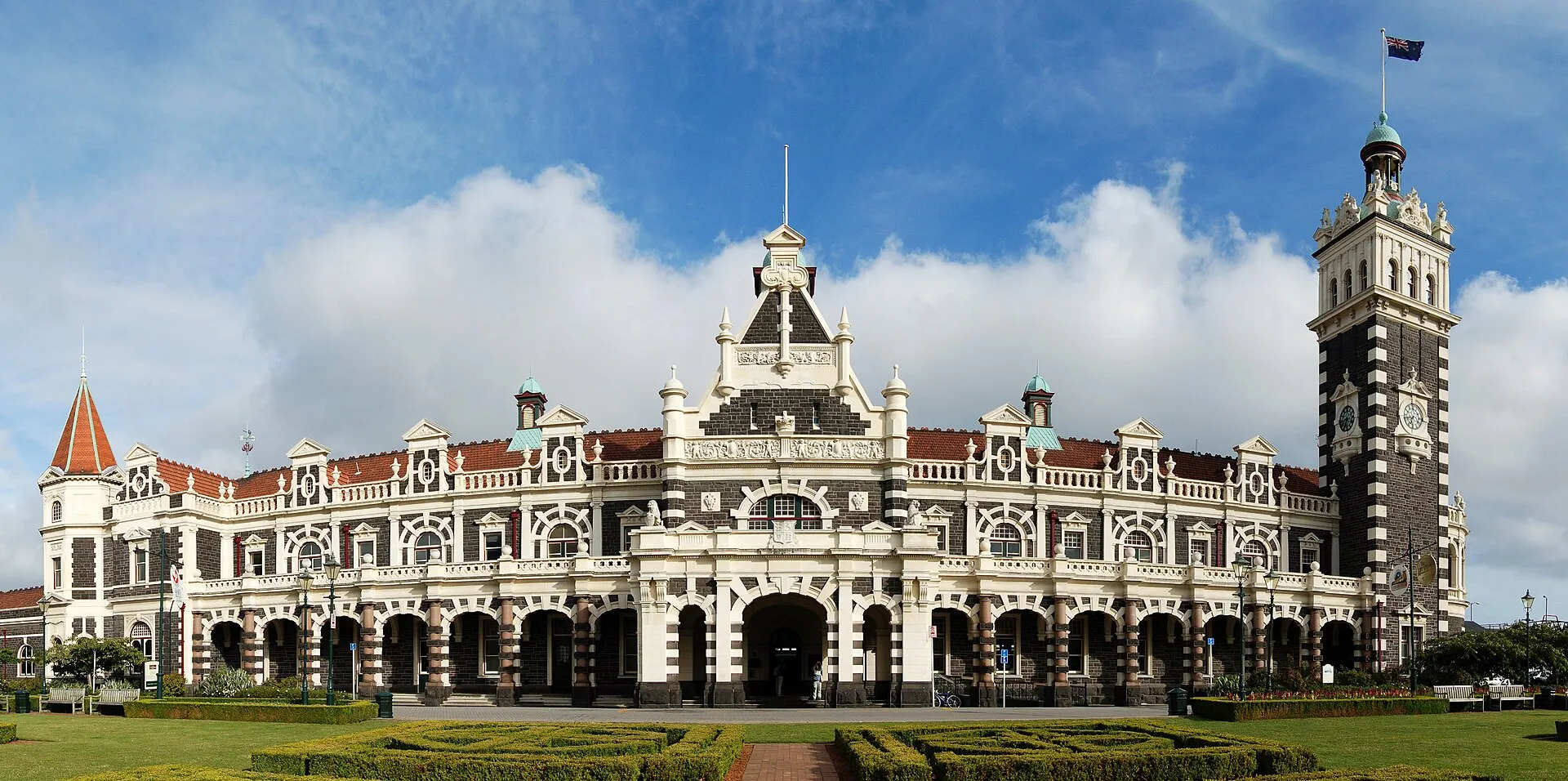
Dunedin's strengths are unusual for a city this size: a genuine Victorian and Edwardian streetscape, a serious university that keeps the arts, music and cafe scene alive, wildlife that includes albatrosses, sea lions and yellow-eyed penguins within half an hour of the Octagon, gigabit fibre, safe streets, drinkable tap water and immediate access to the Otago Peninsula and Central Otago. Living costs are the lowest of New Zealand's main centres. The housing stock, though, is cold, damp and poorly insulated, and winter power bills bite; wages and prices are high relative to Asian or Latin American hubs, so $1900 buys modestly; the weather is grey and wind-lashed for months; the city empties and quietens during university breaks; there is no Uber and very limited late-night life; the international nomad community is thin; and long-haul flights out are expensive, indirect and time-consuming from a small regional airport.
Who Dunedin Is For
A small, safe, English-speaking Western city with fast internet, a strong academic and creative culture and wilderness at the doorstep is the offer, and cheap living or a large coworking scene is not part of it. It rewards writers, researchers, developers on Northern Hemisphere-friendly schedules who do not mind an early start, outdoor people, wildlife photographers and anyone treating New Zealand's South Island as a base for months of exploration. It also fits those on Working Holiday visas who want an affordable landing pad. Skip it if the budget is the priority, if a warm climate is non-negotiable, if a dense international nomad community and constant networking events matter, or if the work requires overlapping heavily with European business hours. Party travellers and those needing frequent cheap flights to other countries will find the isolation frustrating.