Cost of Living in St John's
Where this figure comes from. No cost survey covers St John's, so the $1,700 a month above is our own estimate rather than a measurement. On 416 of our 999 city guides the figure is built from a published Numbeo basket, a one-bedroom rent in the centre plus one person's monthly costs without rent, converted to USD; this city is not one of them. How we source everything.
Budget around $1,700 a month as a solo remote worker in St John's, which is the cheapest provincial capital in Canada and a real saving against anywhere on the mainland's populated coasts. A one-bedroom apartment runs roughly $900 to $1,300, and the colourful row houses downtown that appear in every photograph are within reach rather than aspirational. Groceries cost more than the Canadian average because everything arrives by ship or plane, which is the permanent condition of an island economy. Heating is a serious winter line item. This is our own estimate rather than measured data. Heating through a Newfoundland winter is the line most newcomers get wrong, running $200 to $350 a month between November and April on electric or oil in an older downtown house, and the housing stock here is old. Fibre is around $80 to $110 a month at Canadian prices. Flights are the other structural cost: St John's is expensive to leave, and anyone planning regular trips to the mainland should price that before committing to a year.
Where to Work in St John's
St John's has a small but real coworking and startup scene, built on an ocean technology sector, Memorial University and the offshore energy industry that shaped the city's last forty years. Fibre reaches most of the city at Canadian prices and mobile coverage is good in the built-up area. The time zone is the practical quirk: Newfoundland runs half an hour ahead of Atlantic time, which puts the city three and a half hours ahead of the American west coast and closer to European hours than anywhere else in North America, an advantage for anyone working with Europe. London sits only three and a half hours off by the clock, where the rest of the region is four or five, so a European afternoon call lands mid-morning here instead of over lunch. Memorial University charges the lowest tuition of any Canadian university by a wide margin, a deliberate provincial policy held for decades, which is why the student population is disproportionately large for a city this size.
Getting Around St John's
St John's is built on steep hills around a narrow harbour, and downtown is walkable if the gradients are acceptable; Signal Hill above the harbour entrance is a climb rather than a stroll. Metrobus covers the city adequately and most residents drive. The East Coast Trail runs for over three hundred kilometres along the coast south and north of the city, starting close enough to reach on a bus, and is the best thing about being here. St John's airport is fifteen minutes out with connections through the Canadian hubs and seasonal transatlantic service. Signal Hill and Cape Spear, the easternmost point of North America, are both within twenty minutes and both are where people go when the fog lifts. The East Coast Trail's southern sections around Petty Harbour and the Spout are reachable without a car, which is unusual for a Canadian trail network of that scale.
Sorting transport? Book an airport transfer, or compare car rental on Auto Europe and QEEQ.
Visas for St John's
Canada has no digital nomad visa. The 2023 tech talent strategy clarified that visitors may work remotely for a foreign employer during a normal visitor stay of up to six months, which is the route most people use and requires only an eTA for visa-exempt nationalities. The International Experience Canada working holiday covers a defined list of countries and age ranges with full work rights. Newfoundland and Labrador runs its own provincial nominee stream and has actively recruited remote workers and skilled migrants, which makes it a more realistic permanent route than the competition elsewhere in the country. The Atlantic Immigration Program works from the opposite direction: employer-driven rather than points-based, covering all four Atlantic provinces, which suits someone who can line up a job offer more than someone optimising a ranking total. Finding a designated employer is the step that takes the time. This province is losing population faster than any other and recruits accordingly: its nominee stream and a separate priority-skills route are among the more accessible in the country, and the provincial government runs recruitment missions abroad rather than waiting for applications to arrive. Anybody weighing a permanent move to the country would do well to read what is offered here before assuming the big cities are the easier route.
Best Time to Visit St John's
June to September is the season and it is short, with daytime temperatures rarely above twenty, long evenings and the whales and puffins offshore. Icebergs drift down what locals call Iceberg Alley between roughly April and June, which is the single best reason to time a visit. Fog is a defining feature and St John's is among the foggiest cities in Canada. Winter runs long, wet and windy rather than deeply cold, with heavy snow and the occasional storm that closes everything for a day. Anyone considering a year should visit in February first. Iceberg Alley is best watched in late May and early June, and the icebergs are genuinely visible from shore at Cape Spear and along the northern coast rather than requiring a boat. Puffins arrive at Witless Bay from April and the colony there is among the largest in North America. There is a local name for the storm that blows through around the middle of March and is said to mark the end of winter, and people will tell you the season is not finished until it has come and gone.
Pros and Cons of St John's
St John's is the oldest European-founded city in North America, built in tiers of painted houses around a harbour with the open Atlantic beyond it, three hundred kilometres of coastal trail, icebergs in spring, and a music and pub culture that punches far above the city's size. It is the cheapest provincial capital in the country and its time zone suits European work. The weather is genuinely hard, and the fog and the wind are constant, the island is remote and flights are expensive, and there is no international nomad presence at all. George Street claims more bars per square foot than any street in North America, which is the kind of claim that is impossible to verify and entirely believable on a Friday. The traditional music scene behind it is genuine, with sessions running in several pubs most nights of the week.
Who St John's Is For
A small, characterful, walkable city on the edge of the Atlantic, for anyone genuinely unbothered by weather, which is not a small requirement in this particular place. The time zone makes it unusually good for anyone working European hours from North America. Sunshine is rationed on this coast, the professional network is small outside ocean technology and the university, and flying anywhere from here costs more than the distance suggests it should. Anyone with Canadian ambitions should look at the provincial nominee stream, which has been more open to remote workers than most of its counterparts. The music is a reason on its own. What happens in the bars along George Street is a living tradition being played for the people in the room rather than a heritage performance arranged for visitors. Ocean technology is the sector that makes this city legible as a base. Memorial University's marine institute, the offshore energy industry and a working harbour have together produced a genuine cluster somewhere nobody would have predicted one.
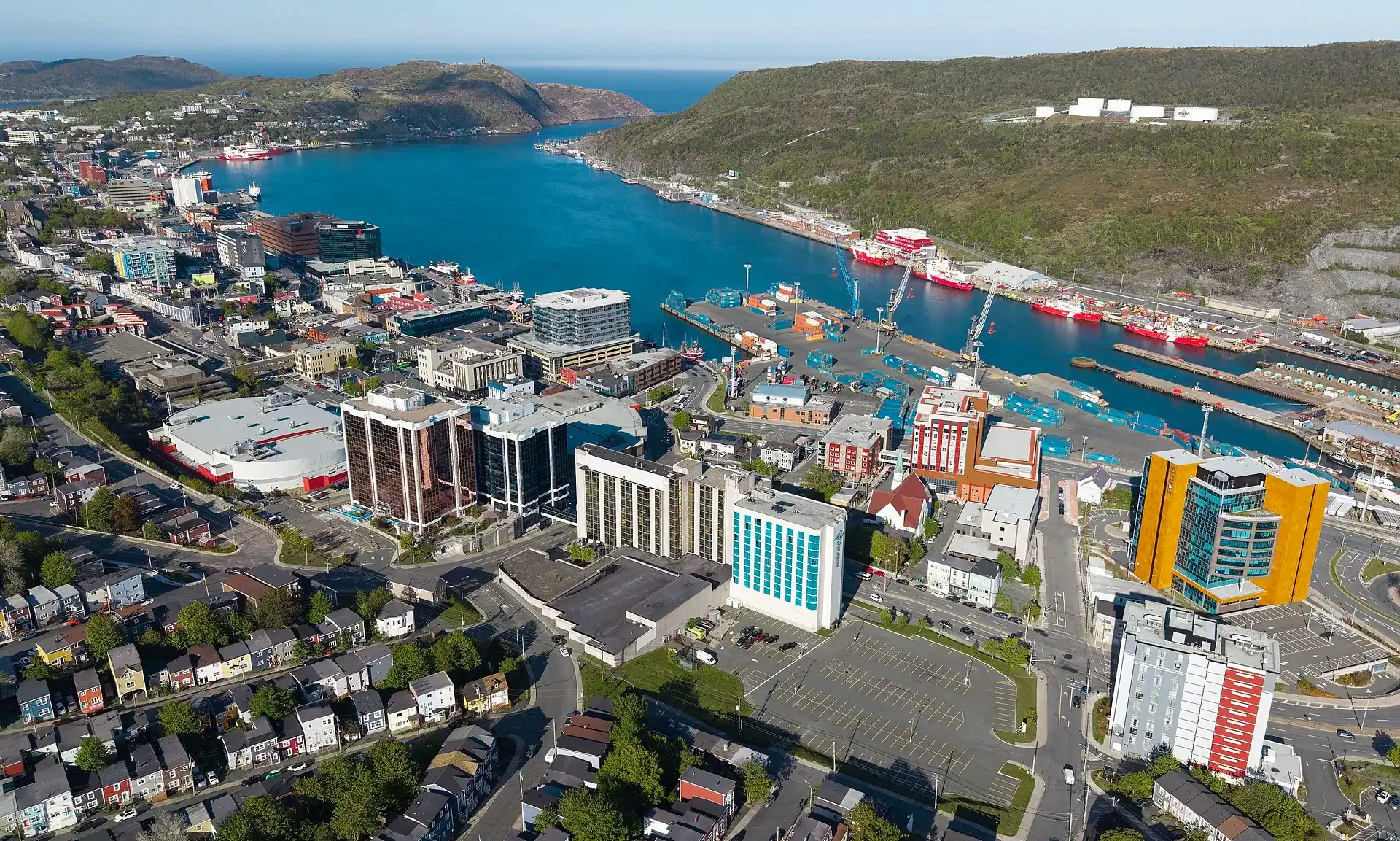 Photo: Quintin Soloviev / Wikimedia Commons (CC BY 4.0)