Cost of Living in Umea
Where this figure comes from. No cost survey covers Umea, so the $1,700 a month above is our own estimate rather than a measurement. On 416 of our 999 city guides the figure is built from a published Numbeo basket, a one-bedroom rent in the centre plus one person's monthly costs without rent, converted to USD; this city is not one of them. How we source everything.
Budget around $1,700 a month. A one-bedroom runs roughly $700 to $1,100, and the university's thirty thousand students dominate the rental market, which means small flats are available and larger ones are not. Groceries are expensive by European standards, though the discount chains help. Eating out is expensive and the range is limited. Utilities are the northern reality: heating runs for seven or eight months and is a substantial annual cost, usually through district heating from the local plant. Sweden is largely cashless, and some businesses no longer accept cash at all. The regulated rental market runs on queue time rather than price, and in a university city the queue for a first-hand contract is measured in years, which is why almost every newcomer sublets at a higher rate on a shorter term. BankID, the national digital identity, is what the whole country runs on, and it cannot be issued without a personal number, which locks a newcomer out of everything from booking a doctor to paying a friend. Systembolaget holds the only licence for strong drink and shuts at three on a Saturday and not at all on a Sunday.
Where to Work in Umea
Connectivity is excellent. Sweden has extensive fibre and Umea is well served, with comprehensive mobile coverage and entirely reliable power. There is coworking and a genuine startup presence around the university, which is a substantial research institution with a strong medical faculty. The time zone is central European, so European work is straightforward. Everything administrative runs on a personnummer, and life without one is workable but awkward: it gates bank accounts, some housing and much of the digital infrastructure that Sweden takes for granted. Anyone staying under a year should establish early whether they can get a coordination number instead of a personnummer, since that is what opens most of the practical services. Fika is less a coffee break than a scheduled part of the working day, and declining it repeatedly reads as standoffish rather than industrious. Decisions are reached by consensus, which takes longer to arrive at and less time to implement than elsewhere, and that is disorienting for anyone used to a fast meeting and a slow rollout. July empties the offices almost entirely, since the industrial holiday is taken as one block, and expecting an answer that month is optimistic.
Getting Around Umea
Umea is flat, compact and built for bicycles, which people use through the winter on studded tyres rather than putting away. Buses cover the rest. The city centre is walkable. Umea Airport has frequent flights to Stockholm, about an hour, and the Botniabanan railway runs south along the coast. The Kvarken ferry sails from Holmsund, the port just outside the city, and takes three and a half hours or so to reach Vaasa in Finland, crossing the narrowest point of the Gulf of Bothnia, a UNESCO site for the land rising out of the sea after the last ice age. Anyone cycling in winter should fit studded tyres, which is normal here rather than eccentric, since the city keeps the cycle paths cleared and expects them to be used all year.
Sorting transport? Book an airport transfer, or compare car rental on Auto Europe and QEEQ.
Visas for Umea
Sweden is a member of the European Union and the Schengen area, so European Union and EEA citizens may live and work here without a permit, registering with the tax agency for a personnummer once staying more than a year. Everyone else needs a Schengen visa for short stays or a work permit tied to an offer of employment for longer ones. There is no digital nomad visa. Sweden's work permit rules have tightened, with a raised salary threshold, and the process for non-European nationals has become slower rather than easier. The old registration requirement for European Union citizens was abolished, so the right to be here is exercised simply by being here, and the paperwork begins only when you want a personal number. That number is issued on the basis of an intention to stay twelve months or more, which is a genuine threshold rather than a formality, and a stay of eleven months leaves a person outside the system altogether. The tax agency rather than the migration agency decides it. A work permit, where one is needed, is tied to the employer named on it. The E12 over the mountains to Mo i Rana enters Norway, outside the EU yet within Schengen; no Entry/Exit System check waits at that border, and a fjord weekend spends the same days.
Best Time to Visit Umea
June to August is the season, with temperatures around twenty degrees, the Ume river at its best and daylight that barely ends: Umea sits close enough to the Arctic Circle that midsummer nights are only dusk. September and early October give the autumn colour. Winter from November to March is cold, often minus ten or below, with reliable snow and a great deal of darkness, though the snow reflects what light there is. The northern lights are visible on clear winter nights, which is not something Stockholm can offer. Anyone hoping for the northern lights should plan for clear nights between September and March, and be prepared to leave the city's light for the best of them. The light returns faster than people expect: between February and April the day lengthens by several minutes every twenty four hours, and the late-winter combination of snow on the ground and real sun is the season residents prefer to summer. Mosquitoes are serious inland from June onwards, and the further from the water the worse they get. Snow usually lies from November into April, and the city is built for it, with heated pavements in the centre and the cycle paths cleared ahead of the roads.
Pros and Cons of Umea
Umea is a young, well-serviced Nordic city with genuine culture for its size, which is what the 2014 European Capital of Culture year was about, along with excellent nature immediately outside the door, northern lights all winter and a university that keeps the average age unusually low. Darkness takes up months of the year, the cost is Swedish, the flight connections are limited, and the personnummer shapes how easy or difficult ordinary life is here more than anything else on the whole list does. Umea is also known nationally as a centre of vegan and straight edge hardcore music, which produced several internationally known bands in the 1990s and is still a live part of the city's identity.
Who Umea Is For
Researchers and students, since the university sets the rhythm of the place, and anyone after a northern Swedish base with real infrastructure. It suits people who enjoy winter sports and long cold months rather than merely surviving them. It suits European Union citizens especially, since the paperwork is minimal. December offers a few hours of grey at this latitude and nothing that could be called sunlight, Swedish prices are what they are, and anybody from outside the European Union without an employer faces a work permit route that has tightened to the point of near-closure. Sami culture has an institutional home here. Umea stands where Sapmi begins to give way to the rest of Sweden, and the city has spent decades building itself into a centre for Sami arts and Sami institutions. Landing here in late summer rather than in the middle of winter is the difference between settling in and enduring, because the months either side of midsummer are when the city lives outdoors and talks to strangers.
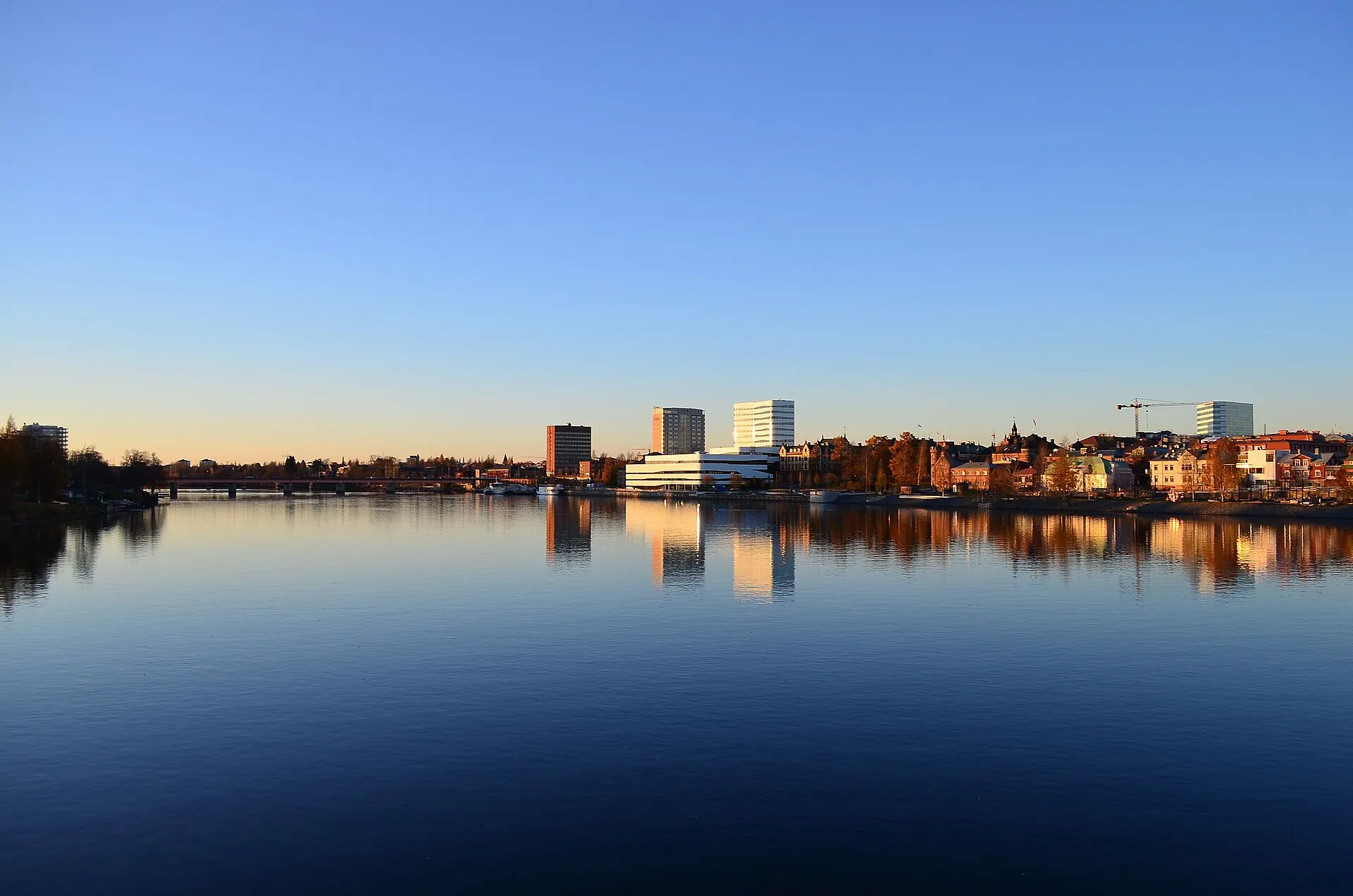 Photo: Meike Wiemann / Wikimedia Commons (CC BY-SA 4.0)