Cost of Living in Launceston
Where this figure comes from. No cost survey covers Launceston, so the $1,850 a month above is our own estimate rather than a measurement. On 416 of our 999 city guides the figure is built from a published Numbeo basket, a one-bedroom rent in the centre plus one person's monthly costs without rent, converted to USD; this city is not one of them. How we source everything.
Launceston runs about $1,850 a month for one person, cheaper than Hobart and well under the mainland capitals. A one-bedroom flat in the centre or in East Launceston is $750 to $1,050; a room in a share house is $400 to $600. Groceries are $380 to $480 a month and a pub meal $22 to $30, with the Tamar Valley wineries adding a pleasant but not cheap habit. Coworking is available at $200 to $320 a month. NBN internet is $50 to $70. Heating is the line that surprises visitors: Tasmanian winters are cold and older weatherboard houses are poorly insulated, so power can reach $150 in July. The heating bill has an odd counterpart: Tasmania generates essentially all of its own electricity from hydro and wind and declared itself self-sufficient in renewables in 2020, so the power warming a badly insulated weatherboard house is about as clean as any on the planet. That does nothing for the cost. Double glazing and a heat pump are what to ask about before signing a lease, because the gap between a retrofitted house and an original one runs to several hundred dollars across a winter.
Where to Work in Launceston
Launceston has a small coworking market centred on the CBD and the Inveresk precinct, where the University of Tasmania moved its northern campus, with desks at $200 to $320 a month. The NBN covers the city, mostly on fibre-to-the-node with fibre upgrades progressing, for $50 to $70 monthly; the technology at a given address matters more than the plan you buy. Mobile coverage from Telstra is good in town and reliable on the main highways, less so in the highlands. Cafes around Charles Street and the Quadrant are genuinely good, this being a UNESCO City of Gastronomy, and several tolerate a laptop all morning. This was the first city in the southern hemisphere lit by publicly owned hydroelectricity, from a station in the gorge that opened in 1895 and ran until 1955, and the building still stands on the walking track. The pattern held afterwards: the state built its twentieth century on dams, which is why an island of six hundred thousand people has industrial-scale power and why the manufacturing that exists here exists at all.
Getting Around Launceston
Launceston is compact by Australian standards and the centre is walkable, with the Cataract Gorge reserve beginning about a kilometre from the main street, which is remarkable for a city of this size. Metro Tasmania runs the bus network, adequate on weekdays and thin at weekends. A car is the practical answer for anything beyond town: the Tamar Valley wine route runs north, Cradle Mountain is about two and a half hours west, the Bay of Fires three hours east and Hobart two and a half hours south on the Midland Highway. Launceston Airport is 15km southeast with direct flights to Melbourne, Sydney and Brisbane. The chairlift across Cataract Gorge has the longest single span of any in the world at three hundred and eight metres, which is not a superlative a city of ninety thousand usually holds. The Spirit of Tasmania sails from Devonport, an hour northwest, to Geelong rather than Melbourne since the terminal moved in 2022, and it carries vehicles, which is how most people bring a car to the island instead of renting one at the airport for a month.
Sorting transport? Book an airport transfer, or compare car rental on Auto Europe and QEEQ.
Visas for Launceston
Australia's eVisitor and ETA schemes cover most European, North American and several Asian nationalities for stays of up to three months per entry across a twelve-month validity, applied for online for little or no fee. Working holiday visas give twelve months to under-30s or under-35s depending on nationality, extendable with specified regional work, and Tasmania counts as a regional area throughout, which makes it a popular place to complete the requirement. There is no digital nomad visa. Remote work for a foreign employer on a visitor visa is not addressed in Australian policy, and tax residency becomes the more pressing question well before the visa does. Tasmania's state nomination stream has long been the most accessible in Australia, because the state is chronically short of working-age people and has written its criteria to say so. Studying here, or working here in a listed occupation, feeds a nomination in a way the same effort in Sydney does not. That is a path measured in years rather than a visa for a season, but it is the one real advantage this island holds over the mainland for anyone thinking past a single stay.
Best Time to Visit Launceston
Launceston has a cool temperate climate and four genuine seasons, which sets it apart from almost everywhere else on this site. December to February is summer: highs of 24C to 25C, long light evenings, and the best time for the gorge, the coast and the highlands. March and April are the pick for many, with settled weather and the Tamar Valley vintage. Winter from June to August is cold, with highs of 12C to 13C, frosts, and a temperature inversion that traps woodsmoke in the valley on still mornings, which is a real air quality problem in July. Spring is changeable. Rain is spread through the year rather than concentrated. The winter smoke has a documented history rather than being folklore: a wood heater replacement programme ran here through the early 2000s, and the fall in particulates that followed was matched by a measurable drop in winter deaths, which became one of the more cited air quality studies anywhere. The problem is smaller than it was and has not gone. On a still July morning the valley still holds it, and anyone with asthma should treat that as a planning input rather than a footnote.
Pros and Cons of Launceston
Launceston is a Georgian and Victorian city of 90,000 people with a river gorge inside its own boundary, some of the best food and wine anywhere in Australia, a university campus, an airport with mainland flights, and rents running a third below those of Sydney. Cradle Mountain, the Bay of Fires and the whole Tasmanian wilderness are within a few hours. It is safe, quiet and green. It is still expensive globally, and a car is needed for most of the appeal, the winter is genuinely cold in badly insulated housing, the winter woodsmoke inversion is unpleasant, and the remote-work community is close to non-existent. Tasmania also holds the reference standard for clean air: the baseline station at Kennaook Cape Grim on the northwest tip measures the cleanest air on earth, sampled off the Southern Ocean, and it is what readings elsewhere are compared against. Holding that alongside a smoke inversion in this valley is the sort of contradiction the island specialises in. The harder one is older. Tasmania's Aboriginal population was almost destroyed within a generation of colonisation, the palawa community that survived is active and visible today, and a visitor who leaves without meeting that history has been shown a partial island.
Who Launceston Is For
A cool climate rather than a warm one, which is unusual enough on this site to be the whole selling point. If you work better at 15C than at 30C, if you hike, cycle, fish or care about food and wine, and if you can absorb Australian prices, this is one of the most liveable small cities anywhere. It works well on a working holiday visa, where Tasmania's regional status is an advantage. Beaches and heat are the wrong expectations entirely, a car is needed to make any of the island useful, the budget has to be an Australian one, and no nomad scene exists here at all. Hobart is livelier if you want a Tasmanian city with more going on. It suits a walker above everything, because the Overland Track, the Walls of Jerusalem and the Freycinet peninsula are all reachable and all serious, and the island keeps a larger share of its land under protection than any other state. It suits somebody prepared to buy a car on arrival and sell it on departure, which is what most people here end up doing and which changes the arithmetic of a six month stay considerably.
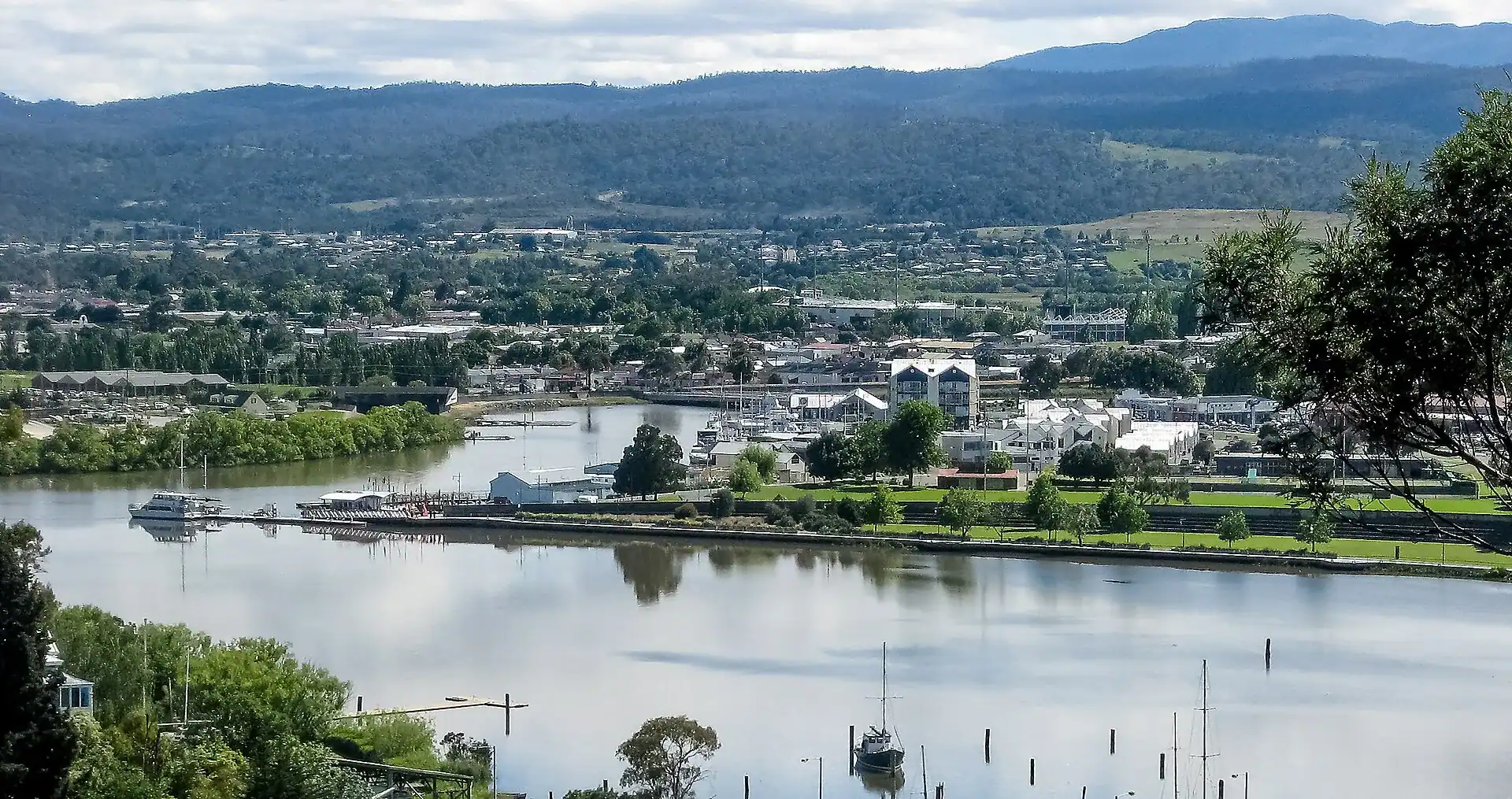 Photo: (WT-shared) Plug, cropped by Georgfotoart / Wikimedia Commons (Public domain)