Cost of Living in Budva
Real market data
Source: Numbeo · August 2026
$1,440/moSolo nomad1-bed centre + living costs
$1,960/moCoupleshared 1-bed + costs
$1,210/moLean / localcheaper area + costs
- 1-bed rent, city centre$790€690
- 1-bed rent, outside centre$560€490
- Monthly costs excl. rent (1 person)$650€564
- Meal, inexpensive restaurant$15€13
- Monthly transit pass$40€35
- Buy price, per m² (centre)$4,260€3,700
Prices are from Numbeo (August 2026), converted to USD at $1 = €0.87 (01 Aug 2026). The monthly living-costs figure is our transparent one-person basket, groceries, a few meals out, utilities, phone, internet, transport and essentials, priced from those figures. Solo adds central rent; couple and lean are estimates from the same numbers.
Budva offers good-value Mediterranean living, though prices swing hard with the seasons. A single nomad can expect roughly $900 to $1,700 a month, landing near the lower end off-season and climbing sharply from June through August when the resort fills up. Rent is the big variable: a one-bedroom apartment near the beach can cost double in July what it does in November. Food, coffee and local wine are affordable, especially away from the seafront terraces. Budgeting well here means avoiding the peak strip and eating where locals do. Each night of a stay also carries the municipal tourist tax, charged per person and set higher in summer, which hosts add to the bill when they register you.
- Off-season one-bedroom rental: roughly $450 to $700 per month
- Peak-summer rentals: often $900 or more for the same apartment
- Meal at a local konoba (tavern): around $9 to $16
- Monthly groceries for one: roughly $220 to $320
- Coffee on a side street: about $1.50 to $2.50
Where to Work in Budva
Budva is a comfortable place to work if you time it right. Wifi in most apartments, aparthotels and cafes is decent and generally reliable, and there is a small but growing digital-nomad presence drawn by the coast, the value and Montenegro's friendly stance toward remote workers. You will find a coworking option or two plus plenty of laptop-friendly cafes, though the scene is far more low-key than in bigger hubs. The honest caveat is seasonality: peak summer is loud, crowded and party-focused, which makes focused deep work harder. The quieter shoulder and winter months are far better for getting things done.
- Cafes along the old town edge and Slovenska Plaza are laptop-friendly outside peak hours
- A coworking space or two operate in and around town; availability is stronger in season
- Carry a local SIM or eSIM as a mobile-data backup for calls
Getting Around Budva
Budva itself is easy to navigate on foot. The walled Stari Grad, the marina, Slovenska Plaza and Mogren beach are all within a short, walkable radius, and you rarely need transport for daily life in the center. For the wider coast, buses and taxis run frequently along the Adriatic road to Kotor (around 40 minutes), Tivat, Becici, Sveti Stefan and Petrovac. Two airports serve the area: Tivat is closest, while Podgorica offers more connections. A rental car is genuinely useful if you want to explore the Bay of Kotor, Lovcen and the mountains at your own pace, though parking in central Budva is tight in summer. No railway reaches Budva. The nearest station is at Bar, further down the coast to the south-east, where the line from Belgrade ends, so arriving by train means finishing the trip by bus.
- Old town, marina and main beaches are all walkable
- Regular buses and taxis run along the coast to Kotor, Tivat and Petrovac
- Tivat Airport is nearest; Podgorica Airport has wider connections
- A car helps for the coast, Kotor bay and mountain trips
- Expect scarce, pricey parking in the center during peak season
Sorting transport? Book an airport transfer, or compare car rental on Auto Europe and QEEQ.
Visas for Budva
Montenegro is welcoming for short and medium stays. Many nationalities, including citizens of the EU, UK, US, Canada and Australia, can enter visa-free and stay for up to 90 days as tourists, which covers a full shoulder-season base with room to spare. For longer stays, Montenegro has introduced a digital-nomad residence permit aimed at remote workers employed by or contracting with companies outside the country, allowing a stretch of legal residence beyond the tourist window. Every foreigner must be registered at an address within 24 hours of crossing the border, which hotels and licensed hosts handle but a private landlord may not, so ask about it before handing over a deposit. Separately, from 1 November 2026 Montenegro requires visas of citizens of Russia, Turkey, Belarus, China and Saudi Arabia, a change adopted in July 2026 to bring its visa list fully into line with the EU's, so holders of those passports can no longer rely on the visa-free stay described above.
- Visa-free tourist entry commonly up to 90 days for many nationalities
- A digital-nomad residence permit exists for longer remote-work stays
- Registration with local authorities may be required for your stay
Best Time to Visit Budva
The shoulder season is Budva at its best. Late spring, roughly May into June, and September deliver warm, sunny weather, swimmable sea and a calmer, more livable town, with better-value rentals and space to breathe. July and August are hot, expensive and intensely party-crowded, when the beaches, old town lanes and nightlife strip fill with holidaymakers and prices peak. Winter is quiet and mild by European standards, but many restaurants, bars and beach venues close, and the resort energy fades to a sleepy off-season hush. For a nomad who wants beach-and-old-town charm plus a workable pace, aim squarely at the shoulder months. July and August have a second face inside the walls, though. Since 1987 the Grad Teatar festival has turned the old town into a stage from the start of July to late August, with drama, concerts and readings on its squares and in the citadel, part of it free, which gives summer evenings in the Stari Grad a far quieter use than the strip below.
- Late spring and September: warm, calmer and best value overall
- July and August: hot, expensive and heavily party-crowded
- Winter: quiet and mild, but many places closed
- Sea is comfortably swimmable from roughly June through September
Pros and Cons of Budva
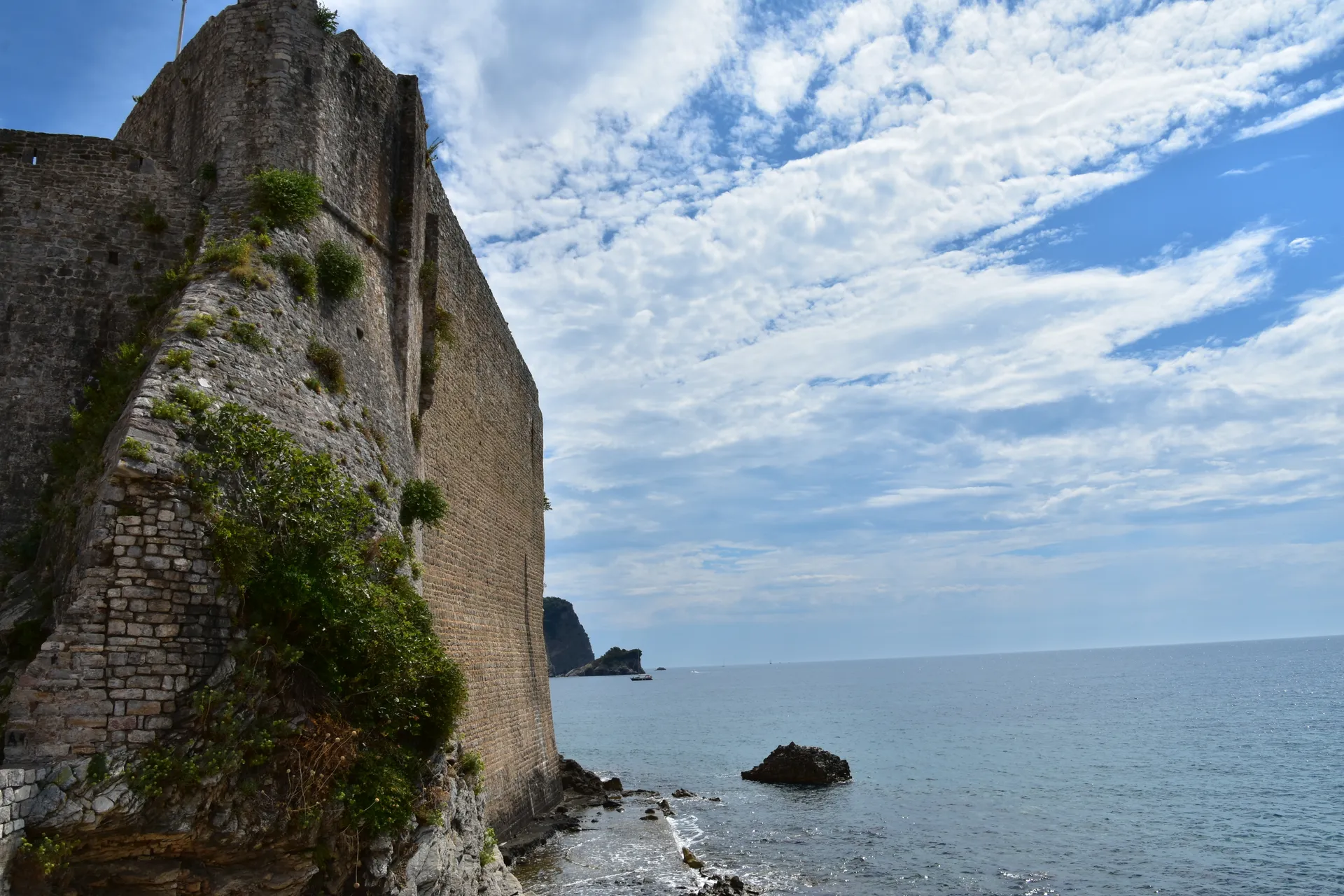
Budva is a genuinely pretty, sunny coastal base that mixes a walled medieval old town with easy beach living and good-value costs, all within reach of the spectacular Bay of Kotor. The lifestyle upside is strong: sea swims, stone lanes, seafood and a relaxed Mediterranean rhythm. The honest downsides are real too. Peak summer is very crowded and party-focused, some of the strip is overbuilt and generic, and the year-round nomad community is thin because so much of the town shuts down or empties off-season. It is a place that rewards good timing more than most.
- Pros: beautiful old town, beaches, sunshine and affordable off-peak living
- Pros: walkable center and close to Kotor, Tivat and Sveti Stefan
- Cons: crowded, expensive and party-heavy in July and August
- Cons: overbuilt strip in places and a thin year-round community
Who Budva Is For
Budva suits the nomad who wants a beach-and-old-town Mediterranean stay with good value and easy sunshine, ideally in the shoulder season. If you love morning sea swims, evenings wandering candlelit stone lanes, fresh Adriatic seafood and day trips around the Bay of Kotor, this stretch of coast delivers. It works best for independent workers who do not need a big, buzzing coworking community and who can time their visit to avoid the peak-summer crush. It is less ideal if you want a dense year-round nomad scene, total quiet in high season, or a large city's amenities. Come in May, June or September and Budva shows its best self.
- Great for: beach-and-old-town lovers seeking value and sunshine
- Great for: independent workers happy without a big nomad hub
- Less ideal for: those wanting a dense year-round community
- Less ideal for: anyone seeking calm during peak summer