Cost of Living in Kotor
Real market data
Source: Numbeo · September 2026
$1,250/moSolo nomad1-bed centre + living costs
$1,700/moCoupleshared 1-bed + costs
$1,230/moLean / localcheaper area + costs
- 1-bed rent, city centre$690€600
- 1-bed rent, outside centre$670€583
- Monthly costs excl. rent (1 person)$560€487
- Meal, inexpensive restaurant$12€10
- Monthly transit pass$46€40
- Buy price, per m² (centre)$4,030€3,500
Prices are from Numbeo (September 2026), converted to USD at $1 = €0.87 (01 Aug 2026). The monthly living-costs figure is our transparent one-person basket, groceries, a few meals out, utilities, phone, internet, transport and essentials, priced from those figures. Solo adds central rent; couple and lean are estimates from the same numbers. The guide below quotes its own monthly range, which is a different measurement rather than a competing one: this table prices a defined basket at the figures above, while that range is a judgement about how somebody actually lives here.
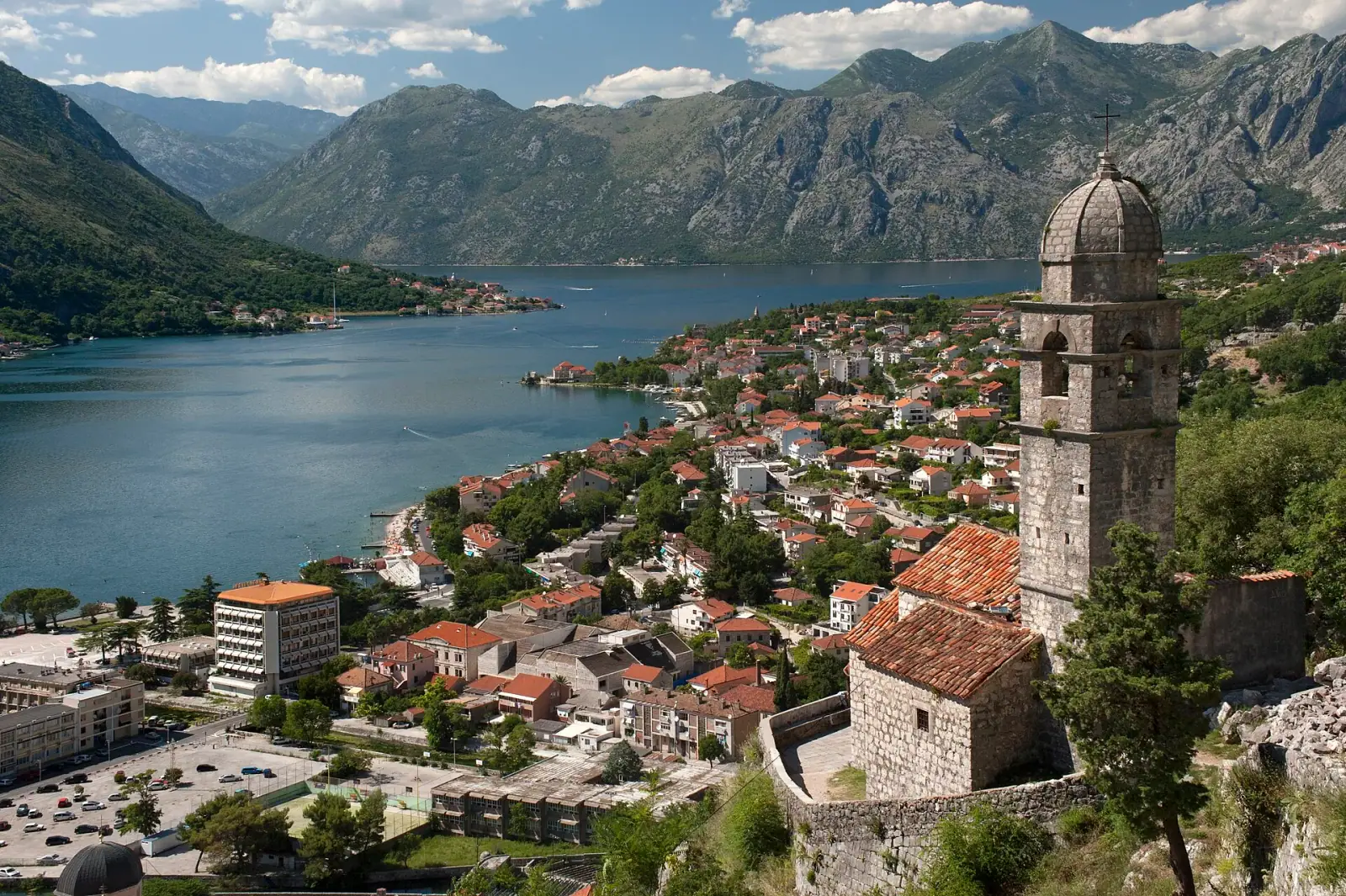
Kotor sits at the expensive end of Montenegro's Adriatic coast, and the Old Town itself carries a premium. Expect to pay $690-1,150 per month for a one-bedroom apartment inside or immediately outside the Old Town walls, especially from May through September. Venture 10-20 minutes north to Dobrota or south toward Tivat and you can find the same square footage for $460-750. Off-season (October through April) prices drop noticeably.
- Rent (Old Town / central): $690-1,150/month
- Rent (Dobrota or nearby villages): $460-750/month
- Groceries (self-catering): $175-290/month
- Eating out (local konoba lunch): $9-16 per meal
- Eating out (mid-range dinner): $21-35 per person
- Coworking hot-desk: around $14/day or $125/month
- Local bus (Blue Line coastal route): $1-2.50 per trip
- Taxi (short ride within Kotor area): $3.50-12
- Monthly total (single person, comfortable): $1,610-2,070
Montenegro uses the euro (EUR). There is no VAT refund mechanism for tourists. July and August push prices up across the board as cruise-ship crowds descend; the same apartment that costs $690 in March may list for $1,150 in peak summer.
Where to Work
Kotor is not a mature coworking city. Dedicated options are limited but growing.
Kotor Nest is the most established dedicated coworking space inside the Old Town, housed in a restored stone building. It fits around 8-10 people with fiber, ergonomic chairs, and natural light. Day passes run roughly $14, with monthly access from about $125. The coliving component means spots can fill quickly in peak season.
Playworking is a coliving and coworking space on the Lustica Peninsula, about 15 minutes from Kotor by car. It is quieter and more community-oriented, with a proper indoor work zone, but requires your own transport.
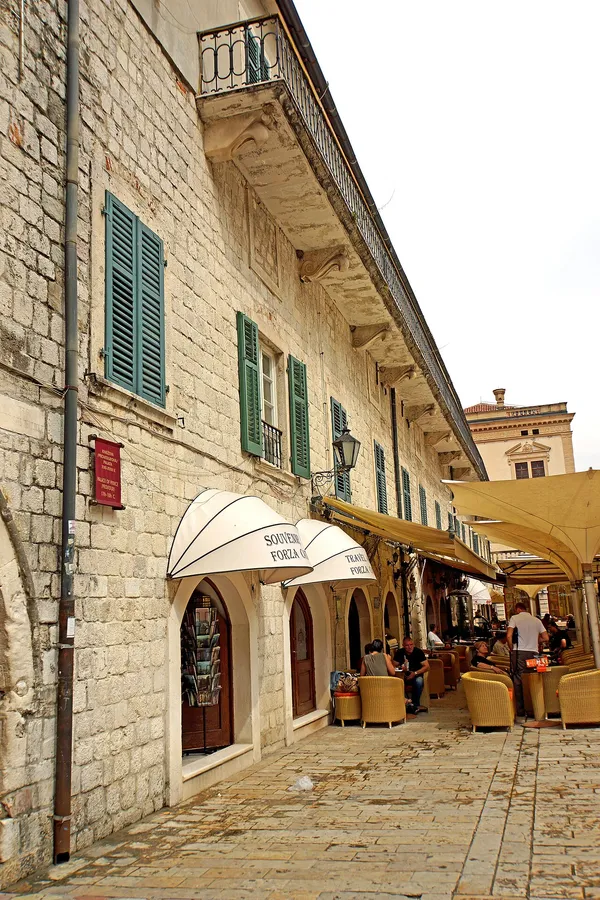
For cafe work, Forza Cafe on the main square offers free WiFi and power outlets. Most cafes in the Old Town tolerate laptop workers during non-peak hours, though ordering regularly is expected and some do not share their password with everyone. Connectivity across Kotor is generally fiber-backed and reliable in accommodations and most coworking spaces. Video calls are routine.
Getting Around
The Old Town itself is compact and almost entirely pedestrian. You can walk from the Sea Gate to the San Giovanni fortress in about 20 minutes. A flat promenade stretches north along the bay toward Dobrota, making it easy to reach cafes, restaurants, and swimming platforms on foot.
For wider travel along the coast, the Blue Line bus runs between Herceg Novi and Tivat, passing through Dobrota, Perast, and Risan. Buses run every 20-30 minutes in high season from roughly 06:00 to 22:00, and less frequently off-season. Payment is cash to the driver, in euros, and small change is appreciated.
Taxis are easy to find and affordable for short trips ($3.50-12 within the area). Local companies like Red Taxi Kotor have apps. Ride-share apps common in Western Europe are not widely available.
Getting to/from the airport: Tivat Airport (TIV) is the closest, about 10 minutes by taxi (roughly $12-17). Podgorica Airport (TGD) is 79 km away and takes around two hours by bus or taxi. Dubrovnik Airport (DBV) in Croatia is also used by many nomads, with a bus connection of around 2.5 hours.
A car opens up the Bay of Kotor and Montenegro's mountains significantly, but parking inside the Old Town is essentially impossible. For day-to-day needs within Kotor, you do not need one.
Sorting transport? Book an airport transfer, or compare car rental on Auto Europe and QEEQ.
Visas and Staying Long-Term
Most Western passport holders (EU, US, UK, Canada, Australia) can enter Montenegro visa-free for up to 90 days within a 180-day period. This is per entry and tracked on each visit.
Montenegro launched a Digital Nomad Visa, which grants a temporary residence permit of up to two years (renewable). To qualify you must work remotely for employers or clients outside Montenegro, earn at least $1,550 per month (three times the national minimum wage), hold valid health insurance, and prove stable remote employment. Applications are handled through the official government portal at digitalnomads.gov.me.
Doing a border run to Croatia or Bosnia is a practical short-term workaround used by some nomads, but it is not a guaranteed extension of your visa-free period and is subject to border officer discretion.
Best Time to Visit
For remote work combined with quality of life, May, June, and September are the strongest months. Temperatures are warm (22-28°C), days are long, and the worst of the summer crowds have not arrived or have thinned. In June you still get 15 hours of daylight without the suffocating heat of August.
July and August bring cruise ships (sometimes 5,000 passengers in the Old Town on a single day), peak prices, heat pushing 35°C, and extremely limited restaurant availability without a reservation. If you value focus and calm, these are the hardest months to be productive in Kotor.
October and November are good shoulder months: mild weather (15-20°C), few tourists, and lower rents. Winter (December through February) is atmospheric and quiet, with highs around 13°C and the chance of significant rain. The Old Town empties almost entirely and some businesses close seasonally.
Spring (March and April) can be wet but rewards the early arrival with near-empty streets, low prices, and the mountain backdrop covered in snow.
Pros and Cons
Pros
- UNESCO-listed medieval Old Town is genuinely beautiful to live and work in
- Very safe, low crime, relaxed pace of life
- Reliable fiber internet in most accommodations and the main coworking space
- Excellent Adriatic seafood and Mediterranean food at reasonable prices
- Easy day trips to Perast, Budva, Lovcen National Park, and the Albanian border
- Montenegro's digital nomad visa is a real long-stay option
- English is widely spoken in tourist-facing businesses
Cons
- Very small town: limited coworking infrastructure and a tiny nomad community
- Crushingly overcrowded in July and August; cruise ships disgorge thousands daily
- Old Town rent is expensive relative to the rest of the Balkans
- Most businesses and rental demand are seasonal; some shut October through March
- No direct international airport; Tivat has limited routes and Podgorica adds travel time
- Nightlife and cultural events are thin outside peak summer
Who Kotor Is Best For
Kotor suits slow travelers and lifestyle-focused nomads who want to spend two to four months somewhere genuinely beautiful without a generic big-city backdrop. It is well-matched to people who love history, hiking, sailing, and being close to the water, and who can handle a smaller, quieter environment.
It works particularly well for solo nomads or couples who do not need a large peer community to stay productive, and who are willing to go slightly outside the Old Town for better value on accommodation.
Skip Kotor if you need a dense coworking scene, a broad nomad network to tap into, or arrive in July and August expecting to focus. It is also a difficult base if you rely on frequent international flights, since both nearby airports have limited routes. Budget nomads expecting Southeast Asian pricing will find Kotor notably more expensive than that benchmark.