Cost of Living in Mostar
Real market data
Source: Numbeo · August 2026
$880/moSolo nomad1-bed centre + living costs
$1,230/moCoupleshared 1-bed + costs
$700/moLean / localcheaper area + costs
- 1-bed rent, city centre$440BAM 749
- 1-bed rent, outside centre$260BAM 439
- Monthly costs excl. rent (1 person)$440BAM 748
- Meal, inexpensive restaurant$7BAM 12
- Monthly transit pass$34BAM 58
- Buy price, per m² (centre)$2,350BAM 3,997
Prices are from Numbeo (August 2026), converted to USD at $1 = 1.7 BAM (01 Aug 2026). The monthly living-costs figure is our transparent one-person basket, groceries, a few meals out, utilities, phone, internet, transport and essentials, priced from those figures. Solo adds central rent; couple and lean are estimates from the same numbers. The guide below quotes its own monthly range, which is a different measurement rather than a competing one: this table prices a defined basket at the figures above, while that range is a judgement about how somebody actually lives here.
Mostar is one of the cheapest cities in the Western Balkans, though your actual spend depends heavily on your lifestyle. All prices below are in US dollars, converted from convertible mark prices. $0.50 is roughly $0.55.
- Rent, central Old Town area: $410-590/month. You pay a premium for the tourist-facing neighbourhoods near Stari Most. Expect more noise in summer.
- Rent, western or northern residential areas: $235-355/month. Neighbourhoods like Bišće Polje are quieter, more local, and a short bus or taxi ride from the centre.
- Groceries: $175-265/month for one person cooking most meals. Local markets and supermarkets are well stocked and cheap.
- Eating out: A full sit-down meal of ćevapi or grilled meat at a local restaurant runs $4.50-9. Coffee is roughly $1. Eating out daily is affordable.
- Coworking hot desk: Around $47-82/month at Code Hub, the main dedicated coworking space. Drop-in daily rates are also available.
- Local transport: Bus tickets cost about $1 per ride. A taxi across the city is $6-12. Many residents simply walk.
- Total monthly range: A comfortable nomad budget runs $940-1,650. Budget travellers sharing accommodation can get lower; those renting privately and eating out regularly should budget closer to the top of that range.
Where to Work
Mostar has a small but usable remote work infrastructure. The situation is honest: it works, but you need to be flexible.
Coworking
Code Hub is the city's main dedicated coworking space, located in the Kardinala Stepinca area on the west side of the city. It offers desks, monitors, meeting rooms, private phone booths, and reliable fast internet. The space is quiet and professional, run by INTERA Technology Park. Monthly memberships start around $92-115 and day passes are available. It occasionally hosts tech events that connect you to the small local startup scene.
Lux Business Bar, also in the Bišće Polje area near INTERA, blends coworking with a cafe-bar format. It suits people who prefer a less formal environment while still getting solid connectivity.
Cafe Working
Working from cafes is normal and accepted here. Cafe Vinyl near the Old Town has fast, reliable WiFi and a relaxed atmosphere with river views. Caribou Coffee is a larger chain-style option with plenty of power outlets and consistent internet. FitBar and Teco are local favourites for quieter working sessions with stable connectivity and healthy food options. Quality varies significantly across other cafes: some are quick while others are far slower, so scout before committing to a work session.
The Real WiFi Situation
Internet at most cafes in the city is modest. Code Hub is the reliable option for video calls and large uploads. A local SIM with data (around $13-17 for 30 days with 7GB) serves well as a backup. Do not plan your workday around an untested cafe connection without a fallback.
Getting Around
Mostar is a small city and the core areas you will actually use are walkable. The Old Town, most cafes, restaurants, and Code Hub are all reachable on foot if you are based centrally, though distances to the coworking area on the west side stretch to a 20-25 minute walk.
Local Transport
City buses connect the main neighbourhoods and cost about $1 per ride. Taxis are cheap and widely available; a cross-city ride rarely exceeds $9-12. There are no ride-hailing apps comparable to Uber operating here, though local taxi apps exist. You do not need a car to live in Mostar, but renting one opens up the surrounding region significantly.
Getting to and from the Airport
Mostar International Airport (OMO) is about 7 km southeast of the centre. Seasonal international flights connect to a handful of European cities. A taxi from the airport to the centre costs $12-18 and takes about 15 minutes. There is no regular public bus service to the airport. Most nomads fly into Sarajevo or Dubrovnik instead. From Sarajevo, buses run regularly and take about 2.5 hours (around $12-15). From Dubrovnik, buses take about 3-4 hours. A bus ticket from Sarajevo costs around $12-15.
Sorting transport? Book an airport transfer, or compare car rental on Auto Europe and QEEQ.
Visas and Staying Long-Term
Bosnia and Herzegovina is not a Schengen country, so it runs independently from that 90-day count.
- Most Western passports (US, Canada, EU, UK, Australia): Visa-free entry for up to 90 days within any 180-day period.
- Digital nomad visa: Bosnia and Herzegovina does not offer an official digital nomad visa as of mid-2026.
- Extensions and longer stays: A temporary residence permit can be applied for locally and grants up to 12 months, renewable. Applications go through the immigration police (MUP). The process requires some paperwork including proof of funds and accommodation.
- Working remotely on a tourist entry: No specific law permits it, but enforcement against remote workers employed abroad is effectively non-existent. Most nomads operate this way without issue.
Best Time to Visit
Mostar sits in a basin surrounded by rocky hills and has a continental-Mediterranean hybrid climate. Summers are genuinely hot, winters are mild but rainy.
Best window for remote work: April-June and September-October. Spring brings warm days of 18-25C (64-77F), blooming landscapes, and very manageable tourist crowds. Autumn offers similar temperatures with even fewer visitors and lower accommodation prices. Both seasons are comfortable for daily work and exploration without heat fatigue.
July and August push regularly above 35C (95F) and sometimes 40C (104F). The Old Town is packed with day-trippers from the coast. Accommodation prices spike, cafes become crowded, and heat makes afternoon productivity difficult unless you are air-conditioned. Workable, but not optimal.
November through March brings rain and occasional cold snaps. The city is quiet, prices are low, and you can negotiate longer apartment rentals. If you prefer solitude and low cost, winter is underrated, though some tourist-facing cafes and restaurants reduce hours or close entirely.
Pros and Cons
Pros
- Genuinely low cost of living, one of the cheapest in the Balkans
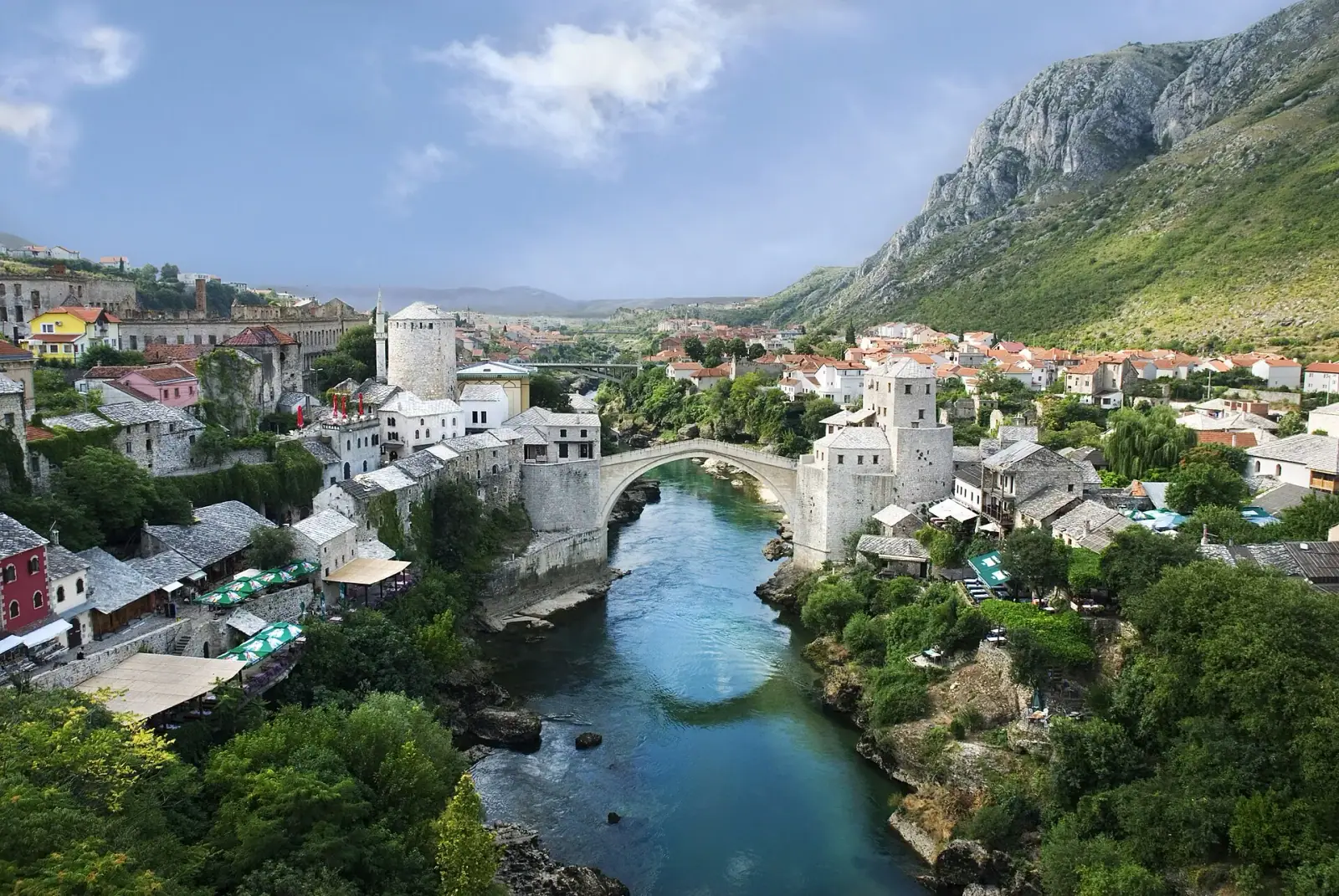
- Stunning old town architecture and setting on the Neretva river
- Welcoming, curious locals with limited but growing English
- Excellent Bosnian food at very low prices
- Easy day trips to waterfalls, canyons, medieval villages, and the Adriatic coast
- Not Schengen: a useful visa reset location for EU-based nomads
- Safe city with low violent crime
Cons
- Very limited coworking infrastructure: one real dedicated space
- Internet speeds are inconsistent outside Code Hub
- Tiny nomad community: not a hub for networking or collaboration
- Extreme summer heat makes outdoor work or movement unpleasant
- Less LGBTQ+ friendly than comparable European destinations
- Limited direct flight connections; most arrivals route through Sarajevo or Dubrovnik
- Some tourist infrastructure shrinks dramatically outside peak season
Who Mostar Is Best For
Mostar suits nomads who want a beautiful, low-cost base in Southeast Europe without the crowds of Dubrovnik or the price tag of Ljubljana. If you value history, outdoor access, extraordinary local food, and a slow pace over a buzzing nomad networking scene, Mostar delivers. It works well for solo workers who are self-sufficient and not reliant on a coworking community. Writers, designers, developers who can work asynchronously, and anyone wanting to stretch a modest budget further than anywhere in Western Europe will feel at home here.
It is a harder fit if you depend on fast, guaranteed internet for live video production or large file transfers outside a coworking space. It also falls short for nomads who want an active social scene with other remote workers, or who expect a range of international dining options. If you are queer or have concerns about social conservatism, the city is not hostile but it is not particularly welcoming either, and Sarajevo offers a notably more open environment. First-timers to the Balkans who want a gentle entry point with plenty of English speakers should consider Sarajevo first before basing in Mostar.