Cost of Living in Herceg Novi
Where this figure comes from. No cost survey covers Herceg Novi, so the $1,150 a month above is our own estimate rather than a measurement. On 416 of our 999 city guides the figure is built from a published Numbeo basket, a one-bedroom rent in the centre plus one person's monthly costs without rent, converted to USD; this city is not one of them. How we source everything.
Budget roughly $1,150 a month as a solo remote worker in Herceg Novi, which is cheaper than Kotor or Budva for a comparable position on the Bay of Kotor. A one-bedroom apartment on the slopes above the old town runs about $400 to $600 on a long lease, with sea views adding a premium and the flat land near Igalo costing slightly less. Summer short-lets are far more lucrative for owners, so year-round contracts are best negotiated from October onwards. Groceries land around $260 to $330. A konoba meal is $10 to $16, a seafood dinner with wine $22 to $32, and coffee about $2. Montenegro uses the euro despite not being in the eurozone, which keeps prices legible. Bills arrive as a set of small separate invoices rather than one statement, and they are still commonly paid in person at a post office or a bank counter, which makes it a monthly errand rather than a direct debit. A buyer pays a transfer tax of a few percent on a purchase and an annual charge afterwards based on the assessed value. Long leases are agreed verbally as often as in writing, and a written one is worth insisting on for the sake of the residence paperwork.
Where to Work in Herceg Novi
Herceg Novi has no significant coworking scene; the country's small remote-work infrastructure sits mostly in Podgorica, Kotor and Budva. People here work from apartments and from cafes along the Šetalište Pet Danica promenade, where sitting for hours over a coffee is entirely normal. Fixed-line internet in the town is generally adequate and fibre is available in newer buildings, but the older stone housing on the hillside can be poorly served, so testing the connection before committing to a lease is worth the trouble. Mobile 4G is good along the coast. Montenegro is not in the EU, so EU roaming does not apply and a local SIM is the sensible purchase on arrival. The town next along the shore has been a rehabilitation spa since the middle of the last century, built around mineral mud and seawater treatments, and it still draws patients from across the region for stays of several weeks, which is a different kind of visitor from the summer crowd. A ship repair yard further into the bay is the other real employer. Neither has any use for a foreigner with a laptop, but between them they keep the year going when the coastal season stops.
Getting Around Herceg Novi
Herceg Novi is built on a steep slope above the water, and its defining feature for daily life is stairs: hundreds of them, connecting the coastal road to the old town to the districts above. The promenade running several kilometres along the shore is flat and is how most people move east to west. Buses connect along the coast to Kotor in about an hour, and to Budva and Podgorica beyond. The Kamenari ferry across the mouth of the bay saves a long drive around it. Tivat airport is around 30 minutes by road and Dubrovnik airport in Croatia about 40 minutes, which gives unusually good flight access for a town this size. A car is useful but not essential. Landing at Čilipi, the Croatian airport, carries a cost the short drive hides. Since 2023 that side of the border has been a Schengen frontier, so a non-EU traveller arriving there has a record opened in the EU's Entry/Exit System at the airport, spends at least a day of the Schengen allowance, and is logged out again at the Karasovići border post on the way here; flying into the Montenegrin airport keeps the whole trip inside Montenegro's separate count.
Sorting transport? Book an airport transfer, or compare car rental on Auto Europe and QEEQ.
Visas for Herceg Novi
Montenegro is not in the European Union or the Schengen area, which is the single most useful fact about it for remote workers who have exhausted their Schengen days. Most Western passports, including EU, UK, US, Canadian and Australian, receive 90 days visa-free within a 180-day period. Montenegro introduced a digital nomad residence permit in 2022 for non-EU remote workers employed by or contracting to foreign companies, granting up to two years initially with the possibility of extension, and it came with a publicised tax exemption on foreign income for permit holders. Rules have been refined since launch. Owning property here opens a route to temporary residence in its own right, renewed annually for as long as the property is held, and it is the arrangement a great many foreign residents on this coast actually use. Registering a company and employing yourself through it is the other common path. Both want a criminal record certificate from the country you came from, translated by a court appointed translator, and that document has a short shelf life, so it is the one to obtain last rather than first.
Best Time to Visit Herceg Novi
May, June, September and October are the best months. The Bay of Kotor is warm and swimmable from June through September, and Herceg Novi enjoys a notably long growing season, which is why the town is full of mimosa, palms and citrus. July and August are hot and busy, with the coast filling with regional holidaymakers and prices climbing. February brings the Mimosa Festival, the town's signature event, when the tree blooms across the hillside and the town holds weeks of parades. Winter is mild by continental standards, around 12 degrees, but wet: the Bay of Kotor is one of the rainiest places in Europe, and November through January are genuinely soaking. A cold wind falls off the mountains behind the bay in the cold months and can turn a mild day sharp within the hour, which is the one weather feature a gentle average temperature hides completely. The bay is enclosed enough that the water holds its heat well past the end of the season, and people swim here weeks after the open coast has given up. Citrus and olives are picked through the same stretch, and the smell off the groves is part of what the town is.
Pros and Cons of Herceg Novi
Herceg Novi sits at the mouth of the Bay of Kotor with mountains behind and Croatia and Dubrovnik airport 40 minutes away, which is a rare combination of scenery and access. It is cheaper than the Croatian coast, uses the euro, offers a long visa-free stay outside Schengen and has a digital nomad permit with a favourable tax position. The old town is genuinely lovely and the swimming season is long. The stairs are relentless and will not suit anyone with mobility issues at all. Rainfall is exceptional. The town is small, the nomad community minimal, and healthcare beyond basics means Podgorica. Construction along the coast is aggressive and often ugly, and summer traffic on the single coastal road is severe.
Who Herceg Novi Is For
The Adriatic without Schengen days ticking down, with mountains and sea in the same view, on condition that a town built up a staircase suits you physically. The Montenegrin nomad permit covers the stay. What the town adds is Dubrovnik and Kotor both inside an hour without either of their price levels attached, plus swimming and walking straight off the doorstep. It is a good fit for couples and quiet solo workers. A nomad community, dependable dry weather, level ground and serious healthcare are all missing, and the level ground is missing permanently: the town climbs a hillside. Kotor is more famous and more crowded; Podgorica has the infrastructure; Tivat has the airport and the marina money.
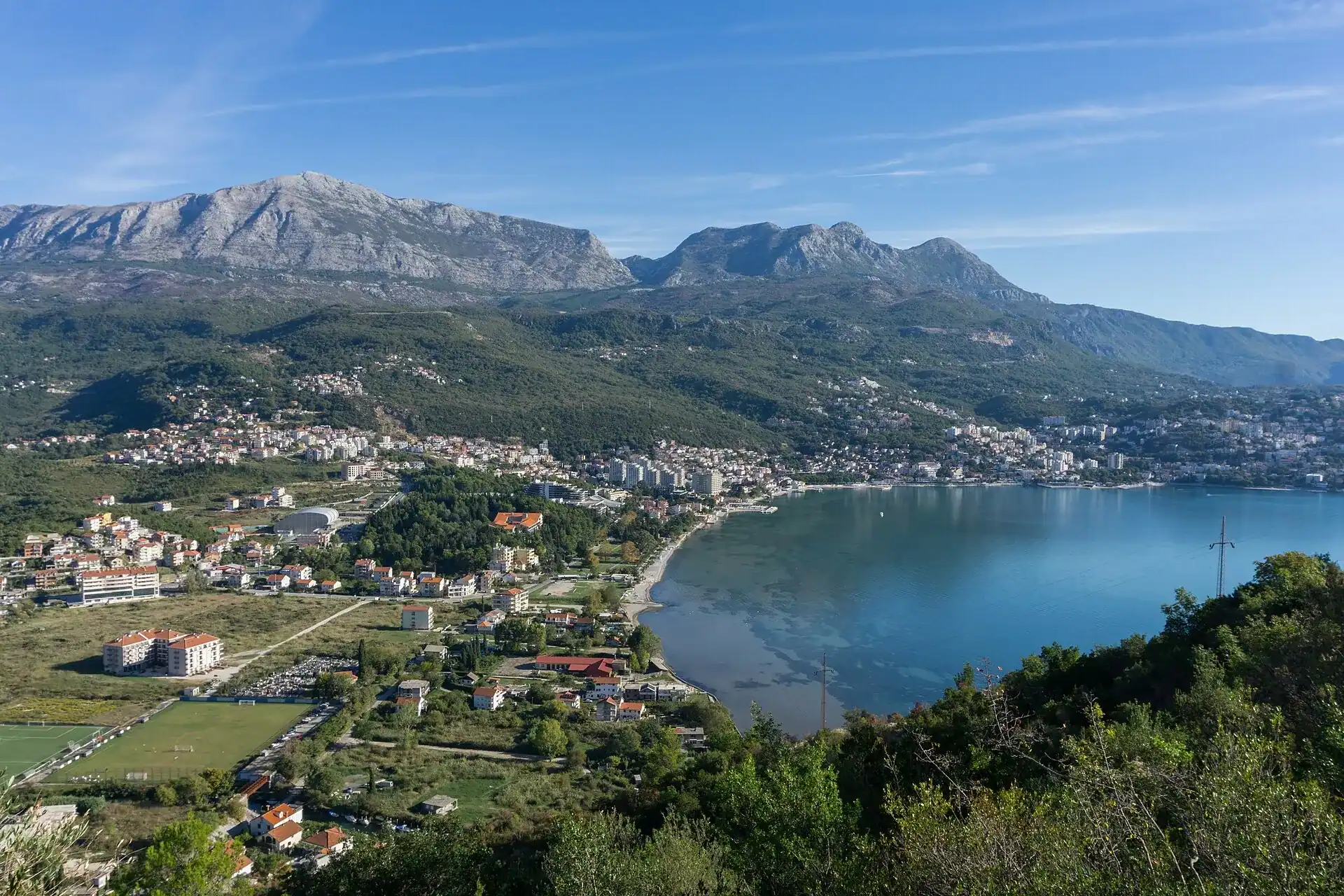 Photo: Michal Klajban / Wikimedia Commons (CC BY-SA 4.0)