Split Dubrovnik
Head to head
Split vs Dubrovnik

Split vs Dubrovnik: Which Is Better for Digital Nomads?

Overall: Split edges ahead, 8.7 to 8.3

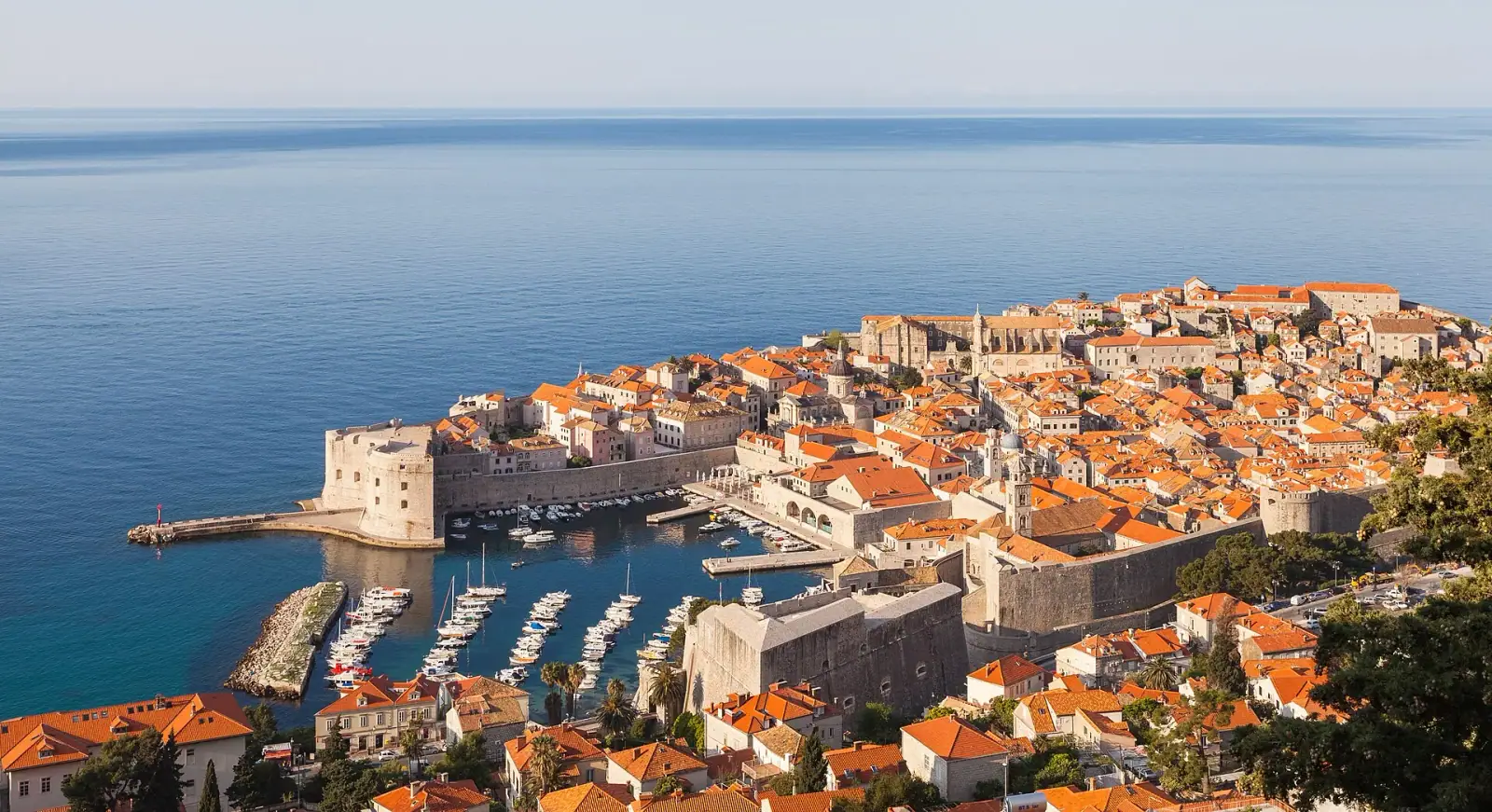
Dubrovnik's walls run for 1,940 metres around almost all of the old city, up to 25 metres high, in a shape that dates from a plan drawn up after a fire in 1292. Walking the circuit takes about two hours, and it is one of the great views in Europe. They also tell you whether you could live here, and the answer starts with the ticket.

What the walls cost

In 2018 the walls drew 1.3 million visitors, in a city of about 41,500 people. A Dubrovnik Pass costs about $46 a day, and the city said that from 2026 you would need a timed booking to get up there at all. At peak times there can be up to 27 visitors for each inhabitant. Cruise calls are held to two a day, coaches have drop-off slots at the Pile Gate, and wheeled suitcases have been banned from the old town's stone streets. These are the measures of a place defending itself.

The mayor has said the goal is to make the old town somewhere to live again instead of a theme park, and the city is buying properties to rent to young families. That is admirable, and it tells you how far things have gone. Residents have been leaving as flats turn into holiday lets, so what you see from the ramparts is a very beautiful set of rooftops with fewer and fewer neighbours beneath them.

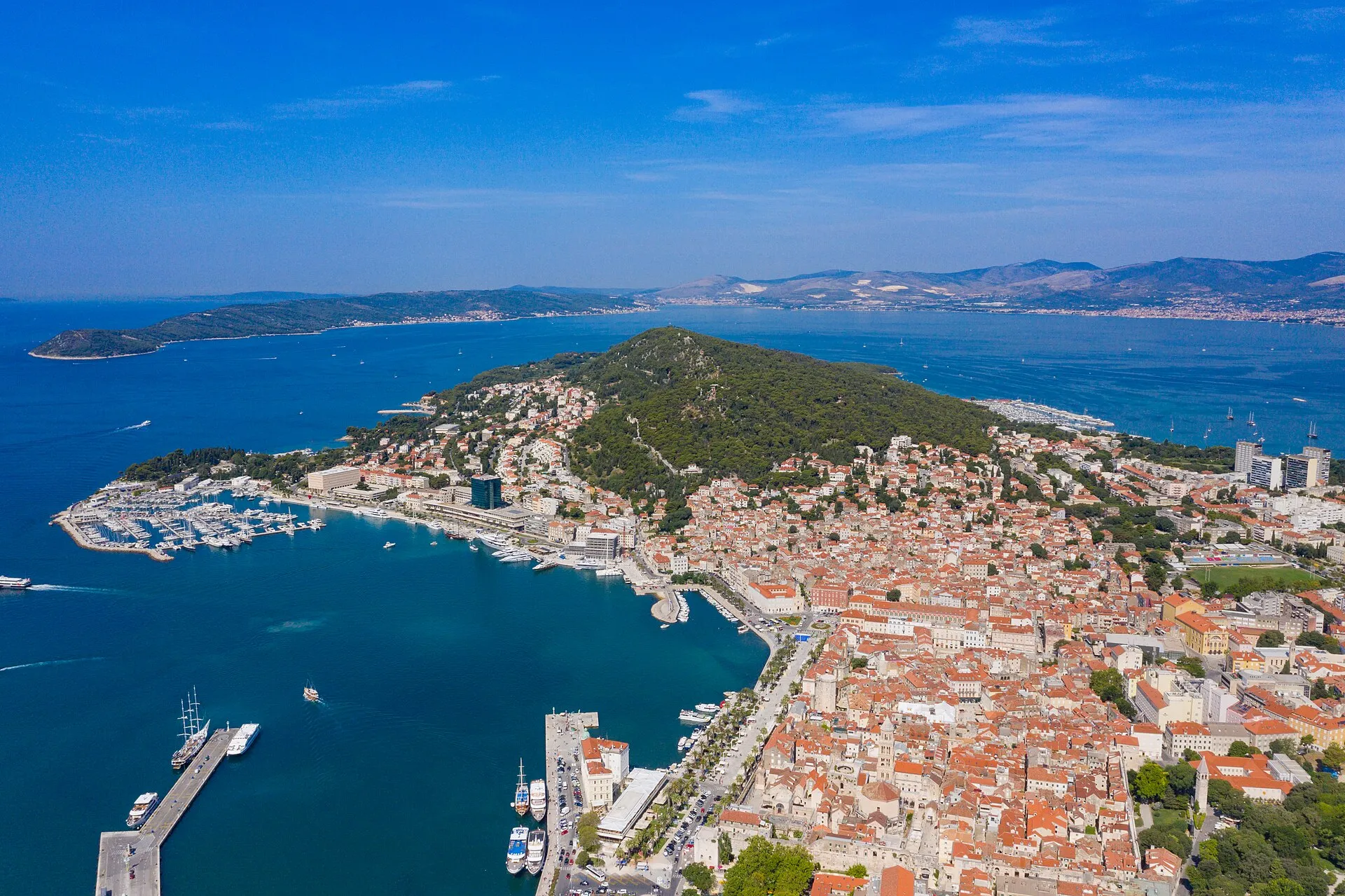
Diocletian's Palace in Split

Split has a wall too, and nobody charges you to walk through it. When Salona fell in the 7th century, refugees took shelter inside the retirement palace of the emperor Diocletian, and they never left. Medieval houses filled the Roman buildings, and the emperor's mausoleum became a cathedral. The old town, of which the palace forms about half, still has around 3,000 inhabitants, with homes, bars and shops among the Roman stone and the Peristyle open to anyone walking through.

That accident of history shaped everything around it. Split has about 160,000 people, a university, a major football club in Hajduk, and a port handling around 5 million passengers a year. Marjan hill gives you 347 hectares of pines for an hour after work. Summer is loud here and rents jump, as we explain in our comparison with Zagreb, and many seaside places close in winter. But there is still a city when the visitors go home.

Working outside the walls

Living in Dubrovnik mostly means living away from what you came to see. The desks are in Gruž, by the ferry port and bus station, where Desk & More on Lopudska is the main purpose-built option. Lapad has the swimming, and rents in the outer districts are far gentler than inside. Cafés in the old town do not much want your laptop at lunchtime.

Getting out takes some planning. Unlike Croatia's other major centres, Dubrovnik has no railway, its airport is 20 kilometres away at Čilipi, and the road north used to mean crossing Bosnia at Neum. The Pelješac Bridge, open since July 2022, removed that border from the drive, which is a real improvement. In winter many old town restaurants and services close, and the place can feel deserted.

Then there is the bill. By our estimate you will spend $2,800 a month in Dubrovnik, and $2,300 in Split, for a smaller place with less going on. So we would not make Dubrovnik a base at all. Rent in Split, and take the ferry or the coast road down in May or October, when the sea is warm and the crowds have thinned. Pay for the walls, go up at the first slot of the morning, and enjoy them as what they have become.

Split vs Dubrovnik: side by side

All 13 categories we rate, each out of 10. Green is strong, amber is middling, red is weak.

SplitDubrovnik
8 Climate 8
6 Cost of living 4
6 WiFi 6
7 Nightlife 5
9 Nature 9
8 Safety 9
7 Food 7
5 Community 4
8 English 8
7 Visa 7
8 Culture 9
7 Cleanliness 8
8 Air quality 8

Split and Dubrovnik at a glance

165 kmapart in a straight line
Same timein January
$500a month less in Split
Population, urban areaSplit215,000Dubrovnik37,000
ElevationSplit17 mDubrovnik32 m
Time zoneUTC+1 in January, UTC+2 in Julyin both
Nearest airportSplitSplit Saint Jerome Airport (SPU), 12 kmDubrovnikDubrovnik Ruđer Bošković Airport (DBV), 17 km
Main languageCroatianin both
CurrencyEuro (€, EUR)in both
PlugsType C/F, 230V / 50Hzin both
Tap waterSafe to drinkin both
Emergency number112in both
TippingRound up or 10%in both
Ride-hailingUber, Boltin both
In the Schengen areaYesin both

Population is the Natural Earth figure for the urban area around each city, elevation from the Copernicus height model, airports from OurAirports.

Where they differ most

The three biggest gaps between the two, in the words of each city guide.

Cost of living

Split

A solo digital nomad can live well in Split for roughly $1,380 to $2,070 per month outside peak summer. Rent for a one-bedroom runs $690 to $1,040, coworking passes start around $75 per week, and a meal at a local konoba costs $17 to $29.

Dubrovnik

Dubrovnik is Croatia's priciest city. A nomad budget runs roughly $2,880-4,030 per month covering a mid-range one-bedroom apartment ($920-1,380 in Lapad or Gruz), meals at local konobas ($12-21), coffee, and transport. Old Town dining and summer-season pricing push costs higher.

Nightlife

Split

Split punches well above its size for after-dark energy. The evening passegiata along the Riva is an institution, and the bars tucked inside Diocletian's Palace keep things lively until late. Bačvice beach district draws a younger crowd with open-air venues in summer.

Dubrovnik

Nightlife is seasonal and tourism-driven rather than a deep local scene. Summer brings beach clubs like Banje, rooftop bars with fortress views, and occasional DJ nights. The Old Town's narrow streets host lively bar-hopping until late from June to September.

Safety

Split

Split is considered low risk for travelers and residents. Croatia ranked among the safest European countries for walking alone at night in recent surveys. The main concerns in summer are petty pickpocketing in crowded tourist areas around the Palace and on busy public transport.

Dubrovnik

Dubrovnik is extremely safe by any measure. Violent crime is rare and petty theft, while present in crowded tourist areas during summer, is uncommon by European standards. The city has a visible, professional police presence in the Old Town.

From the score notes in the Split and Dubrovnik guides, where each one is explained in full.

Month by month: the weather

Each bar runs from the average daily low to the average daily high. Rain is below.

SplitDubrovnikScale runs from 3C to 31C, rain up to 186 mm
See the numbers
SplitDubrovnik
Jan11C / 6C, 73 mm11C / 3C, 137 mm
Feb12C / 6C, 64 mm13C / 4C, 122 mm
Mar15C / 9C, 58 mm14C / 6C, 111 mm
Apr18C / 12C, 62 mm17C / 9C, 102 mm
May23C / 16C, 58 mm21C / 14C, 76 mm
Jun28C / 20C, 49 mm27C / 19C, 52 mm
Jul31C / 23C, 25 mm30C / 21C, 25 mm
Aug31C / 23C, 32 mm30C / 21C, 48 mm
Sep25C / 18C, 82 mm26C / 18C, 104 mm
Oct21C / 15C, 80 mm22C / 13C, 141 mm
Nov16C / 11C, 120 mm17C / 10C, 186 mm
Dec12C / 7C, 99 mm14C / 7C, 180 mm

Split: weather-station averages for 1991-2020. Dubrovnik: ERA5 reanalysis temperatures for 2019-2023, CHPclim rain for 1980-2009.

What a month costs

Split$2,300
Dubrovnik$2,800

Our own estimate for a comfortable month for one remote worker, the same figure the city guides use.

Entry rules for common passports

Tourist entry on arrival. Every passport is in the visa finder, and remote-work visas are on the nomad visa page.

United States
Visa-free, 90 daysin both
United Kingdom
Visa-free, 90 daysin both
Germany
Visa-freein both
Canada
Visa-free, 90 daysin both
Australia
Visa-free, 90 daysin both
India
Visa requiredin both

Where you would live and work

The areas people choose in each city, and some of the places they work from.

Split

Neighbourhoods

  • Diocletian's PalaceLiving inside a Roman emperor's palace
  • BačviceSplit's beach neighborhood with local energy
  • ŽnjanFamily beaches and modern apartments
  • VarošNarrow streets climbing Split's western hill
  • Spinut / TrstenikLocal Split living with marina views

Places to work

The WorksTinkTankSmartspaceRe.Split CoworkingTinel Specialty Coffee Shop
More on the Split guide →
Dubrovnik

Neighbourhoods

  • Old Town (Stari Grad)Dubrovnik's UNESCO walled wonder
  • PileDubrovnik's western gateway
  • PločeDubrovnik's eastern beach quarter
  • LapadDubrovnik's relaxed resort peninsula
  • GružDubrovnik's working harbor and market

Places to work

Desk and MoreTUP Coworking SpaceLife According to KAWAAkademis Academia CafeSoul Caffe and Rakhija Bar
More on the Dubrovnik guide →

Services in a language you speak

Providers in our directory who work in a language other than the local one, from official registers, consular lists and the providers’ own websites.

Therapists
1Split
0Dubrovnik

Where each city wins

Split is stronger on

Cost of LivingNightlifeCommunity
Split guide →

Dubrovnik is stronger on

SafetyCultureCleanliness
Dubrovnik guide →

Add a third city in the comparison tool →

Frequently asked questions

Is Split or Dubrovnik cheaper for digital nomads?

Split is the cheaper base, around $2,300 a month versus $2,800 in Dubrovnik, a difference of about $500.

Which has better WiFi, Split or Dubrovnik?

Both score 6/10 for WiFi, so connectivity is comparable.

Which is safer, Split or Dubrovnik?

Dubrovnik rates higher on safety (9/10 versus 8/10).

Split or Dubrovnik: which is better overall for remote work?

Split takes the overall Nomad Score (8.7/10 versus 8.3/10), though the right pick depends on what you value most.




