Cost of Living in Bydgoszcz
Real market data
Source: Numbeo · September 2026
$1,380/moSolo nomad1-bed centre + living costs
$1,910/moCoupleshared 1-bed + costs
$1,190/moLean / localcheaper area + costs
- 1-bed rent, city centre$710zł2,649
- 1-bed rent, outside centre$520zł1,943
- Monthly costs excl. rent (1 person)$670zł2,503
- Meal, inexpensive restaurant$13zł48
- Monthly transit pass$29zł108
- Buy price, per m² (centre)$2,980zł11,166
Prices are from Numbeo (September 2026), converted to USD at $1 = zł3.74 (01 Aug 2026). The monthly living-costs figure is our transparent one-person basket, groceries, a few meals out, utilities, phone, internet, transport and essentials, priced from those figures. Solo adds central rent; couple and lean are estimates from the same numbers.
Budget around $1,380 a month. A one-bedroom runs roughly $250 to $450, well below Warsaw or Krakow, with the streets around the Old Market and the Mill Island at the top. Market produce is cheap and Poland's own food is good and inexpensive. Eating out costs little: a full meal in an ordinary restaurant runs under fifteen dollars. Utilities are moderate and heating runs through a long winter. Poland uses the zloty rather than the euro, which has been a modest advantage for foreign earners over recent years. The city has an unusually large amount of housing for its population. Polish rents come with czynsz, a monthly administrative charge to the building's cooperative covering shared costs and often heating, quoted separately from the rent and sometimes forgotten in a comparison. A deposit of one or two months is standard. The other administrative step worth knowing is meldunek, address registration, which is not the barrier it once was but still surfaces when dealing with offices. Food is where the value shows most plainly, and the milk bars, subsidised canteens surviving from the communist period, still serve a full meal for a few dollars.
Where to Work in Bydgoszcz
Connectivity is good and cheap. Poland has extensive fibre and among the best value mobile data in Europe, with comprehensive coverage and reliable power. There is a real coworking scene and a substantial business services sector: Bydgoszcz has become a location for shared service centres and software work, which means the professional infrastructure is better than the city's profile suggests. The time zone is central European. Administrative processes have improved but still involve queues and paper more often than the Baltic states, which is worth knowing before comparing the two. Polish technology works differently from most of Europe and it is worth understanding before negotiating anything: the large majority of developers here contract through their own registered business rather than take employment, which shifts tax, holiday and notice onto the individual and produces headline rates that look higher than they are. A preferential rate on income from intellectual property exists for qualifying software work and is a substantial saving for anyone eligible. Rates for this city sit below Warsaw and Krakow, which is precisely why the service centres came.
Getting Around Bydgoszcz
Bydgoszcz is flat and has an extensive tram network, which makes getting around cheap and simple, with buses filling the gaps. The centre is walkable and the Brda river and the canal system run through it, with a genuine island in the middle of the city. Bicycles work well. Bydgoszcz Ignacy Jan Paderewski Airport has limited service, so Gdansk two hours north or Warsaw three hours southeast are the practical air connections. The railway station is well connected, and Torun, a UNESCO-listed medieval town, is forty five minutes away. Anyone using the airport should check the schedule carefully, since the routes served have changed repeatedly and Gdansk is often the more practical option despite the distance. The water tram runs along the Brda through the middle of the city in the warmer months and is public transport rather than a tourist boat, which is a pleasant oddity. Trains to Warsaw take under three hours on a line that has been steadily upgraded. Cycling is genuinely easy on flat ground with a decent network, and the towpaths along the canal run for miles out of the city towards the Vistula.
Sorting transport? Book an airport transfer, or compare car rental on Auto Europe and QEEQ.
Visas for Bydgoszcz
Poland is a member of the European Union and the Schengen area, so European Union and EEA citizens may live and work here without a permit, registering for residence after three months. Everyone else needs a Schengen visa for short stays or a temporary residence and work permit for longer ones, and Poland's system is notoriously slow, with waits of many months in some voivodeships. There is no dedicated digital nomad visa. The Business Harbour scheme that fast-tracked IT specialists, once the practical route for many, stopped taking new applications in January 2024. The residence card process is the part that tests patience, and the mechanism that saves people is the stamp: submitting a complete application before your current permission expires legalises your stay while it is considered, however long that takes, though it does not let you leave and return. Plan travel around that. A PESEL number is the other thing to obtain early, since it is the identifier that health care, banking and the tax office all run on and almost nothing proceeds without it. Ryanair's flights from Dublin and several British airports make Bydgoszcz's small terminal an external border of the zone, so the Entry/Exit System picks up non-EU arrivals there, usually after a shorter queue than at Warsaw.
Best Time to Visit Bydgoszcz
May to September is the comfortable window, with July around twenty four degrees and the riverside and the island at their best. Spring and autumn are pleasant and short. Winter from December to February is cold, often around freezing or below, with grey skies for weeks and the air quality problem that affects much of Poland: coal heating in the surrounding region pushes winter particulates well above guidance. The Bydgoszcz Music Festival and the Camerimage cinematography festival, which is internationally significant, both fall outside the summer. Anyone here in November should look at the Camerimage schedule, since the festival brings cinematographers and directors from across the world and fills the city's hotels. Late summer into October is when Poland is at its best and the forests around the city fill with people collecting mushrooms, which is a national preoccupation with its own etiquette and its own poisonings each autumn. The June light is long, with dusk after nine. Winter is the season to plan indoors around, and the city's opera and philharmonic both run full programmes through it, which is more culture than a place this size has any business supporting.
Pros and Cons of Bydgoszcz
Bydgoszcz is a genuinely handsome and much underrated Polish city at low cost: a granary-lined river, an island park in the centre, extensive Art Nouveau and eclectic architecture from its Prussian period, and the Man Crossing the River sculpture suspended above the water, which has become the city's emblem. Camerimage brings serious international attention each November. Winter air here is bad enough to matter, the flight connections are limited, the immigration system is slow for non-Europeans, and few people outside Poland have ever heard of the place at all. The city was also part of Prussia until 1920, which is why its centre looks more German than most of Poland and why the granaries and the canal exist at all. Poland's public health service charges nothing to those insured through work and is chronically overstretched, so most people with means carry a private subscription costing very little by Western standards and use it for anything routine. The city is safe by any European measure. Its quieter problem is demographic: Bydgoszcz has been losing population for two decades as people move to Warsaw or abroad, which is visible in the schools and in which parts of the centre are thriving.
Who Bydgoszcz Is For
Software or business services, since there is a real employer base here, and anyone after a Polish city without the tourism of Krakow or the prices of Warsaw. It suits cinematographers and film people during Camerimage, which is among the most respected festivals in its field. It suits European Union citizens, for whom the paperwork is light. Winter smog in Polish cities is bad enough to change what somebody with asthma can do outdoors, the airport serves a handful of destinations and nothing beyond them, and a non-EU passport turns the residence paperwork into a project measured in months. Torun is forty five minutes away and worth the trip repeatedly. The medieval town came through the war intact, holds a UNESCO listing for it, and is where Copernicus was born. Among Polish cities of similar size, Wroclaw is prettier and far busier, Poznan is wealthier and better connected to Berlin, Gdansk has the coast, and this one is cheaper than all three with a decent employer base. Polish is difficult, and while younger people and the service centres speak English, a post office counter will not. It suits somebody who wants a functional, inexpensive European base and does not need the city to be a destination in itself.
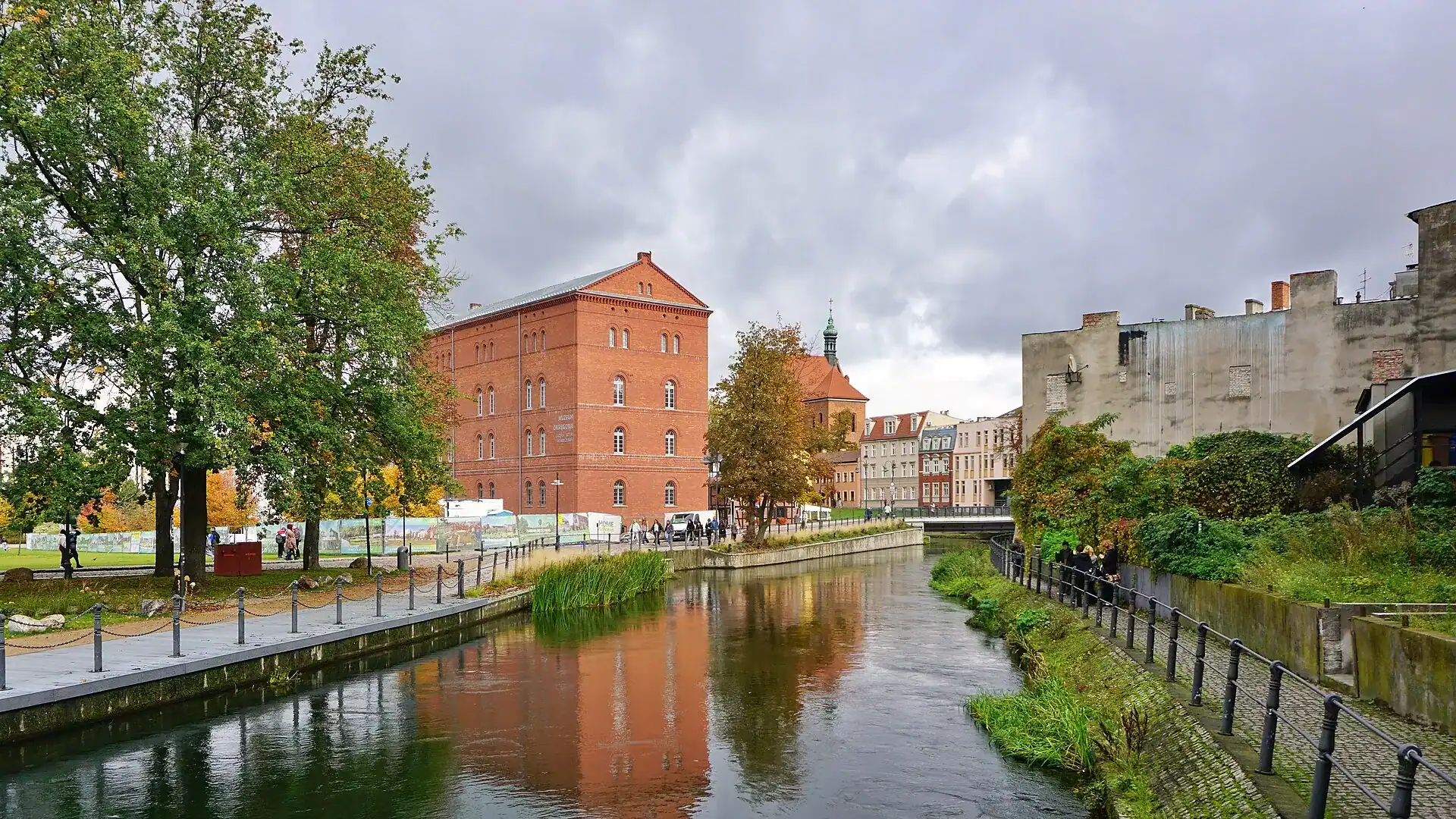 Photo: Igor123121 / Wikimedia Commons (CC BY 4.0)