Cost of Living in Nitra
Real market data
Source: Numbeo · July 2026
$1,360/moSolo nomad1-bed centre + living costs
$1,850/moCoupleshared 1-bed + costs
$1,230/moLean / localcheaper area + costs
- 1-bed rent, city centre$740€646
- 1-bed rent, outside centre$610€531
- Monthly costs excl. rent (1 person)$620€535
- Meal, inexpensive restaurant$10€9
- Monthly transit pass$29€25
- Buy price, per m² (centre)$3,010€2,617
Prices are from Numbeo (July 2026), converted to USD at $1 = €0.87 (01 Aug 2026). The monthly living-costs figure is our transparent one-person basket, groceries, a few meals out, utilities, phone, internet, transport and essentials, priced from those figures. Solo adds central rent; couple and lean are estimates from the same numbers.
Budget around $1,360 a month. A one-bedroom runs roughly $300 to $500, below Bratislava an hour west and comparable with the other Slovak regional centres. Market produce is cheap and the Nitra region is Slovakia's agricultural heartland, which shows in the market. Eating out is inexpensive and Slovak food is filling rather than refined. Utilities are moderate and heating runs through a continental winter. Slovakia uses the euro, which makes it noticeably dearer than Hungary or Poland across the borders for the same standard of living. Anyone comparing with Hungary an hour south should note that the euro makes Slovakia dearer for the same flat, which is why cross-border shopping is a normal habit here. A flat taken through an agency carries a commission of about a month on top of the deposit, and going direct through a local listings site avoids it if you can read the ads. Panel blocks charge a monthly repair fund contribution alongside the heating, and it is billed to the tenant under most contracts here. Household energy tariffs are regulated rather than set by the market, which held bills down through the recent price spike and is worth knowing before comparing with anywhere across a border. Waste collection is charged per person per year by the town hall.
Where to Work in Nitra
Connectivity is good. Slovakia has extensive fibre in the cities at reasonable prices, comprehensive mobile coverage and reliable power. There is a small coworking presence helped by two universities, including the Slovak University of Agriculture, and by the Jaguar Land Rover plant that opened here in 2018 and employs several thousand people. The time zone is central European. Bratislava is ninety minutes by road and Vienna two hours, which puts a major professional market within reach without the housing costs. Anyone in agricultural science should know that the university here is Slovakia's centre for it and runs a good deal of the country's food and crop research. Freelancers here register a trade licence rather than a company, and the flat-rate expense deduction attached to it lets a sole trader write off a fixed share of turnover with no receipts kept at all. Nothing else about self-employment in this country saves as much effort. The supplier park around the car plant pulled German and English into the local labour market in a way the rest of the region has not seen. Shift changes there set the rhythm of the roads, so the ring road is at its worst around six in the morning and again in the early afternoon.
Getting Around Nitra
Nitra is compact and walkable, with the upper town and castle on the hill and the lower town beneath it, and buses covering the rest. There is no direct railway to Bratislava, which is an odd gap for a city of this size and means the bus is the practical connection at about ninety minutes. Vienna airport is two hours by road and Bratislava's an hour and a half. The Zobor hill above the city has walking trails and a view over the whole Danubian plain. Anyone relying on the bus to Bratislava should book ahead at peak times, since the route is busy and the coaches fill on Friday and Sunday evenings. An electronic vignette is needed for the expressways and is bought online against a number plate rather than stuck on the windscreen, and the cameras check it automatically, so a hire car crossing the country without one collects a fine by post. A riverside cycle path runs out of town along the water and is flat the whole way, which makes a bicycle a genuine option for anything inside ten kilometres. Parking in the lower town is zoned and paid by text message, and the machines that do exist take coins only.
Sorting transport? Book an airport transfer, or compare car rental on Auto Europe and QEEQ.
Visas for Nitra
Slovakia is in the European Union and the Schengen area, so European Union and EEA citizens may live and work here without a permit, registering residence with the foreign police. Everyone else needs a Schengen visa for short stays or a temporary residence permit for longer ones. There is no digital nomad visa. Slovak administration requires officially translated documents for most applications and is slower than the Czech equivalent, so anyone from outside the European Union should budget several months for the process. Anyone applying should expect to need documents apostilled and translated by a court-certified translator, which is the step most people underestimate for time and cost. Appointments at the foreign police are booked online and the nearest free slot can be weeks away, so the booking gets made before the paperwork is finished rather than after. Proof of accommodation means a notarised statement from the owner of the flat rather than the lease itself, and a landlord unfamiliar with the procedure will want convincing. Once a permit is granted there is a medical report to file within thirty days confirming the holder carries no serious communicable disease, and missing that deadline undoes the rest of the work. Arrivals through Vienna airport are entered into the Entry/Exit System by Austrian officers, and the drive east into Slovakia crosses nothing.
Best Time to Visit Nitra
May to September is the comfortable window, with July around twenty five degrees, which is warm for Slovakia since Nitra sits on the Danubian lowland rather than in the mountains. The wine harvest in September and October is the region's season, with the vineyards on Zobor hill among the oldest in the country. Winter from December to February is cold, often around freezing, with fog on the plain and the region's usual central European winter air quality problem from domestic heating. Anyone here in August should look at Agrokomplex, the national agricultural fair, which has run since 1974 and fills the city for a week each year.
Pros and Cons of Nitra
This is the oldest town on record in Slovakia, mentioned in 828 when the first Christian church in the region was consecrated here, with a castle and cathedral on the hill above it and vineyards running up Zobor. It is cheap, safe and an hour and a half from both Bratislava and Vienna. It is a small city with a modest cultural offer, no railway to the capital, an economy that now depends heavily on a single car plant, and very little English anywhere in daily life. The city is also the seat of a bishopric founded in 880, which makes it the oldest in Slovakia and explains why the cathedral sits where it does on the hill.
Who Nitra Is For
The automotive sector or agricultural science, since both are concentrated here. Euro-zone residency at a low cost, with Vienna and Bratislava both inside a comfortable drive, is the practical case for being here at all. Nitra is the oldest recorded town in the country: the first written mention of it predates Bratislava's by nearly eighty years. There is no passenger railway to Bratislava from here, which is genuinely unusual for a Slovak city of this size, some Slovak is needed for daily life, and no international community exists in Nitra to arrive into. Nitra was one of the two centres of Great Moravia. The archaeology of that ninth century state is concentrated in this region, and it is a deeper past than most Slovak cities can point to.
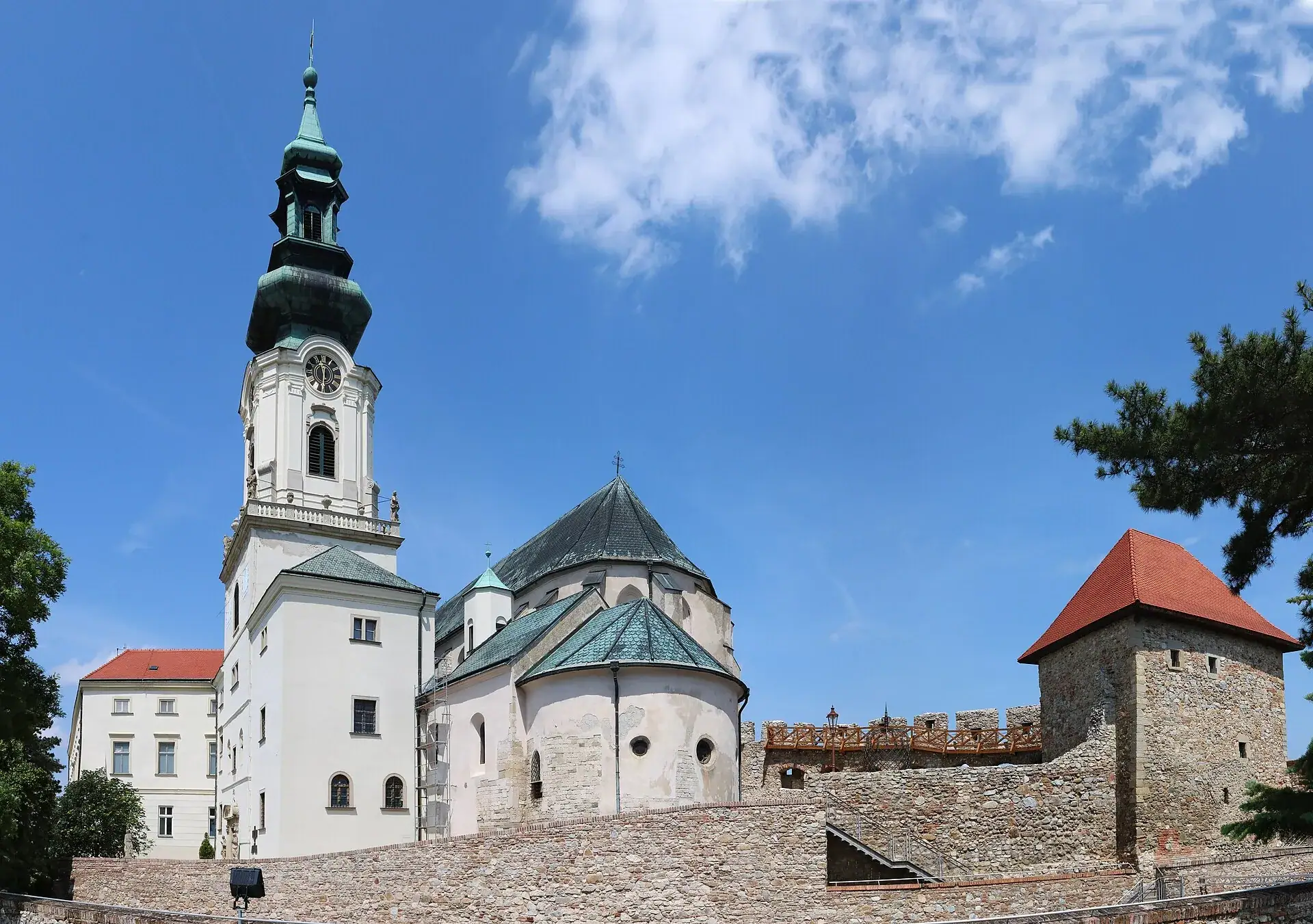 Photo: Ingo Mehling / Wikimedia Commons (CC BY-SA 4.0)