Cost of Living in Jelgava
Real market data
Source: Numbeo · August 2026
$900/moSolo nomad1-bed centre + living costs
$1,350/moCoupleshared 1-bed + costs
$830/moLean / localcheaper area + costs
- 1-bed rent, city centre$330€290
- 1-bed rent, outside centre$260€230
- Monthly costs excl. rent (1 person)$560€489
- Meal, inexpensive restaurant$8€7
- Monthly transit pass$29€25
- Buy price, per m² (centre)$1,040€900
Prices are from Numbeo (August 2026), converted to USD at $1 = €0.87 (01 Aug 2026). The monthly living-costs figure is our transparent one-person basket, groceries, a few meals out, utilities, phone, internet, transport and essentials, priced from those figures. Solo adds central rent; couple and lean are estimates from the same numbers.
Budget around $900 a month. A one-bedroom runs roughly $220 to $380, well below Riga forty kilometres north and among the cheapest in the European Union. Market produce is cheap and Zemgale is Latvia's agricultural region, which shows in the quality of the local vegetables, dairy and rye bread. Eating out is inexpensive. Utilities are moderate and district heating runs from October to April. Latvia adopted the euro in 2014 and prices have risen noticeably since, though they remain a fraction of the Nordic countries across the sea. Anyone comparing with Riga should note that the capital runs roughly double for a comparable flat, which is the whole reason the commuter traffic exists. Whether a block has been through the renovation programme decides a winter bill more than anything else does, because an insulated building can cost half what an untouched one does to keep warm, and the work is visible from the street. Ask before signing anything. Buildings are run by a management company that bills the heating, the water and the maintenance together, and that invoice arrives separately from the rent. Local wages are low relative to prices, which is why the shops feel dearer than the rent would lead you to expect.
Where to Work in Jelgava
Connectivity is very good. Latvia has extensive fibre at high speeds and low prices, comprehensive mobile coverage and reliable power. There is limited coworking in Jelgava itself, though Riga's is forty minutes away by train. The time zone is eastern European, two hours ahead of GMT. Latvia operates a digital nomad visa for nationals of OECD member countries, and Latvia University of Life Sciences and Technologies, based in the palace here, gives the town a student population and a research presence in agriculture and food science. Anyone commuting to Riga should buy a monthly rail pass rather than single tickets, since the forty minute journey adds up quickly at the standard fare. Almost everything official can be signed electronically here, and the national e-signature is accepted by banks, the tax office and private companies alike, which removes most of the reasons a freelancer would otherwise need to be somewhere in person. The sugar refinery that once dominated the local economy closed when the bloc reformed its quotas, and the town has spent the years since rebuilding around food processing and the university instead. Wages are low enough that hiring local help is realistic on a foreign income.
Getting Around Jelgava
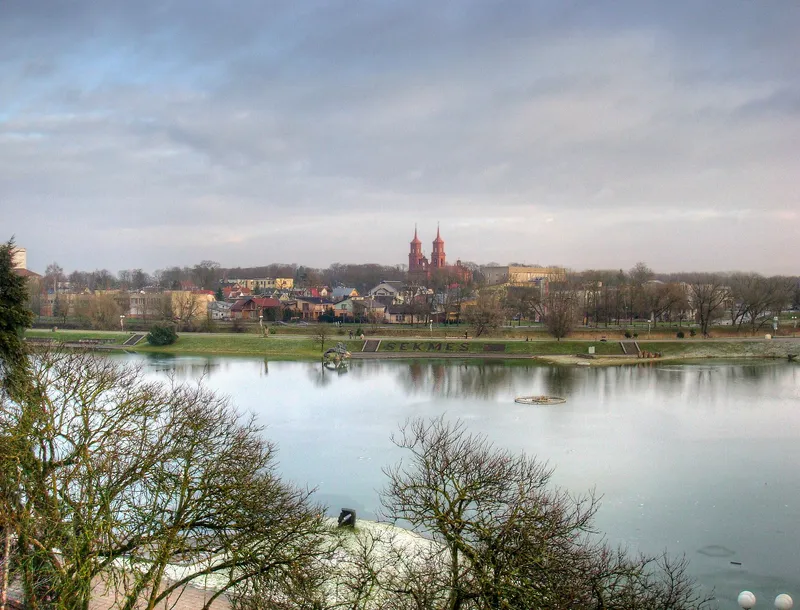
Jelgava is flat and compact and works well on foot or by bicycle. Buses cover the town. Trains reach Riga in about forty minutes and run frequently, which makes commuting genuinely practical and is the main reason people live here rather than in the capital. The Lielupe river runs through and floods the surrounding meadows every spring, which is when the storks arrive: Latvia has one of the densest white stork populations in Europe and the Jelgava floodplain is among the best places to see them. Anyone here in April should expect the Lielupe flood, which regularly covers the meadows on both sides and occasionally closes the smaller roads for days. The rail corridor being built to join this region to the network further west passes close by, and when it opens the journey south changes completely, though the date has slipped repeatedly and should be treated as a plan rather than a promise. For now the road south is the fast way to the next country and takes under two hours. Within the town the flat ground and light traffic make a bicycle the obvious choice, and the river path runs out into the meadows without meeting a car.
Sorting transport? Book an airport transfer, or compare car rental on Auto Europe and QEEQ.
Visas for Jelgava
Latvia is in the European Union and the Schengen area, so European Union and EEA citizens may live and work here without a permit, registering for a personal code. Everyone else needs a Schengen visa for short stays or a residence permit for longer ones. Latvia's digital nomad visa, introduced in 2022, is available to nationals of OECD member countries working remotely for a foreign employer above an income threshold, valid for a year and renewable once, which makes it one of the more accessible schemes in the region. Anyone applying for the digital nomad visa should note that the OECD nationality requirement is strict, and that Latvia checks the employment relationship rather than just the income. Permanent residence here eventually requires passing a state examination in the national language, which is a real barrier rather than a formality and is why many long-term foreign residents never take that step. The remote work permit is no route towards it either, since time spent on it does not count. Applications are lodged with the migration office and a state fee is charged at each stage, with a faster track available for a higher fee, which is worth paying when a lease start date depends on it. Driving south into Lithuania crosses no EES desk, and the days there still count.
Best Time to Visit Jelgava
May to September is the season, at around twenty one degrees with long light evenings, the spring flood receding and the storks nesting on every other pole. April brings the flood itself, which regularly covers the meadows and occasionally the roads. Winter from December to March is cold, often around minus five, with snow and short days. The Jelgava ice sculpture festival in February is the town's main event and draws sculptors internationally, which is more than a town of fifty five thousand would normally support. Midsummer on the twenty third and twenty fourth of June empties Latvian towns completely as people leave for the countryside, so anything needing an office, a bank or a shop should be done either side of it.
Pros and Cons of Jelgava
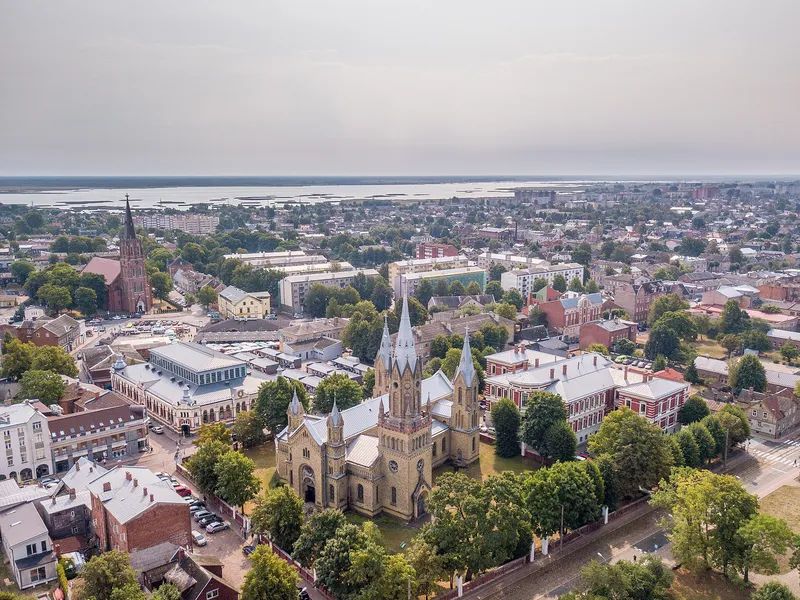
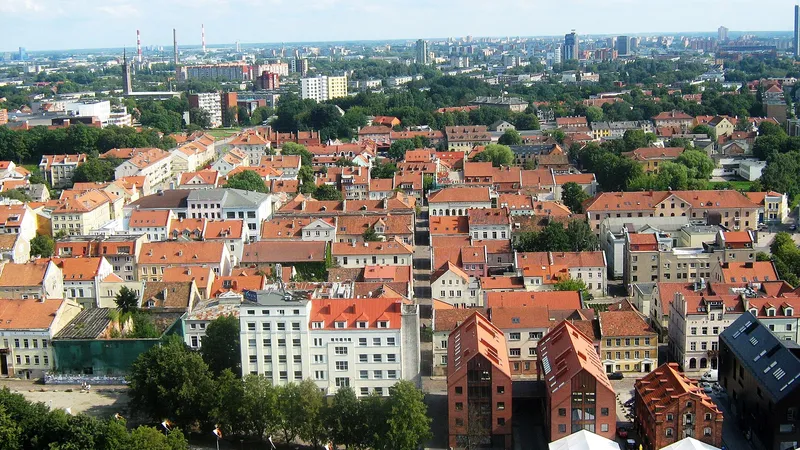
The palace is the thing here: built by Rastrelli in the 1730s for the Dukes of Courland before he was called away to St Petersburg to build the Winter Palace, which makes it a serious piece of baroque architecture in a small Latvian town. Add Riga forty minutes away, European Union rights, a digital nomad visa and almost the lowest costs in the bloc. The town around it was ninety per cent destroyed in 1944 and rebuilt in Soviet blocks, with the palace left standing in the middle of them. The palace also holds the ducal crypt, where the embalmed Dukes of Courland lie in a vault that is open to visitors, which is not something every agricultural university offers.
Who Jelgava Is For
Riga access at half the cost, which is a genuinely sensible arrangement given the train, along with digital nomad visa holders from OECD countries. It suits birdwatchers, since the stork density and the spring floodplain are both remarkable. The war removed almost all of the historic town, so what stands now is Soviet-era rebuilding arranged around a single restored baroque palace. The social scene is thin for a related reason, because most young people here commute to Riga for work and take their evenings with them. It also suits students of agriculture and food science, since the university here is Latvia's centre for both and teaches a good deal of it in English.
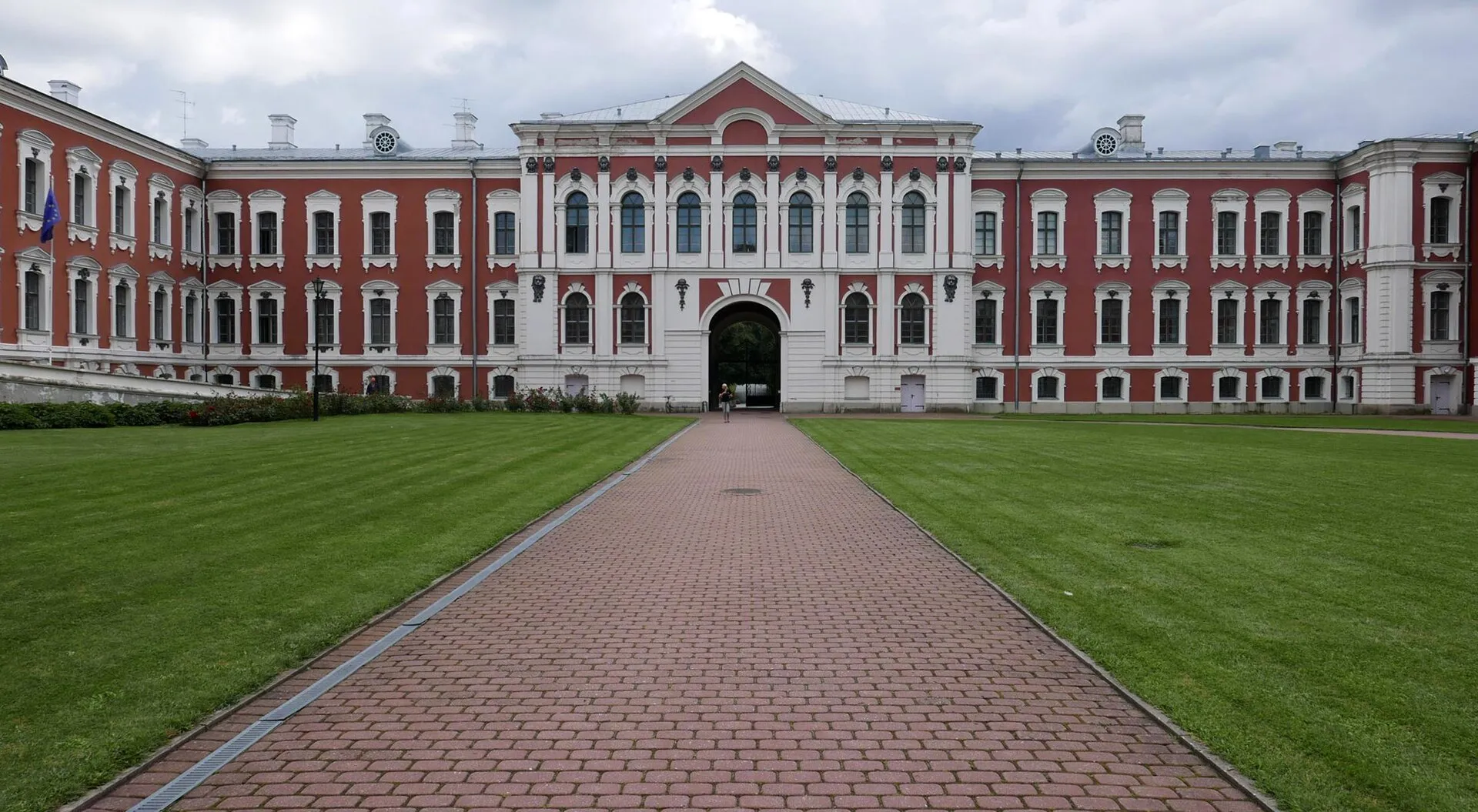 Photo: Ken Eckert / Wikimedia Commons (CC BY-SA 4.0)