Cost of Living in Lublin
Real market data
Source: Numbeo · August 2026
$1,390/moSolo nomad1-bed centre + living costs
$1,920/moCoupleshared 1-bed + costs
$1,230/moLean / localcheaper area + costs
- 1-bed rent, city centre$730zł2,730
- 1-bed rent, outside centre$560zł2,103
- Monthly costs excl. rent (1 person)$660zł2,483
- Meal, inexpensive restaurant$9zł35
- Monthly transit pass$32zł120
- Buy price, per m² (centre)$3,770zł14,087
Prices are from Numbeo (August 2026), converted to USD at $1 = zł3.74 (01 Aug 2026). The monthly living-costs figure is our transparent one-person basket, groceries, a few meals out, utilities, phone, internet, transport and essentials, priced from those figures. Solo adds central rent; couple and lean are estimates from the same numbers.
Budget roughly $1,390 a month as a solo remote worker in Lublin, which is among the cheapest city living in the European Union. A one-bedroom apartment near the old town or in Śródmieście runs about $350 to $480, and the blocks in Czechów or LSM drop that to $260 to $350. Groceries land around $200 to $250, with Biedronka and the Ruski Rynek market both far cheaper than the city-centre shops. A milk-bar lunch is $3 to $5, a restaurant dinner with a beer $12 to $18, and a monthly transit pass about $12. Utilities add $80 to $160 and rise sharply through the heating season. Student demand tightens the market every September. Rent is quoted without the administration charge the housing cooperative levies for the building, and on an older block that charge can add a third again on top, so the two figures have to be asked for separately. District heating is billed through the same channel and settled once a year against actual use, which produces a refund or a demand in the spring. Deposits are usually a single month and are returned without much argument, which is a pleasant contrast with several markets further west.
Where to Work in Lublin
Lublin has a real coworking scene for its size, built on a growing outsourcing and software sector and on five universities with something like 60,000 students between them. Desks run about $80 to $140 a month, mostly in and around the centre. Polish fixed-line internet is fast and cheap, gigabit fibre is ordinary, and mobile data is generous and inexpensive, which makes working from an apartment entirely practical. The cafes on Krakowskie Przedmieście and in the old town are used to laptops and long stays. English is common among students and in the technology firms, and much less so in shops and offices, where a translation app earns its keep. A large share of the student body and of the newer technical workforce is Ukrainian, and has been since well before 2022, which gives the local professional world a second working language that is neither the national one nor the international one. Business services firms recruit here precisely because the wage level is eastern and the graduate supply is not. For a freelancer the practical effect is a client base that already understands remote arrangements, and rates that will feel low until you set them against the rent.
Getting Around Lublin
Lublin is compact and the old town, the castle and the main street form a walkable core about a kilometre across. Beyond that a trolleybus and bus network covers the city cheaply, with a monthly pass around $12 and single tickets well under a dollar. Cycling works on the flat parts and less well on the hills around the centre. The railway station connects to Warsaw in about two and a half hours, and the newer expressway makes the bus competitive. Lublin has its own airport 10km south with a modest list of European routes, and Warsaw's two airports are within three hours by road. The Ukrainian border is about 100km east. The trolleybus network is one of only three left in the country and is the cheapest way to cross the city, running on overhead wires that give the older districts a particular look. A city bus goes to the former camp on the southeastern edge of town, which sits inside the built-up area rather than out in the countryside, and that proximity is the thing visitors find hardest to absorb. The expressway north has cut the drive to the capital enough that the coach now competes with the train on time.
Sorting transport? Book an airport transfer, or compare car rental on Auto Europe and QEEQ.
Visas for Lublin
Poland is in the European Union and the Schengen area, so EU and EEA citizens may live and work here with no formality beyond registering an address. Most other Western passports get 90 days in any 180-day Schengen period. Poland has no dedicated digital nomad visa, which is the structural gap for anyone wanting to stay longer. The usual routes are a temporary residence permit tied to work, study or business activity, or registering a sole trader, the jednoosobowa działalność gospodarcza, which many freelancers use. The Poland Business Harbour programme, once the quicker route for IT professionals of certain nationalities, was frozen by the foreign ministry in January 2024 and remains shut. A national identification number is the key that unlocks the health service, the tax office and most online government services, and it is issued on registration of an address rather than applied for separately. While a residence application sits in the queue a stamp in the passport keeps the stay legal, but it does not permit travel elsewhere in the area, which strands people who assumed otherwise. Decisions are made at province level, so which office is handling the file matters as much as what is in it. Lublin airport's Luton flights make its small terminal an outer Schengen border, registering British arrivals for the Entry/Exit System.
Best Time to Visit Lublin
May to September is the comfortable half of the year in Lublin. Late spring and early summer bring long light evenings and the old town squares fill; July and August are warm, into the mid to high twenties, and the students are away, which makes the city noticeably quieter and the rentals briefly loose. September is arguably the best month, warm and with the academic year restarting. Autumn turns grey and wet through October and November. Winter is genuinely cold, regularly below freezing from December to February, with snow and short days. The Carnaval Sztukmistrzów street arts festival in July and the Night of Culture in June are the two dates worth planning around.
Pros and Cons of Lublin
Lublin gives you European Union residency options, a well-preserved painted old town, five universities and gigabit internet at a price that undercuts most of the continent. It is safe, walkable, and close enough to Warsaw for a day trip while costing roughly half as much. The food scene has improved sharply. It sits in Poland's east, a position that has felt much less remote since 2022, and the current travel advice is worth reading before a long stay rather than after one. Winters are long and dark. The international community is thin and the nomad scene barely exists. English is limited outside the university and technology worlds, and Polish is a hard language to make progress in quickly.
Who Lublin Is For
Life in the European Union at something close to its lowest price, and nobody waiting to welcome you. Poland's business and technology routes cover the legal side of a stay. Warsaw, Krakow and the Baltic are all a few hours off without any capital-city rent attached to being near them, and the history of this part of Europe is dense here and often hard going, and that is precisely what brings some people. It is a reasonable base for couples and for quiet, focused work. Warmth and a coast are not available this far inland and this far east, English will not carry daily life, and no established nomad crowd has formed here to join. Krakow and Warsaw both offer more of all of that.
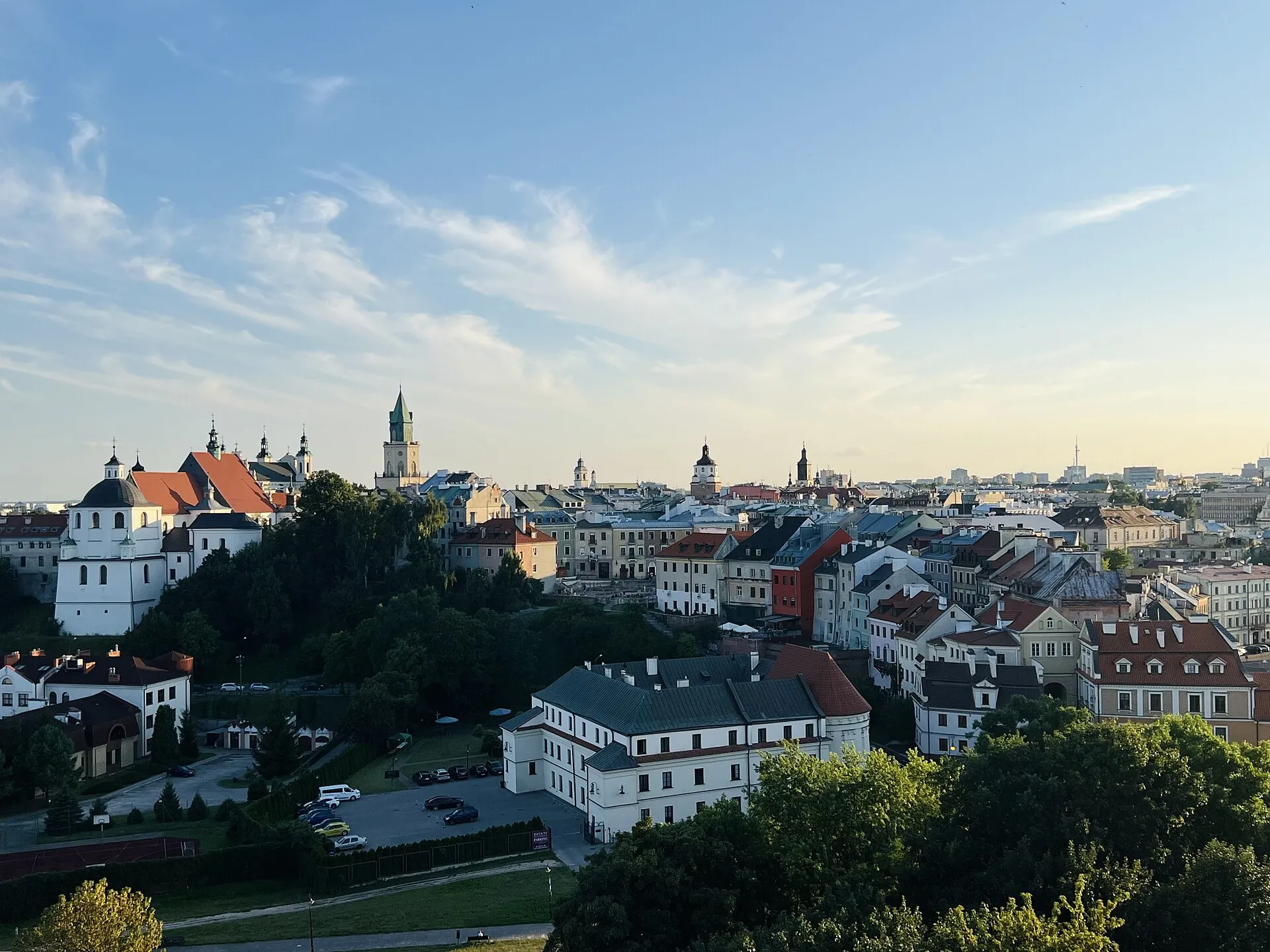 Photo: Kanion / Wikimedia Commons (CC0)