Cost of Living in Warsaw
Real market data
Source: Numbeo · August 2026
$2,030/moSolo nomad1-bed centre + living costs
$2,640/moCoupleshared 1-bed + costs
$1,750/moLean / localcheaper area + costs
- 1-bed rent, city centre$1,250zł4,692
- 1-bed rent, outside centre$980zł3,672
- Monthly costs excl. rent (1 person)$770zł2,889
- Meal, inexpensive restaurant$12zł45
- Monthly transit pass$29zł110
- Buy price, per m² (centre)$6,390zł23,921
Prices are from Numbeo (August 2026), converted to USD at $1 = zł3.74 (01 Aug 2026). The monthly living-costs figure is our transparent one-person basket, groceries, a few meals out, utilities, phone, internet, transport and essentials, priced from those figures. Solo adds central rent; couple and lean are estimates from the same numbers. The guide below quotes its own monthly range, which is a different measurement rather than a competing one: this table prices a defined basket at the figures above, while that range is a judgement about how somebody actually lives here.
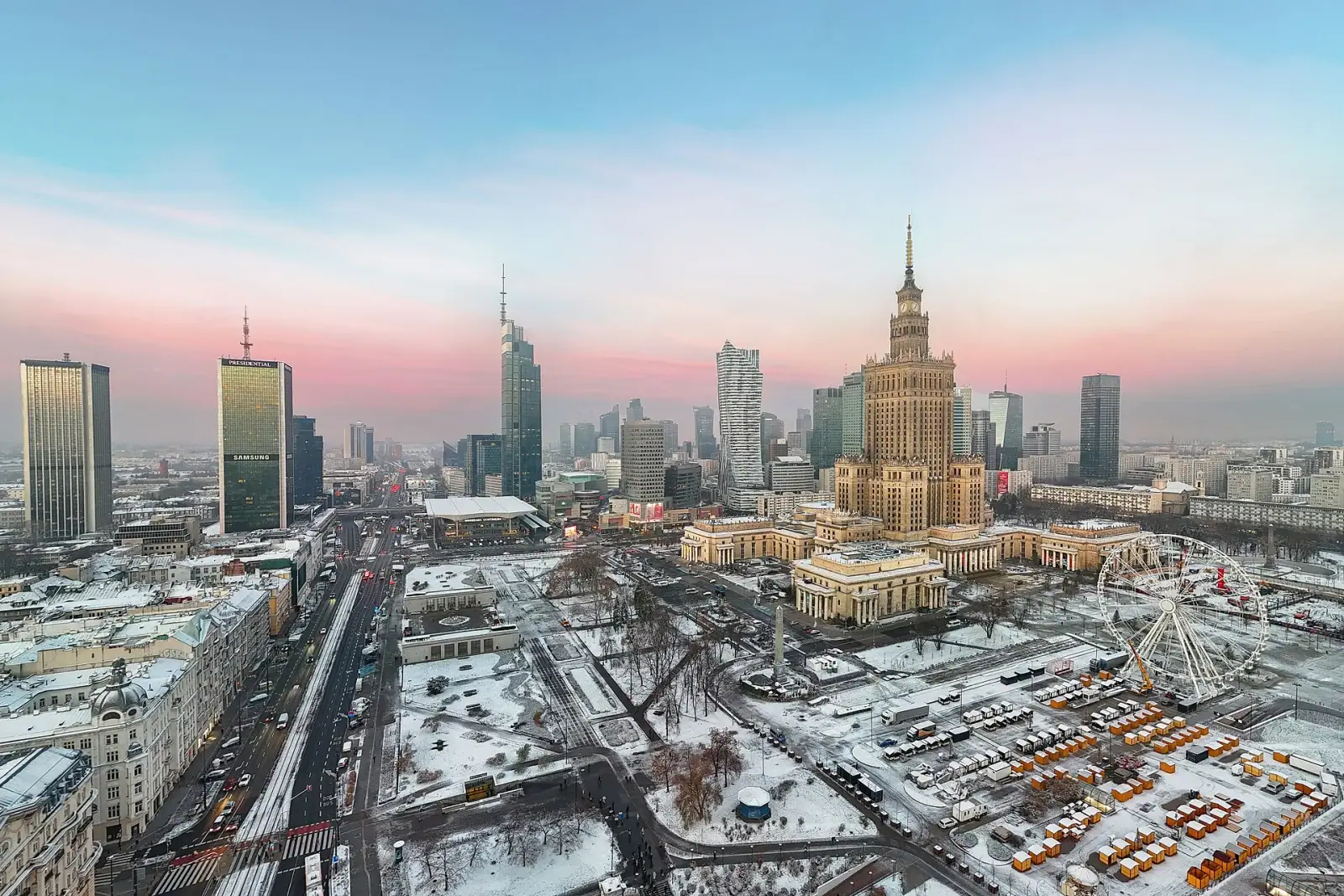
Warsaw is one of Europe's more affordable capitals, but it has risen in cost over recent years and no longer qualifies as a budget destination. Expect a wide range depending on how centrally you want to live and how often you eat out.
Rent: A one-bedroom apartment in the city center (Srodmiescie, Zoliborz, Mokotow) runs roughly $935-1,340/month. In cheaper outer areas like Praga or Bemowo, the same apartment costs $535-800/month.
Groceries: A reasonable weekly shop at a Biedronka or Lidl comes to about $67-94/month, so roughly $265-375/month for one person cooking regularly at home.
Eating out: A sit-down lunch at a mid-range restaurant costs $8-16. A traditional milk bar (bar mleczny) meal is under $5.50. Dinner with drinks at a decent spot runs $21-40.
Coworking hot desk: Expect $135-240/month for a dedicated hot desk at spaces like Brain Embassy or WeWork. Day passes run $21-35.
Local transport: A monthly ZTM pass covering all trams, buses, and both metro lines costs $29. This covers the whole city reliably.
Total monthly range: A solo nomad living centrally with coworking, eating out a few times a week, and a mid-range apartment should plan for $1,740-2,410/month. Living further out and cooking more often brings it to $1,200-1,600/month.
Where to Work
Warsaw has a mature coworking market. Brain Embassy operates several well-designed locations across the city including Czackiego in the center, with 24/7 access and consistent fast internet. Mindspace has two flagship locations, including one in the Skyliner tower near Rondo Daszynskiego metro station, with a premium feel and strong community events. WeWork runs five locations across Warsaw for those who want a more corporate setup or flexible day passes.
Cafe culture for working is well established. CoffeeDesk operates multiple Warsaw branches as hybrid cafe-coworking spaces with dedicated power sockets, strong WiFi, and extended hours. Green Caffe Nero has locations across the city, most open until 11 PM, with reliable internet and spacious seating that tolerates long laptop sessions without pressure to leave. You will generally find WiFi usable and widespread in cafes.
The real WiFi situation: connectivity is strong in dedicated coworking spaces and decent in most cafes. Mobile data on Polish SIMs (Play, Orange, T-Mobile) is fast and cheap, making a SIM-based hotspot a reliable backup. You will rarely struggle to find a connection in the center.
Getting Around
Warsaw's public transport network is genuinely good for a city its size. Two metro lines (M1 running north-south, M2 running east-west) cover the key areas and intersect at Swietokrzyska. Trams and buses fill in the gaps. A monthly ZTM pass at $29 gives unlimited access to the whole network and is the obvious choice for any stay longer than two weeks.
Walkability is high in the central districts. Srodmiescie, the Old Town, and Powisl are pleasant on foot, and the city has invested in cycling infrastructure, making renting a Veturilo city bike practical for short trips in good weather.
Getting to/from the airport: Warsaw Chopin Airport (WAW) is about 7 km southwest of the center. The SKM commuter rail line (train 69) runs between the airport and Warsaw Central station in about 20 minutes for $1. A taxi or Uber costs $11-19 depending on traffic and time of day. There is no reason to take an expensive transfer service. Ryanair also flies from Modlin, about 40km north, where Wizz Air resumed operations in December 2025. The airport has no station of its own: a shuttle bus covers the 4km to Modlin station, where Koleje Mazowieckie trains run into the city, and coaches go direct.
Sorting transport? Book an airport transfer, or compare car rental on Auto Europe and QEEQ.
Visas and Staying Long-Term
Poland is part of the Schengen Area. Citizens of the US, Canada, Australia, UK, and roughly 60 other countries can enter visa-free for up to 90 days within any 180-day rolling period. This covers a standard short stay comfortably.
There is no dedicated digital nomad visa for Poland as of mid-2026. For longer stays, the main option is a Type D national visa, which can be issued for up to one year and, in some cases, allows renewal. A freelance pathway exists under Type D but requires registering as a sole proprietor in Poland and engaging with the Polish tax system. This is a meaningful administrative commitment and works best for those planning a multi-year base rather than a temporary stint. Chopin airport's long-haul flights from North America and Asia make it the first Schengen border for many people who settle here, and the Entry/Exit System counts their visa-free days from that landing; the count stops mattering once a residence card is issued, since card holders fall outside the system.
Best Time to Visit
Warsaw's climate is continental: cold winters (January averages around -1.5C/29F, with grey skies and occasional snow), warm summers (July peaks at about 26C/79F), and genuinely pleasant spring and autumn months.
For remote work, the best window is May through June and September through October. Temperatures are comfortable, the city is lively without peak-tourist crowds, and daylight hours are long in late spring. July and August are warm and sunny but bring the most tourists, higher short-term rental prices, and occasional city-center congestion. Winter (December through February) can be grey and cold, which some people find productive and others find draining. November is probably the least appealing month, combining short days with damp cold and limited daylight. On summer Sundays free piano recitals of Chopin's music are played beside his monument in Łazienki Park, and an afternoon on the grass there is the best single argument for a summer stay.
Pros and Cons
- Affordable by Western European standards, especially outside the city center
- Strong transport infrastructure and two metro lines
- Excellent coworking scene with multiple premium operators
- Vibrant and growing food and nightlife scene, including Michelin-starred restaurants
- Large English-speaking professional community and international tech scene
- Good flight connections across Europe from Warsaw Chopin Airport
- Air quality is a genuine concern, with year-round pollution from traffic (winters can be particularly bad)
- No digital nomad visa; 90-day Schengen limit applies to most Western passports with limited easy extensions
- Winters are cold, grey, and long, which can affect mood during an extended stay
- Polish bureaucracy can be slow and complex if you need to register, open a bank account, or navigate official processes
- Less of a beach or nature escape than other nomad hubs
Who Warsaw Is Best For
Warsaw suits nomads who want a serious European city with real infrastructure: fast internet, proper coworking, good food, and a functioning metro. It works especially well for people in tech, finance, or creative industries who benefit from being in a city with a growing startup ecosystem and a large professional expat community. Those who appreciate history, modern architecture, and a city that is actively rebuilding its identity will find Warsaw genuinely interesting rather than just functional.
It is also a strong choice for people on a US or UK salary who want to spend time in Europe without paying Paris or Amsterdam prices. Budget-conscious nomads who cook at home and use public transport can live comfortably for under $1,500 a month.
Warsaw is less suited to nomads who prioritize warm weather year-round, beach access, or a strong outdoor lifestyle. Those sensitive to urban air pollution may find the city uncomfortable, particularly in winter and spring. If you need to stay longer than 90 days without engaging with visa paperwork and local registration, Warsaw is also not the easiest base to sustain legally.