Cost of Living in Panevezys
Real market data
Source: Numbeo · August 2026
$1,090/moSolo nomad1-bed centre + living costs
$1,610/moCoupleshared 1-bed + costs
$950/moLean / localcheaper area + costs
- 1-bed rent, city centre$430€375
- 1-bed rent, outside centre$300€260
- Monthly costs excl. rent (1 person)$650€568
- Meal, inexpensive restaurant$13€11
- Monthly transit pass$36€31
- Buy price, per m² (centre)$1,840€1,600
Prices are from Numbeo (August 2026), converted to USD at $1 = €0.87 (01 Aug 2026). The monthly living-costs figure is our transparent one-person basket, groceries, a few meals out, utilities, phone, internet, transport and essentials, priced from those figures. Solo adds central rent; couple and lean are estimates from the same numbers.
Budget around $1,090 a month, which makes Panevezys among the cheapest cities in the European Union. A one-bedroom runs roughly $200 to $350, a fraction of Vilnius and less than half of Kaunas. Market produce is cheap and Lithuania grows a great deal of its own food, with the local dairy and rye bread genuinely good. Eating out is inexpensive: a full meal in an ordinary place runs under ten dollars. Utilities are moderate and district heating runs through a long winter. Lithuania adopted the euro in 2015 and prices have risen since. The mechanism that matters for a freelancer is the individual activity certificate, a light-touch registration that lets you invoice legally at a low effective tax rate without forming a company, and it is one of the more civilised arrangements in the European Union. Social contributions to Sodra are separate and are the cost people forget. Food is where the low prices are most visible: the covered market sells local produce at prices that make cooking obviously cheaper than eating out, which is not true everywhere at this income level.
Where to Work in Panevezys
Connectivity is excellent. Lithuania has among the fastest and cheapest fibre in Europe, with comprehensive mobile coverage and reliable power, and the country's digital administration through its electronic identity system works well. There is limited coworking in Panevezys itself. The time zone is eastern European, two hours ahead of GMT, which gives a full European overlap and a workable American afternoon. Lithuania has been actively courting fintech and technology companies since Brexit, and the licensing regime is genuinely one of the more welcoming in Europe. Anyone forming a company should look at Lithuania's electronic company registration, which is among the fastest in Europe and can be completed remotely in a few days. The city's own economy is manufacturing rather than services, with a free economic zone on the edge of town that has drawn electronics, glass and food processing, and that is where local employment sits. It also means the professional network here is industrial, so a software freelancer will find colleagues online rather than in the city. Rail Baltica, the new European gauge line being built through the Baltics, is planned to pass close by, which would change the town's connections more than anything else on the horizon.
Getting Around Panevezys
Panevezys is flat and compact and works well on foot or by bicycle, with the centre walkable end to end in twenty minutes. Buses cover the rest cheaply. There is no passenger railway, which is unusual for a city of this size in Europe: the line closed to passengers and the narrow gauge heritage railway to Anyksciai is now a tourist route rather than transport. Buses reach Vilnius in about two hours and Riga in three, and both airports are the practical connections. Anyone travelling to the airports should note that the Vilnius bus runs frequently and that the Riga service, while longer, is often the cheaper flight option. The absence of a passenger railway is temporary in principle rather than permanent: Rail Baltica is intended to restore a proper connection, though the timeline has slipped repeatedly and nobody local plans around it yet. Cycling infrastructure is good and improving, and the Green Lakes route north is a genuine day out. Riga is a straightforward drive north on a good road and close enough to make the Latvian capital a realistic weekend rather than an expedition.
Sorting transport? Book an airport transfer, or compare car rental on Auto Europe and QEEQ.
Visas for Panevezys
Lithuania is in the European Union and the Schengen area, so European Union and EEA citizens may live and work here without a permit, registering their residence with the migration department. Everyone else needs a Schengen visa for short stays or a residence permit for longer ones. Lithuania has no dedicated digital nomad visa, but it operates a startup visa and a self-employment route that have both been used by remote workers, and the country's e-residency style programmes for company formation are relatively accessible. Anyone applying for a residence permit should allow several months, since Lithuania's migration department has been working through a substantial backlog since 2022. The self-employment route deserves naming, since it is what most independent workers actually use: a national long-stay visa or temporary residence based on registered individual activity, supported by a plan for the work, evidence of income and local health insurance, and granted a year at a time. Family members can be included. Anyone going this way should have documents translated and apostilled before arriving, because doing it afterwards from Lithuania is slower and more expensive than doing it at home. Cheaper fares often leave from Riga, three hours north by bus, and whichever of the two airports first receives you from outside Schengen does the EES registration; the Latvian border carries no check.
Best Time to Visit Panevezys
June to August is the season, at around twenty two degrees with long light evenings and the lakes and forests around the city at their best. May and September are pleasant and quiet. Winter from December to March is cold, often minus five to minus ten, with snow lying for weeks and daylight running from about half past eight to four in December. Spring arrives late. The Panevezys drama theatre, which under Juozas Miltinis became one of the most significant in the Soviet Union, is at its busiest in the winter season. The forest seasons structure the local year more than the calendar does: wild mushrooms from late August into October and berries through July draw whole families out, and it is a national pastime rather than a rural curiosity. Jonines at midsummer is celebrated with fires and wreaths by the water. Uzgavenes in late winter, with its carved masks and the burning of More, is the strangest and best of the Lithuanian festivals and falls when the town most needs it.
Pros and Cons of Panevezys
European Union residency rights and excellent internet come at close to the lowest cost anywhere in the bloc here, in a quiet, safe, orderly city where nothing costs much and nothing is very far away. The Aukstaitija national park with its lakes and the Anyksciai forest are both within an hour. Panevezys itself is a functional industrial city with little going on in the evenings, a shrinking population, no passenger railway at all, very little English, and a winter that is long, dark and genuinely cold from November on. The Miltinis theatre here also trained several generations of Lithuanian actors and its productions were watched across the Soviet Union, which is an unlikely legacy for a provincial industrial town. Geography has become part of the calculation since 2022. Lithuania borders both Belarus and Kaliningrad, the Suwalki corridor to Poland is the country's only land link to the rest of the alliance, and NATO deployments here have grown accordingly. Lithuanians treat this as settled fact rather than as a source of anxiety, and a newcomer should arrive knowing it rather than reading it as a warning. Healthcare is decent, with Kaunas and Vilnius holding the specialist hospitals two hours away.
Who Panevezys Is For
Cost and connectivity inside the European Union rather than atmosphere, for anyone content with a quiet provincial city. It suits people building a company under Lithuania's fintech or startup regimes. It suits cyclists, since the country is flat and the network is good. There is no international community in this part of Lithuania, daily life outside the shops expects some Lithuanian or Russian, and a Lithuanian winter decides the question for a good many people who assumed it would not. The narrow gauge railway still runs the sixty eight kilometres to Anyksciai on Soviet-era rolling stock, and it is a protected cultural monument, not a heritage line kept alive by volunteers at weekends. Among the Lithuanian options, Vilnius has the flights, the scene and the salaries, Kaunas the students and the interwar architecture, Klaipeda the sea, and this city the lowest costs of any of them. It rewards someone with a project and a preference for quiet over stimulation. Anyone whose Lithuanian is nonexistent will manage in shops and struggle at a counter, and Russian remains more useful here than English with anyone over fifty.
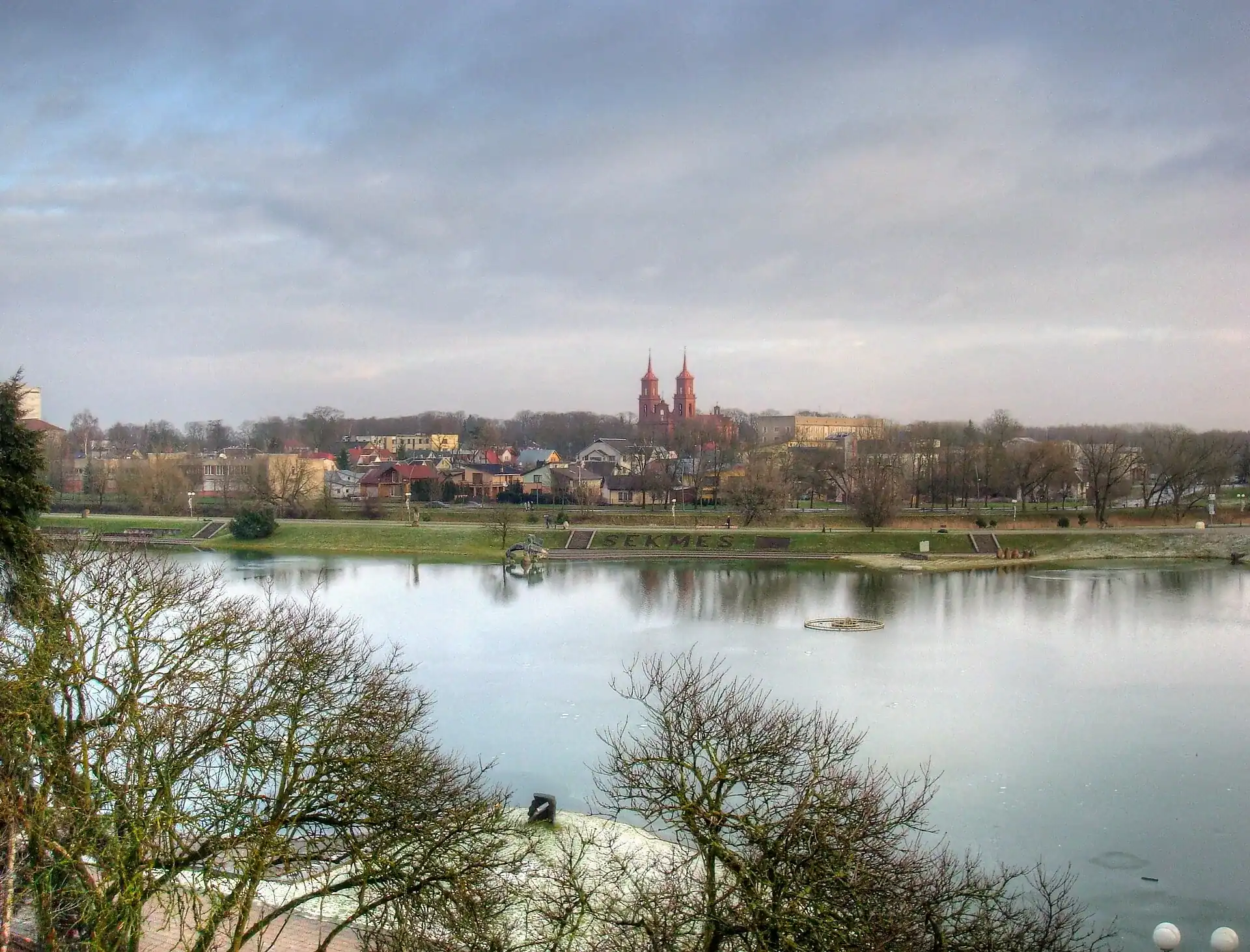 Photo: Modris Putns / Wikimedia Commons (CC BY-SA 3.0)