Cost of Living in Bialystok
Real market data
Source: Numbeo · July 2026
$1,240/moSolo nomad1-bed centre + living costs
$1,780/moCoupleshared 1-bed + costs
$1,210/moLean / localcheaper area + costs
- 1-bed rent, city centre$560zł2,087
- 1-bed rent, outside centre$530zł1,975
- Monthly costs excl. rent (1 person)$680zł2,537
- Meal, inexpensive restaurant$10zł38
- Monthly transit pass$35zł130
- Buy price, per m² (centre)$2,790zł10,423
Prices are from Numbeo (July 2026), converted to USD at $1 = zł3.74 (01 Aug 2026). The monthly living-costs figure is our transparent one-person basket, groceries, a few meals out, utilities, phone, internet, transport and essentials, priced from those figures. Solo adds central rent; couple and lean are estimates from the same numbers.
Budget around $1,240 a month. A one-bedroom runs roughly $250 to $450, well below Warsaw and among the cheapest of Poland's larger cities. Market produce is cheap and Podlasie's food is distinctive, with the potato-based kartacze and babka ziemniaczana reflecting a Belarusian and Lithuanian influence that is quite different from western Polish cooking. Eating out is inexpensive. Utilities are moderate and heating runs through a long cold winter. Poland uses the zloty rather than the euro, which has been a modest advantage for foreign earners. Anyone comparing with Warsaw should note that Bialystok runs roughly half the price for a comparable flat while staying two hours away by train. Heating is where the money goes in a region this cold, and a house outside the district network burns coal or wood unless the owner has taken the national subsidy to swap the boiler, which many have not. A filter for the indoor air stops being a fussy purchase in the weeks when the smoke settles over the streets. Set against all that, property here is among the cheapest anywhere in the country and a foreign income stretches a very long way, which is the whole of the arithmetic that brings anybody to this corner.
Where to Work in Bialystok
Connectivity is very good. Poland has extensive fibre and among the best value mobile data in Europe, with comprehensive coverage and reliable power. There is a coworking presence helped by the university and by a growing business services sector. The time zone is central European. Bialystok sits close to the Belarusian border, which since 2021 has been the site of a migration crisis and a militarised zone, and the practical effect for residents is a heavy border force presence rather than any restriction on ordinary life in the city. Anyone concerned about the border should understand that the restricted zone applies to a strip along the frontier itself rather than to the city, which functions entirely normally.
Getting Around Bialystok
Bialystok is flat and compact, with the Branicki Palace and its gardens at the centre and the Kosciuszko market square beside it, all walkable. Buses cover the city and cycling is easy. Trains reach Warsaw in about two hours and Vilnius in around six on a line that has been substantially rebuilt. Warsaw's airports are the practical connections. The Bialowieza Forest, the last substantial remnant of the primeval woodland that once covered the European plain, is about eighty kilometres southeast. Anyone visiting Bialowieza should book a guide for the strictly protected core, since that part of the forest cannot be entered without one and the permit is arranged through them. A signed long-distance cycle trail threads the whole eastern border region and passes through the town, more than two thousand kilometres of it and most of that on quiet roads, which is the best reason to keep a bicycle here. The expressway to the capital has cut the drive to under two hours and the coaches use it. Local buses are cheap and run on a card, and outside the centre the roads are empty enough that driving is a pleasure rather than a chore.
Sorting transport? Book an airport transfer, or compare car rental on Auto Europe and QEEQ.
Visas for Bialystok
Poland is in the European Union and the Schengen area, so European Union and EEA citizens may live and work here without a permit, registering residence after three months. Everyone else needs a Schengen visa for short stays or a temporary residence and work permit for longer ones, and Poland's process is slow, with waits of many months in some voivodeships. There is no digital nomad visa. The Business Harbour fast track for IT specialists has been suspended since January 2024. The Vilnius train crosses into Lithuania unchecked, so a weekend there spends the same Schengen days, while the Belarusian frontier an hour east is a true external border, and every non-EU crossing there goes into the Entry/Exit System. Anyone able to document Polish ancestry and some knowledge of the language can apply for a card that grants the right to work without a permit and a fast route to settlement, which is a far easier path than the ordinary one and is used heavily in this part of the country. For everybody else a permit is tied to the reason it was granted, so changing employer or leaving a course means telling the office rather than assuming the card still covers it. Fingerprints are taken in person and cannot be posted.
Best Time to Visit Bialystok
May to September is the comfortable window, with July around twenty three degrees and Bialowieza at its best for walking and for the bison. Spring and autumn are short. Winter from December to February is cold, often minus five to minus ten, and Podlasie is among the coldest parts of Poland, which is also when the bison are easiest to see against the snow. The region's winter air quality suffers from the same coal heating problem as the rest of the country. Anyone hoping to see bison should go in winter, when they gather at the feeding sites and are visible against the snow rather than hidden in summer undergrowth. The Orthodox pilgrimage to the holy hill southeast of here in late summer is the largest religious gathering of its kind in the country, and people walk for days to reach it carrying crosses, which is a side of this region a visitor will not meet anywhere further west. The marshes north of the city are one of the great birdwatching sites of the continent and also the reason nobody goes there in early summer without repellent. The thaw comes late here and then the whole season arrives at once.
Pros and Cons of Bialystok
The Branicki Palace is an eighteenth century complex known as the Versailles of Podlasie, and the Bialowieza Forest an hour and a half southeast is the last primeval lowland forest in Europe, a UNESCO site, and home to the continent's largest free-roaming population of European bison. The city is cheap, safe and increasingly prosperous. The winter air carries the smoke of coal stoves, the cold is serious, and the border close by has been genuinely tense since 2021 and shows no sign of easing. Bialystok is also where Ludwik Zamenhof invented Esperanto in the 1880s, and he did it here specifically because the city's Polish, Yiddish, Russian and German speakers could not understand each other.
Who Bialystok Is For
Bialowieza is why most outsiders come to this corner of Poland, and it is genuinely unlike any other European forest. Polish costs at the low end come with an actual employer base attached. Most cities this cheap cannot offer that second half. The region's history is Polish, Belarusian, Lithuanian, Tatar and Jewish all at once, and it is visible rather than archival: there are wooden mosques at Kruszyniany and Orthodox churches through the villages around. Smog is a genuine winter problem in this part of Poland, and the border with Belarus a short drive east is militarised in a way that some people find uncomfortable to live near. It suits anyone curious about Esperanto, since Ludwik Zamenhof grew up here and traced the invention of the language directly to watching this town's Poles, Jews, Germans and Russians fail to understand one another.
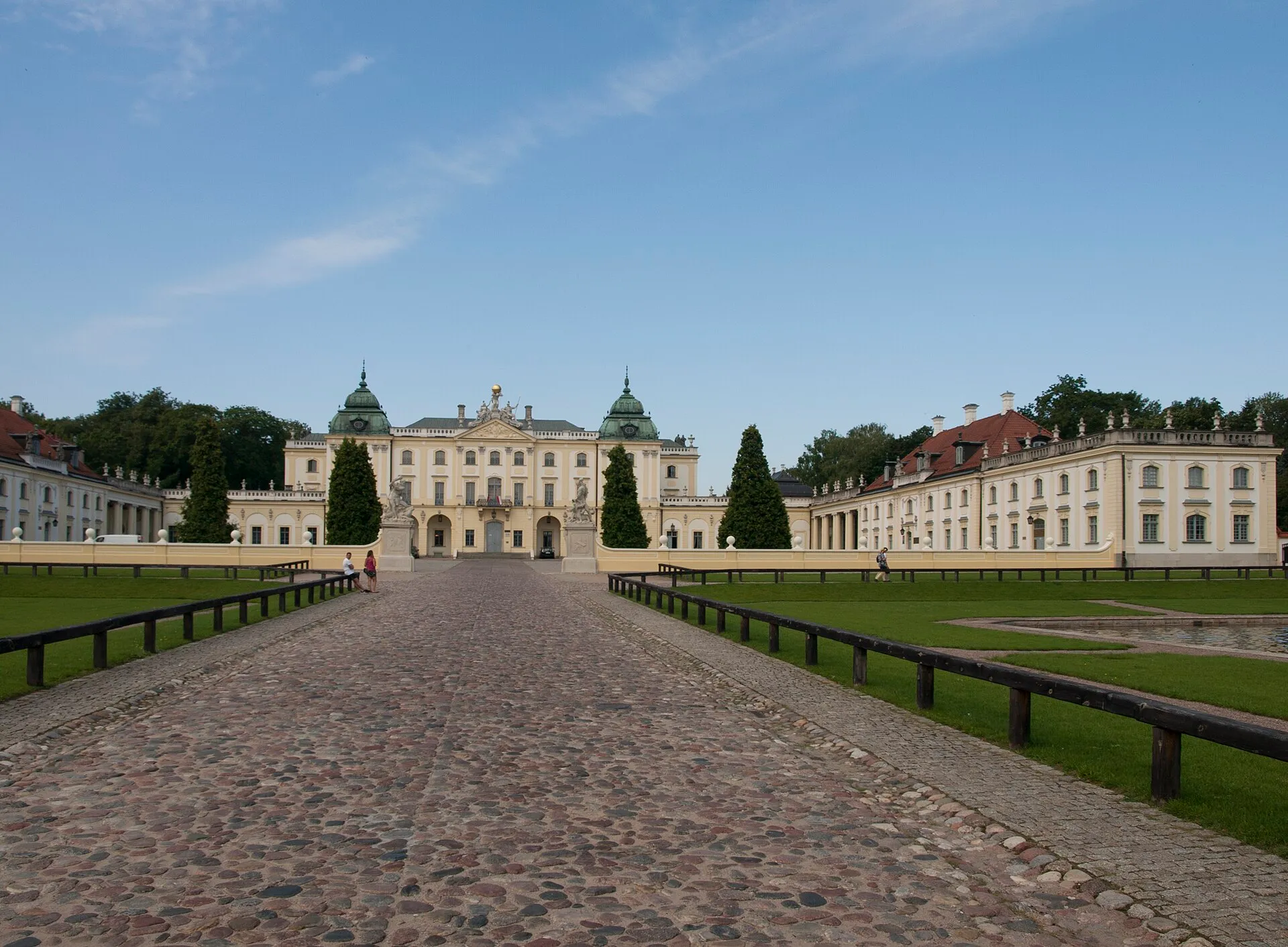 Photo: Ymblanter / Wikimedia Commons (CC BY-SA 4.0)