Cost of Living in Poznań
Real market data
Source: Numbeo · August 2026
$1,530/moSolo nomad1-bed centre + living costs
$2,090/moCoupleshared 1-bed + costs
$1,320/moLean / localcheaper area + costs
- 1-bed rent, city centre$830zł3,107
- 1-bed rent, outside centre$620zł2,330
- Monthly costs excl. rent (1 person)$700zł2,619
- Meal, inexpensive restaurant$12zł45
- Monthly transit pass$32zł120
- Buy price, per m² (centre)$3,690zł13,797
Prices are from Numbeo (August 2026), converted to USD at $1 = zł3.74 (01 Aug 2026). The monthly living-costs figure is our transparent one-person basket, groceries, a few meals out, utilities, phone, internet, transport and essentials, priced from those figures. Solo adds central rent; couple and lean are estimates from the same numbers. The guide below quotes its own monthly range, which is a different measurement rather than a competing one: this table prices a defined basket at the figures above, while that range is a judgement about how somebody actually lives here.
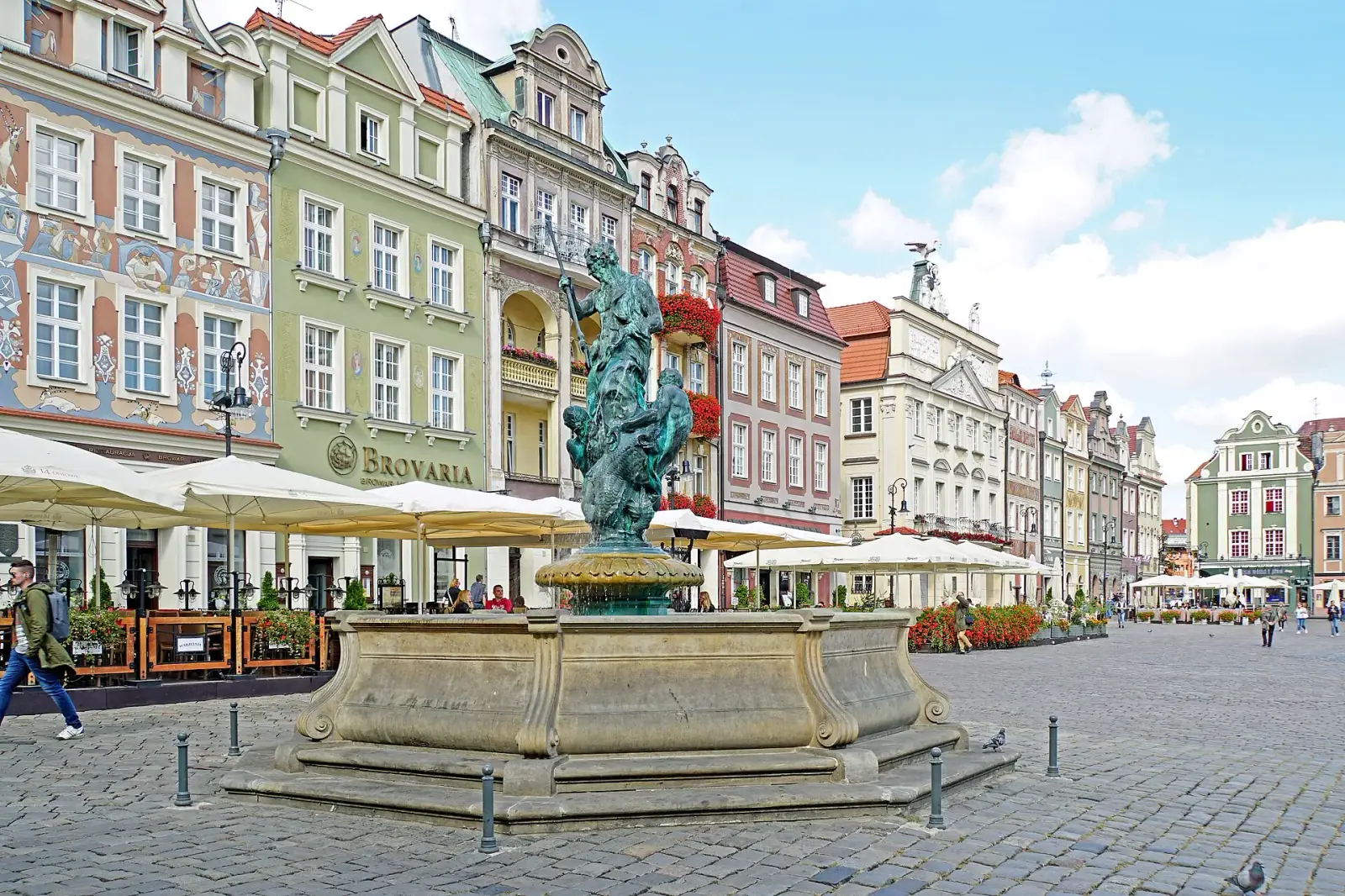
Poznań is one of Poland's more affordable major cities, though prices have risen steadily since 2023. A realistic monthly budget for a solo remote worker sits between $1,200 and $2,000, depending on your accommodation choices.
- Rent, central (Stare Miasto, Jeżyce): $670-935/month
- Rent, cheaper area (Grunwald, Winogrady): $480-670/month
- Groceries (cooking at home): $185-295/month
- Eating out (mix of budget and mid-range): $160-320/month
- Coworking hot-desk: $105-175/month
- Local transport monthly pass: $20-32
- Utilities (if not included in rent): $80-135
Total realistic range: $1,200-2,000/month. Poznań is cheaper than Warsaw or Kraków for comparable quality of life, but noticeably pricier than smaller Polish cities like Lublin or Rzeszów.
Where to Work
Poznań has a solid and growing remote work infrastructure. The city centre and Jeżyce district offer the best concentration of coworking spaces and laptop-friendly cafes.
Coworking Spaces
Mundo Coworking (Garbary 35/9, Stare Miasto) combines a proper coworking setup with a cafe in a 19th-century tenement building. It draws a mix of freelancers and small startups. ClockWork Poznan Coworking (Słowackiego 55) is a more structured facility with dedicated desks, meeting rooms, and reliable fast internet. Business Link operates two Poznań locations (Nowy Rynek and Maraton) catering to corporate remote workers who want a professional atmosphere. Plus Jeden (Za Bramką 1) is a free coworking initiative funded by the city, open weekdays during business hours; it is good for occasional use but not a substitute for a dedicated membership.
Cafes
Jeżyce hosts the best cafe-work culture. SMASH is a specialty roastery with communal tables and strong WiFi. STRAG. on the same street is smaller and quieter. Minister Cafe in Srodmiescie is well known among locals for reliable WiFi and good coffee.
WiFi quality across cafes is generally good, especially in the better spots. Video calls work fine in most coworking spaces. Home and cafe connections are comfortable for most remote work tasks.
Getting Around
Poznań is compact and highly walkable in the centre. Most daily errands in Stare Miasto or Jeżyce can be done on foot. The tram and bus network is extensive and runs from around 05:00 to 23:00, with limited night lines after that. A single ticket costs about $1; a monthly pass runs $20-32 depending on zones. The Jakdojade app handles route planning and ticket information well.
Bikes and e-scooters (Bolt) are practical from spring through early autumn. Cycling infrastructure has improved significantly in recent years, with dedicated lanes connecting most major districts.
Airport: Poznań Lawica Airport (POZ) sits 7 km west of the centre. Bus line 159 connects the airport to Poznań Główny train station in about 25 minutes, running every 15-20 minutes during the day. A taxi costs around $8-13. The main train station links Poznań to Warsaw (2.5-3 hours), Berlin (roughly 3 hours), and other major cities.
Sorting transport? Book an airport transfer, or compare car rental on Auto Europe and QEEQ.
Visas and Staying Long-Term
Poland is part of the Schengen Area. Citizens of the US, UK, Canada, Australia, and most other non-EU countries can enter visa-free for up to 90 days within any 180-day period across the entire Schengen zone. Your stay in Poznań counts toward this shared limit, not just Poland's total.
Poland does not offer a dedicated digital nomad visa. The closest option is a Type D long-stay visa, which requires a specific purpose (study, family, business registration). Nomads wanting to stay beyond 90 days typically register as a sole proprietor in Poland, which qualifies for a two-year freelance Type D visa, but involves paying Polish taxes. EU/EEA citizens can live and work in Poland without any visa restrictions.
Best Time to Visit
Poznań has a moderately continental climate with real seasons. Winters (November through February) are cold, gray, and often damp, with temperatures regularly around 0°C (32°F) and some snow. Days are short and natural light is scarce, which affects motivation for many remote workers.
The best window for remote work is May through September. Temperatures in summer reach 22-26°C (72-79°F), parks are lively, and outdoor cafe terraces are open. July can be rainy, so late May, June, and September are the sweet spots: warm and dry without peak tourist crowds. Autumn (September-October) brings cooler but pleasant weather, lower prices, and a quieter atmosphere. Spring (April-May) is fresh and pleasant once the last cold snaps pass.
Avoid January through March if you are sensitive to short days, cold, and persistent overcast skies.
Pros and Cons
- Pro: Significantly cheaper than Warsaw or Kraków for similar urban quality of life
- Pro: Compact, walkable centre with strong cafe and coworking culture
- Pro: Good train connections to Berlin and Warsaw
- Pro: Lively university city with a young population and active food scene
- Pro: Safer than most comparable European cities, low petty crime
- Con: Air quality degrades noticeably in winter due to coal heating and traffic
- Con: English proficiency is lower outside central tourist and coworking areas
- Con: No digital nomad visa; 90-day Schengen limit applies to most non-EU citizens
- Con: Gray, cold winters with minimal daylight can be hard for motivation
- Con: Smaller international nomad community compared to Warsaw or Kraków
Who Poznań Is Best For
Poznań works well for remote workers from within the EU who can stay indefinitely and want an affordable, underrated Polish city with genuine local character. It suits people who enjoy a compact, walkable city where bars, cafes, and coworking spaces are within easy reach, without the tourist saturation or higher costs of Kraków.
It is a strong fit for those visiting in spring or autumn on a Schengen stay, looking for a cost-effective base with reliable infrastructure and good food. The city also appeals to anyone traveling with easy access to Germany, since Berlin is about three hours by train.
Skip Poznań if your main concern is a large English-speaking nomad community, if you need to be based in Europe long-term on a single non-EU passport without setting up a business, or if you find cold, dark winters genuinely disruptive to your work. Those who want a warmer, sunnier base with more international nomad infrastructure will be better served elsewhere.