Cost of Living in Santiago de Compostela
Real market data
Source: Numbeo · August 2026
$1,370/moSolo nomad1-bed centre + living costs
$1,880/moCoupleshared 1-bed + costs
$1,150/moLean / localcheaper area + costs
- 1-bed rent, city centre$750€650
- 1-bed rent, outside centre$530€458
- Monthly costs excl. rent (1 person)$630€544
- Meal, inexpensive restaurant$14€12
- Monthly transit pass$35€30
- Buy price, per m² (centre)$3,150€2,733
Prices are from Numbeo (August 2026), converted to USD at $1 = €0.87 (01 Aug 2026). The monthly living-costs figure is our transparent one-person basket, groceries, a few meals out, utilities, phone, internet, transport and essentials, priced from those figures. Solo adds central rent; couple and lean are estimates from the same numbers.
Santiago de Compostela is one of the more affordable cities in western Europe, and a nomad can live comfortably on roughly $1,000 to $1,400 a month. As a compact university city, it keeps rents modest, and the walkable centre means you rarely need a car. Groceries at the covered Mercado de Abastos are excellent value, and set lunches with local wine cost little. Galician seafood and Albarino are treats rather than daily splurges. The figures below are editorial estimates and shift with season, flat size and how much you eat out, but they give a realistic starting picture for planning your stay. The pilgrim economy distorts the rental market in one specific way. A very large number of beds in this city exist to be let by the night to people walking in, which means the short-term stock is enormous and the long-term stock is correspondingly thin, and a landlord weighing a month against thirty nights will usually choose the nights. Long lets are found in the newer districts rather than in the old town, and outside the walking season they get considerably cheaper. Heating is the other line: this is a wet, cool city for most of the year and the old granite buildings hold the damp.
- Rent for a one-bedroom flat near the centre: roughly $650 to $900 a month.
- Monthly groceries for one person: around $220 to $320.
- Coworking desk or cafe-based work budget: about $90 to $150.
- Everyday extras (transport, a menu del dia, wine, small treats): roughly $180 to $260.
Where to Work in Santiago de Compostela
Being a lively student city, Santiago has a steady supply of quiet cafes, library corners and a handful of coworking spaces, mostly clustered in the Ensanche new town around Praza de Galicia and Rua do Franco. Wifi is generally reliable and reasonably quick, though older granite buildings in the Casco Historico can have patchy signal, so ask before you settle in for the day. The University of Santiago gives the place a scholarly, laptop-friendly rhythm, and speciality coffee shops have grown in number. For calls and deep focus, a coworking membership or a well-lit flat with fibre is your safest bet, especially through the long, wet winter months. Worth knowing about the language, because it changes daily life here more than a visitor expects. Galician is co-official and genuinely spoken, in the street, on the signage and in the university, and it is closer to Portuguese than to Spanish. Anyone with Spanish will follow it within a fortnight and nobody expects a foreigner to use it, but being aware that it is a language rather than an accent is the difference between reading the place correctly and not. A consequence of the clock this country keeps is that in June the light here holds past ten at night.
Getting Around Santiago de Compostela
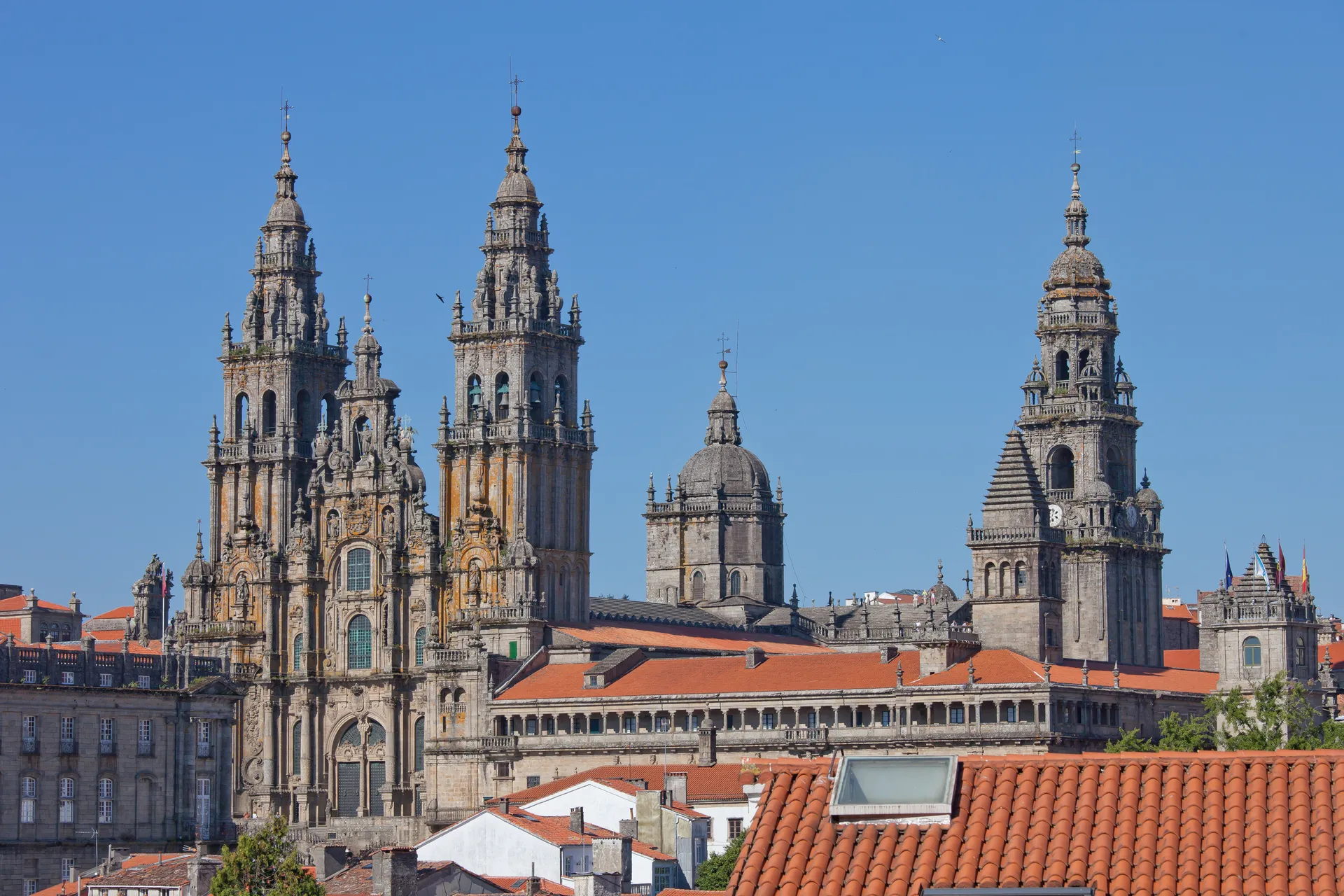
Santiago is wonderfully walkable, and most nomads never need more than their own two feet. The UNESCO old town is pedestrianised, its granite streets closed to most traffic, so wandering between the cathedral, cafes and markets takes minutes. City buses cover the wider Ensanche, residential outskirts and the university campuses cheaply and reliably. The railway station links you to A Coruna, Vigo, Ourense and onward to Madrid, while Santiago-Rosalia de Castro Airport, a short bus ride out of town, connects across Spain and to several European cities. Cycling is possible but the frequent rain and hilly, cobbled centre make walking the more practical daily choice. A couple of practical notes. The granite paving in the old town is polished by several centuries of feet and is genuinely slippery when wet, which in this city means most of the time; a sole with grip is not optional and the locals all wear one. And the walking routes converge on the cathedral from several directions, so the streets on the approaches fill with people carrying packs from mid-morning through the afternoon in season, which is charming and makes the last two hundred metres to the square a shuffle. The airport bus runs from the centre and is a fraction of a taxi.
Sorting transport? Book an airport transfer, or compare car rental on Auto Europe and QEEQ.
Visas for Santiago de Compostela
Santiago de Compostela sits within Spain and the Schengen Area, so entry rules follow national policy rather than anything local. Many visitors from visa-exempt countries can stay up to 90 days in any 180-day period without a visa. For a longer base, Spain offers a digital nomad visa aimed at remote workers employed by or contracting with companies outside the country, letting you live and work legally for an extended period with a route to renewal. Applicants typically need proof of income, health cover and a clean criminal record. A piece of the local administration is worth arranging in the first month and almost nobody does. The digital certificate, a file installed in your browser that proves your identity to any government system, is what turns a queue and an appointment into a five-minute job, and it covers tax, social security, the town hall and the immigration portal. Getting it requires one in-person visit with a passport. Do that early and the rest of the bureaucracy stops being the reason people give up on staying. Processing times for the residence card also differ sharply between provinces, and a smaller one is generally faster. Pilgrims on the Portuguese Way cross the Minho at Tui unchecked; their Entry/Exit System count began when they landed in Porto or Lisbon.
Best Time to Visit Santiago de Compostela
Santiago has a mild oceanic climate and a well-earned reputation for rain, so timing matters. Late spring and early autumn, roughly May to June and September, offer the best balance of warmer, drier days and thinner crowds. Summer is the busiest stretch, when pilgrims completing the Camino de Santiago fill the old town and the Feast of Saint James around 25 July brings festivities and full flats. Winters are grey, wet and mild rather than cold, which suits nomads seeking calm, cheap, low-season stays. Pack a good waterproof whatever the month, because a bright morning can turn to drizzle by lunchtime here. Put a number on the rain, because the reputation understates it. This is among the wettest cities in Europe, with roughly three times the annual rainfall of London spread across about a hundred and fifty wet days, and the local word for the fine drizzle that falls on many of the others is worth learning early. Nothing else in the suitcase matters as much as a good coat. The other date to check is the Holy Year, which falls whenever the feast day lands on a Sunday and multiplies the number of walkers arriving; the next ones are known years ahead and change everything about a summer here.
Pros and Cons of Santiago de Compostela
Santiago rewards those who want history, character and a gentle pace over big-city buzz. The UNESCO old town, superb Galician food and welcoming student atmosphere make it a memorable base, and low costs stretch a remote income comfortably. The trade-offs are real, though: the weather is famously wet, the English-speaking nomad community is small, and the city can feel quiet if you crave nightlife or a large international crowd. Weigh these points honestly against your own priorities before booking a longer stay, as Santiago suits a particular temperament rather than everyone. The temperament in question is specific and worth naming. This city is built around an arrival: for a thousand years people have walked here from across the continent and finished in the same square, and the effect is that the place is permanently full of people at the end of something, which is an unusual and rather moving atmosphere to live inside. It also means the population you meet in the centre is almost entirely transient, and the actual city, the students, the civil servants, the Galicians, lives in the newer districts and eats elsewhere. Anyone who stays long moves outward and stops going into the old town except to walk through it, which is the right instinct and worth having early.
- Pros: beautiful, walkable UNESCO old town; excellent-value Galician food and wine; low cost of living; safe and relaxed; strong culture and history.
- Cons: frequent rain and grey skies; small international nomad scene; limited nightlife; patchy wifi in old stone buildings; fewer flights than major hubs.
Who Santiago de Compostela Is For
Santiago de Compostela suits the nomad who values atmosphere, culture and calm over nightlife and networking. If you love walkable historic streets, world-class seafood, a slower Galician rhythm and a budget that leaves room to explore, you will feel at home here. Writers, researchers, solo travellers and anyone drawn to the Camino or to Spain beyond the coast will find plenty to savour. It is less ideal if you need a buzzing international community, guaranteed sunshine or a big-city social scene. Come with a waterproof, an appetite and an appreciation for granite, greenery and good wine, and Santiago will reward you. On length, six months from September is the shape that works, because it catches the autumn, the whole academic year's energy and the quiet winter when the walking season stops and the city belongs to itself. Summer is the version everybody sees and the least representative. Live out in the newer districts rather than inside the historic core; the rent drops, the damp drops with it, and you are still ten minutes from the square on foot. And treat the weather as a decision rather than a detail, because a hundred and fifty wet days is a real thing to live through and the people who leave early almost always leave over that.