Cost of Living in Vernazza
Where this figure comes from. No cost survey covers Vernazza, so the $1,400 a month above is our own estimate rather than a measurement. On 416 of our 999 city guides the figure is built from a published Numbeo basket, a one-bedroom rent in the centre plus one person's monthly costs without rent, converted to USD; this city is not one of them. How we source everything.
Vernazza is tiny, protected, and heavily touristed, which makes it one of the pricier places on the Ligurian coast to settle for a month. Lodging is the big line item: this is a village of a few hundred residents with a fraction of that in bookable rooms, so short-term rentals command a premium and vanish fast in high season. Expect a realistic monthly budget of roughly $1,500 to $2,400 for one person, and more if you want a harbour view or a private apartment rather than a room. Eating out along the piazza is not cheap, though a small kitchen and the Monterosso supermarket runs help a lot. This is a scenic slow-travel stay, not a budget base. A month of daily walking need not mean a daily trail fee. Only the coastal blue path either side of the village needs the Trekking Card, at about $12 a day or $18 on peak days, and the Via dell'Amore charges separately, while path 508 climbs from beside the station up an old mule track to the sanctuary of Nostra Signora di Reggio in about an hour for nothing.
- Studio or one-bed rental (monthly, off-peak): roughly $1,000 to $1,700
- Groceries for one: roughly $300 to $450, with limited village shops
- Restaurant dinner with wine on the piazza: roughly $30 to $55 per person
- Cinque Terre Card and regional trains add up if you move around daily
Where to Work in Vernazza
Start from what is missing here, because nothing nearby fills the gap: the village offers no coworking space and nothing resembling a nomad scene. It is a stunning fishing village, not a work base. That said, you can absolutely get a scenic slow-work stretch done if your job is light on calls. The reliable move is to work from your accommodation in the morning, then use a harbour-side cafe or bar for a coffee and a change of scene. Wifi in these old stone tower-houses is genuinely patchy, so treat any listing's connection claims with caution and lean on mobile data. A good Italian SIM is close to essential here.
- Buy an Italian SIM (TIM or Vodafone) and tether when the wifi dips
- Message hosts before booking to confirm real upload speeds for video calls
- Work mornings, explore afternoons, when the day-trip crowds peak
- Nearby La Spezia or Levanto offer more serious cafe options if you need them
Getting Around Vernazza
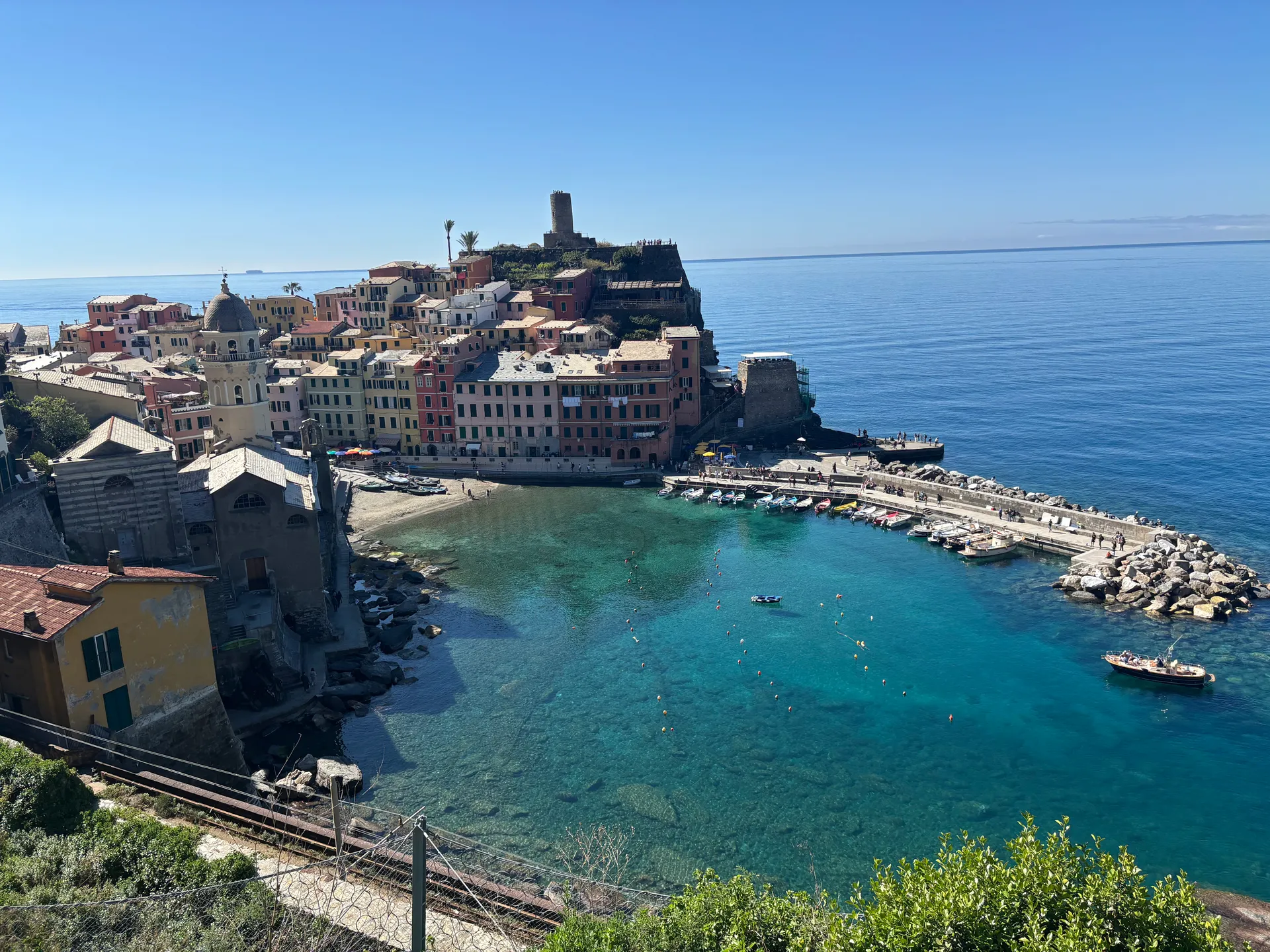
Vernazza is car-free and almost entirely walkable end to end in a few minutes, from the train station down through the main street to the harbour, piazza, and the Belforte tower on the point. Leave any car in the paid lots up the hill or, better, do not bring one at all. The Cinque Terre regional trains are the backbone of the coast, linking all five villages and running on to La Spezia and Levanto in minutes. Seasonal ferries connect the villages by sea for a beautiful, slower alternative, and the Sentiero Azzurro coastal trail lets you walk between them on foot. A Cinque Terre Card bundles trains and trail access. The train fare is the number to know before a month of hopping between villages. This season, from mid-March to the start of November, a single ride between any two stations inside the park costs about $6 to $12 depending on a colour-coded calendar of busier days, and it is the same for one stop as for the whole run to the end of the line. Each ticket is good for one direct trip, so a coffee stop in Corniglia on the way home means buying another, while after 7:30 in the evening every train drops back to the cheapest band.
- Everything in the village is on foot; the streets are steep and stepped
- Regional trains run frequently between all five villages and to La Spezia
- Ferries offer scenic coastal hops in the warmer months
- The Cinque Terre Card covers trains plus the paid coastal trail sections
Sorting transport? Book an airport transfer, or compare car rental on Auto Europe and QEEQ.
Visas for Vernazza
Vernazza sits in Italy, an EU and Schengen country, so the standard rules apply. Most non-EU visitors, including US, UK, Canadian, and Australian passport holders, can enter visa-free for up to 90 days within any rolling 180-day period for tourism. That window suits a scenic month here well. If you want to stay longer or work legally from Italy, look into Italy's digital-nomad and remote-worker visa routes, which target qualifying remote professionals and freelancers who meet income and insurance thresholds. Those routes involve consular applications and paperwork, so start early. The nearest external Schengen frontier by sea is Genoa, about an hour and a half up the line, where the GNV ferries from Tunis dock and a non-EU passenger's first entry is logged by the Entry/Exit System on the quay, so the short-stay allowance starts there rather than on the platform at Vernazza.
- Schengen 90/180 rule covers most short scenic stays visa-free
- EU and Swiss citizens have full freedom to live and work
- Italy's digital-nomad visa exists for qualifying longer-term remote workers
Best Time to Visit Vernazza
Late spring and early autumn are the sweet spots for Vernazza. From roughly May into June, and again in September into early October, the sea is warm enough for a swim, the coastal trails are open and comfortable, and the light on the pastel houses is glorious without the peak crush. Summer is hot and extremely crowded, with day-trip crowds packing the single main street and the piazza from late morning; it is beautiful but tiring, and lodging is priciest. Winter is quiet and atmospheric, with rougher seas, shorter days, and some restaurants and rentals closed for the season. For a slow, workable, scenic stay, aim for the shoulder months. Autumn rain deserves respect here for a structural reason: the Vernazzola stream runs in a culvert beneath the main street. On 25 October 2011 a cloudburst set off landslides that jammed that channel and buried the lower village under about four metres of mud, and although the street was dug out and rebuilt, a heavy-rain warning in October or November is the day to stay off the paths.
- May to June: warm, green, open trails, manageable crowds
- July to August: hottest, most crowded, and most expensive
- September to early October: warm sea, softer light, excellent value of experience
- November to March: quiet, some closures, rougher weather at sea
Pros and Cons of Vernazza
Vernazza is genuinely one of the most beautiful villages in Italy, and that is both its gift and its catch. The setting is unforgettable: a car-free tumble of colourful tower-houses around a tiny harbour, with the Doria Castle, the Santa Margherita church, vineyard terraces above, and the coastal trail linking you to four sister villages. The food is superb Ligurian cooking, safety is good, and English is widely spoken thanks to tourism. But it is small, seasonal, and expensive, with thin nightlife, a minuscule long-term community, patchy wifi, and crowds that can overwhelm the single street in high summer. Weigh the scenery against the practical friction honestly.
- Pros: breathtaking scenery, car-free calm, excellent food, good safety, easy trains to nearby villages
- Cons: high cost, limited lodging, patchy wifi, no nomad scene, intense seasonal crowds
- Best treated as a scenic slow-travel stay rather than a productive work base
Who Vernazza Is For
Vernazza is for the slow traveller who wants beauty over bandwidth. If you can work a few flexible hours, do not depend on flawless video calls, and want to trade a big-city nomad scene for morning swims, terrace vineyards, and dinners of pesto and anchovies by the harbour, this is close to perfect for a shoulder-season month. It is not the right call if you need reliable coworking, an active social or nightlife scene, a tight monthly budget, or a base to grind out heavy remote work. Come for the scenery, the sea, the walking, and the quiet after the day-trippers leave, and manage your expectations about everything else.
- Great for: slow travellers, scenery seekers, hikers, couples, light remote workers
- Less ideal for: call-heavy jobs, budget nomads, nightlife or big social scenes
- Best paired with shoulder-season timing and a good mobile data plan