Cost of Living in Taormina
Where this figure comes from. No cost survey covers Taormina, so the $1,300 a month above is our own estimate rather than a measurement. On 416 of our 999 city guides the figure is built from a published Numbeo basket, a one-bedroom rent in the centre plus one person's monthly costs without rent, converted to USD; this city is not one of them. How we source everything.
Taormina is one of Sicily's most expensive addresses, a glamorous cliff-top resort where prices climb with the views. A slow-travel nomad should budget roughly $1,300 to $2,400 per month, with the figure swinging sharply by season. A short-term studio or one-bedroom in or near the historic center runs high in summer and drops noticeably from November through March, when many owners prefer longer, calmer bookings. Dining on Corso Umberto and around the piazzas carries a resort premium, though a simple trattoria lunch or a market shop keeps costs sane. Groceries, coffee and local wine are reasonable by Western European standards; it is the location, the season and the sit-down meals that inflate the total.
- Rent (short-term studio/1BR): roughly $800 to $1,600, far cheaper off-season
- Cheaper base: Giardini Naxos below often costs 20 to 30 percent less
- Trattoria lunch around $15 to $25; espresso at the bar under $2
- A car adds gas, tolls and scarce paid parking, but unlocks Etna and Sicily
Where to Work in Taormina
Taormina's whole economy is built for holidaymakers, and that shows the moment you open a laptop: the town is a compact resort rather than a nomad hub. There is no dedicated coworking space, so your office will be your apartment, a hotel lounge or a laptop-friendly cafe. Wifi in modern stays and many cafes is perfectly serviceable for calls and everyday work, though older stone buildings and busy summer networks can wobble. The real variable is season. In July and August the town is mobbed, terraces are packed and prices peak, which makes focused work stays frustrating. The shoulder months are transformed: quieter cafes, calmer streets, easier tables and better-value stays. If you need a reliable daily desk, prioritize an apartment with proven fiber and a real work surface.
- No coworking; rely on your stay, hotel lounges or cafe tables
- Shoulder-season mornings are the sweet spot for quiet, connected work
- Catania, an hour south, has more coworking if you need a hub day
Getting Around Taormina
Taormina is a walking town, and a steep one. The hilltop historic center, Corso Umberto and the piazzas are pedestrian, laced with staircases and lanes that reward good shoes and punish heavy bags. To reach the sea, the funivia cable car glides down to the Isola Bella and Mazzaro beach area in a few minutes, saving a long, sweaty descent. Below the cliff, the Taormina-Giardini train station sits on the coastal line, linked to the center by local buses that spare you the climb. Interurban buses run along the coast to Catania and Messina, and Catania Fontanarossa airport, about an hour away, is the main gateway. A car helps enormously for Etna and wider Sicily, but expect narrow roads and very limited parking. Drivers do best to leave the car at the edge: the municipal Lumbi car park, the largest in town, runs a free shuttle up to the northern gate of the old town from early morning until after midnight, while the multi-storey by the southern gate sits about 200 metres from the pedestrian main street, inside a traffic-restricted zone that applies around the clock.
- Historic center is pedestrian, steep and stair-heavy; pack light
- Funivia cable car connects the town to Isola Bella and the beaches
- Buses link the hilltop to the Taormina-Giardini train station below
- Coastal buses reach Catania and Messina; Catania airport is the gateway
- A car unlocks Etna and Sicily but parking is scarce and pricey
Sorting transport? Book an airport transfer, or compare car rental on Auto Europe and QEEQ.
Visas for Taormina
Taormina sits in Italy, an EU and Schengen country, so entry rules follow the wider Schengen framework. Many visitors from countries such as the United States, Canada, the UK and Australia may enter visa-free for up to 90 days within any 180-day period, which suits a scenic slow-travel stay but caps how long you can linger. EU and EEA citizens face no such limit and can live and work freely. For longer stays, Italy offers a national digital-nomad and remote-worker visa aimed at qualifying professionals, with income, insurance and documentation requirements, plus the standard permit-of-stay steps after arrival. Malta tempts as a change of scene, and the Virtu Ferries catamaran from Pozzallo, a long drive south, reaches Valletta in under two hours, but it never leaves the Schengen area: no Entry/Exit System check happens on either quay, so a week on Malta is spent from the same allowance as a week here.
- Schengen 90/180 rule applies to most visa-free visitors
- EU/EEA citizens can stay and work without limit
- Italy's digital-nomad visa targets longer remote-work stays
Best Time to Visit Taormina
Timing makes or breaks a Taormina stay. Late spring, roughly May and June, and early autumn, September and October, are the sweet spots: warm sunny days, swimmable sea, bougainvillea in bloom and a town that feels lively without being suffocating. July and August are hot, expensive and thoroughly mobbed, with jet-set crowds, cruise-day surges and peak prices that make quiet work stays hard. Winter is the quiet flip side, mild and atmospheric but sleepy, with reduced hours, some seasonal closures and a hushed Corso. For a working slow-traveler, the shoulder months win easily: better value, calmer cafes, easier tables and comfortable weather for both desk time and exploring Etna and the coast. The cold months have one draw the coast cannot offer: in a snowy season Etna's ski lifts open on the southern slope above Nicolosi and the northern one at Piano Provenzana, both within reach for a day trip from here.
- May to June and September to October are ideal and calmer
- July and August: hot, costly and crowded, best avoided for work
- Winter is mild but sleepy, with some closures and short hours
- Shoulder season offers the best mix of price, weather and calm
Pros and Cons of Taormina
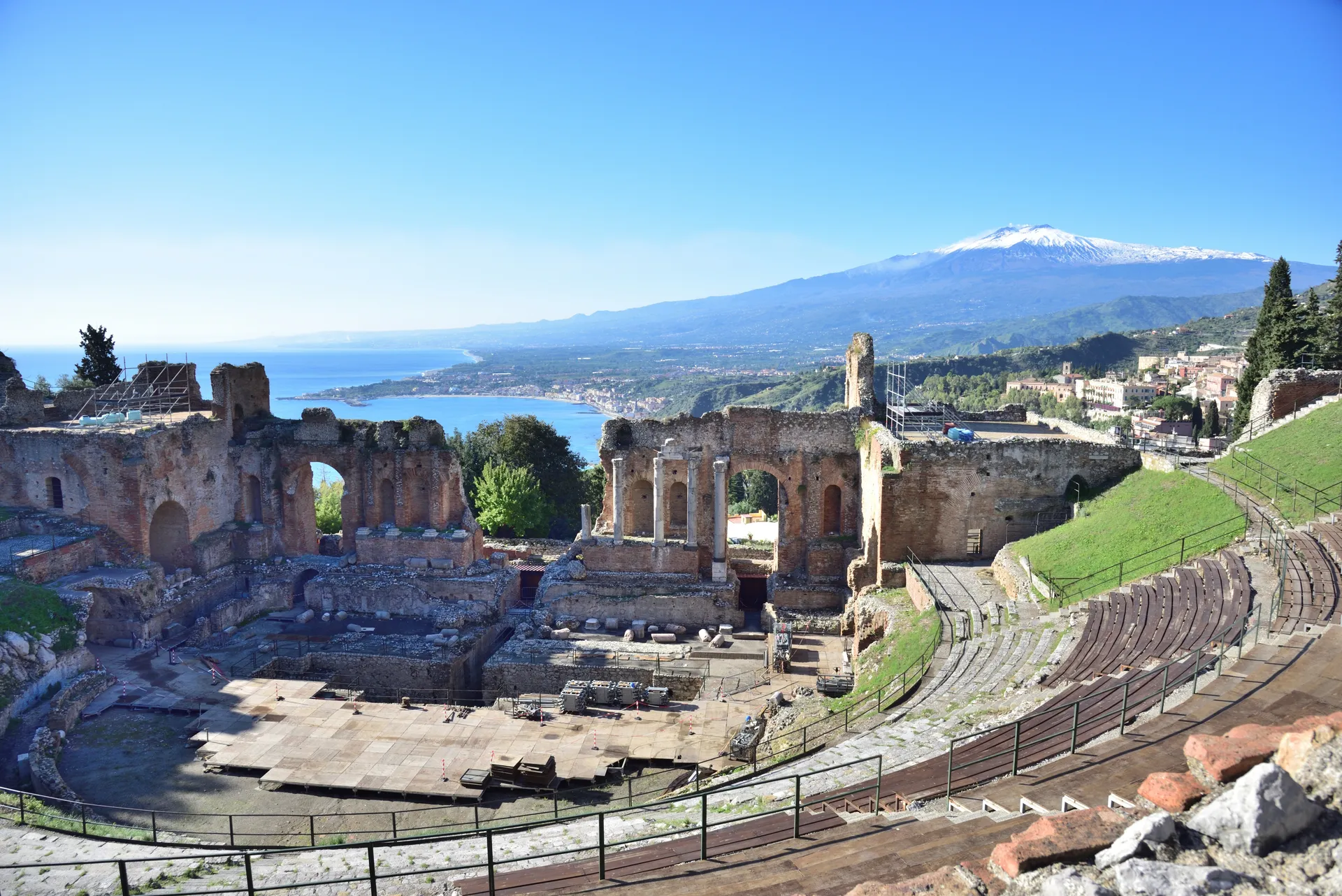
Taormina is a genuine stunner, a hilltop terrace above the Ionian Sea where the ancient Teatro Antico frames Mount Etna and a smoking summit meets a blue horizon. The setting, the Sicilian food, the warmth and the sheer glamour are hard to match, and English is widely spoken in this well-worn tourist town. The trade-offs are real, though. It is expensive by Sicilian standards, intensely seasonal, and light on nomad infrastructure, with no coworking and a thin remote-work community. The steep lanes and staircases test your legs and luggage, and high-season crowds can overwhelm the very charm you came for. It rewards a scenic, cultural, well-funded stay far more than a budget or infrastructure-hungry one.
- Pros: spectacular Etna-and-sea setting, ancient theatre, superb food
- Pros: warm climate, good safety, widely spoken English
- Cons: pricey, very seasonal, no coworking, thin nomad scene
- Cons: steep stairs and lanes, summer crowds and cruise-day surges
Who Taormina Is For
Taormina suits the well-funded slow traveler who values scenery, culture and comfort over cheap rent and coworking desks. If you can work self-sufficiently from an apartment, want to wake up to Etna views, and dream of unwinding over Sicilian dinners and cable-car beach days, this town delivers in style. It is ideal for a shoulder-season month, a couple or solo traveler on a good budget, or a remote worker pairing a light workload with real exploration of Etna and eastern Sicily. It is a poor fit for budget backpackers, anyone needing a busy nomad community, or those relying on rock-solid infrastructure and coworking. Rent a car to roam the island, and treat Taormina as a beautiful, cultured basecamp rather than a hustle hub.
- Great for well-funded, scenery-loving slow travelers
- Best for shoulder-season stays with a light workload
- Pair it with a car for Etna and wider Sicily
- Not for budget backpackers or coworking-dependent nomads