Cost of Living in Ravenna
Where this figure comes from. No cost survey covers Ravenna, so the $1,650 a month above is our own estimate rather than a measurement. On 416 of our 999 city guides the figure is built from a published Numbeo basket, a one-bedroom rent in the centre plus one person's monthly costs without rent, converted to USD; this city is not one of them. How we source everything.
Budget roughly $1,650 a month as a solo remote worker in Ravenna, which is moderate for northern Italy and considerably below Bologna or Milan. A one-bedroom apartment near the centre runs about $620 to $850, and the outer districts or Marina di Ravenna on the coast drop that to $500 to $650. Groceries land around $310 to $390. A lunch is $10 to $15, a restaurant dinner with wine $25 to $35, and Romagna's Sangiovese is cheap and good. A piadina, the local flatbread, is $4 to $6 and is what half the city eats at lunchtime. A monthly transit pass is roughly $32. Utilities add $120 to $210, more through a damp Po valley winter. Rent is quoted without the condominio charge, which covers the stairwell, the lift and the courtyard and is billed separately to the tenant under most contracts. A waste tax falls on the occupier rather than the owner and has to be registered when a lease starts. Landlords often prefer a contract under the flat-rate rental regime, which is cheaper for them and limits how the rent can be raised, so a tenant gains by asking which regime is in use.
Where to Work in Ravenna
Ravenna is a working city of about 160,000 with a port, a petrochemical sector and a satellite campus of the University of Bologna, and coworking exists in a modest way at roughly $130 to $200 a month. Most remote workers use their apartment or the cafes around Piazza del Popolo and the streets near the basilicas, which are relaxed about long stays. Italian fibre reaches most of the city and speeds are good; mobile data is cheap within EU roaming. English is limited outside the tourism trade and the university, which is worth knowing before committing: Ravenna receives a great many day visitors but has very few foreign residents, so daily life runs entirely in Italian. The city runs an internationally known school of mosaic restoration, and the workshops attached to it take commissions from around the world, which is an unusual thing for a place this size to hold and the one field in which it is a centre rather than a province. The port handles bulk cargo rather than containers and employs more of the city than the mosaics do. August empties the offices as thoroughly as anywhere in the country.
Getting Around Ravenna
Ravenna is flat, compact and one of the most cycle-friendly cities in Italy, with a large historic centre closed to traffic and bicycles everywhere. Almost everything a resident needs is within a twenty-minute ride. Buses cover the wider municipality, including the coast at Marina di Ravenna and Punta Marina, with a monthly pass around $32. The railway station is at the edge of the centre and connects to Bologna in about an hour and a quarter, Ferrara in an hour and Rimini in an hour, which puts a good deal of Emilia-Romagna within reach. Bologna airport is the practical international gateway at about ninety minutes. The Adriatic beaches are a fifteen-minute bus ride.
Sorting transport? Book an airport transfer, or compare car rental on Auto Europe and QEEQ.
Visas for Ravenna
Italy is in the European Union and Schengen. EU and EEA citizens may live and work here after registering residency; most other Western passports get 90 days in any 180. Italy's digital nomad visa became operational in 2024 after several years of delay and targets highly qualified non-EU remote workers and freelancers who meet income, insurance and professional-experience thresholds, granting a renewable one-year permit. The process runs through an Italian consulate abroad followed by a permesso di soggiorno application at the local questura, and Italian administrative procedure is demanding enough that most people use a professional. Emilia-Romagna's offices are better organised than the national average. A codice fiscale, the tax code, comes before everything else, is issued quickly and free at the revenue office, and nothing can be rented or signed without it. Residency is registered at the town hall and triggers a visit from the municipal police to confirm somebody actually lives at the address, which is a real step rather than a formality. The permit application itself begins at a post office counter with a stamped kit, which is the part that makes no sense to anybody until it is explained. San Marino, an easy drive south, is no exit: with no checks on its Italian border, the Entry/Exit System never sees you leave.
Best Time to Visit Ravenna
April to June and September to October are the best months. Spring is mild and the mosaics are at their best in the low angled light that fills the basilicas; autumn is warm, quiet and the Adriatic is still swimmable into September. Summer is hot and humid on the Po plain, into the low thirties, and the coast fills with Italian holidaymakers through July and August, particularly at Rimini and Cervia down the road. Winter is cold, damp and frequently foggy, which is the Po valley's characteristic weather, with temperatures near freezing and grey skies for weeks. The Ravenna Festival in June and July brings serious opera and orchestral programming to the city. The fog on the plain is not the thin sort: it settles for days at a time between November and February and closes the motorway far more often than snow ever does. Dante died here in 1321 after his exile, and the city has refused every request to give the remains back since, which is marked each September with readings at the tomb. The beach season starts in June and the coast empties completely by the middle of September.
Pros and Cons of Ravenna
Ravenna holds eight UNESCO-listed buildings and the finest Byzantine mosaics outside Istanbul, which is an extraordinary concentration for a city of this size, and it is flat, cycleable, safe and inexpensive by northern Italian standards. Dante is buried here. The Adriatic beaches are fifteen minutes away, Bologna is an hour by train, and the food of Romagna is excellent and cheap. The city is a quiet one, and outside the monuments it is an ordinary working town with a large industrial port attached. Winters are foggy and grey. There is no foreign community and no nomad scene at all, English is limited, and the coast nearby is package-holiday territory in summer.
Who Ravenna Is For
An interest in late antiquity, Byzantine art or Italian history is what brings people, and living among these particular buildings is worth arranging a life around. Cyclists get flat ground and a compact centre they can cross without effort. The price is reasonable by Italian standards, and Bologna's amenities sit an hour away without any of Bologna's rent. Couples and quiet solo workers do best. English will not carry daily life, no foreign community has formed, the nightlife is modest, the land is flat in every direction, and the winters are damp rather than crisp. Bologna is the obvious step up in size and energy, and Rimini is the coastal alternative with far more going on in summer. Twelve months is what it takes to see the mosaics in every light, which is why people who come for them tend to stay. Anyone without the language should expect the social world to stay small however long the stay runs.
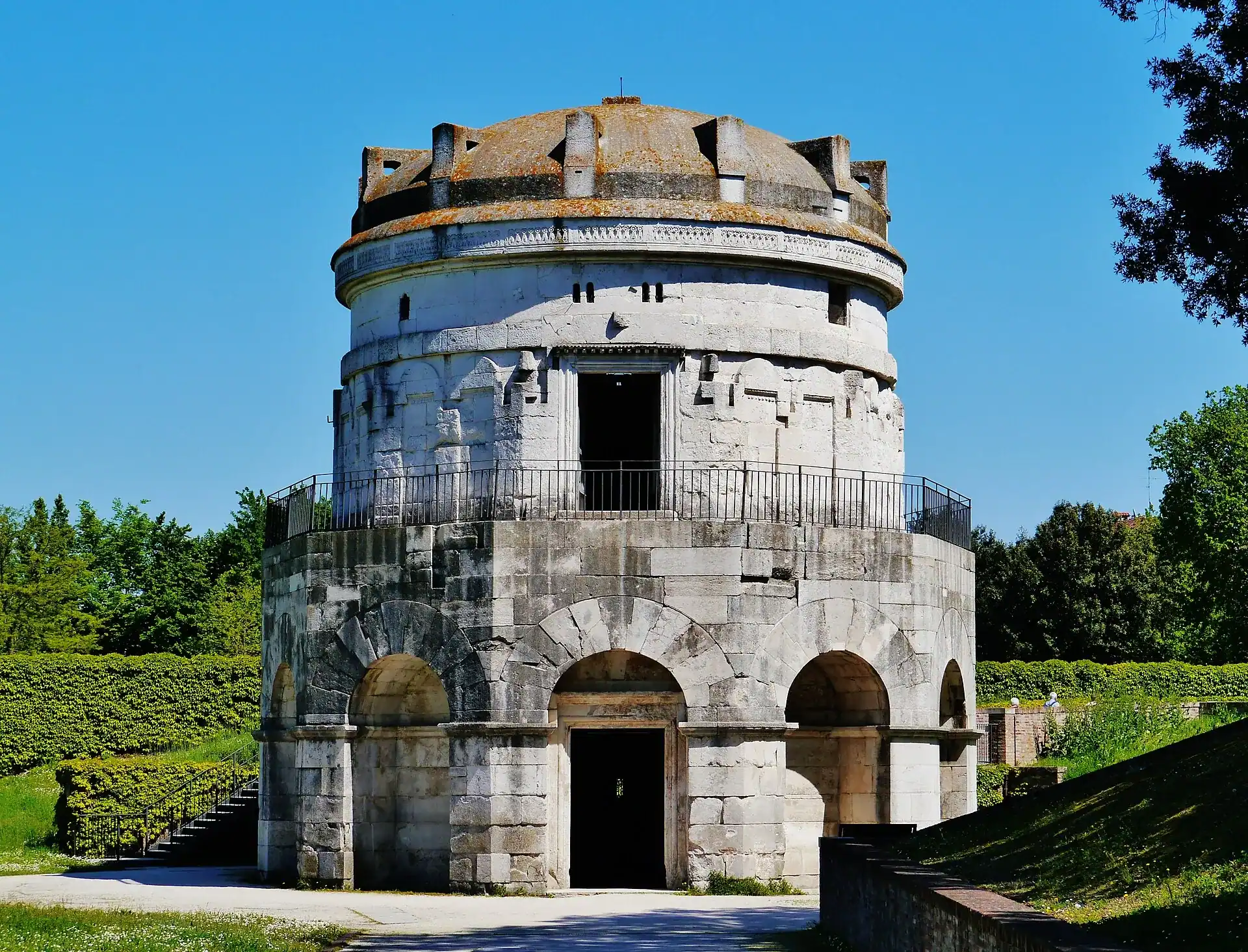 Photo: Zairon / Wikimedia Commons (CC BY 4.0)