Cost of Living in Jerusalem
Real market data
Source: Numbeo · September 2026
$2,950/moSolo nomad1-bed centre + living costs
$3,810/moCoupleshared 1-bed + costs
$2,360/moLean / localcheaper area + costs
- 1-bed rent, city centre$1,870₪5,725
- 1-bed rent, outside centre$1,290₪3,933
- Monthly costs excl. rent (1 person)$1,080₪3,293
- Meal, inexpensive restaurant$23₪71
- Monthly transit pass$70₪213
- Buy price, per m² (centre)$20,020₪61,200
Prices are from Numbeo (September 2026), converted to USD at $1 = ₪3.06 (01 Aug 2026). The monthly living-costs figure is our transparent one-person basket, groceries, a few meals out, utilities, phone, internet, transport and essentials, priced from those figures. Solo adds central rent; couple and lean are estimates from the same numbers.
Budget roughly $2,950 a month as a solo remote worker in Jerusalem, which makes it expensive by regional standards and comparable to a mid-sized Western European capital. A one-bedroom apartment in a central neighbourhood such as Nachlaot, Rehavia or the German Colony runs about $1,300 to $1,900, and rents are quoted in shekels but often discussed in dollars. Further out, in Kiryat Yovel or Pisgat Ze'ev, the same apartment is $900 to $1,200. Groceries run $400 to $550, noticeably less if you shop at Mahane Yehuda market rather than the supermarkets. A hummus lunch is $8, a restaurant dinner $25 to $40, and a monthly transit pass about $60. Utilities and municipal tax, the arnona, add $200 to $300 and catch newcomers out. Rent is often paid with a year of post-dated cheques handed over at signing, along with a guarantee from somebody local, which is a real obstacle for a newcomer with nobody to ask. Leases turn over in a single season keyed to the academic year, so arriving outside that window means taking what is left rather than choosing. A local bank account has to exist before any of it works.
Where to Work in Jerusalem
Jerusalem has a real coworking market, mostly clustered downtown around Jaffa Road and in the Talpiot business area, and several spaces are aimed at the technology and non-profit sectors rather than at tourists. Desk rates run about $200 to $300 a month. Cafe working is normal and accepted: the streets around Emek Refaim and the lanes off Jaffa Road have plenty of places where a laptop and a long coffee raise no eyebrows. Wifi is fast and widely available, and mobile data is cheap and excellent, so tethering is a genuine fallback. The one thing to plan around is Shabbat: from Friday afternoon to Saturday evening most of the city closes, including many cafes and nearly all transport, and this is not a city where that rule bends. Offices here open on Sunday and shut on Thursday evening, which leaves the local weekend and the European one overlapping by a single day, so anybody with clients abroad ends up working six days to cover both. The last working day is a short morning at best. That mismatch is the biggest practical adjustment for somebody arriving from Europe or America, and it wants planning for before the first week rather than after it.
Getting Around Jerusalem
Jerusalem is walkable in its centre and hilly enough that walking is real exercise. The light rail runs a single main line through the middle of the city, from Pisgat Ze'ev through the Old City walls and down Jaffa Road, and is the fastest way along that corridor. Buses cover everything else and are frequent, with a rechargeable Rav-Kav card or a phone app for payment. A monthly pass is about $60. Everything stops for Shabbat, from Friday afternoon until Saturday night, when taxis and shared sherut minibuses are the only option and charge accordingly. Tel Aviv is an hour away by fast train from Yitzhak Navon station, which makes day trips easy. Driving in the city is slow and parking is genuinely difficult; most residents do not bother with a car.
Sorting transport? Book an airport transfer, or compare car rental on Auto Europe and QEEQ.
Visas for Jerusalem
Israel grants most Western passports, including EU, UK, US, Canadian and Australian, a 90-day visitor permit on arrival, issued as a paper slip rather than a stamp. Since January 2025 an ETA-IL electronic travel authorisation must be obtained online before flying. There is no digital nomad visa, and working remotely for a foreign employer on a tourist permit sits in the usual grey area. Extensions are possible through the Population and Immigration Authority but are discretionary and not reliable. Anyone Jewish or with Jewish ancestry has a separate and much simpler route through the Law of Return, which grants citizenship. Border questioning is thorough on both entry and exit, and travellers should expect detailed questions about where they are staying and who they know. Keep the paper entry slip somewhere safe, because it stands in place of a stamp in the passport and is what exempts a visitor from sales tax on hotel bills and some other services. Losing it means paying that tax and explaining yourself on the way out. Entry is often granted for less than ninety days at the officer's discretion, so read what was actually written on it rather than assuming the maximum.
Best Time to Visit Jerusalem
Spring and autumn are clearly the best times. March to May brings warm days, cool evenings and hillsides that are briefly green, and September to November does the same in reverse. Summer, June to August, is hot and dry, with highs in the low thirties, though Jerusalem's 750 metre elevation makes the nights far more bearable than on the coast. Winter, December to February, is cool and wet, occasionally cold enough to snow, and the stone city looks its best in it. Plan around the festival calendar rather than the weather: Passover in spring and the September or October cluster of Rosh Hashanah, Yom Kippur and Sukkot close much of the city and push accommodation prices sharply up. Ramadan changes the rhythm of the Old City entirely. The sharav blows in off the desert at the turn of the seasons, hot and dry, lifting the temperature ten degrees and filling the air with dust for a day or two at a stretch. On the Day of Atonement the country stops completely: no traffic at all, and children riding bicycles down empty motorways, which is worth seeing once. Nothing is open that day, the airport included.
Pros and Cons of Jerusalem
Few cities offer this much history in this small a space, and for anyone interested in archaeology, religion or the politics of the region, Jerusalem is unmatched. The food is excellent, the markets are among the best in the Mediterranean, connectivity is first-rate and Tel Aviv is an hour away. The city is compact and the light is extraordinary. It is expensive, the political situation is a live and sometimes dangerous reality rather than a background detail, and travellers should follow their government's current advice rather than any guide, including this one. Shabbat removes a day and a half of normal service every week. The nomad community is small, as most remote workers in Israel base themselves in Tel Aviv. Social tensions are visible and can be uncomfortable.
Who Jerusalem Is For
Nobody arrives in this city without a specific reason to be here: research, faith, family, archaeology, or work connected to the region. It rewards curiosity and patience, and it punishes anyone hoping for a straightforward, cheap, easy base. A compact walkable city with serious food and several thousand years of history immediately outside the door is what is on offer, and the only real condition is a budget that can absorb what it costs. A large nomad community, cheap living, a beach and political calm are four things this city does not offer, and Tel Aviv, which is very close, answers most of them considerably better. Conditions here can change quickly.
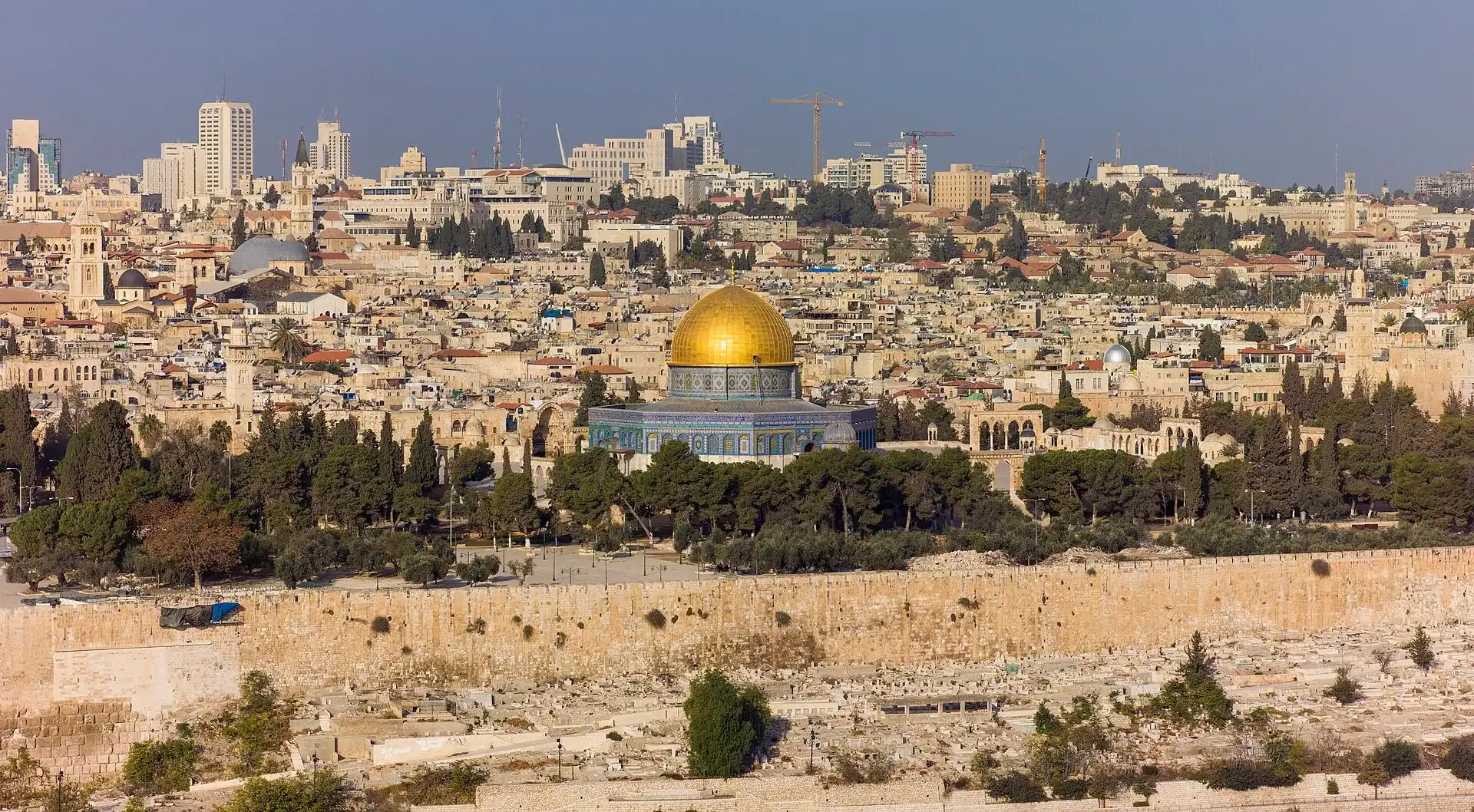 Photo: Godot13 / Wikimedia Commons (CC BY-SA 4.0)