Cost of Living in Byblos
Where this figure comes from. No cost survey covers Byblos, so the $1,100 a month above is our own estimate rather than a measurement. On 416 of our 999 city guides the figure is built from a published Numbeo basket, a one-bedroom rent in the centre plus one person's monthly costs without rent, converted to USD; this city is not one of them. How we source everything.
Byblos (Jbeil) can be surprisingly affordable or quietly expensive, depending on how you live and how you pay. Budget carefully and a single nomad might spend roughly $800 to $1,600 a month, with rent, generator fees, and dining the biggest swings. The catch is Lebanon's economy: after the currency collapse, much of daily life runs on physical US dollars ("fresh dollars"), and prices can shift week to week. Banking is difficult, international cards do not always work smoothly, and ATMs are unreliable, so many people carry cash. Every figure here is an editorial estimate rather than a fixed rate. Prices are worked out at roughly 89,500 Lebanese pounds to the dollar, the rate set in December 2023 after the old peg of about 1,500 was abandoned, so a bill running into hundreds of thousands of pounds comes to only a few dollars. Doing that sum before paying in either currency is the simplest way to avoid being short-changed on the conversion.
- Rent: roughly $400 to $900 for a modest furnished one-bedroom, higher near the harbour.
- Generator subscription and utilities can add $80 to $200 during heavy-cut months.
- A casual mezze meal often runs $8 to $20; harbour fish restaurants cost much more.
- Bring US dollars in cash and expect to pay for most things that way.
Where to Work in Byblos
Byblos is a lovely place to work in theory, but the infrastructure demands a plan. Lebanon's state electricity supply is minimal, so buildings rely on private diesel generators, and there are still daily gaps when the power switches over or fails. Home internet can be slow or intermittent, so a strong mobile-data plan on Alfa or Touch is essential backup, and many nomads tether through their phones during outages. Several cafes and better guesthouses have decent wifi and welcome laptops, especially in the modern town and around the old souk. If reliable connectivity is mission-critical for calls, build in redundancy and test any long-term stay before committing.
- Keep a charged power bank and a topped-up Alfa or Touch data SIM as backup.
- Ask any stay directly about generator hours and actual wifi speed.
- Cafes near the souk and modern town are the most laptop-friendly options.
Getting Around Byblos
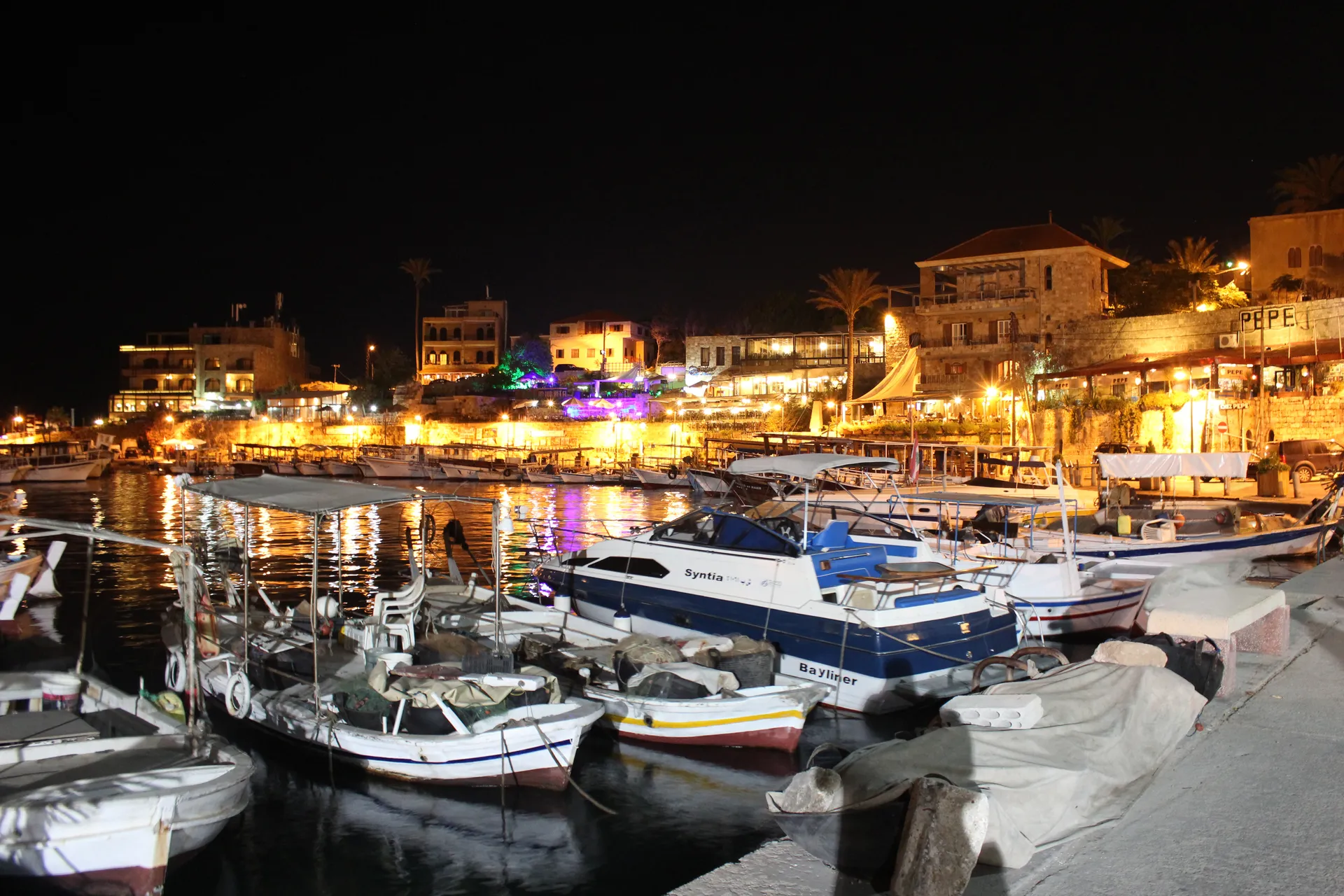
The heart of Byblos (Jbeil) is compact and best explored on foot. The old town, the souk, the archaeological site, and the picturesque fishing harbour all sit within easy walking distance of one another, so you rarely need a vehicle inside the historic core. For longer trips, taxis and shared "service" taxis run locally, and buses and vans travel the coastal highway to Beirut, which takes about an hour but can stretch much longer in traffic. Beirut-Rafic Hariri International Airport is the main gateway, roughly 40km south. A car gives you freedom to reach beaches and villages, but driving in Lebanon is chaotic and lane discipline is loose, so only self-drive if you are confident.
- Old town, souk, and harbour are all walkable.
- Shared service taxis are cheap; agree the fare before you get in.
- Beirut is about an hour south by road, traffic permitting.
Sorting transport? Book an airport transfer, or compare car rental on Auto Europe and QEEQ.
Visas for Byblos
Lebanon offers visa on arrival to citizens of many countries, and stays of one to three months are common depending on nationality, but rules change and enforcement varies. Entry can also be affected by regional events and your passport's stamp history. Lebanon has experienced periods of instability and security concerns, and conditions can change quickly. Byblos itself tends to be calm and tourist-friendly, but do not treat the wider situation casually. For citizens of more than 80 countries, including the EU states, the United States, Canada and Australia, the visa on arrival is free, runs for one month and can be extended by two more. The officer at Beirut airport asks for a non-refundable return or onward ticket and a Lebanese phone number and address, so have the Byblos booking to hand.
- Many nationalities get visa on arrival, but verify your own case in advance.
- An Israeli stamp or related travel history can cause entry problems.
- Always read the current official travel advisory before booking.
Best Time to Visit Byblos
Byblos has a classic Mediterranean climate, and the shoulder seasons are the sweet spot. Spring, from April to June, brings warm days, wildflowers, and comfortable temperatures ideal for exploring the ruins and souk. Autumn, from September to November, is similarly pleasant, with warm sea temperatures lingering into October. Summer, from July to August, is hot, humid, and lively, with the harbour and beach clubs at their busiest and nightlife in full swing, though the heat and crowds are intense. Winters are mild but wet, with grey skies and rain that can make power cuts feel gloomier. For the best balance of weather, atmosphere, and manageable crowds, aim for the shoulder months. Warm evenings are also when the Byblos International Festival stages its concerts in the historic quarter, the liveliest the old town gets all year.
- Spring (April to June): warm, green, and uncrowded.
- Summer (July to August): hot, humid, busy, and social.
- Autumn (September to November): warm sea and mild days.
- Winter: mild but wet, quieter, and cheaper.
Pros and Cons of Byblos
Byblos (Jbeil) rewards the right traveller and frustrates the unprepared. On the plus side, it is one of the oldest continuously inhabited cities on Earth, layered with Phoenician, Roman, and Crusader history, and its harbour, souk, and cafe culture are genuinely charming. The food is superb, English and French are widely spoken, and the town feels warm and welcoming. The downsides are structural: unreliable electricity and internet, a cash-only US-dollar economy with a broken banking system, volatile prices, and a country navigating serious economic and security challenges. This is not a plug-and-play destination. The archaeological site is compact enough to see in a morning, and it stacks the eras on a single headland: the Temple of the Obelisks from the second millennium BC, a small theatre built under the empire around AD 218, and the castle the Crusaders raised beside the port in the 12th century. During the 2024 war UNESCO put Byblos and 33 other Lebanese cultural sites under enhanced protection, a status meant to shield them from attack.
- Pro: extraordinary history, beautiful setting, and excellent Lebanese food.
- Pro: warm, sociable culture with strong English and French.
- Con: power cuts, patchy internet, and cash-only realities.
- Con: broader economic crisis and shifting security situation.
Who Byblos Is For
Byblos suits experienced, adaptable travellers who value culture and atmosphere over convenience and can roll with infrastructure that does not always cooperate. If you love ancient history, Mediterranean charm, and long evenings of mezze and conversation, and you can work around power cuts with your own backup connectivity and a stash of US-dollar cash, you will find it magical. It is a poor fit for anyone who needs guaranteed uptime for critical calls, relies on card payments and functioning banks, or wants a low-risk, hands-off base. Readers of history get a town that shaped how they read at all. The Greek word for papyrus, byblos, came from this port's trade in it and gave English the word Bible, and the sarcophagus of King Ahiram found here carries one of the earliest known inscriptions in the 22-letter Phoenician alphabet, the ancestor of Greek and Latin script. The original sarcophagus is in the National Museum in Beirut, so a day there belongs in the same plan.
- Great for culture-driven, flexible nomads who plan ahead.
- Fine for short, well-prepared stays with backup connectivity.
- Not ideal for those needing reliable banking or guaranteed uptime.