Cost of Living in Ulaanbaatar
Where this figure comes from. No cost survey covers Ulaanbaatar, so the $900 a month above is our own estimate rather than a measurement. On 416 of our 999 city guides the figure is built from a published Numbeo basket, a one-bedroom rent in the centre plus one person's monthly costs without rent, converted to USD; this city is not one of them. How we source everything.
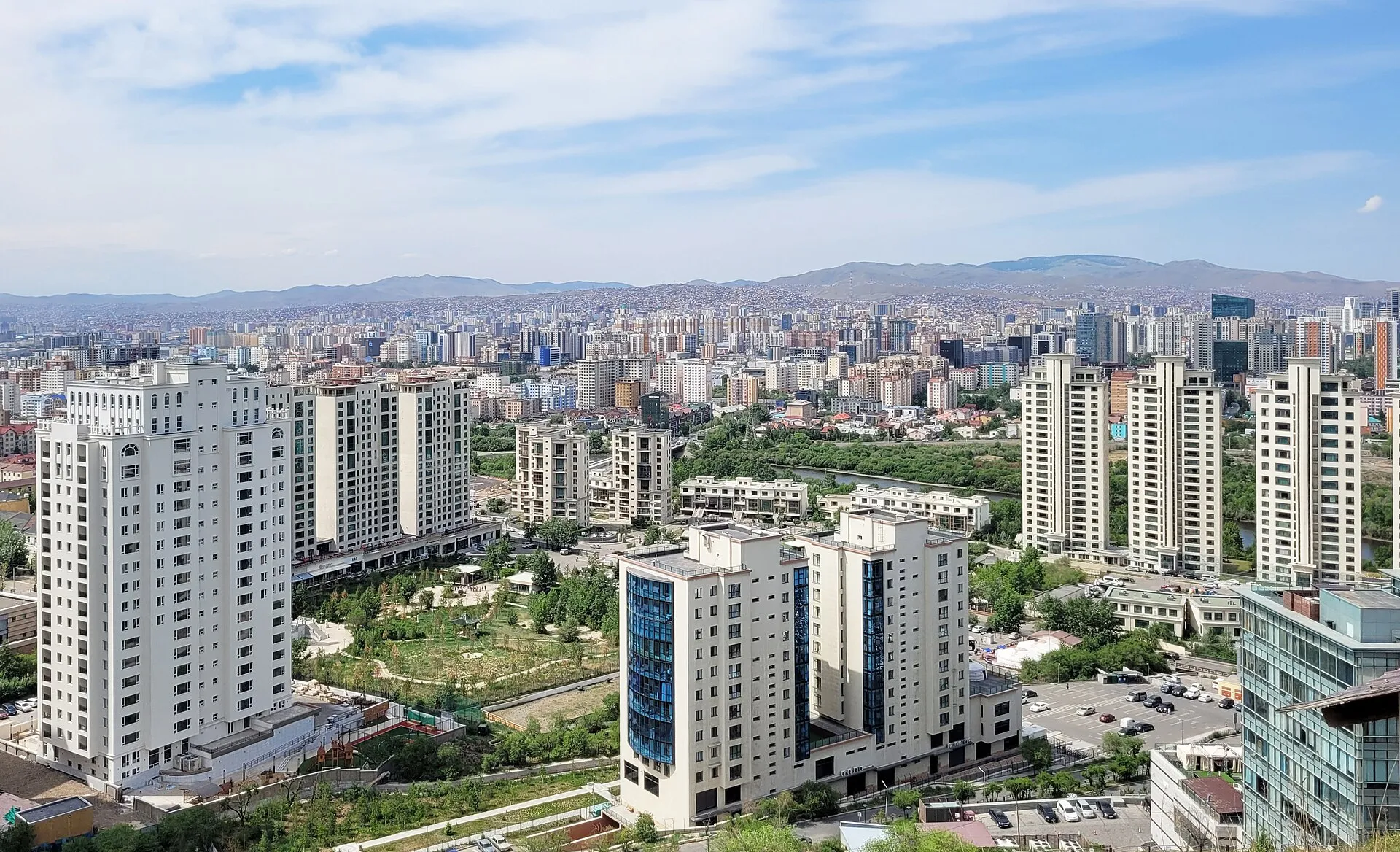
Ulaanbaatar runs around $900 a month for a single nomad, which covers a modern apartment and an unremarkable but comfortable life. A furnished one-bedroom on a monthly lease in Sukhbaatar district, near the State Department Store or around Seoul Street costs $300 to $550; further out in Bayanzurkh or Songinokhairkhan drops to $200 to $350. Food is moderately priced: a bowl of guriltai shul or a plate of buuz at a local canteen is $2 to $4, a mid-range restaurant meal is $8 to $15, and imported groceries carry a noticeable markup. A Mobicom or Unitel SIM with a monthly data bundle costs $8 to $15. Coworking desks run $80 to $150. Utilities are the seasonal variable: $40 in summer, $80 to $130 in winter when heating and electricity peak, though district heating is often bundled into rent. Transport is under $30. The verdict: fair rather than exceptional value, bought with a very hard winter. Heating in the apartment blocks comes from the power stations and runs from the middle of September to the middle of May whether anybody wants it or not, billed through the building charge, so a flat is warm and the cost is not a variable to manage.
Where to Work in Ulaanbaatar
Base yourself in Sukhbaatar district, ideally within walking distance of Sukhbaatar Square, Seoul Street or the State Department Store, since these hold the best apartment stock, the cafes and most services. Ulaanbaatar has a real cafe culture for its size: Tom N Toms, Caffe Bene and Coffee Bean cover the reliable Korean-style chains with sockets and long-stay tolerance, while independents around Seoul Street and the Blue Sky area are quieter. For dedicated space, look at the coworking and startup hubs around Sukhbaatar Square and the Shangri-La and Blue Sky towers; Mongolia's startup scene is small but the incubator space around the National University and the tech park rents desks. Fibre is genuinely good in the centre, and 4G coverage is strong in the city. The main caveats are winter power and heating load, minimal English outside the centre, and cafes that close early.
Getting Around Ulaanbaatar
There is no metro. Public transport is a dense city bus and trolleybus network with a U Money smart card, and fares are about $0.15 to $0.25, though buses are crowded and the routes are signed largely in Cyrillic. Ride-hailing dominates for foreigners: UBCab and local apps operate, and a cross-city car ride costs $2 to $5, while informal taxis, essentially any private car flagged down, charge a per-kilometre rate around $0.50. Traffic in Ulaanbaatar is genuinely bad for a city of 1.6 million, with license plate restrictions by day of week in place to manage it. The core around Sukhbaatar Square is walkable, but winter ice and sub-freezing temperatures from November to March limit walking for much of the year. Chinggis Khaan International Airport is 50km south, roughly 60 to 90 minutes, at $15 to $25 by taxi. No car needed in town; a hired 4x4 with driver is the norm for countryside trips. Overland, the weekly through train to Beijing resumed in June 2025 after a long pause and takes about 31 hours, including a slow stop at the Chinese border while the carriages are lifted onto new bogies for China's narrower track.
Sorting transport? Book an airport transfer, or compare car rental on Auto Europe and QEEQ.
Visas for Ulaanbaatar
Entry got much easier after 2023, when a temporary exemption let citizens of 34 countries, among them the UK, most EU members, Switzerland and New Zealand, visit visa free for thirty days of tourism; on 31 December 2025 it was renewed again to run until 1 January 2027, and Canadian, Japanese and German citizens hold separate, permanent thirty-day exemptions of their own. US citizens have long held a separate 90-day visa free arrangement. Where a visa is required, Mongolia operates an e-visa system for tourist and business categories. There is no digital nomad visa. Extensions of a visa free or tourist stay are possible through the Immigration Agency of Mongolia in Ulaanbaatar, typically adding up to 30 days, and must be applied for before the current stay expires; the office is on the road toward the airport. Anyone staying beyond 30 days on a longer visa must register with the immigration agency within one week of arrival, and failure to register is the single most common and most expensive mistake foreigners make here.
Best Time to Visit Ulaanbaatar
Ulaanbaatar is the coldest capital city in the world and the climate dictates everything. The good window is short: mid-June to early September, when days reach 20C to 25C, the steppe is green, and the countryside is genuinely accessible. Naadam, the national wrestling, archery and horse racing festival, falls on 11 to 13 July and is the single best reason to be in the country. May and September are shoulder months, cool, dry and pleasant, with September particularly good for travel as the crowds thin. From late October the temperature collapses, and December through February routinely sit between minus 20C and minus 35C, with January averaging around minus 25C. Winter also brings the city's worst problem: ger district coal burning creates particulate pollution among the worst on earth. Tsagaan Sar, the lunar new year, falls in February. March and April are windy, dusty and unpredictable. The winter air here is among the worst measured anywhere, because the districts on the hillsides burn coal for heat and on a still freezing night the smoke sinks and sits over the whole basin. It is a serious health matter rather than an inconvenience, and masks are ordinary equipment.
Pros and Cons of Ulaanbaatar
Ulaanbaatar offers something scarce: a genuinely different, low-tourism capital with surprisingly good internet, an easy visa position for most Western passports, a compact walkable core, decent coffee and a young, educated, increasingly English-speaking population. The real draw is outside the city, with the steppe, the Gobi, Terelj and the Khuvsgul region among the most spectacular and least crowded landscapes anywhere, and horse riding and ger stays within a couple of hours. Costs are moderate and crime against foreigners is generally low. The problems are seasonal and structural. Winter is not a figure of speech: five months below freezing, often far below, and coal smoke that makes the city's air among the world's most polluted from November to March, which is a genuine health cost. Infrastructure outside the centre is rough, pickpocketing in crowded areas is common, traffic is heavy, English drops off quickly outside the core, and the nomad community is essentially nonexistent.
Who Ulaanbaatar Is For
Ulaanbaatar fits the summer-season nomad and the adventure-oriented traveller: someone arriving in June and leaving in September, using the city as a serviceable, connected base for horseback trips, the Gobi, Naadam and long drives across empty country. It suits photographers, writers and anyone drawn to landscapes and cultures still far off the standard circuit, and it works for remote workers on European or Asian hours who want somewhere genuinely unlike anywhere else without visa hassle. Skip it as a winter base unless there is a specific reason to be there, because the cold and the air quality together are punishing, particularly for anyone with respiratory conditions or young children. Skip it too if a nomad community, year round outdoor life, beaches, cheap tropical costs or a large restaurant and nightlife scene matter, or if the work requires overlap with US time zones. Those wanting a full-year Asian base should look elsewhere.