Cost of Living in Xian
Real market data
Source: Numbeo · September 2026
$630/moSolo nomad1-bed centre + living costs
$880/moCoupleshared 1-bed + costs
$490/moLean / localcheaper area + costs
- 1-bed rent, city centre$310¥2,108
- 1-bed rent, outside centre$170¥1,183
- Monthly costs excl. rent (1 person)$310¥2,130
- Meal, inexpensive restaurant$3¥18
- Monthly transit pass$26¥174
- Buy price, per m² (centre)$2,370¥16,000
Prices are from Numbeo (September 2026), converted to USD at $1 = ¥6.76 (01 Aug 2026). The monthly living-costs figure is our transparent one-person basket, groceries, a few meals out, utilities, phone, internet, transport and essentials, priced from those figures. Solo adds central rent; couple and lean are estimates from the same numbers.
Budget around $630/month as a solo remote worker in Xian (editorial estimates in USD, converted from RMB), making it one of China's more affordable major cities. A one-bed apartment near the centre inside or close to the ancient city walls runs about $350-480, dropping to $230-330 in outer districts a short metro ride away. Food is a highlight and a bargain: a famous roujiamo (meat sandwich) or bowl of biangbiang noodles is $1.50-3, and a hearty Muslim Quarter feast for one lands under $8. Home cooking from local markets keeps groceries near $160-230. The metro costs roughly $0.30-0.75 a ride, so transport rarely exceeds $25/month. Coworking hot-desks run about $80-130/month, though many work from cafes for a $3-4 coffee. Utilities and fast broadband add $40-65. Xian delivers rich history and excellent food at a noticeably lower cost than the eastern coastal megacities. Well over a million students live in this city, one of the largest concentrations anywhere in the country, and that is what holds the price of food, haircuts and modest flats down where it is. The districts in the south near the campuses are where a newcomer gets the most for the money, and where the cheap eating is.
Where to Work in Xian
Xian's coworking scene is smaller than Chengdu's or Shanghai's but functional, with hot-desks broadly $80-130/month clustered in the high-tech zone and near the universities in the south of the city. Fibre broadband and 5G are fast and cheap, and mobile data is plentiful. As everywhere in mainland China, the Great Firewall blocks Google, Gmail, WhatsApp, Instagram, and many Western sites, so install and test a reliable VPN before you arrive, keep a backup, and expect occasional instability during video calls. Set up WeChat and Alipay early, since daily life and payments run on them. Cafe-work culture is present, with a decent independent coffee scene in the university districts and the trendier areas near the walls, though staff rarely speak much English, so translation apps are essential. Xian sees fewer foreign remote workers than the coastal hubs, so expect a more local, less English-friendly environment. Always confirm your VPN before scheduling meetings.
Getting Around Xian
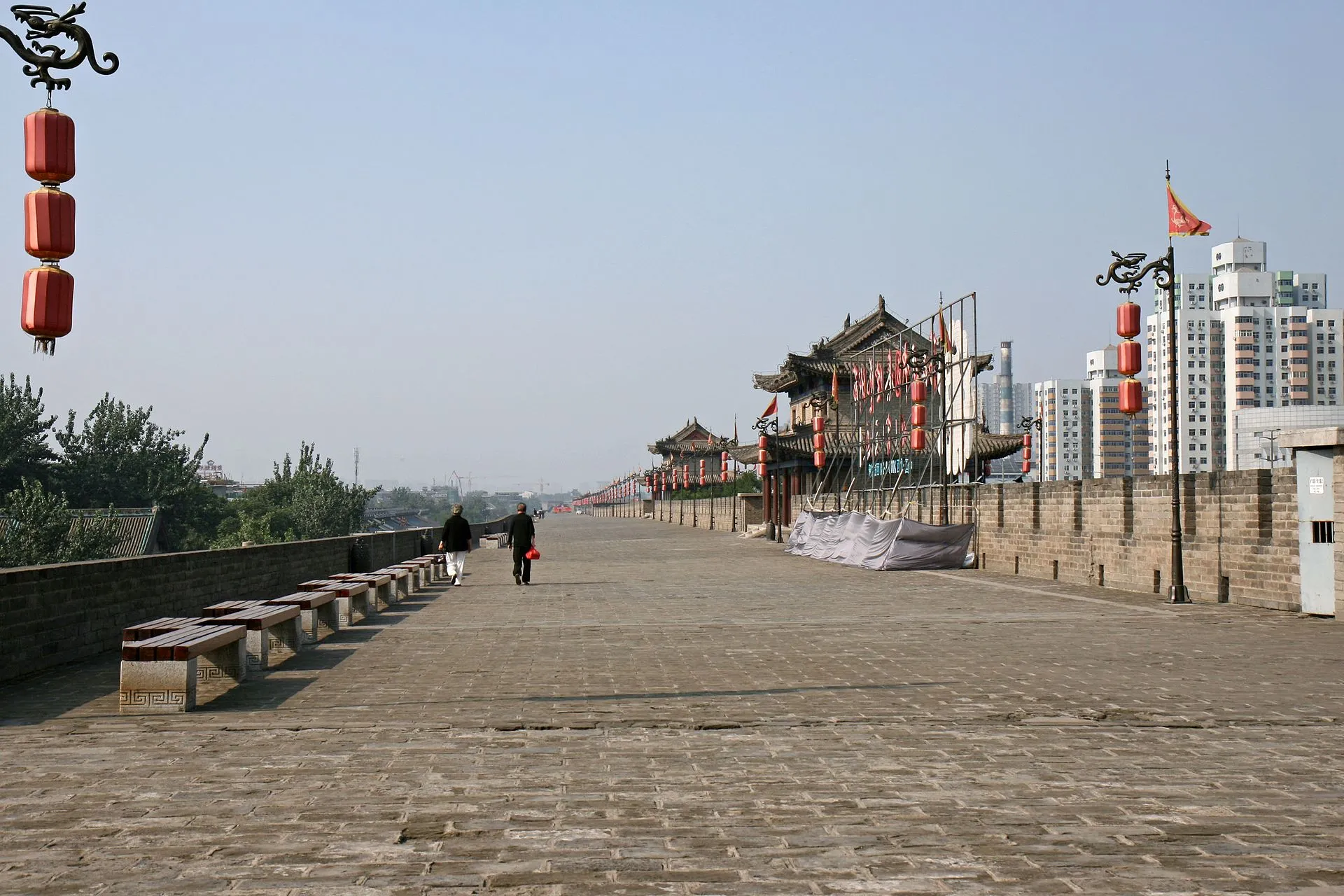
Xian has an excellent, cheap, and expanding metro system, with modern trains and fares around $0.30-0.75 that connect the walled centre, the high-speed rail station, and the airport line. The historic core inside the Ming-era city walls is compact and walkable, and you can even cycle the top of the walls themselves. Beyond the centre the city sprawls, so the metro plus Didi (China's Uber) covers the gaps; Didi is easy once linked to WeChat or Alipay, with typical rides $3-6. Bike-share handles short hops. You do not need a car. Xianyang International Airport, northwest of the city, is well connected by a dedicated metro line and airport buses and handles growing domestic and some international routes. High-speed rail links Xian to Chengdu, Beijing, and Luoyang in a few hours. The Terracotta Army is reachable by public bus or Didi. Between metro, Didi, and bikes, getting around is cheap and straightforward.
Sorting transport? Book an airport transfer, or compare car rental on Auto Europe and QEEQ.
Visas for Xian
China expanded visa-free access substantially in 2024-2025, offering unilateral visa-free entry of up to 30 days to passport holders from many countries, including much of the EU, the UK and Canada, plus Australia, New Zealand, Japan, and others. The list leaves out the United States, which means US citizens bound for Xi'an need a visa or the transit exemption below. A separate transit visa-free policy allows eligible travelers to stay up to 240 hours (10 days) when transiting to a third country, and Xian is among the covered entry points. There is no dedicated digital nomad visa, and these entries are officially for tourism, business, or transit rather than employment, so remote work for a foreign employer occupies a grey area best kept low-profile. Longer stays require a proper visa (such as M or F) arranged in advance through a Chinese embassy or consulate.
Best Time to Visit Xian
Xian has a temperate continental climate with four distinct seasons, more variation than the humid southern cities. The best times to visit are spring (April-May) and autumn (September-October), when days are mild and dry, roughly 60-77F, with clearer skies and comfortable sightseeing weather for the walls and Terracotta Army. Summers (June-August) are hot and can be humid, with highs in the upper 80s to mid-90s F and occasional heavy rain, plus dusty haze. Winters (December-February) are cold and dry, with highs near 40F, freezing nights, and some of China's worst seasonal air pollution as coal heating and the sheltered basin location trap smog; this is the main season to avoid if air quality concerns you. Spring can bring occasional dust from the north. Overall, aim for the April-May or September-October shoulder windows for the most pleasant temperatures and the cleanest air. Dust off the loess plateau to the north reaches the city in spring and can turn the sky yellow for a day at a time, which is a different thing from the winter smog and arrives with no warning at all. The lantern display on the walls at the new year is the best single sight in the local calendar.
Pros and Cons of Xian
Pros: Xian is affordable even by Chinese standards, safe, and steeped in history as an ancient capital, with the Terracotta Army, intact city walls, and the atmospheric Muslim Quarter on your doorstep. The food is outstanding and cheap, blending Shaanxi and Silk Road flavours. The metro is excellent and inexpensive, ride-hailing is easy, and high-speed rail connects you across the country. It offers a deeply local Chinese experience at low cost. Cons: the Great Firewall makes a reliable VPN mandatory for Western services, and English is spoken far less than in coastal hubs, so the language barrier is real. Winter air pollution can be severe, and winters are cold with poor indoor heating in some buildings. The foreign nomad community is small, daily life runs entirely on Chinese apps, and long-term visas remain difficult. Summers are hot and hazy. It is more historic than cosmopolitan.
Who Xian Is For
History is the draw, and the fit is a budget-focused arrival who wants an inland Chinese base rather than a glossy coastal expat scene. Ancient China is the subject, the imperial sites and the Silk Road material start at the doorstep, and Shaanxi food is substantial enough to be a daily argument for staying rather than an occasional treat. The rock-bottom cost of living lets a modest income go a long way, and the excellent metro and rail links make it a comfortable hub for exploring central China. It fits independent, culturally curious travelers who are comfortable with a significant language barrier and treat the VPN and app setup as routine. An English-speaking community of any size, unfiltered access to Western tools, breathable winter air and a straightforward route to staying past a month are all absent here, and none of them is arriving soon. Come to Xian for history, food, and value; be ready for a very local, less international day-to-day experience.