Cost of Living in Sarajevo
Real market data
Source: Numbeo · August 2026
$1,080/moSolo nomad1-bed centre + living costs
$1,550/moCoupleshared 1-bed + costs
$920/moLean / localcheaper area + costs
- 1-bed rent, city centre$480BAM 814
- 1-bed rent, outside centre$320BAM 552
- Monthly costs excl. rent (1 person)$600BAM 1,015
- Meal, inexpensive restaurant$9BAM 15
- Monthly transit pass$35BAM 60
- Buy price, per m² (centre)$3,220BAM 5,475
Prices are from Numbeo (August 2026), converted to USD at $1 = 1.7 BAM (01 Aug 2026). The monthly living-costs figure is our transparent one-person basket, groceries, a few meals out, utilities, phone, internet, transport and essentials, priced from those figures. Solo adds central rent; couple and lean are estimates from the same numbers. The guide below quotes its own monthly range, which is a different measurement rather than a competing one: this table prices a defined basket at the figures above, while that range is a judgement about how somebody actually lives here.
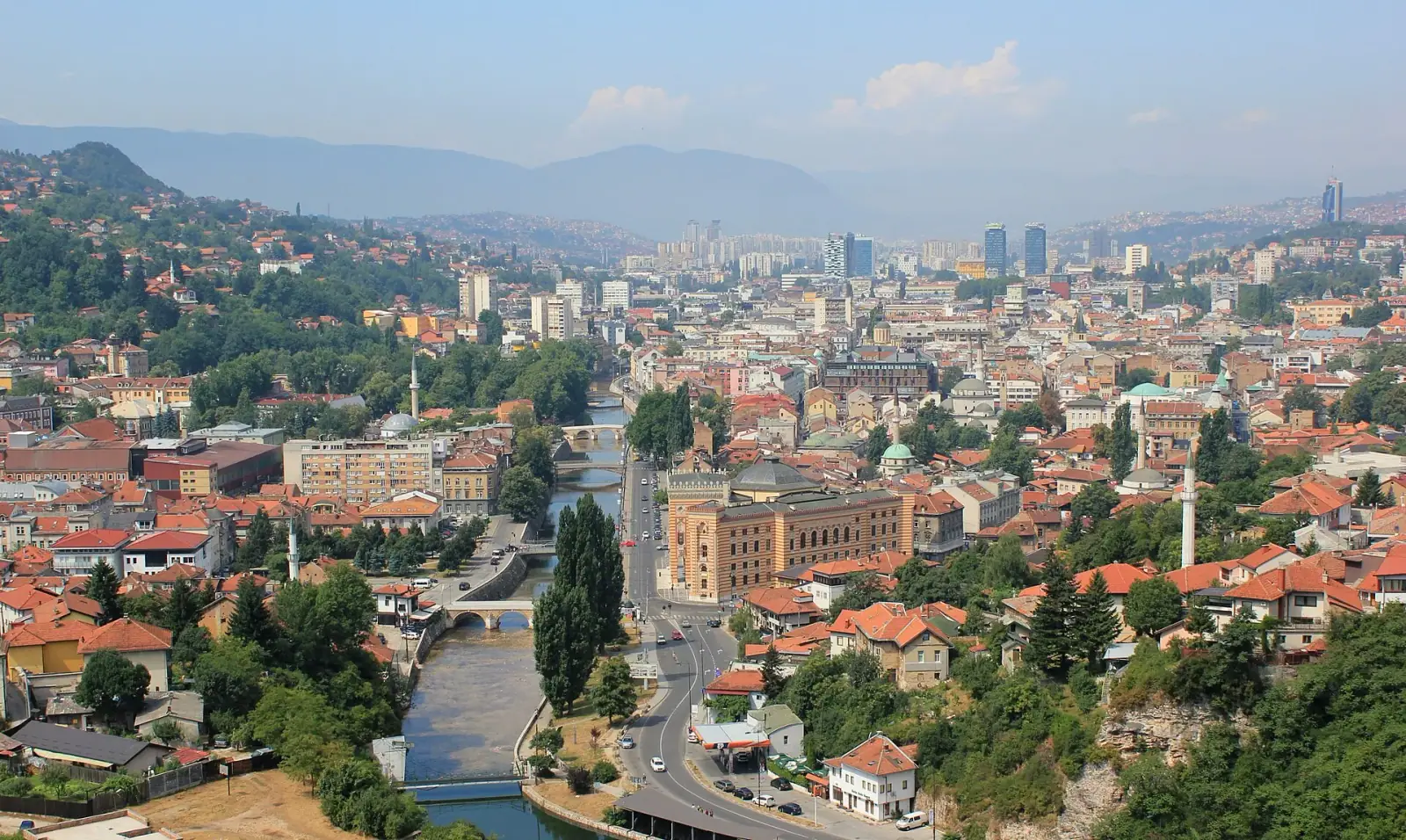
Sarajevo is one of the most affordable capitals in Europe, and your money goes noticeably further here than in neighboring Croatia or Slovenia. Expect to spend around $470-705 per month on rent alone. A one-bedroom apartment in the city center (Centar or Baščaršija) runs $325-530, while the same apartment in quieter outer districts like Hrasno or Ilidža drops to $265-410. Utilities add roughly $59-88 on top.
Monthly groceries at local markets and supermarkets cost around $120-165 if you cook most meals. Eating out is genuinely cheap: a sit-down lunch at a local restaurant runs $4.50-9, while a decent dinner with drinks is $12-21. A flat white at a specialty cafe is $2-3. Grbavica, across the river and a short walk from Marijin Dvor, is where many younger residents rent, in plain Yugoslav-era blocks that cost less than the streets around Baščaršija, where short-term holiday lets have absorbed much of the old housing.
- Rent (1BR, central): $325-530
- Rent (1BR, outer area): $265-410
- Groceries: $120-165
- Eating out: $88-145
- Coworking hot-desk: $175-220
- Local transport (monthly pass): $18-26
- Total comfortable range: $795-1,240 per month
Where to Work
Sarajevo has a small but solid coworking scene. HUB387 in the city center is the most popular option, with fiber internet, a sociable atmosphere, and flexible daily or monthly passes. tershouse, housed in a renovated 1890 Austro-Hungarian railway workshop at Kolodvorska 12, advertises fibre WiFi and 24/7 access in a striking historic setting. Easy Coworking in the Skenderija district is the most affordable option and stays quieter, suiting focused solo work.
Cafe culture is deeply embedded here, and many independent cafes actively welcome laptop workers. Habitus Cafe even offers structured digital nomad day and week packages with meals included. Gypsy Coffee Lab is a specialty coffee shop with reliable WiFi and plenty of outlets. Most independent cafes have free WiFi, though speeds vary and are best confirmed before committing to a full workday session.
The general WiFi situation is workable, and fiber infrastructure in the city has improved significantly. You will rarely struggle to find a functional connection for video calls in a coworking space. Cafe WiFi is more inconsistent, particularly during busy lunch hours.
Getting Around
The historic center of Sarajevo is compact and very walkable. You can cover the old bazaar quarter (Baščaršija), the Austro-Hungarian district, and the modern city center on foot in under 30 minutes. The terrain is flat along the valley floor, though side streets climb steeply into the surrounding hills.
Public transport is run by GRAS and covers the city with trams, trolleybuses, and buses. Trams run east-west along the main valley corridor from Baščaršija to Ilidža. A single ticket costs $1 from the driver ($1 from a kiosk), and a monthly pass runs around $18-26. The network is reliable for the central areas but less so for hillside neighborhoods.
Getting to and from Sarajevo International Airport (SJJ) is straightforward. Trolleybus line 103 runs directly between Baščaršija and the airport, taking roughly 30-40 minutes and costing under $1. Taxis are available but negotiate the fare or use an app; the ride should cost $9-15. Ride-hailing apps like Bolt operate in the city. The Trebević cable car, rebuilt and reopened in 2018 after the war destroyed the original, lifts you from the Bistrik neighbourhood to the mountain in about ten minutes, and the abandoned bobsleigh track from the 1984 Winter Olympics up there makes an easy after-work walk.
Sorting transport? Book an airport transfer, or compare car rental on Auto Europe and QEEQ.
Visas and Staying Long-Term
Bosnia and Herzegovina is not in the European Union or the Schengen Area, so visa rules are set independently. Citizens of the US, UK, EU countries, Canada, and Australia can enter visa-free for up to 90 days within any 180-day period. This is a generous allowance for shorter stays.
Bosnia and Herzegovina does not offer an official digital nomad visa as of 2025-2026. The most practical long-term option is to register a business entity in the country, which then makes you eligible to apply for a temporary residence permit valid for up to 12 months, with extensions available. Border runs do not reset the visa-free allowance, because the window rolls: a week in Montenegro only pauses the count, and Croatia has been inside Schengen since 2023, so days there come out of a separate allowance and that border now takes your fingerprints and photo for the Entry/Exit System. The rule that catches independent travellers is registration: every foreigner must have an address registered with the police or the Service for Foreigners' Affairs within 48 hours of arriving, which hotels handle automatically and a private host may not, so ask the landlord of a rented flat for the white card that proves it was done.
Best Time to Visit
Sarajevo sits in a valley at around 500 meters above sea level with a humid continental climate. Summers are warm with highs of 25-30°C (77-86°F) in July and August, winters are genuinely cold with regular snow from December through February, and spring and autumn offer mild, pleasant days.
For remote work, May, June, and September are the best months. Temperatures are comfortable (15-22°C / 59-72°F), tourist crowds are manageable, and the city feels alive without the August peak-season congestion. The Sarajevo Film Festival runs in August and adds an interesting cultural dimension, though accommodation prices rise slightly.
Avoid November through February if air quality is a concern for you. The valley geography traps coal and wood smoke from residential heating, and winter pollution episodes can reach hazardous levels. In December 2025, AQI readings pushed above 300 on several days, causing school closures and flight cancellations. Summer air quality is significantly better.
Pros and Cons
- Pro: Extremely affordable cost of living by European standards
- Pro: Rich multicultural history and architecture with Ottoman, Austro-Hungarian, and Yugoslav layers
- Pro: Safe city with low street crime; locals report feeling secure day and night
- Pro: Good internet infrastructure and a growing coworking scene
- Pro: Outstanding local food, especially grilled meats, burek, and fresh produce markets
- Pro: Easy access to nature including ski areas (Jahorina, Bjelasnica) within 45 minutes
- Con: Severe winter air pollution is a real health concern from November to February
- Con: No digital nomad visa; long-term stays require business registration or creative solutions
- Con: Nomad community is small; social connections take effort to build
- Con: English is spoken by younger people but less common among older residents and in non-tourist areas
- Con: Nightlife scene is modest compared to larger European cities
- Con: Political instability in Bosnia and Herzegovina at the national level can create uncertainty, though Sarajevo itself is calm
Who Sarajevo Is Best For
Sarajevo suits budget-conscious remote workers who want a European base without the inflated costs of Prague, Lisbon, or Tbilisi. If you genuinely enjoy exploring history, eating well, and spending weekends hiking or skiing, the city rewards that kind of traveler deeply. It works best for solo workers or couples on a one-to-three month stint, especially in spring or autumn.
It also suits people drawn to off-the-beaten-path destinations. Sarajevo is not yet a polished nomad hub, and that is part of the appeal. You will interact more with locals, eat at neighborhood spots rather than Instagram-friendly cafes, and pay very little for a lot.
Skip Sarajevo if you need a thriving nomad meetup scene, are sensitive to air quality in winter, or want the infrastructure depth of a larger city. It is also not ideal for longer stays without a clear visa pathway, unless you are willing to handle the administrative work of setting up a local business structure.