Cost of Living in Sokcho
Where this figure comes from. No cost survey covers Sokcho, so the $1,500 a month above is our own estimate rather than a measurement. On 416 of our 999 city guides the figure is built from a published Numbeo basket, a one-bedroom rent in the centre plus one person's monthly costs without rent, converted to USD; this city is not one of them. How we source everything.
Budget roughly $1,500 a month as a solo remote worker in Sokcho, which is well below Seoul while still being South Korea. A one-bedroom apartment or officetel near the centre or the beach runs about $450 to $700, and Korean leases traditionally involve a large deposit, the jeonse or wolse system, so short-term and foreigner-friendly options often come at a premium through agencies or serviced buildings. Groceries land around $350 to $450; Korean supermarket prices for fruit and imported goods are high. A bowl of noodles or a gimbap lunch is $6 to $9, a Korean barbecue dinner for two $30 to $45, and the fish market by the port is excellent and cheap. Utilities add $80 to $160.
Where to Work in Sokcho
Sokcho is a city of about 80,000 and has no meaningful coworking scene; that sits in Seoul and Busan. Remote workers here work from their accommodation or from cafes, of which Korea has an extraordinary density even in small cities, and Korean cafe culture positively expects long laptop sessions. Connectivity is the reason Sokcho works at all as a base: South Korea has among the fastest and most reliable internet anywhere, fixed-line and mobile alike, and that holds outside the capital. Public wifi is ubiquitous. English is limited in daily life, and while translation apps handle most transactions, anything administrative is considerably easier with a Korean-speaking friend. Half the town was settled by refugees who came south from the far north during the war and expected to go back, and their descendants still run the market and the food stalls that carry those northern dishes, which is a piece of history you eat rather than read. The economy otherwise is fishing, the squid boats and whatever the national park brings in. None of it employs foreigners, so the work you do here is what you brought with you, and the compensation is a cost of living well under the capital.
Getting Around Sokcho
Sokcho is compact and spread between the beach, the port and the Cheongchoho lagoon, and much of it is walkable or cyclable on the flat. City buses cover the rest cheaply with a T-money card, and the same card works nationwide. Bus 7 and 7-1 run to Seoraksan national park, which is the main reason most people are here, in about twenty minutes. Express buses connect Sokcho to Seoul in around two and a half hours, and this is the standard route since the city has no railway station, though a KTX line to the east coast has been under development. Yangyang international airport is nearby with limited service; Incheon is the practical international gateway. The coast road north runs out after about an hour at a checkpoint, beyond which the civilian control zone begins and an observatory looks across the line into the other country, a reminder that this is a border province rather than simply a holiday one. Traffic on the mountain road west is heavy on autumn weekends, and a journey that takes an hour in spring can take three when the leaves turn. Bicycles can be hired by the lagoon and the flat loop around it is the pleasant local ride.
Sorting transport? Book an airport transfer, or compare car rental on Auto Europe and QEEQ.
Visas for Sokcho
South Korea grants most Western passports 90 days visa-free, and requires many of them to obtain a K-ETA electronic travel authorisation before departure, though this requirement has been temporarily waived for a rotating list of countries. Korea's F-1-D workation visa, piloted from 2024 and made a permanent category on 30 June 2026, is for remote workers employed by foreign companies with at least a year of experience in their field. Its income floor is a multiple of Korea's gross national income per head: Sokcho is outside the capital region, so applicants aged 18 to 34 need one times GNI, about $36,400 a year, and applicants 35 and over, or anyone bringing family, one and a half times, about $54,600. It is granted a year at a time up to three years and allows accompanying family. It was a significant addition, as Korea previously had no route at all for remote workers. The remote work visa carries an insurance condition that is unusually specific: the policy has to cover medical costs up to a high fixed sum, and a standard travel policy will not satisfy it. Holders may not take work from a local employer at all, which is the line separating it from every other long-stay category. A criminal record certificate, apostilled and translated, is part of the file, and obtaining one from a home country usually takes longer than the rest of the application put together.
Best Time to Visit Sokcho
Autumn, late September through November, is the outstanding season in Sokcho: clear skies, cool air and the foliage on Seoraksan, which is one of the most celebrated autumn sights in Korea and fills the park and the town at weekends. Spring, April and May, is the second window, mild and with cherry blossom. Summer is hot and humid, into the low thirties, and July brings the monsoon rains, but this is also when the east coast beaches are the point and Sokcho fills with Korean holidaymakers. Winter is cold, often below freezing, and this stretch of coast gets heavy snow, which makes Seoraksan spectacular and the roads occasionally difficult. Book far ahead for autumn weekends. A dry wind comes off the mountains at the turn of the year and has driven serious wildfires through this region several times lately, and the emergency alerts that reach every phone in those weeks are not a formality. The squid season runs through the warmer months and the boats work at night under lamps bright enough to read by from the shore. Sea fog rolls in on summer mornings and clears before noon, which is why the early swimmers have the beach to themselves.
Pros and Cons of Sokcho
Sokcho gives you Korean infrastructure, which is to say some of the best internet, transport and healthcare in the world, in a small coastal city with a national park of granite peaks directly behind it and the East Sea in front. Costs are well below Seoul, the seafood is superb, and the country is exceptionally safe. English is genuinely limited and Korea is administratively demanding for foreigners: banking, phone contracts and rentals all involve their own hurdles. There is no foreign community in Sokcho and no nomad scene. The city is quiet outside the tourist seasons and busy within them. Winters are cold and snowy, and Seoul is a two and a half hour bus ride rather than a commute.
Who Sokcho Is For
Korea without the cost and intensity of Seoul, for people who hike or climb and can operate in a mostly Korean-language environment. The new workation visa paired with somewhere genuinely quieter is a rare combination in Korea. Seoraksan is what draws most people in the first place, and the infrastructure and the safety are what keep them. Solo workers who came for focus get it, and couples manage too without much adjustment. Daily life runs in Korean and no app closes that gap, the nightlife is a handful of places by the harbour, and a professional network would have to be assembled from nothing by somebody who does not speak the language. Seoul and Busan have all of that, and Busan in particular offers a coastal city with far more happening.
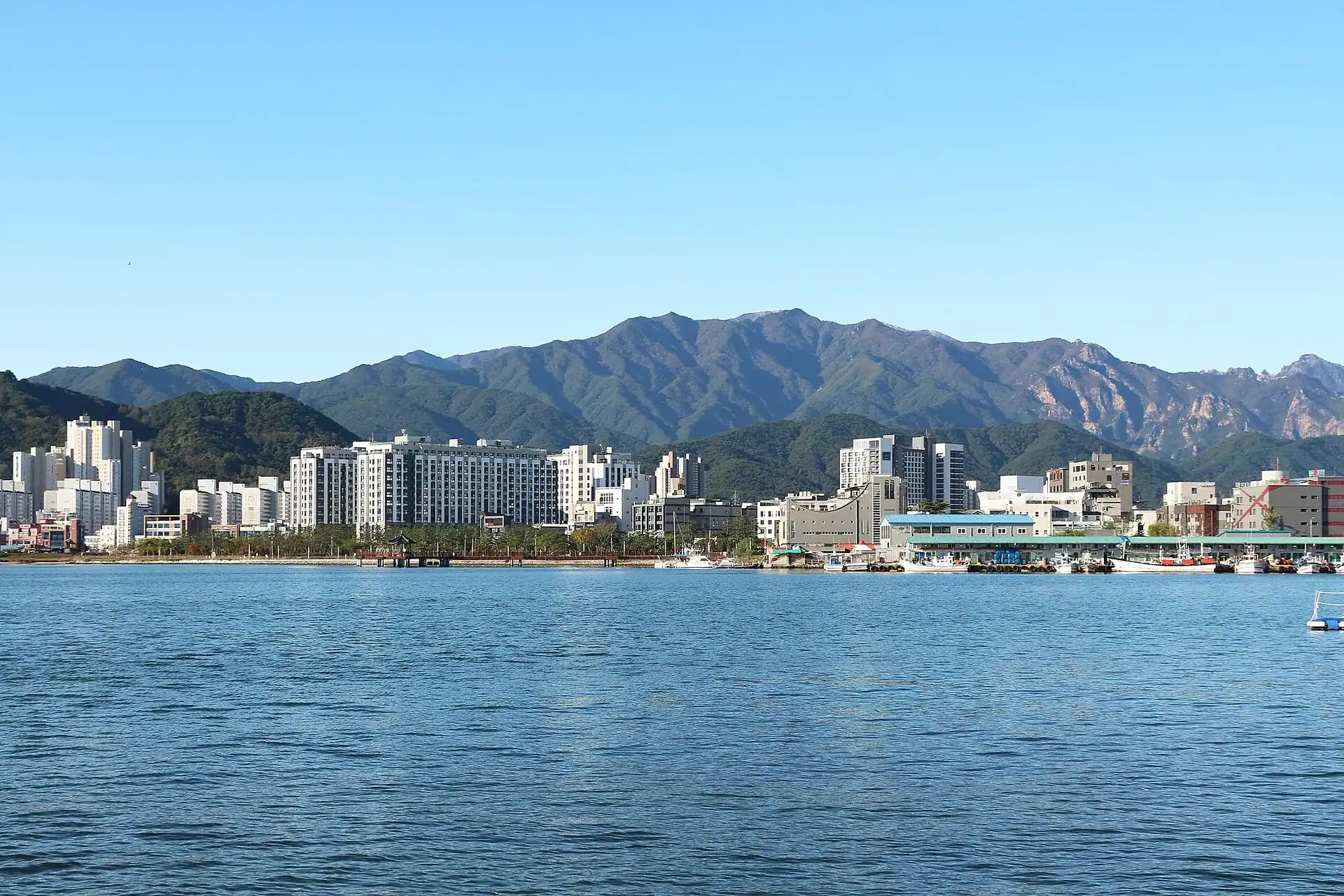 Photo: Bernard Gagnon / Wikimedia Commons (CC0)