Cost of Living in Bishkek
Real market data
Source: Numbeo · August 2026
$900/moSolo nomad1-bed centre + living costs
$1,160/moCoupleshared 1-bed + costs
$720/moLean / localcheaper area + costs
- 1-bed rent, city centre$570KGS 50,213
- 1-bed rent, outside centre$400KGS 34,623
- Monthly costs excl. rent (1 person)$330KGS 28,504
- Meal, inexpensive restaurant$7KGS 600
- Monthly transit pass$12KGS 1,020
- Buy price, per m² (centre)$1,690KGS 147,943
Prices are from Numbeo (August 2026), converted to USD at $1 = 87.42 KGS (01 Aug 2026). The monthly living-costs figure is our transparent one-person basket, groceries, a few meals out, utilities, phone, internet, transport and essentials, priced from those figures. Solo adds central rent; couple and lean are estimates from the same numbers.
Bishkek is one of the cheapest capital cities a remote worker can choose, with a comfortable single-person budget of roughly $700 to $1,100 a month. Soviet-era apartments in the centre rent for about $300 to $550 furnished, and everyday costs are very low: a hearty plate of plov or a bowl of lagman costs a couple of dollars, and Osh Bazaar keeps grocery bills tiny. Cheap Yandex taxis and marshrutkas round out an easy, affordable daily life. These are our editorial estimates, priced in the som, and the city offers strong value even against other Central Asian bases. Heating is the seasonal cost worth asking about before you sign. Older blocks run on district heating that is usually bundled into the rent and comes on whether you want it or not, while newer buildings with their own boilers push a real bill onto the tenant. An air purifier belongs on the shopping list for the same months. Weekend trips are the other variable: a shared car to the mountains and a night in a guesthouse or a yurt camp is cheap on its own but adds up if you go every week.
- Furnished flat in the centre: roughly $300 to $550 a month
- Plate of plov or lagman: roughly $2 to $4
- Marshrutka or short taxi ride: under $1 to $2
- Monthly mobile data package: roughly $3 to $6
Where to Work in Bishkek
Bishkek's remote-work scene is small but functional. Home internet and 4G are cheap and generally adequate for calls, and a handful of coworking spaces and a growing cafe culture around the centre give you places to plug in. Speeds are decent rather than blazing. A Beeline, O! or MegaCom SIM costs almost nothing and provides a reliable backup. The city is a natural base between mountain trips, and many nomads treat it as a comfortable, low-cost place to work through the week before heading into the Tian Shan at the weekend. The clock here runs six hours ahead of UTC, an hour further east than most of the region, which makes an afternoon start the natural way to catch European colleagues and leaves the morning genuinely free. Low water at the reservoirs has caused scheduled power cuts in some recent winters, announced in advance by district, so a laptop that holds a charge and a phone with data matter more from December to February than at any other time. Most local services operate in Russian, and a translation app earns its place on the phone within a day.
Getting Around Bishkek
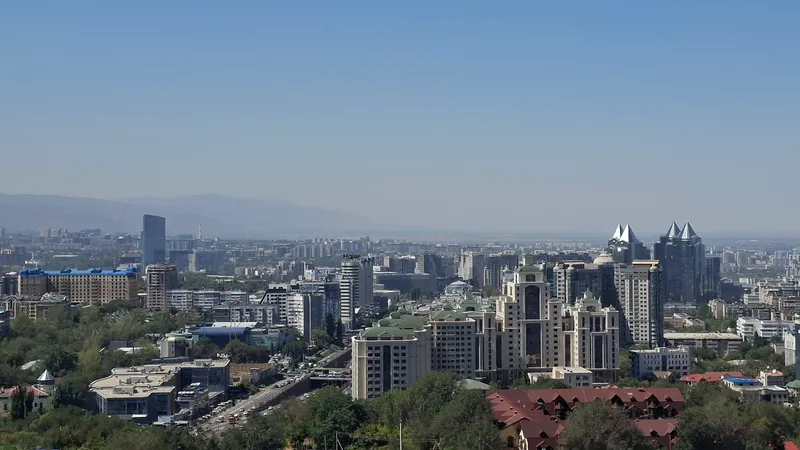
Bishkek is laid out on a flat, walkable Soviet grid, which makes orienting yourself simple. Marshrutka minibuses and city buses cover the routes cheaply if chaotically; the trolleybus network was dismantled through 2024, so older advice about the wires no longer applies. Most nomads rely on the Yandex Go app, where taxis cost only a dollar or two across town. The compact centre around Ala-Too Square and the main museums is easily walked. For the mountains, shared taxis and marshrutkas run to Ala-Archa National Park in under an hour and to Lake Issyk-Kul in a few, while Manas International Airport connects Bishkek to Central Asian, Russian, Turkish and Gulf hubs. The airport lies well north of the city, around half an hour out on a good day, and a booked car costs little more than the shared minibus that runs the same route. Long-distance travel to the south of the country goes from the western bus station rather than the central one, which catches people out, and the road over the mountains is spectacular and long. In winter the roads into the high country need snow tyres and sometimes close entirely, which is worth confirming before committing to a weekend plan rather than discovering at the last pass.
Sorting transport? Book an airport transfer, or compare car rental on Auto Europe and QEEQ.
Visas for Bishkek
Citizens of the EU, UK, US and many other countries can enter Kyrgyzstan visa-free for up to 30 days in any 60-day period. The allowance was cut from 60 days in 120 on 31 December 2025, so older advice promising a two-month stay with no paperwork no longer holds. Longer stays need a visa or registration with the State Registration Service, and the rules are relatively straightforward by Central Asian standards. Note your permitted period to avoid overstay penalties on exit. The border run no longer works the way it used to. A few hours into Kazakhstan does not reset the clock, because the 30 days are counted across any 60-day window, so a long stay now means alternating a month here with a month in a neighbouring country, or holding a visa. Do not get sloppy about the count: fines for overstaying are calculated per day and collected at the airport, where an argument is not going to help. Register anything longer than the free allowance rather than hoping nobody checks.
Best Time to Visit Bishkek
Bishkek is a four-season city, and summer is prime time thanks to the mountains. From June to September the weather is warm and dry and the high country opens up for trekking, horse riding and swimming at Lake Issyk-Kul, making this the peak window for outdoor-minded nomads. Spring and autumn are mild and pleasant in the city, with green foothills in May and crisp, clear days in September and October. Winter is cold and snowy, good for skiing at nearby resorts but marred by valley smog on still days. For the classic Kyrgyz mountain experience, come in summer. The summer window is narrower than it looks. Herders move up to the high pastures once the snow clears, and the passes that make the classic treks possible are only reliably open for about ten weeks in midsummer, so a trip built around the mountains at either shoulder is a gamble. The lake takes until high summer to warm up enough for swimming. At the other end of the year the valley traps its own smoke for months at a time, and on still, cold days the air quality here is genuinely poor, which anyone weighing a long winter stay should know first.
Pros and Cons of Bishkek
Bishkek is an underrated, ultra-affordable gateway to some of Asia's finest mountains. Gateway is the operative word, and it cuts both ways. Almost everything people love about being based here happens outside the city: the alpine lakes, the walnut forests, the horse trails, the week-long treks that start two hours from your front door. The city itself is a grid of Soviet blocks and plane trees with good food, cheap taxis and very little to look at, and nobody has ever described it as beautiful. If your weekends are the point and your weekdays are for working, that arrangement is close to ideal and absurdly cheap. If you were hoping the city would carry you through a wet Tuesday in February, it will not, and the smoke in the valley makes those months harder than the temperature alone suggests. Judge it on the ratio of time you will actually spend outside it.
- Pros: very low cost of living, 30 days visa-free for most Western passports, spectacular and accessible mountains and lakes, a safe and relaxed feel, and cheap taxis and food.
- Cons: winter air pollution in the valley, limited English outside younger circles, a small nomad community, modest coworking and nightlife, cold winters, and a city that is more functional than beautiful.
Who Bishkek Is For
Bishkek is made for the mountain-loving, budget-focused nomad who wants a cheap, easy base at the edge of the Tian Shan. Trekkers, climbers, horse riders and anyone drawn to Kyrgyzstan's wild landscapes will find it the perfect launchpad, with visa-free entry and low costs that reward a long stay. It also suits Central Asia explorers and those who enjoy building their own social circle rather than joining a ready-made scene. It is a weaker fit for those who need widespread English, clean winter air, or a large established community. Come in summer, base yourself centrally, and let the mountains fill your weekends. The stay that makes sense is a long summer: arrive in May while the foothills are still green, alternate the 30 visa-free days with a month in Kazakhstan or Uzbekistan, or get a visa that covers the season, and leave in October before the air turns. That gives you the whole trekking season on a budget most people spend on a fortnight elsewhere. A winter here is a different proposition and suits skiers and almost nobody else. Learn the Cyrillic alphabet on the flight over; being able to read a shop sign, a bus number and a menu changes the city from opaque to easy inside a week.