Cost of Living in Ubud
Real market data
Source: Numbeo · September 2026
$880/moSolo nomad1-bed centre + living costs
$1,160/moCoupleshared 1-bed + costs
$750/moLean / localcheaper area + costs
- 1-bed rent, city centre$540Rp9,750,000
- 1-bed rent, outside centre$400Rp7,285,333
- Monthly costs excl. rent (1 person)$340Rp6,170,268
- Meal, inexpensive restaurant$3Rp50,000
- Buy price, per m² (centre)$990Rp17,914,675
Prices are from Numbeo (September 2026), converted to USD at $1 = Rp18040 (01 Aug 2026). The monthly living-costs figure is our transparent one-person basket, groceries, a few meals out, utilities, phone, internet, transport and essentials, priced from those figures. Solo adds central rent; couple and lean are estimates from the same numbers. The guide below quotes its own monthly range, which is a different measurement rather than a competing one: this table prices a defined basket at the figures above, while that range is a judgement about how somebody actually lives here.
Ubud sits at a comfortable middle ground: noticeably cheaper than Canggu or Seminyak, but pricier than rural Bali towns. Your monthly spend depends heavily on how much you lean into the tourist-facing cafes and health food scene versus eating local.
- Rent (central Ubud, studio): $390-665/month. Expect a clean room with AC, a kitchenette, and usually a small garden or rice-field view.
- Rent (quieter areas: Penestanan, Nyuh Kuning, Sayan): $275-500/month. These neighborhoods are 10–20 minutes from the center by scooter and often get you more space for less.
- Groceries (self-catering, local market staples): $39-67/month. Cooking with local ingredients from Pasar Ubud is the cheapest route; imported goods at Bintang Supermarket add up fast.
- Eating out (warung, local): $1-2 per meal. A full plate of nasi goreng or nasi campur at a family warung rarely exceeds this.
- Eating out (cafes, health food, expat dining): $4.50-11 per meal. Ubud has no shortage of smoothie bowls and avocado toast; budget accordingly if that is your daily routine.
- Coworking hot-desk (monthly): $148-221/month. Day passes run about $14-17.
- Local transport (Grab/Gojek, scooter rental): $22-44/month for a scooter rental, or roughly $1.50-4.50 per Grab ride.
- Total realistic monthly range: USD 1,000–1,600 covers a comfortable nomad life with decent accommodation, daily cafe work, and regular eating out. Budget travelers who cook and ride a scooter can get under USD 800; anyone who leans into Ubud's wellness and fine-dining scene can easily spend USD 2,000+.
Where to Work
Ubud punches above its size when it comes to remote-work infrastructure, though it is not as wired as Canggu.
Coworking Spaces
Outpost Ubud (Penestanan area) is the most established option: air-conditioned zones, standing desks, 24-hour access, a rooftop yoga and sunset deck, and desks on top of its coliving if you want community built in. Setter Ubud (Jl. Raya Sanggingan) is the newer, more design-forward space: fibre WiFi with a backup line, height-adjustable desks, free coffee and drinks, and four focus rooms. Both spaces host events and attract a mix of long-term residents and short-term visitors.
Cafe Work Culture
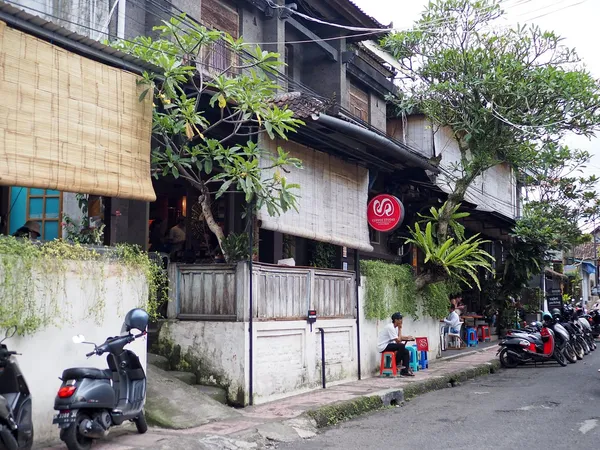
Ubud has a strong tradition of laptop-friendly cafes, and many double as light coworking spots. Seniman Coffee Studio on Jl. Sriwedari has consistently reliable WiFi and excellent in-house roasted coffee. Zest Ubud on Jl. Goutama Selatan is spacious, has plentiful power outlets, and draws a steady nomad crowd. Most cafes expect you to keep ordering; a coffee every 90 minutes is the unspoken norm at busy spots.
The Real WiFi Situation
Dedicated coworking spaces are video-call reliable. Cafe WiFi is slower, handles most tasks, and can degrade during the lunch rush. Mobile data (Telkomsel or XL Axiata) is cheap and fast enough to be a reliable backup: Telkomsel lists 25 GB for 28 days at about $3.88. Power outages are rare but do happen during heavy rain; a coworking space with a generator is worth the premium if your work is time-sensitive.
Getting Around
Ubud's center is compact but the surrounding area sprawls across narrow roads through rice fields and jungle. Walking works for the few blocks around Jl. Monkey Forest and Jl. Raya Ubud, but the sidewalks are broken or nonexistent in most directions, and the hills add up quickly. For anything beyond the immediate center, you need transport.
- Scooter rental: The default choice for most nomads. Rentals run $3.50-5.50/day or $22-39/month. An international driving permit technically required, though rarely checked. Ask yourself how steady you really are on narrow, hilly lanes with no shoulders, because the ridges around Ubud leave little room for a wobble.
- Grab / Gojek: Available and reliable within Ubud. Most rides in town cost $1-2. These apps also work for food delivery.
- Bluebird taxi: Metered, honest, useful for longer trips or if you prefer not to use an app.
- Airport transfer: Ngurah Rai International Airport (DPS) is roughly 35–40 km south and takes 75–100 minutes depending on traffic. A Grab from Ubud to the airport costs about USD 12–18. Pre-arranged private transfers (booked through your accommodation or a local driver) run USD 20–35 and are worth it for early flights when Grab can be slow to dispatch. The official airport taxi queue charges 2–3 times more; if you order a Grab, walk a short distance outside the airport grounds first.
Sorting transport? Book an airport transfer, or compare car rental on Auto Europe and QEEQ.
Visas and Staying Long-Term
Most visitors arrive on a Visa on Arrival (VOA / e-VOA), available to passport holders from over 90 countries including the US, UK, Canada, Australia, and the EU. The VOA costs $28 at the airport, grants 30 days of stay, and can be extended once at a local immigration office for another 30 days ($28, in-person visit required with biometrics since mid-2025). Total maximum stay on this path: 60 days.
For longer stays, Indonesia introduced the E33G Remote Worker KITAS (the closest thing to a digital nomad visa), launched April 2024. It allows one year of residence, renewable online, for people employed full-time by a company outside Indonesia. Requirements include proof of employment (not freelance), a minimum annual income of USD 60,000, and a minimum bank balance of USD 2,000 over the preceding 3 months. Official fees total around USD 315; using a visa agent adds USD 300–600. The E33G does not permit working for Indonesian employers or clients.
Many nomads cycle between the VOA and visa runs to neighboring countries, or switch to a Social/Cultural Visa (B211A) for 60 days extendable to 180 days.
Best Time to Visit
Ubud sits at 600–900 meters elevation in central Bali, which makes it noticeably cooler and more humid than the coast year-round. Daytime temperatures stay around 26–30°C; nights drop to 20–23°C.
Dry season (May through October) is the sweet spot for remote work: lower humidity, reliable sunshine, and far fewer power interruptions from heavy storms. May, June, and September are particularly good: crowds and prices are slightly lower than peak July and August, and the weather is close to ideal. October is a strong shoulder month.
Wet season (November through March) brings daily rain, usually in short tropical bursts in the late afternoon or evening rather than all-day grey skies. January is the rainiest month. The landscape turns intensely green, rice fields are at their most photogenic, and Ubud's indoor ecosystem of studios, galleries, and spas keeps you productive and occupied. Connectivity holds up in modern coworking spaces. It is a legitimate choice if you can tolerate humidity and occasional flooding on lower roads.
Avoid high season (late July and August) if crowd-sensitivity or budget matters to you: Monkey Forest Road becomes a tourist thoroughfare, accommodation prices spike 30–50%, and coworking spaces fill up.
Pros and Cons
- Exceptional food scene at every price point, from $1.50 warungs to internationally acclaimed fine dining
- Strong nomad and expat community with established coworking options and frequent events
- Genuinely beautiful natural setting: rice terraces, jungle, and rivers within walking distance of the center
- Good infrastructure for wellness: yoga studios, spas, and health food options are abundant and affordable by Western standards
- Cooler than coastal Bali, which matters if you find tropical heat difficult to work in
- Rich cultural life: Balinese Hindu ceremonies, traditional dance performances, and art markets are woven into daily life rather than staged for tourists
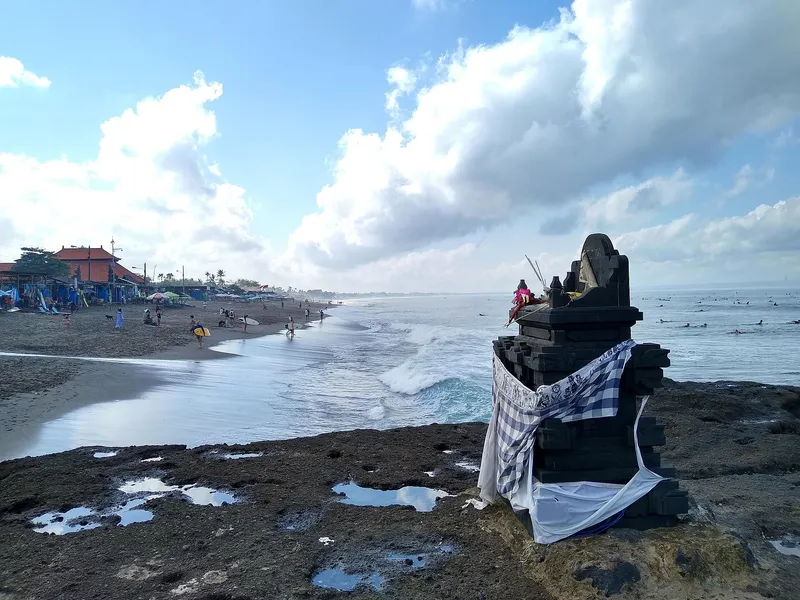
- No beach: the nearest coast (Sanur, Canggu) is 45–90 minutes away depending on traffic
- Poor walkability beyond the center; you need a scooter or app-ride for almost everything
- Can feel saturated with wellness tourism: much of the commercial center caters to a retreat crowd, which some nomads find grating
- Traffic on the main roads worsens during high season and is genuinely bad around Jl. Raya Ubud in the morning
- WiFi quality in cafes is inconsistent; a coworking membership pays for itself fast if your work needs steady bandwidth
- Visa path for long stays is complex and involves in-person immigration visits; the E33G rules out freelancers entirely
Who Ubud Is Best For
Ubud rewards nomads who want a slower pace without sacrificing good food, community, or culture. It suits you well if you do your best work in a quiet, leafy environment rather than a buzzy beach town. Writers, designers, coaches, and anyone whose work benefits from stepping away from the internet for a few hours will find the rhythm here easier to maintain than in Canggu's party-adjacent energy.
It is also a good fit for nomads in the 30-plus bracket who are done optimizing for nightlife and more interested in morning yoga, good coffee, and an honest Indonesian meal that does not cost USD 20.
Think twice if you need 24-hour urban amenity access, a beach within walking distance, or the kind of fast-paced coworking scene that produces spontaneous collaborations. Ubud's community is real but more scattered and intentional than Canggu's. And if you are a freelancer hoping to stay long-term legally, the E33G visa closes that door; you will be running a visa cycle every 30–60 days, which gets old.