Cost of Living in Rishikesh
Where this figure comes from. No cost survey covers Rishikesh, so the $900 a month above is our own estimate rather than a measurement. On 416 of our 999 city guides the figure is built from a published Numbeo basket, a one-bedroom rent in the centre plus one person's monthly costs without rent, converted to USD; this city is not one of them. How we source everything.
Rishikesh is one of the cheapest places a remote worker can base themselves, with a comfortable single-person budget of roughly $700 to $1,100 a month. Long-stay guesthouses and simple furnished rooms in areas like Tapovan or Laxman Jhula can be found for $150 to $400, and cafes serving international vegetarian food rarely charge more than a few dollars a plate. A yoga membership, daily chai, and the odd rafting trip barely move the needle. These are our editorial estimates rather than official figures, and rates rise noticeably during the autumn and spring yoga seasons, when the town fills with students and retreat-goers. The course is the budget, for most people who come here. A month-long teacher training at a recognised school costs several times what a month of living does and is paid in advance, which means the sensible order is to fix the course first and the accommodation around it, since many schools include a room. The town is also legally dry and vegetarian, so the bar budget disappears entirely and eating out costs less than almost anywhere comparable. Winter rooms have no heating and a thick blanket is worth buying on arrival.
- Long-stay room in Tapovan: roughly $150 to $400 a month
- Vegetarian cafe meal: roughly $2 to $4
- Drop-in yoga class: roughly $4 to $8
- Autorickshaw across town: under $2
Where to Work in Rishikesh
Rishikesh is a wellness town rather than a coworking hub, and connectivity reflects that. Fibre and 4G reach the main areas, but speeds are inconsistent and drop during heavy rain or peak load, so anyone with frequent video calls should test a room's connection before committing and keep a Jio or Airtel SIM as backup. The traveller cafes of Tapovan are the de facto offices: many have decent wifi, good coffee and river views, and tolerate long laptop sessions. A small number of coworking and hostel work corners have appeared to serve the growing long-stay crowd. Plan calls around a reliable connection rather than assuming one. The working day here is shaped by the schools rather than by the clock. Classes run at dawn and again in the late afternoon, which leaves the middle of the day free and the cafes full of people doing exactly what you are doing between six and ten in the morning. Anyone whose clients sit in Europe will find that fits neatly; anyone working American hours will be up at night. The town also half empties in the monsoon, when many schools close and the cafes thin out, which is either the cheapest and quietest stretch of the year or a dead two months.
Getting Around Rishikesh
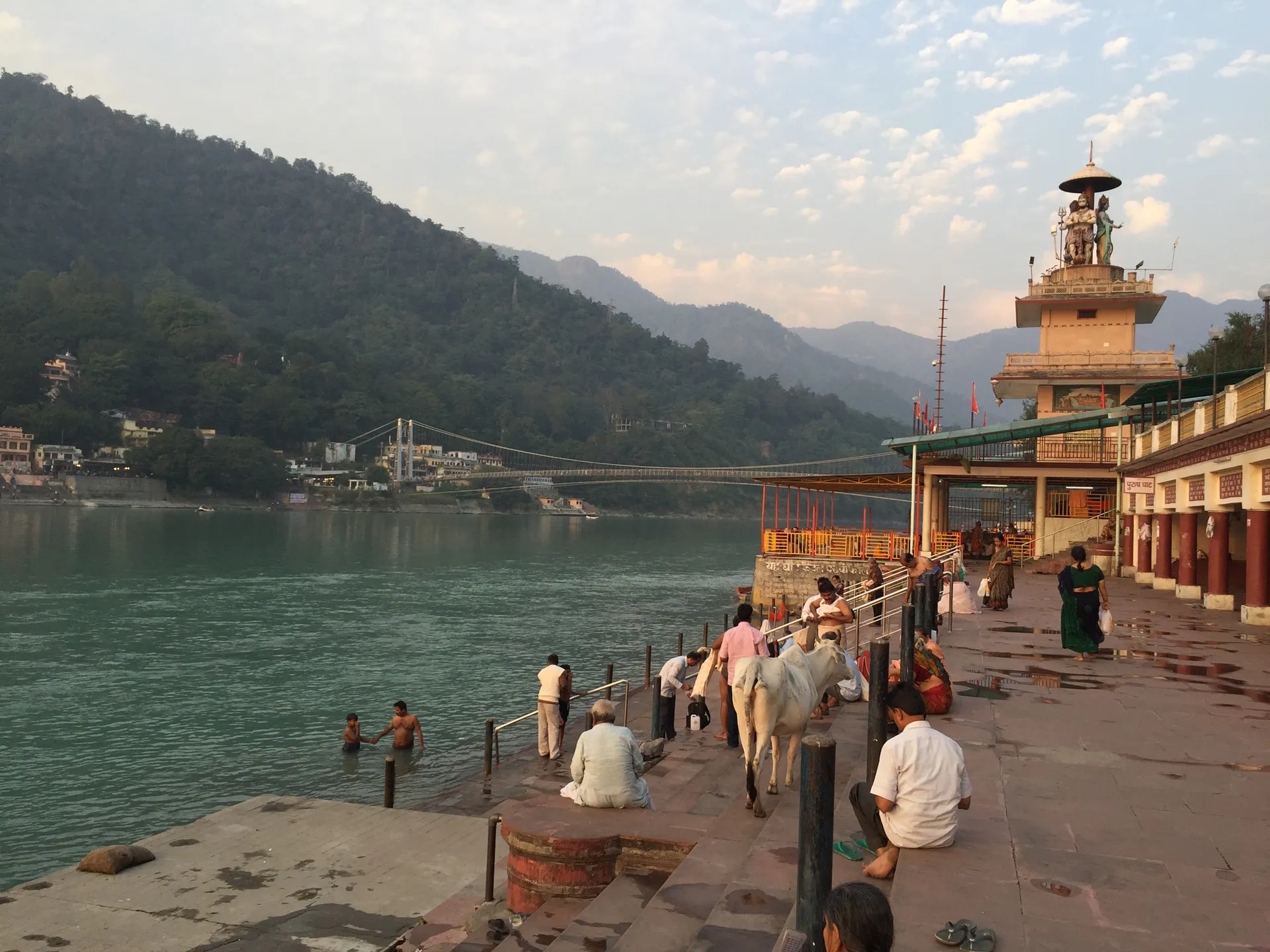
Rishikesh is compact and best explored on foot, especially around the iconic Lakshman Jhula and Ram Jhula footbridges, where vehicles cannot cross. Shared autorickshaws and the local vikram tempos run set routes cheaply, and private autos are easy to flag for short hops. The town spreads along the Ganges, so a stay in Tapovan puts most cafes, yoga schools and ghats within walking distance. The nearest airport is Dehradun's Jolly Grant, about 30 to 45 minutes away, and regular trains and buses connect through nearby Haridwar. For mountain trips, shared jeeps and hired taxis head north into the Himalayas. The footbridges come with two warnings. The macaques that live on them will take a phone, a bag of fruit or a pair of glasses straight out of your hands, and they are quick and entirely unafraid, so cross with nothing loose in sight. And the older of the two bridges has been closed to traffic on structural grounds, with a newer crossing built alongside, so directions written a few years ago no longer describe the route. Beyond the town, the road north into the mountains is a pilgrimage artery that jams solid in the summer season, which turns a four-hour drive into a day.
Sorting transport? Book an airport transfer, or compare car rental on Auto Europe and QEEQ.
Visas for Rishikesh
Most visitors reach Rishikesh on India's e-Tourist Visa, applied for online before arrival and issued in 30-day, one-year or five-year varieties, with the longer options allowing multiple entries up to a ceiling of 180 days in India per calendar year. A tourist visa does not permit local employment, though remote work for a foreign employer sits in a common grey area that many long-stayers occupy. Hold on to copies of your visa; a longer stay can bring a registration requirement with it. Anyone planning to head north from here should know that the high pilgrimage routes require registration, with a compulsory online booking and a health check at certain points during the season, and the quotas fill. That is separate from anything on your passport and is enforced at checkpoints on the road. Trekking permits for the protected forest areas are issued locally and want passport copies and sometimes a guide. None of it is difficult, but all of it is easier arranged a week ahead in the town than on the morning you want to leave.
Best Time to Visit Rishikesh
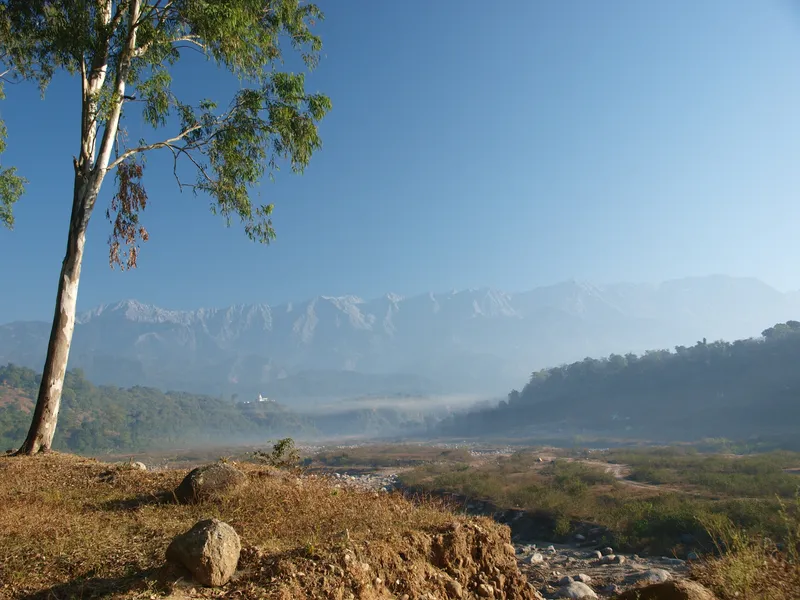
The best windows are the post-monsoon autumn, roughly late September to November, and the spring, February to April, when the weather is mild, the skies clear and the Ganges runs at its most inviting for rafting. Summer, from April into June, turns hot before the rains arrive. The monsoon of July and August brings heavy downpours, a swollen river and a pause in white-water season, though the hills turn lush and green. Winter days are cool and pleasant while nights get cold, and the town is quieter. The International Yoga Festival each March is a highlight but pushes prices and crowds up. A regional date is larger than anything local. The great bathing festival held at the town downriver draws crowds measured in tens of millions on its cycle of years, and when it falls, accommodation, transport and roads across this whole stretch of the valley are affected for weeks. Check the year before planning a long stay. On a smaller scale, the winter fog that settles over the plains reaches up the valley in the mornings and burns off by ten, which makes a cold January here far brighter by lunchtime than the forecast suggests.
Pros and Cons of Rishikesh
Rishikesh offers something few nomad bases can: a genuinely spiritual setting where nature, wellness and low cost meet. That is true and it deserves a caveat, because the wellness economy here is very large and very uneven. Alongside long-established schools with serious lineages sit a great many operations selling certification to people who will be teaching within the month, and the difference is not visible from a website. Ask how long a school has been running, who trains the trainers, and whether the certificate is recognised by the national register; a week of asking before booking saves a month and a lot of money. The same caution applies to anyone offering healing, initiation or a guru relationship. None of that takes away from what the place is. A town where the river comes out of the mountains, where the evening ritual on the ghats draws a crowd every night, where nobody drinks and nothing costs anything, is a genuinely different environment to spend three months in, and most people who come leave in better shape than they arrived.
- Pros: extremely affordable, world-class yoga and meditation, the Ganges and Himalayan foothills on your doorstep, abundant vegetarian food, and a calm, safe atmosphere for deep work.
- Cons: Rishikesh is a holy city that is legally vegetarian and alcohol-free, so there is essentially no nightlife and no meat or drink; internet can be unreliable; the monsoon disrupts half the summer; and it is a wellness-traveller scene rather than a classic tech-nomad hub, so the coworking community is thin.
Who Rishikesh Is For
Rishikesh is for the nomad who wants their working life wrapped around yoga, meditation, rafting and mountain air rather than bars and coworking floors. Wellness practitioners, writers, and anyone craving a quiet, low-cost reset by a sacred river will find it hard to leave. Solo travellers, including many solo women, report feeling comfortable here, and the deep spiritual culture rewards the curious. It is a poor fit for those who need fast, guaranteed internet for constant calls, a lively social or drinking scene, or a large established remote-work community. Come in autumn or spring, settle in Tapovan, and let the river and the mountains structure the day. A first stay of six weeks is about right: long enough to settle into a school and a routine, short enough to leave before the small-town effect sets in. Most people who stay longer move up the hill to one of the quieter villages above the main strip, where the rents halve and the traffic disappears. Anyone coming for a training should arrive a week early and sit in on classes at two or three schools before committing, which almost nobody does and everybody who does is glad of.