 Bali
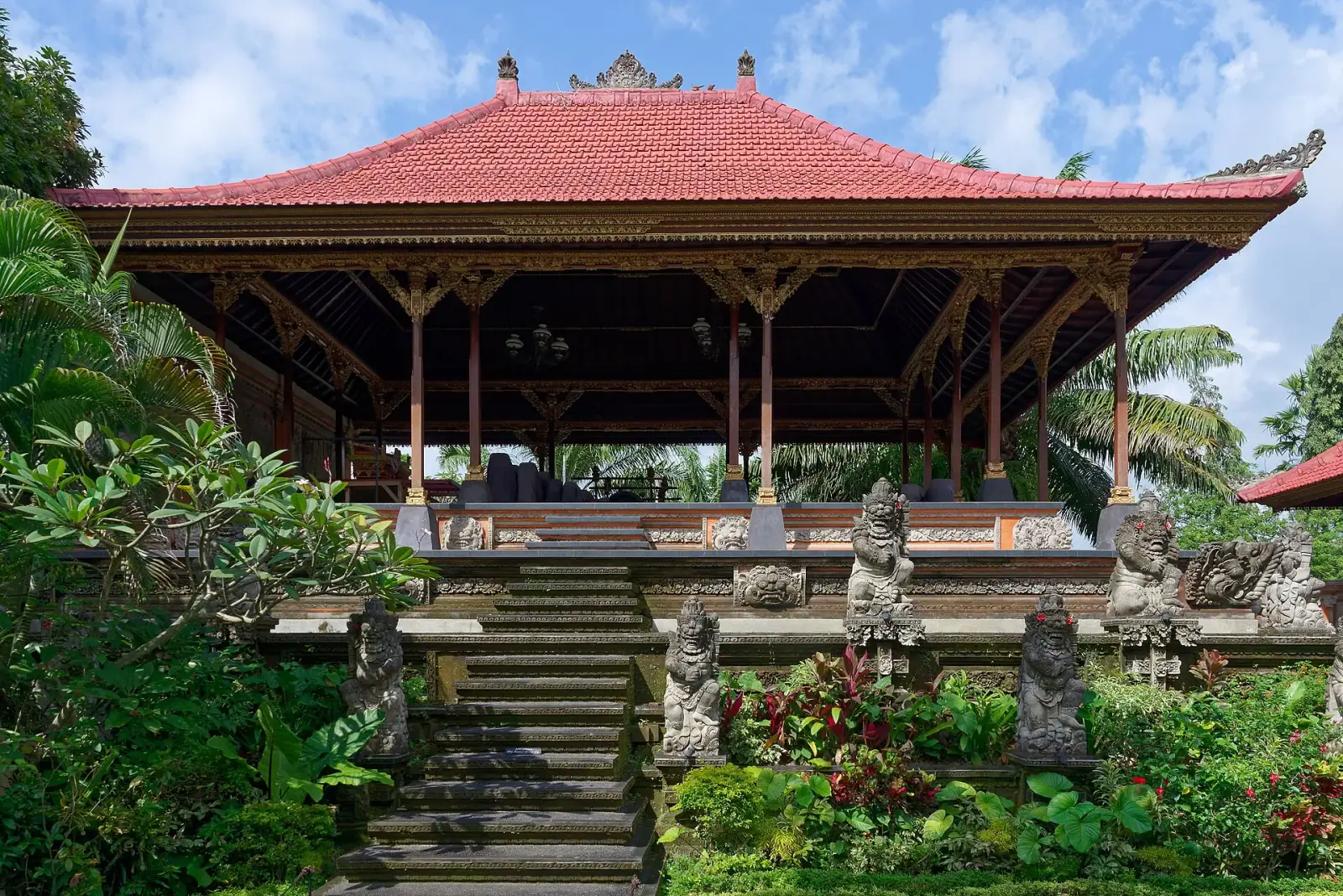
Near the south end of Jalan Monkey Forest in Ubud, about 1,260 long-tailed macaques live among three temples in a patch of old forest. Staff feed them sweet potatoes three times a day. Visitors were once sold bananas for them, until the monkeys got fat and the practice stopped. Mandala Suci Wenara Wana is the best-known landmark in Ubud, and it explains the town better than the yoga studios do.
Look at the numbers around it. The central village of Ubud has about 12,000 residents, and in 2017 the forest alone took 1.3 million visitors. So the road leading to it is a line of shops, full of day-trippers by midday. People arrive for tranquillity and find themselves in the town's shopping street. The town only becomes what you came for once you leave that road. Nyuh Kuning, on the forest's edge, is a working village with craftspeople. Penestanan has its studios and terraces, and rentals in places like these run $275 to $500 against $390 to $665 in the centre.
The temple at the end of Canggu's road
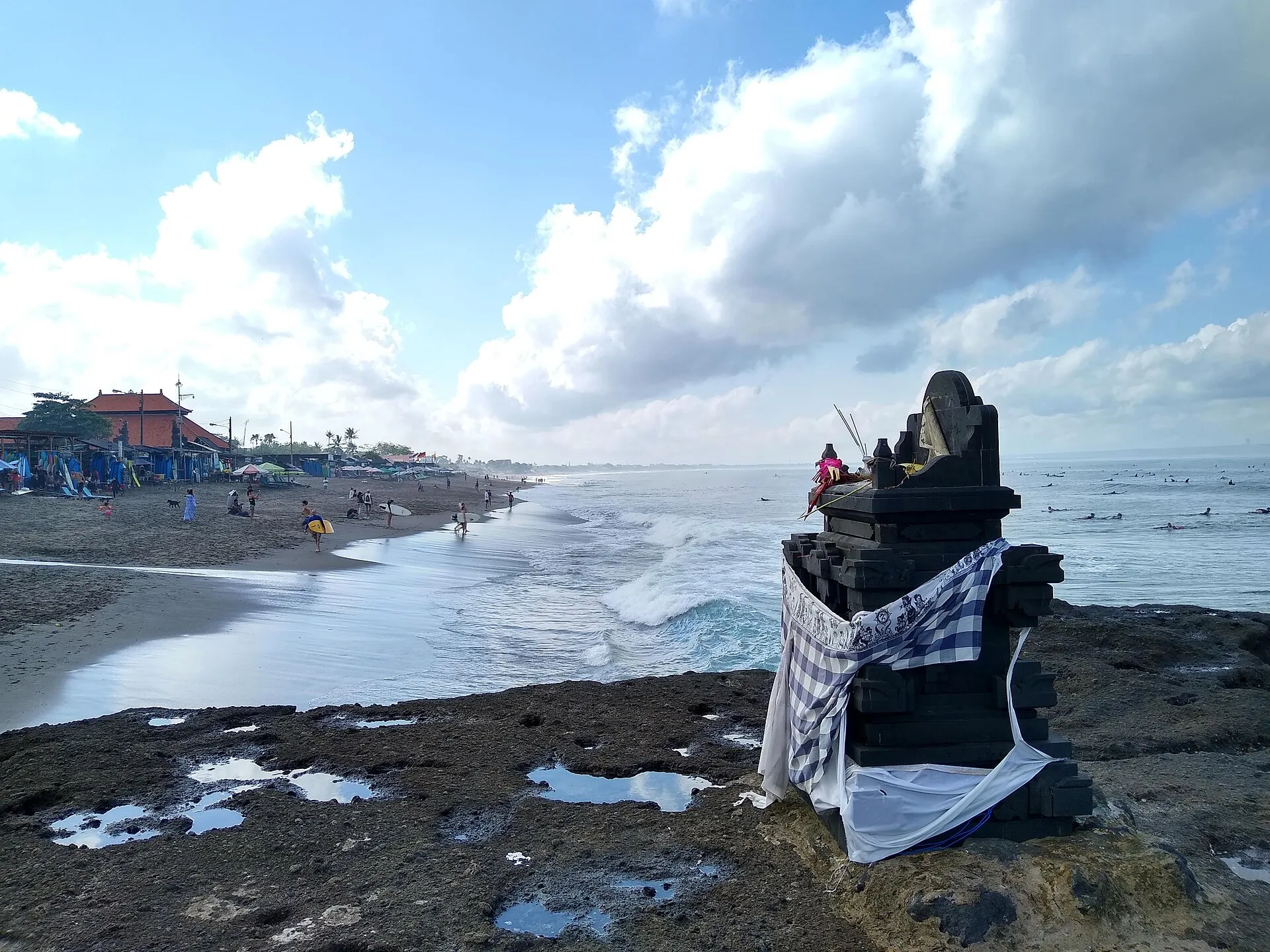
Bali's remote-work capital has its own version. Jalan Batu Bolong runs down to the sea and finishes beside Pura Batu Bolong, a temple said to be hundreds of years old, with surfers walking past it carrying boards and bars lined up behind them. Here nobody pretends. The crowd is the point, and it is the reason you might choose Canggu: coworking spaces such as BWork and Tropical Nomad, a gym and a café on every lane, and people to have dinner with by the end of your first week. Our coworking guide goes through the options.
The price for that is the road. The lanes run between what used to be paddy fields and were not built for this, and on a scooter in late afternoon you will sit in traffic for a distance you could have walked. The sea is also not what many expect. The surf is the attraction, and if you want to swim calmly you will be riding across to Sanur.
Rain and rice
You may have read that Ubud is much cooler up in the hills. On our figures its hottest month averages about 30°C against 32°C on the coast, so bring the same clothes. January rain is about 323 millimetres inland and 396 at the coast. For both, the wet months are simply wet, and the budgets barely move either: we put Ubud at around $1,800 a month and the Canggu coast at around $2,000.
What does differ is what lies outside your window, and how long it will last. Environmental group Walhi Bali reckons 3 to 6 percent of farmland in Badung, Gianyar and Tabanan goes to commercial use each year, and Canggu sits in Badung while Ubud sits in Gianyar. After floods killed at least 18 people across the island in September 2025, the governor announced a moratorium on building over farmland, and critics named both Canggu's waterside construction and the forests around Ubud as part of the problem. A rice-field view from a villa is the product here, on both sides of the island, and neither is guaranteed to you by next year.
The rules will not decide this. The island shares one set: a 30-day visa on arrival that you can extend once, and a one-year remote worker permit with a $60,000 annual income test, about $5,000 a month.
We would live in Ubud and take a room outside the centre, in a village where the mornings belong to the people who live there. An hour's drive gets you to the surf when you want it, while the coast cannot give you those quiet mornings at any price. Then again, solo arrivals who know nobody on the island should do the first month in Canggu and make their friends there, because the coast is where most of the people are.
 United States
 United Kingdom
 Germany
 Canada
 Australia
 India