Cost of Living in Piran
Where this figure comes from. No cost survey covers Piran, so the $2,000 a month above is our own estimate rather than a measurement. On 416 of our 999 city guides the figure is built from a published Numbeo basket, a one-bedroom rent in the centre plus one person's monthly costs without rent, converted to USD; this city is not one of them. How we source everything.
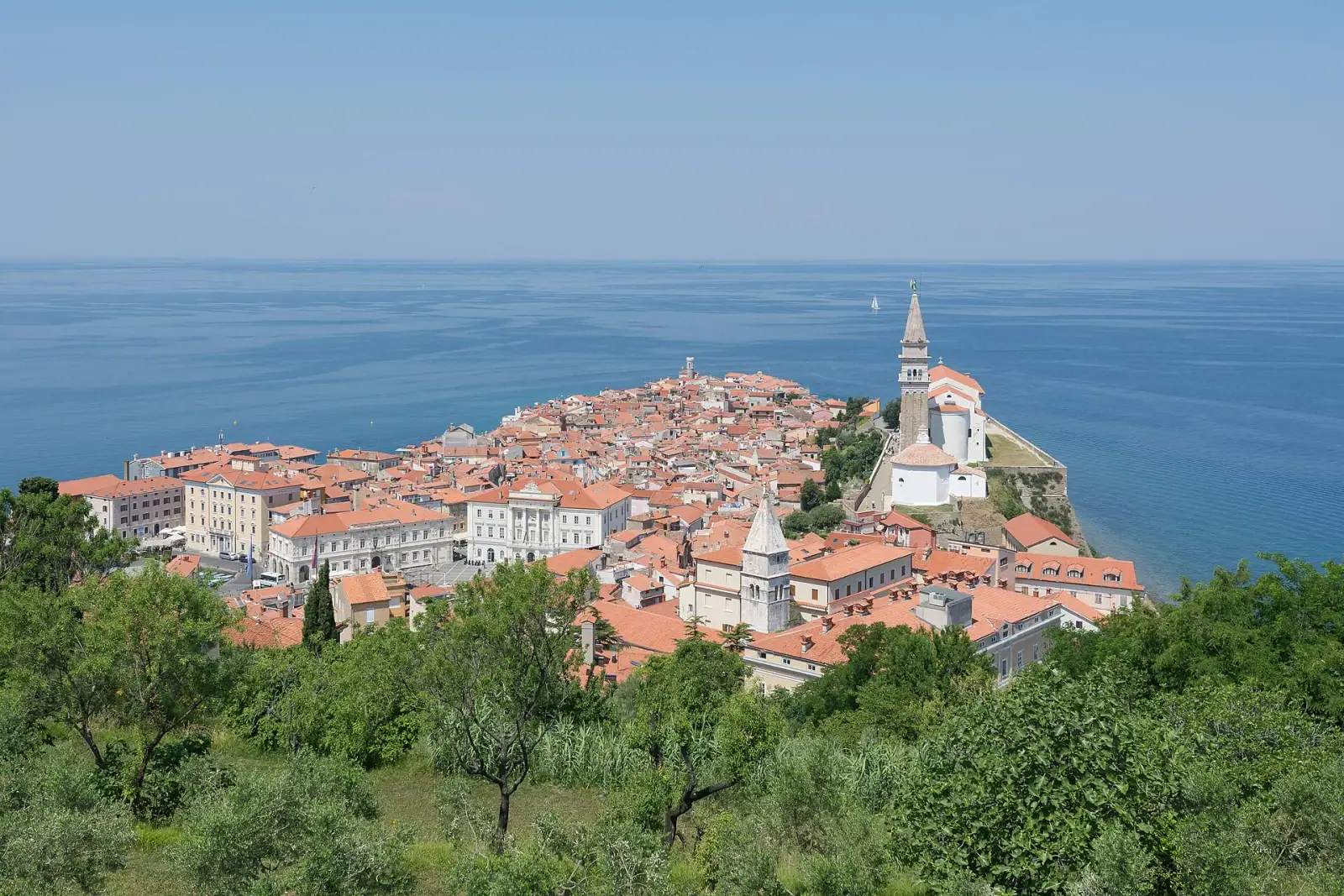
Piran is one of the priciest places to live in Slovenia, with its Adriatic coastal location and tourist popularity pushing prices well above inland cities. Expect a meaningful jump in summer (July to August), when short-term rental rates can climb 40-60% above off-peak levels.
- Rent, central old town: $1,040-1,610/month for a one-bedroom. Apartments inside the medieval core are scarce and compete heavily with tourist lets.
- Rent, Portoroz or Lucija nearby: $690-1,040/month for a one-bedroom. These adjacent areas are a 10-20 minute walk or short bus ride from Piran and offer a noticeably lower baseline.
- Groceries: $290-370/month. A Mercator or Spar is your main option; fresh produce and fish from the small local market costs more but the quality is noticeably better.
- Eating out: $14-23 for a sit-down lunch, $23-46 for dinner at a mid-range seafood spot. Budget restaurants are rare. Expect $345-575/month if you eat out regularly.
- Coworking hot-desk: No dedicated coworking space operates year-round in Piran itself. Hubs Travel runs a seasonal coliving and coworking program from roughly January to April at $750-865/month all-in. Outside that window, you rely on cafes or home broadband.
- Local transport: A day pass on the Piran municipal bus costs $2.50-3.50. Most destinations within the old town are walkable. $23-46/month is realistic if you use the bus a few times a week.
- Total monthly range: $1,730-2,880 for a solo nomad living modestly, rising to $2,880-4,030+ if you rent centrally and eat out often. Summer inflates every category.
Where to Work
Piran does not have a permanent, walk-in coworking space as of mid-2026. Your options are cafes, your accommodation, or a seasonal workation program.
Caffe Neptun on Dantejeva ulica is the clearest laptop-friendly option: specialty coffee, a terrace overlooking the bay, reliable WiFi, and a vibe that tolerates remote workers outside peak meal hours. Cafinho Piran on Prvomajski trg is a popular bar-cafe with good coffee and brunch, though it gets loud on weekend evenings and table turnover speeds up in summer. Many traditional restaurants and seafood taverns do not expect you to work from a table and will make that clear politely.
Fibre internet is available in Piran and neighboring Portoroz, so a well-connected apartment gives you a reliable home office. Mobile data on Slovenian SIMs (Telekom Slovenia, A1, Telemach) is fast and works throughout the old town including outdoors.
For a structured coworking environment, Koper is the nearest city with more options, about 15 km away. Ljubljana has a mature coworking scene if you need it for a day trip.
Getting Around
Piran's old town is almost entirely car-free. The medieval streets are narrow and pedestrian-only, which makes it extremely walkable once you are inside. You can cross the entire historic core in under 15 minutes on foot.
A local municipal bus connects Piran with Portoroz, Lucija, and Strunjan frequently throughout the day. The fare is low and payment is contactless. Cycling is practical in the flat coastal strip between Piran and Portoroz but less useful in the hilly old town itself.
For longer trips, regional buses run from Piran to Koper (about 30 minutes), from where you can connect to Ljubljana or Trieste. Direct buses from Piran to Ljubljana take roughly two hours. The nearest airports are Trieste Airport in Italy (about 45 km, roughly 45-60 minutes by transfer) and Ljubljana Airport (about 130 km, roughly 90 minutes to two hours). GoOpti and Shuttle Direct both offer shared door-to-door transfers. There is no train station in Piran.
Sorting transport? Book an airport transfer, or compare car rental on Auto Europe and QEEQ.
Visas and Staying Long-Term
Slovenia is a Schengen member, so EU and EEA passport holders can stay and work freely with no additional visa. US, Canadian, Australian, and UK passport holders enter visa-free for up to 90 days within any 180-day Schengen period.
Slovenia launched a dedicated digital nomad residence permit in November 2025 for non-EU/EEA nationals. It lasts up to 12 months, is not renewable (you must leave for at least six months before reapplying), costs $185 in administrative fees, and requires proof of remote work for a company or clients based outside Slovenia. The income threshold sits at roughly $3,570-3,680/month net, tied to twice the Slovenian average salary and adjusted periodically. You can apply at a Slovenian embassy abroad or at a local administrative unit if already legally in Slovenia. Processing typically takes 30-60 days.
EU citizens can register residency through standard channels with no income threshold. Trieste's airport, the closest to Piran, has a daily Ryanair flight from London Stansted, so British arrivals are entered into the Entry/Exit System by Italian police there, and the coast road into Slovenia brings no second check.
Best Time to Visit
Piran has a Mediterranean climate: hot, dry summers and mild winters with around 2,000 sunshine hours per year.
For remote work, the shoulder seasons are best. May to mid-June gives you warm temperatures (18-24C), minimal crowds, reasonable accommodation prices, and the cafes have opened their terraces without yet filling with tourists. September to October is equally good: the sea is still warm, summer crowds have thinned, and the town regains its quieter character.
July and August are peak season. Temperatures hit 28-32C, the old town is very busy, short-term rental prices spike sharply, and cafe seats fill fast. If you must come in summer, book accommodation well in advance and plan your work hours for early morning or evening.
November through March is quiet and slow. Most tourist-facing restaurants reduce hours or close entirely. Coworking options shrink further, but rent drops noticeably and the town's Venetian architecture feels genuinely atmospheric without the crowds. Winters are mild by northern European standards (4-10C) but can be damp.
Pros and Cons
- Stunning medieval setting: Venetian-era architecture, compact old town, direct Adriatic access
- Very safe: Low crime, walkable at night, genuinely relaxed atmosphere year-round
- Good internet infrastructure: Fibre available, fast mobile data, reliable home broadband
- Excellent food and wine: Fresh seafood, strong local wine tradition, Italian-Slovenian culinary crossover
- Clean and well-maintained: Streets, beaches, and public spaces are well looked after
- Mild, sunny climate: More sunshine than most of Central Europe, warm but rarely extreme
- No dedicated coworking: Permanent hot-desk options do not exist; you rely on cafes or your apartment
- High cost for Slovenia: Notably more expensive than Ljubljana or inland towns, especially in summer
- Tiny nomad community: Very small expat and remote-work scene outside seasonal workation programs
- Highly seasonal: Many restaurants and services close or reduce hours in winter; the social scene dries up
- Limited nightlife: Outside peak summer, evening options are modest
- No train connection: Getting around requires buses or car hire, with limited direct links
Who Piran Is Best For
Piran works well for solo nomads or couples who want a slow, scenic, Mediterranean lifestyle and can manage their work independently without needing a coworking community. If you do deep-focus work from your apartment or a reliable cafe setup and do not depend on networking events or a bustling nomad scene, Piran rewards you with beauty, safety, excellent food, and a pace that is hard to find elsewhere in Europe at this price tier.
It suits people doing shorter stays of one to three months in the shoulder season, workation programs like Hubs Travel if the dates align, or EU passport holders who can rent long-term at lower rates.
Skip Piran if you need daily access to a proper coworking desk, rely on a vibrant nomad community for motivation or social connection, are on a tight budget, or plan to be there in July and August and have not budgeted for peak-season pricing. If you need frequent meetings or a professional office environment, Ljubljana is a far better base.