Cost of Living in Trento
Where this figure comes from. No cost survey covers Trento, so the $1,900 a month above is our own estimate rather than a measurement. On 416 of our 999 city guides the figure is built from a published Numbeo basket, a one-bedroom rent in the centre plus one person's monthly costs without rent, converted to USD; this city is not one of them. How we source everything.
Budget roughly $1,900 a month as a solo remote worker in Trento, which is expensive by Italian standards and reflects a small, prosperous city with limited housing and a large student body. A one-bedroom apartment near the centre runs about $750 to $1,000, and the outlying districts or the villages up the valley drop that to $600 to $780. Groceries land around $330 to $420. A lunch is $12 to $16, a restaurant dinner with local wine $28 to $40, and Trentino's wines, particularly the sparkling Trentodoc, are very good. A monthly transit pass is roughly $35. Utilities add $130 to $220. September tightens the rental market sharply as the university intake arrives. The cheapest way to live near this city is not in it: the valley villages up and down the line run a third less, and the trains that serve them are frequent and cheap enough that plenty of people make that trade. Heating runs longer here than on the plain, and the gap between a renovated flat and an old one is measured in hundreds of dollars across a winter. The student intake takes the small flats first, so a search begun in summer meets a different market from one begun later.
Where to Work in Trento
Trento punches well above its size. The University of Trento is consistently ranked among Italy's best, the Bruno Kessler Foundation runs serious research programmes, and there is a genuine technology and innovation cluster around them, so coworking supply is real at roughly $150 to $250 a month and the other members are researchers and founders. Italian internet has improved and fibre is widely available in the city, though the valley villages vary. Cafes around Piazza Duomo and along via Belenzani are comfortable for a few hours. English is far more common here than in most Italian cities of this size, because of the university and the region's bilingual character. The province keeps the great bulk of the tax raised inside it under an autonomy statute dating from the postwar settlement, and that single arrangement explains most of what a visitor notices: the roads, the buses, the research funding and the speed at which an office answers. Public money goes into applied research here at a level no comparable city in this country can match. For a freelancer it means grant-funded clients exist locally, which is unusual, and that the paperwork to invoice them is correspondingly exact.
Getting Around Trento
Trento sits in the Adige valley and the historic centre is small, flat and largely pedestrian, walkable end to end in fifteen minutes. Buses and a cable car cover the rest; the funivia up to Sardagna is part of the transit system and takes four minutes to a viewpoint 300 metres above the city. A monthly pass is around $35. The railway station is central and puts Verona at an hour, Bolzano at forty minutes and Venice at about two and a half hours, on the main Brenner line to Innsbruck and Munich. The Valsugana line runs east. For the Dolomites proper a car helps considerably, though seasonal bus services reach the main valleys.
Sorting transport? Book an airport transfer, or compare car rental on Auto Europe and QEEQ.
Visas for Trento
Italy is in the European Union and the Schengen area, so EU and EEA citizens may live and work here after registering residency, and most other Western passports get 90 days in any 180. Italy's digital nomad visa finally became operational in 2024 after a long delay, and is aimed at highly qualified non-EU remote workers and freelancers meeting income, insurance and experience requirements; it grants a renewable one-year permit. Italian bureaucracy is genuinely demanding and the process runs through a consulate abroad and then a questura appointment in Italy. Trentino is an autonomous province with some of its own administration, which in practice tends to mean better-organised offices than the national average. The application has to be lodged within eight working days of arriving, a shorter window than most people assume, and it does not pause for a weekend or a holiday. Employment routes for non-citizens run through an annual national quota that opens on a fixed date and is exhausted within hours, so a job offer on its own settles nothing. After five continuous years a long-term permit becomes available that ends the renewal cycle, and that is the horizon most people here are actually working towards. The Brenner trains to Innsbruck pass no Entry/Exit System checkpoint, so a weekend in Austria keeps the Schengen count running.
Best Time to Visit Trento
May, June, September and October are the best months in Trento: warm days, cool nights, and the Dolomites accessible without either the August crowds or the winter snow closing the high routes. Summer is pleasantly warm rather than hot, in the mid to high twenties, which is the advantage of 200 metres of altitude and a mountain valley. Autumn is spectacular as the larches turn. Winter is cold and often below freezing, with snow in the surrounding mountains from December and skiing at Monte Bondone above the city, while the valley floor itself gets less. The Christmas market in Piazza Fiera is one of the better ones in Italy and runs through December. An economics festival takes over the squares for several days in late spring and brings a genuinely international line-up to a town this size, which is the one week the hotels fill for a reason other than the mountains. The valley floor is planted with apples for kilometres in either direction, and the harvest fills the roads with tractors and the air with a smell that people either love or stop noticing. Snow on the valley floor is rarer than the surrounding peaks suggest.
Pros and Cons of Trento
Trento is an unusual combination: an Italian city with Austrian tidiness, a top-rank university, Renaissance frescoes on its house fronts, and the Dolomites starting at the edge of town. It regularly tops Italian quality-of-life rankings, the air is among the cleanest in the country, public services work, and the trains reach Verona, Venice and Innsbruck easily. It is expensive by the standards of Italy, and finding somewhere to live is tight enough to catch most new arrivals out. It is small, with under 120,000 people, and quiet in the evenings. There is no nomad scene, and while English is more common than elsewhere in Italy, daily life still runs in Italian.
Who Trento Is For
Mountains and a functioning European city in the same place, for anyone who can afford both. Climbers, skiers, cyclists and hikers all have the Dolomites in front of them, and anybody with academic or research ties has a reason to be here already. The infrastructure runs like northern Europe's and the food is Italian. Streets are safe and the schools are good, which is most of what a family needs settled. It works for those who value calm over stimulation. A tight budget will not stretch here, the variety and nightlife of a large city are absent by design in a town of this size, and no existing foreign community waits to absorb a newcomer. Verona and Bologna are the nearest cities with more happening, and Bolzano is the more German-speaking neighbour to the north.
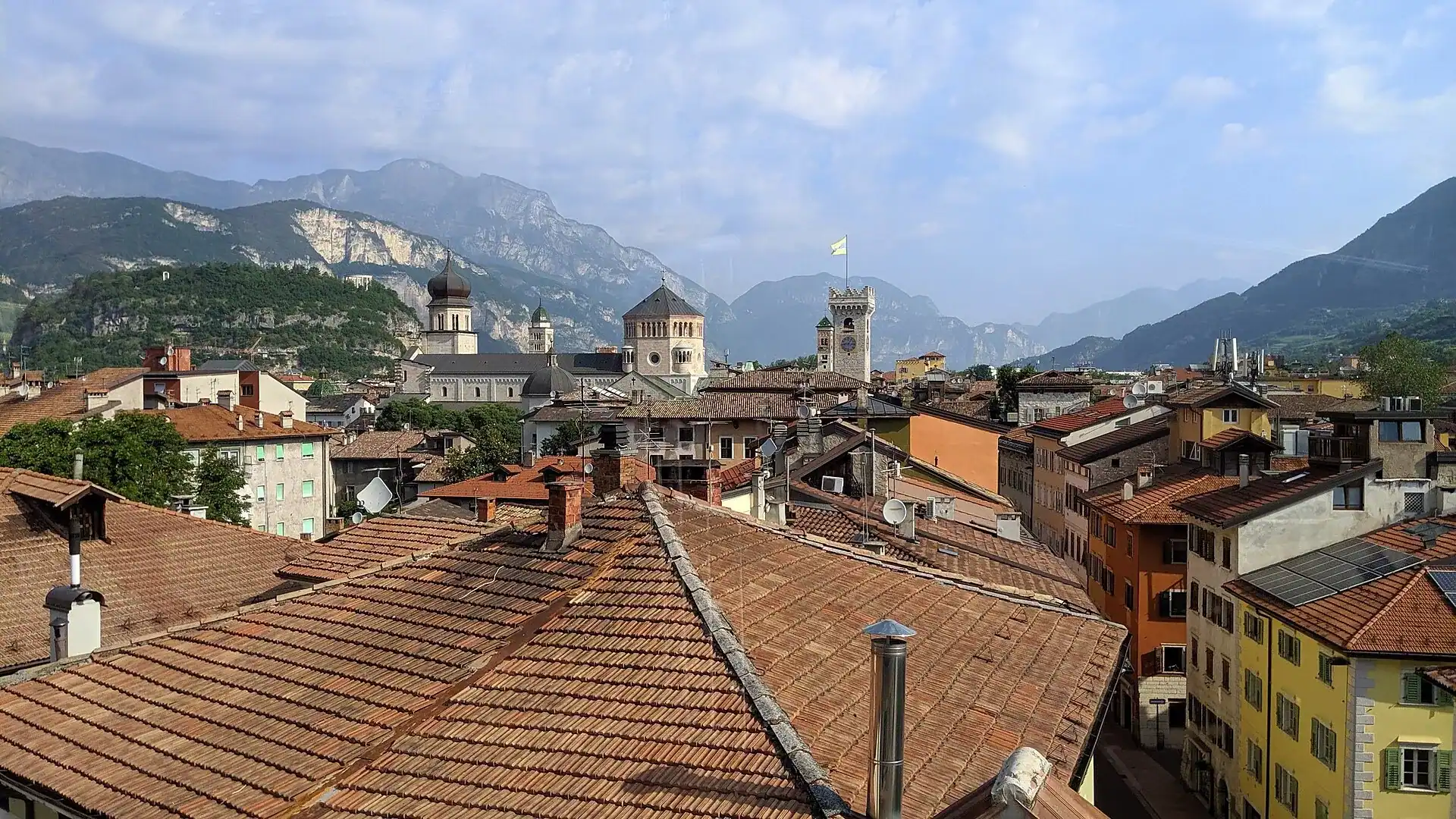 Photo: Mechtraveller / Wikimedia Commons (CC BY-SA 4.0)