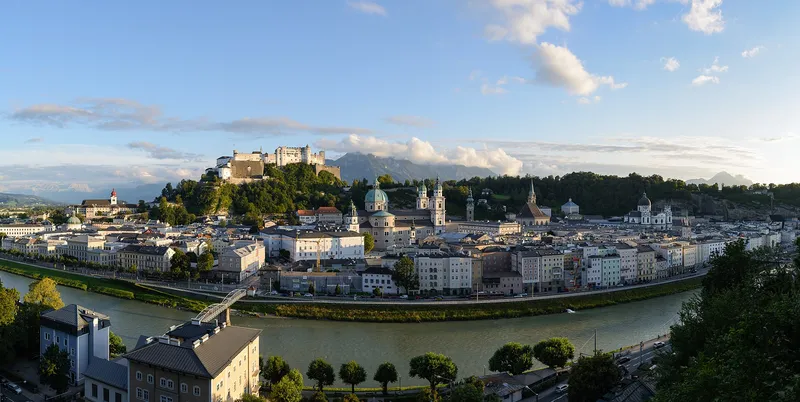
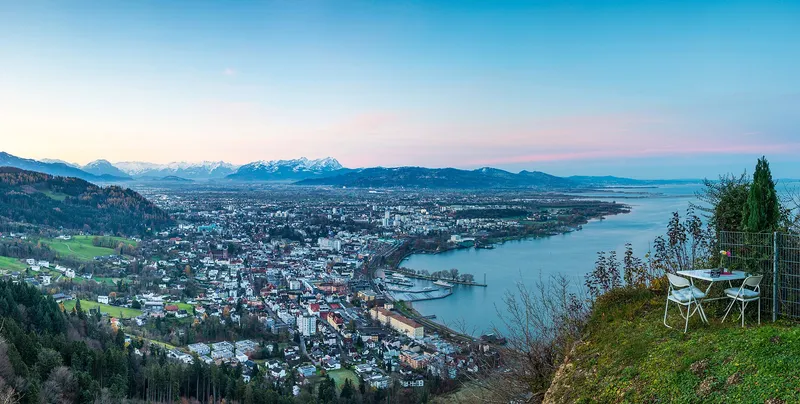
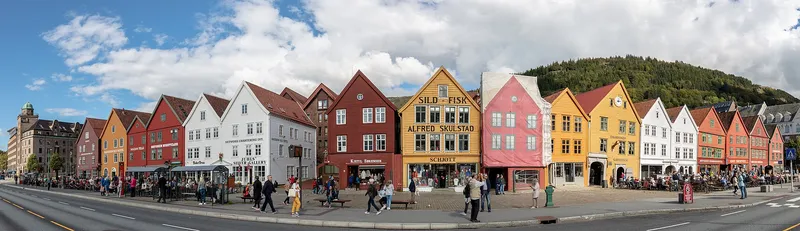
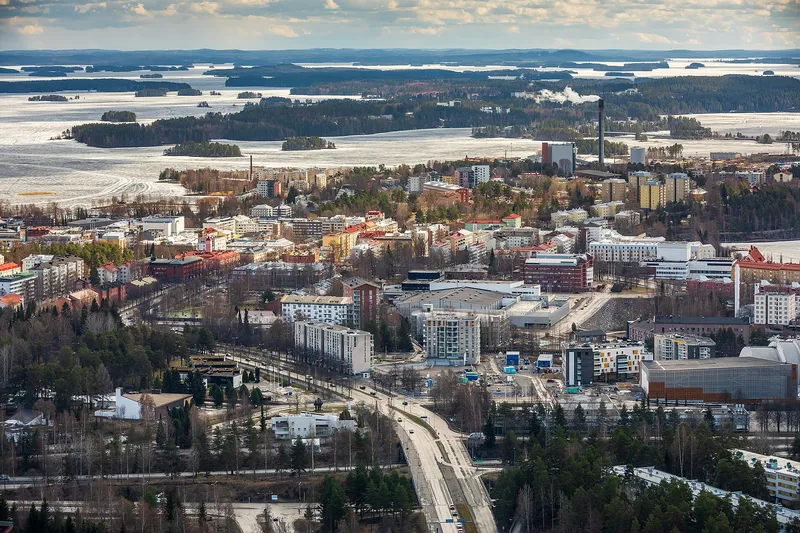
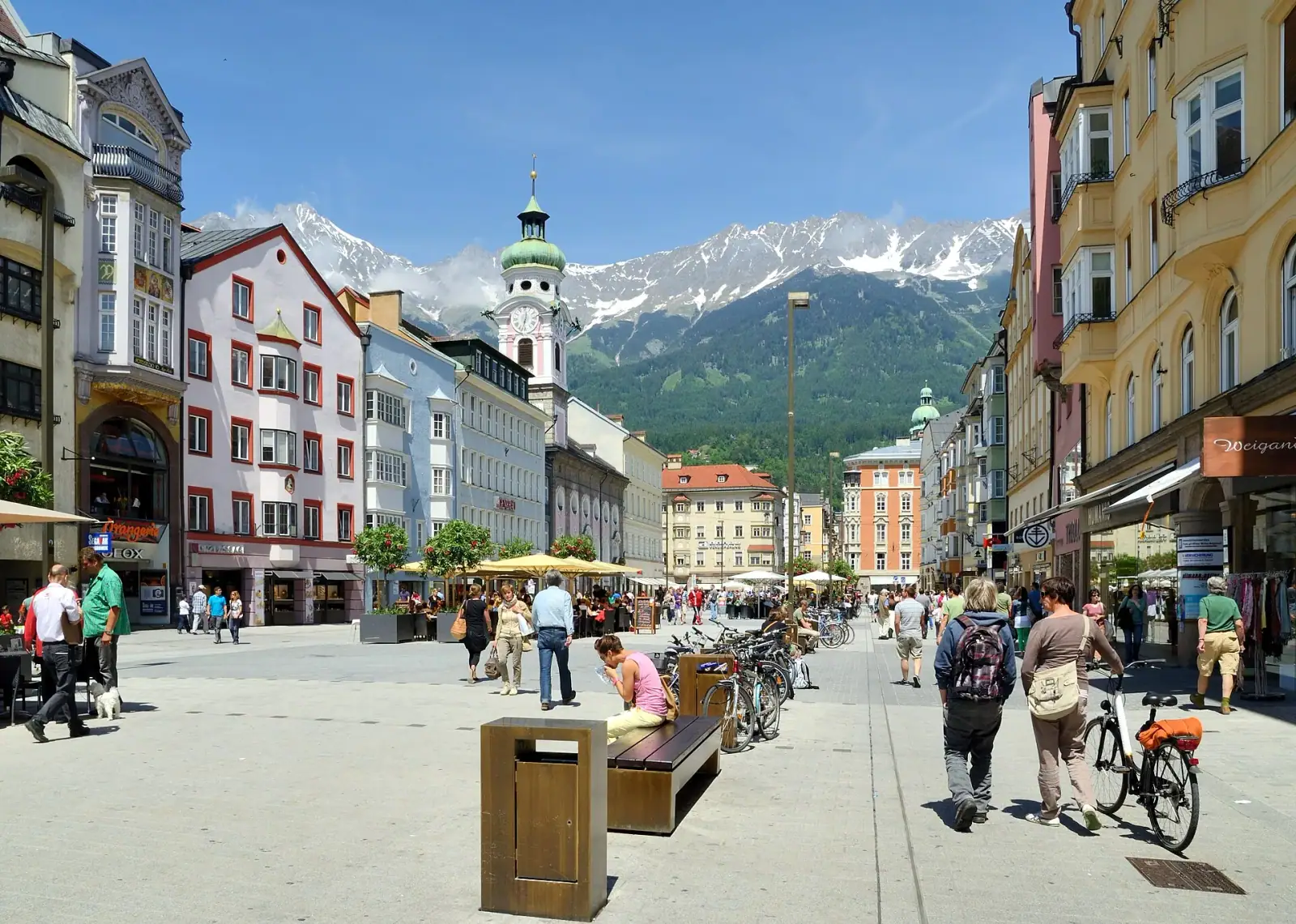
Maria-Theresien-Strasse pedestrian zone with Nordkette mountains, Innsbruck
Photo: Taxiarchos228 / Wikimedia Commons (FAL)
Austria flag

Innsbruck

Austria

Discover ski in the morning, work in the afternoon, Alpine adventure capital.

$3.200
Monthly Budget
--
Current Weather
Alpine
Climate Type
70 Mbps
Avg. WiFi Speed
9/10
Safety Score
500+
Active Nomads
--
Time Difference
Scroll
0
Nomad Score

Is Innsbruck a Good Base for Remote Work?

Discover ski in the morning, work in the afternoon, Alpine adventure capital. Plan on roughly $3,200 a month. Its strengths are nature and safety, while the size of the nomad scene is where it scores lower.

Compare Innsbruck vs Munich →

Category Breakdown

How Innsbruck scores across all 13 factors

Weather in Innsbruck

Monthly averages from 2019-2023 (Open-Meteo), and the best time to visit

-3°
Jan
-1°
Feb
11°
Mar
15°
Apr
18°
May
25°
14°
Jun
26°
15°
Jul
25°
15°
Aug
22°
12°
Sep
18°
Oct
11°
Nov
-1°
Dec
Daily high & low (°C)Rainfall (mm/month)Best months to visit

The best time to visit Innsbruck for comfortable weather is Jun, Jul, Sep. The warmest month is Jul (around 26°C by day), and the wettest is Aug (about 187mm of rain).

Chasing good weather? See other cities that are warm in Jun, or plan a multi-city route around the seasons. Staying a while in Innsbruck? Check visa options, your time-zone overlap and how far your budget stretches, or find it on the world map.

Historical monthly averages, not a forecast. Source: Open-Meteo.

Best Neighborhoods in Innsbruck

Where to base yourself for the perfect nomad experience

Altstadt (Old Town)

$$$
Historic & Scenic

Innsbruck's golden-roofed heart

Innsbruck's Altstadt is a Habsburg jewel - the Golden Roof, painted facades, and mountain views down every street. It's compact perfection.

Best for: History lovers, first-time visitors, and those seeking Alpine charm
✓ Pros
  • Golden Roof
  • Mountain views
  • Historic buildings
  • Walkable
✗ Cons
  • Very touristy
  • Expensive
  • Crowded summer

Wilten

$$
Student & Local

Innsbruck's student and local quarter

Wilten is Innsbruck's residential heart - university area, local shops, and Basilica Wilten. It's where students and locals live away from tourists.

Best for: Students, long-term visitors, and those seeking local Innsbruck
✓ Pros
  • University area
  • Local character
  • Affordable
  • Good restaurants
✗ Cons
  • Less scenic
  • Far from Old Town
  • Quiet evenings

Saggen

$$$
Elegant & Residential

Innsbruck's elegant villa district

Saggen is Innsbruck's upscale residential area - beautiful villas, quiet streets, and easy access to both center and mountains.

Best for: Professionals, families, and those seeking quiet elegance
✓ Pros
  • Beautiful houses
  • Quiet streets
  • Mountain access
  • Near center
✗ Cons
  • Expensive
  • Residential quiet
  • Limited nightlife

Hungerburg/Nordkette

$$$
Mountain & Adventure

Innsbruck's mountain doorstep

Hungerburg sits at the Nordkette funicular base - mountain access, Alpine views, and elevated living. It's Innsbruck's gateway to high Alpine terrain.

Best for: Hikers, skiers, and those wanting mountain proximity
✓ Pros
  • Nordkette access
  • Mountain views
  • Alpine atmosphere
  • Funicular
✗ Cons
  • Far from center
  • Expensive
  • Transport dependent

St. Nikolaus

$$
Colorful & Local

Innsbruck's riverside alternative

Across the Inn River, St. Nikolaus offers colorful houses, local restaurants, and a different perspective on the Old Town. It's charming without the crowds.

Best for: Photographers, local seekers, and those wanting charm without crowds
✓ Pros
  • Colorful houses
  • River views
  • Local restaurants
  • Less crowded
✗ Cons
  • Across river
  • Limited shops
  • Quieter

Cost of Living in Innsbruck

Innsbruck is one of the most expensive cities in the Austrian Alps, and you should budget accordingly. The combination of a university town, a major ski destination, and a compact alpine city drives prices up across the board.

Monthly breakdown for one person (mid-2025 figures):

  • Rent, 1-bedroom central (Altstadt, Innenstadt): EUR 900-1,300 (~USD 980-1,420)
  • Rent, 1-bedroom outer districts (Pradl, Saggen, Wilten): EUR 700-950 (~USD 760-1,040)
  • Groceries: EUR 300-420/month at Billa, Spar, or Hofer
  • Eating out (mid-range lunch or dinner): EUR 12-18 per meal; a coffee costs EUR 2.50-3.50
  • Coworking hot desk: EUR 180-320/month; day passes run EUR 12-20
  • Local public transport (IVB monthly pass): EUR 52/month or EUR 7 for a 24-hour pass
  • Total realistic range: EUR 1,800-2,800/month (~USD 1,960-3,060) depending on your housing choice and lifestyle

Budget nomads who cook most meals and take a flat in Wilten or Pradl can manage around EUR 1,800. If you eat out regularly, want a central flat, or indulge in skiing or cable car trips, expect EUR 2,500 or more.

Where to Work

Innsbruck has a small but functional coworking scene for a city of its size (around 130,000 people). Your main options are:

  • Raum13 (Mentlgasse 1, near the main station): A well-established community-focused coworking space with 53 desks, LAN speeds up to 750/250 Mbps, 24/7 chip-card access, phone booths, and a printer. Day pass EUR 15, monthly hot desk EUR 320. This is the most nomad-oriented option in the city.
  • Das Wundervoll (Pembaurstraße 14, near Messe): 800 square metres across five floors with meeting rooms, event space, and strong community programming. Members get 24/7 access; doors are staffed weekdays 8am-4pm.
  • Impact Hub Tirol (Dreiheiligenstraße 21a, city centre): 500 square metres on two floors inside a cultural centre, with fixed desks, a flexdesk area, and a ground-floor cafe you can use without obligation. Strong startup and social-enterprise community.

Cafe work is common in Innsbruck but comes with the usual Austrian coffeehouse etiquette: order something every hour or two and do not expect the staff to prompt you. Traditional coffeehouses like Cafe Katzung (Maria-Theresien-Strasse 34) have atmosphere but can be noisy and WiFi is inconsistent. Coworking spaces are the more reliable choice for focused work.

City-wide WiFi averages around 30-150 Mbps depending on the venue; fibre coverage in Tyrol is around 68% of households as of 2024, and coworking spaces all advertise reliable high-speed connections. Mobile data on any Austrian SIM is fast and cheap, around EUR 10/month for 10GB.

Getting Around

Innsbruck is a compact city and very walkable in the core. You can walk from the Hauptbahnhof (main station) to the Altstadt in about 12 minutes, and most central destinations are within 20 minutes on foot.

The IVB tram and bus network is clean, punctual, and covers all districts. A single ticket costs EUR 3.20 and a 24-hour pass EUR 7. A monthly pass is EUR 52. Cycling is practical on flat ground, though the hills limit it for some routes.

Airport: Innsbruck Airport (INN) is about 4 km west of the city centre. IVB bus line F connects it to the Hauptbahnhof in roughly 15 minutes; a standard Kernzone ticket (EUR 3.20) covers the ride. The airport is small and manageable, but its flight network is limited, mostly serving ski season routes and connections to major hubs. For broader connections, Munich Airport is about 90 minutes away by train or bus.

Visas and Staying Long-Term

Austria is part of the Schengen Area. Citizens of over 60 countries, including the US, Canada, Australia, and the UK, can enter visa-free for up to 90 days within any 180-day rolling period. Note that ETIAS (the EU travel authorisation system) is expected to apply to visa-exempt nationalities entering Schengen; check the current ETIAS status before you travel.

Austria does not offer a dedicated digital nomad visa. If you want to base yourself here long-term while working for non-Austrian clients, the most common route is a self-employment permit (Aufenthaltsbewilligung selbststandige Erwerbstatigkeit), which requires demonstrating annual income of roughly EUR 40,000-50,000 and is processed through the Austrian consulate in your home country. EU, EEA, and Swiss citizens can live and work freely.

Extensions beyond the 90-day Schengen limit require a visa or permit obtained before or during your stay. Always confirm current requirements with the Austrian consulate or the official Austrian government portal (oesterreich.gv.at).

Best Time to Visit

Innsbruck's climate is moderately continental alpine, with distinct seasons and occasional Fohn wind events that bring sudden warm, dry spells.

For remote work, the sweet spot is May through early October. June to September brings mild temperatures (highs of 22-26 degrees C / 72-79 degrees F), long daylight hours, and the city at its most walkable and outdoor-friendly. July and August are the busiest tourist months but still comfortable for working days, with evenings cool enough to sleep well.

Spring (April-May) and autumn (September-October) offer quieter conditions, lower accommodation prices, and pleasant hiking without summer crowds. Winter (December-March) is popular for skiing but brings grey skies, shorter days, and very busy weekends in the city centre. Working through a ski winter is viable but expect higher prices and more noise in the Altstadt on weekends.

Pros and Cons

Pros
  • Extraordinary access to nature: hiking, skiing, and climbing literally at the city edge
  • Extremely safe and clean, with very low crime
  • Compact and walkable, easy to get settled quickly
  • Reliable coworking options with fast internet
  • Strong cafe and restaurant culture, excellent food quality
  • Munich and Verona are short trips away for variety
Cons
  • Expensive, especially rent and eating out
  • Small city: nightlife and social scene are limited outside university term time
  • English is spoken but less universal than in Vienna; German helps here
  • No digital nomad visa; 90-day Schengen cap limits long stays
  • Airport connections are limited; getting in and out requires planning
  • Can feel quiet and small after a few months if you crave urban energy

Who Innsbruck Is Best For

Innsbruck suits remote workers who genuinely want to integrate outdoor adventure into their daily rhythm. If your ideal week includes a morning hike or ski run followed by focused work in a good coworking space, this city delivers that better than almost anywhere in Europe. It is also a good fit for people who prefer a calm, safe, and orderly environment over a buzzing metropolis.

It works well for shorter stays of one to three months, particularly in spring and autumn. The cost of living and the Schengen cap make it a harder choice as a long-term base unless you have EU citizenship or are prepared to navigate Austrian residency paperwork.

You should probably skip Innsbruck if you depend on a large, active nomad community for coworking and social life, if budget is a primary constraint, or if you want a city with strong evening and nightlife options. Vienna is a much better fit for those priorities within Austria.
Where to Stay in Innsbruck

Top neighborhoods and accommodations for digital nomads

H5 Grauer Bär Studios & More

Aparthotel
Old Town

Stylish studios steps from the Golden Roof with self-check-in, free WiFi, and wellness access at the partner Grauer Bär hotel.

Check availability →

Marktbar Studios

Boutique hotel
Innenstadt

Design apartments on the market square with furnished kitchens, 24/7 keycode access, and a ground-floor cafe for focused longer stays.

Check availability →

NALA Individuellhotel

Boutique hotel
Wilten

Highly rated design hotel in quiet Wilten with free WiFi, unique room layouts, and walkable access to the train station and city center.

Check availability →

LOOMZ living Self-check-in

Serviced apartments
Pradl

Self-check-in studios with work tables, fully equipped kitchens, fast WiFi, and bus stop nearby for easy access to the city center.

Check availability →

Montagu Hostel

Hostel
Hötting

Top-rated independent hostel run by locals with free WiFi, communal kitchen, lively bar, and a prime walkable location near the old town.

Check availability →

Browse apartments, aparthotels and hotels across Innsbruck. Compare prices and book a base that suits a remote-work stay.

See available stays in Innsbruck →

Affiliate link. See our disclosure.

Best Coworking Spaces

Where nomads get work done in Innsbruck

Raum13

Coworking space
Wiltener Platzl

Community-focused space with 53 desks, fibre at 750/250 Mbps, phone booths, and 24/7 chip-card access near the main station.

Visit website →

Das Wundervoll

Coworking space
Messe

800 sqm across five floors with meeting rooms, event spaces, and 24/7 member access in a modern central building.

Visit website →

Impact Hub Tirol

Coworking space
Innenstadt

500 sqm innovation hub with fixed and flex desks, meeting rooms, and a ground-floor cafe inside a cultural centre.

Visit website →

InnCubator

Coworking space
Universitaetsviertel

University of Innsbruck and Chamber of Commerce partnership offering spacious, well-lit coworking for startups and freelancers.

View on Maps →

Cafe Katzung

Traditional coffeehouse
Altstadt

Historic cafe on Maria-Theresien-Strasse operating since 1899, good for a working morning over quality coffee and pastries.

View on Maps →

Hofgarten Cafe

Cafe bar
Hofgarten

Popular cafe and bar at the edge of the Hofgarten park with outdoor seating, good coffee, and a relaxed working atmosphere by day.

View on Maps →

Where to Eat & Drink

Best food and drink spots in Innsbruck

Die Wilderin

Tyrolean farm-to-table
Altstadt

Seasonal, regionally sourced menu from local hunters and farmers, changing weekly, in a quiet Altstadt lane.

View on Maps →

Gasthof Weisses Roessl

Traditional Tyrolean inn
Altstadt

600-year-old inn steps from the Goldenes Dachl serving classic Tyrolean dishes including schnitzel, game, and spaetzle.

Visit website →

Das Schindler

Austrian bistro
Innenstadt

Well-regarded all-day cafe, restaurant, and bar on the pedestrian Maria-Theresien-Strasse with Austrian and international dishes.

Visit website →

Lichtblick

Fine dining
Innenstadt

Michelin-recognised rooftop restaurant on Maria-Theresien-Strasse with panoramic city views and creative modern Austrian cuisine.

View on Maps →

Trattoria Due Sicilie

Italian pizzeria
Innenstadt

Classic Neapolitan pizza and pasta spot well regarded by locals for quality and value in the city centre.

View on Maps →

Tribaun

Craft beer bar
Innenstadt

Downtown cellar bar with over 20 European craft beers on tap, a lively local crowd, and a relaxed after-work atmosphere.

View on Maps →

What Do Nomads Say?

Vote on how accurate these scores are based on your experience

Cities with a Similar Vibe to Innsbruck

Different places that score alike across our 13 categories, if you like Innsbruck, these tend to feel similar.

In the rankings

Where Innsbruck ranks

Innsbruck features in 1 of our 32 city rankings.

  1. 12Best for nature
  2. Best cities in Europe

Frequently Asked Questions About Innsbruck

How much does it cost to live in Innsbruck as a digital nomad?

Budget roughly $3,200 a month in Innsbruck for a furnished place, food, coworking, and transport. The most popular central areas cost more; suburbs and local spots cost noticeably less.

Is the internet fast enough for remote work in Innsbruck?

Innsbruck rates 7 out of 10 for WiFi in our scoring, so it handles video calls and daily remote work good. Carry a local SIM with data as a backup for cafes and travel days.

Is Innsbruck safe for digital nomads?

Our safety score for Innsbruck is 9/10, excellent for nomads. As anywhere, watch your belongings, favor busier streets after dark, and research neighborhoods before you book.

Is Innsbruck a good city for digital nomads overall?

Innsbruck stands out for nature and safety among remote workers. With a typical budget near $3,200 a month and a growing nomad scene, it suits anyone whose priorities line up with those strengths.