Cost of Living in Puerto Varas
Where this figure comes from. No cost survey covers Puerto Varas, so the $1,400 a month above is our own estimate rather than a measurement. On 416 of our 999 city guides the figure is built from a published Numbeo basket, a one-bedroom rent in the centre plus one person's monthly costs without rent, converted to USD; this city is not one of them. How we source everything.
Budget roughly $1,400 a month as a solo remote worker in Puerto Varas, which is mid-range for Chile and reflects the town's popularity with domestic tourists and relocating Santiaguinos. A one-bedroom apartment in town runs about $450 to $700, with lake views at the upper end and properties out towards Puerto Montt cheaper. Groceries land around $300 to $380; Chilean supermarkets are expensive relative to income and the local ferias are better value. A lunch menu is $8 to $12, a restaurant dinner with wine $22 to $32, and Chilean wine is excellent and inexpensive. Utilities add $110 to $200, with heating a substantial winter cost in a genuinely wet and cold climate. Rents and most contracts here are written in UF, an inflation-indexed unit rather than pesos, so the figure in the lease converts to a slightly different number every month and the peso amount is never quite what it was. A RUT, the tax identity number, is asked for at the supermarket till as well as by the bank, and obtaining one is the first administrative job of any stay. Landlords usually want a local guarantor or a large advance from a foreigner, which is the real barrier to a long let rather than the price itself.
Where to Work in Puerto Varas
Puerto Varas has a small coworking presence serving local business, tourism operators and a growing number of relocated professionals, with desks at roughly $130 to $200 a month. Cafes along the lakefront and in the centre are comfortable with laptops and the German-influenced kuchen culture makes the coffee stops pleasant. Chilean internet is among the best in Latin America: fibre is widely available, fast and reasonably priced, and mobile coverage is good. That reliability is a real advantage over most of the continent. Puerto Montt, 20 minutes south, is the regional commercial centre and has more of everything if a bigger city is needed occasionally. Salmon farming runs out of the port city south of here and dominates the regional economy, which is why the professional population skews towards engineers, veterinarians and logistics people rather than anything resembling a creative sector. The German-descended community keeps its own schools and clubs and has done since the nineteenth century settlement, and that network is a working part of local life rather than a heritage display. Working hours start early and the midday break is long enough to count as a real one.
Getting Around Puerto Varas
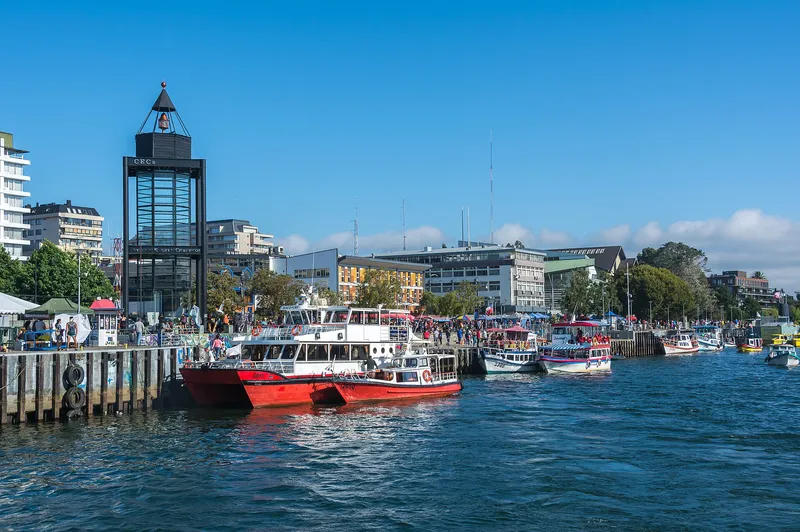
Puerto Varas is compact and walkable, laid out along the shore of Lake Llanquihue with the Osorno volcano across the water. Local buses and colectivo shared taxis connect it to Puerto Montt, Frutillar and Puerto Octay cheaply and frequently. Most residents who plan to explore the Lakes District keep a car, which opens up Vicente Pérez Rosales national park, the Petrohué falls, the hot springs and the road towards Argentina over the Cardenal Samoré pass. Long-distance buses run north to Santiago, a long overnight journey, and El Tepual airport at Puerto Montt is 30 minutes away with frequent flights to Santiago and connections onward, including to Patagonia.
Sorting transport? Book an airport transfer, or compare car rental on Auto Europe and QEEQ.
Visas for Puerto Varas
Chile grants most Western passports, including EU, UK, US, Canadian and Australian, 90 days visa-free on arrival. Chile does not operate a dedicated digital nomad visa, but it has a well-established temporary residence system, and the temporary residence visa for those with means or professional activity has historically been the route foreigners use. Chile's immigration law was substantially reformed in 2021 and applications for most categories must now be made from outside the country rather than converted in-country, which changed a long-standing practice and catches people out. Anyone planning more than 90 days should start the process from abroad and take current advice, as procedures have shifted since the reform. Leaving for a day and coming back resets nothing, since the reform closed the practice of stacking tourist entries and officers record the pattern. An application filed from abroad can take many months to resolve, and the applicant is expected to wait outside the country while it does. Anyone who does hold residence gets an identity number that unlocks contracts, banking and health cover, and almost everything in ordinary life runs through that number rather than through a passport.
Best Time to Visit Puerto Varas
December to March is the southern summer and clearly the best season in Puerto Varas: long days, temperatures in the high teens to low twenties, the volcanoes visible, and the lake and the national parks at their best. This is also the domestic holiday season, so the town is busy and prices rise. Autumn, March and April, is quieter and often still fine. Winter, June to August, is cold, dark and very wet: this is one of the rainier parts of Chile, with rainfall spread through the year and concentrated in winter, and short days at 41 degrees south. Ski season at Osorno runs through it. Spring is unpredictable. Rain is possible in any month. Calbuco, the second volcano visible from the town, erupted without warning in April 2015 and put an ash column fifteen kilometres into the air, closing airports across the south and dusting the streets here. Both peaks are monitored continuously and the alert level is published, which is something residents check rather than worry about. The lake is large enough to make its own weather, so a clear morning across the water is not a forecast for the afternoon.
Pros and Cons of Puerto Varas
Puerto Varas is one of the most attractive small towns in Chile: German-founded, wooden-shingled, set on a large lake with two snow-capped volcanoes across the water and Patagonia beginning just south. Chile has the best internet and the most stable institutions in South America, the food and wine are excellent, and the national parks are extraordinary. It rains a great deal here, and the winter is long, dark and properly cold. Costs are high for the continent. Chile's post-2021 immigration reform makes long stays harder to arrange than they once were. The nomad community is minimal, with most of Chile's remote workers in Santiago or Valparaíso, and Spanish is essential.
Who Puerto Varas Is For
The Chilean Lakes District as a daily backdrop, if you can handle rain and a long winter. Hikers, kayakers, climbers and skiers all have something to work with, and anybody heading to or from Patagonia gets a comfortable place to break the journey. Chile's infrastructure and its stability are the quiet argument underneath all of it. Couples and families are well served, in a town that is safe and where the local schooling holds up. Sun is rationed at this latitude, there is no nomad scene, the costs are Chilean rather than cheap, and no straightforward route exists for staying past ninety days. Santiago has the flights, the community and the jobs; Valparaíso has the coast and more life. Arriving for a southern summer and leaving before June is what most foreigners here actually do, and it is a defensible plan rather than a failure of nerve. Anyone intending to stay through a winter should rent somewhere with proper heating and ask what it costs to run before signing, because the answer separates a pleasant winter from a miserable one.
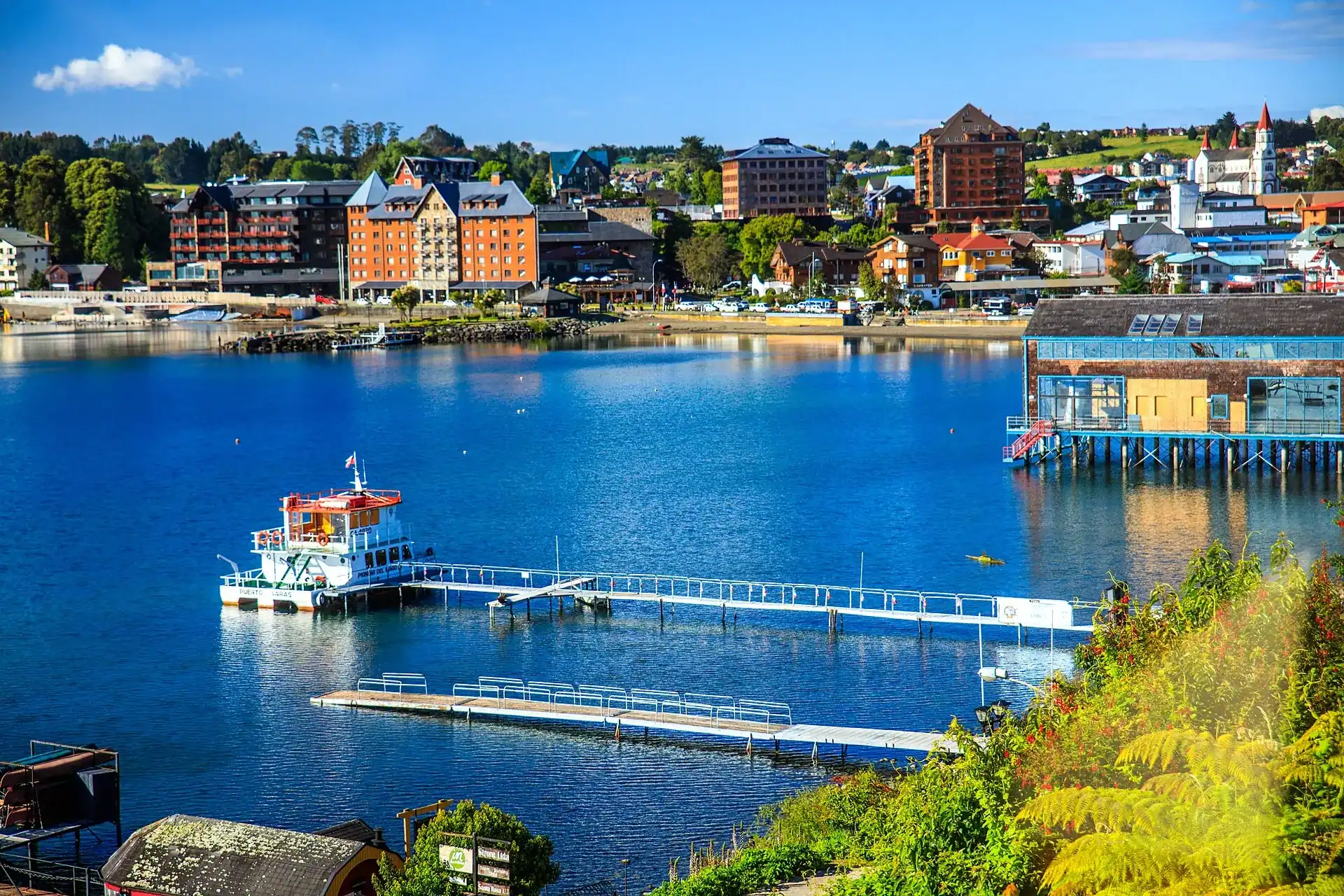 Photo: Murray Foubister / Wikimedia Commons (CC BY-SA 2.0)