Cost of Living in Bergamo
Real market data
Source: Numbeo · August 2026
$1,440/moSolo nomad1-bed centre + living costs
$2,010/moCoupleshared 1-bed + costs
$1,330/moLean / localcheaper area + costs
- 1-bed rent, city centre$740€642
- 1-bed rent, outside centre$620€540
- Monthly costs excl. rent (1 person)$700€612
- Meal, inexpensive restaurant$16€14
- Monthly transit pass$46€40
- Buy price, per m² (centre)$3,530€3,062
Prices are from Numbeo (August 2026), converted to USD at $1 = €0.87 (01 Aug 2026). The monthly living-costs figure is our transparent one-person basket, groceries, a few meals out, utilities, phone, internet, transport and essentials, priced from those figures. Solo adds central rent; couple and lean are estimates from the same numbers.
Bergamo sits in the mid-range for northern Italy: cheaper than Milan, yet dearer than the south. A digital nomad can expect to spend roughly 1,400 to 1,900 dollars a month, depending on whether you rent a studio in the modern Citta Bassa or a characterful flat below the Venetian walls. Groceries at local shops and markets are reasonable, and a simple trattoria lunch stays affordable. Rent is the biggest line item, followed by dining out and the occasional funicular or train fare. Utilities and mobile data are moderate. These figures are editorial estimates rather than fixed quotes, so treat them as a planning guide and pad your budget for seasonal swings. A cost worth separating out is the airport. The low-cost base on the edge of town is the reason many people choose here, and the flights are genuinely cheap, but the bus to it, the baggage, the seat selection and the return transfer at the far end turn a headline fare into something ordinary; anyone flying monthly should price the whole journey rather than the ticket. On rent, note that the upper town is priced for its views and its listing, and a flat five minutes down the funicular costs meaningfully less for the same space.
- Rent, one-bedroom flat: roughly 750 to 1,050 dollars a month
- Groceries and household basics: roughly 300 to 400 dollars a month
- Dining out and coffee: roughly 220 to 320 dollars a month
- Transport, mobile and utilities: roughly 130 to 220 dollars a month
Where to Work in Bergamo
Bergamo is compact, so most working nomads settle into a rhythm between cafes, a coworking desk and a quiet flat. The Citta Bassa around the Sentierone and Porta Nuova holds the bulk of modern cafes with reliable wifi, plug sockets and space to linger over a cappuccino. A handful of coworking spaces and shared studios operate in the lower town, offering fast connections, meeting rooms and a small local community of freelancers and startups. The university presence keeps a few study-friendly cafes buzzing. For calls, a rented flat is usually your best bet, as Citta Alta cafes fill with tourists by midday. Overall connectivity is solid and dependable. The air is the working condition this region does not advertise. The Po valley sits between the Alps and the Apennines with very little wind, which traps particulates through the winter, and the readings here are among the worst in western Europe between November and February. Over a long stay that is a real cost to your health rather than a grumble, and the practical answers are a purifier indoors and choosing the upper town, which sits a couple of hundred metres above the plain and is noticeably clearer on a bad day.
Getting Around Bergamo
Bergamo is a walkable city, and most nomads rarely need a car. The historic Citta Alta and the modern Citta Bassa are linked by a charming funicular that climbs the hillside in a couple of minutes, and a second funicular continues up to San Vigilio for sweeping views. Buses and a tram line cover the lower town and reach outlying neighbourhoods. Orio al Serio airport (BGY) lies just a few kilometres away and is a major low-cost hub, ideal for weekend hops across Europe. Trains connect Bergamo to Milan, about 50 kilometres off, in under an hour. Cycling works on the flat, though the upper town rewards walking. The funiculars come with two details worth having. They run on the same ticket as the buses rather than as an attraction, which means a monthly pass covers your commute up and down the hill, and the second one continuing to the viewpoint above stops earlier in the evening than the first. And the walk up, which most residents do at least sometimes, takes about twenty minutes on a stepped path through the walls and is the best short walk in the city. The airport bus runs through the night, which is the other reason the flights work.
Sorting transport? Book an airport transfer, or compare car rental on Auto Europe and QEEQ.
Visas for Bergamo
Italy is part of the Schengen area, so many visitors can stay up to 90 days in any 180-day period without a visa. For longer stays, Italy now offers a digital nomad visa aimed at remote workers and highly skilled freelancers earning above a set income threshold and holding valid health cover. It grants a longer residence permit and, once you arrive, you register locally for a permesso di soggiorno. EU and EEA citizens face no such hurdles and may live and work in Bergamo freely, registering with the local commune after settling in. A deadline catches people who settle rather than visit. Once you register as resident with the town hall, a non-EU driving licence stops being valid after twelve months, and there is no conversion agreement with most countries, which means retaking the theory and the practical in Italian. People discover this in month thirteen. If you drive, deal with it in the first quarter or decide not to register. Orio al Serio takes flights from Tirana, Fès, Tbilisi and Dubai, and for non-EU passengers a first arrival on them opens a biometric Entry/Exit System record; nothing is stamped.
Best Time to Visit Bergamo
Late spring and early autumn are the sweet spots for Bergamo. May, June and September bring mild, pleasant days, ideal for wandering the Venetian walls and the Orobie Alps foothills without the peak crowds. Summer can turn hot and humid in the Po valley, and July and August draw tourists to Citta Alta, though the city empties of locals for holidays. Winter is cold and often grey, with mist settling over the plain and occasional snow dusting the hills, but the Christmas season and quieter streets have real charm. If you want long light and comfortable temperatures for outdoor working breaks, aim for the shoulder months. A local date is worth a mention and a local memory is worth more. The city hosts a long-running international festival of applied arts and a well-known piano competition, both of which fill the upper town for a week. The memory is heavier: this province was the worst-hit place in Europe in the spring of 2020, the convoy of army trucks carrying coffins out of the city became the defining image of that year, and there is a memorial wood planted for the dead. Nobody here has forgotten it and a visitor should know it before making conversation about that year.
Pros and Cons of Bergamo
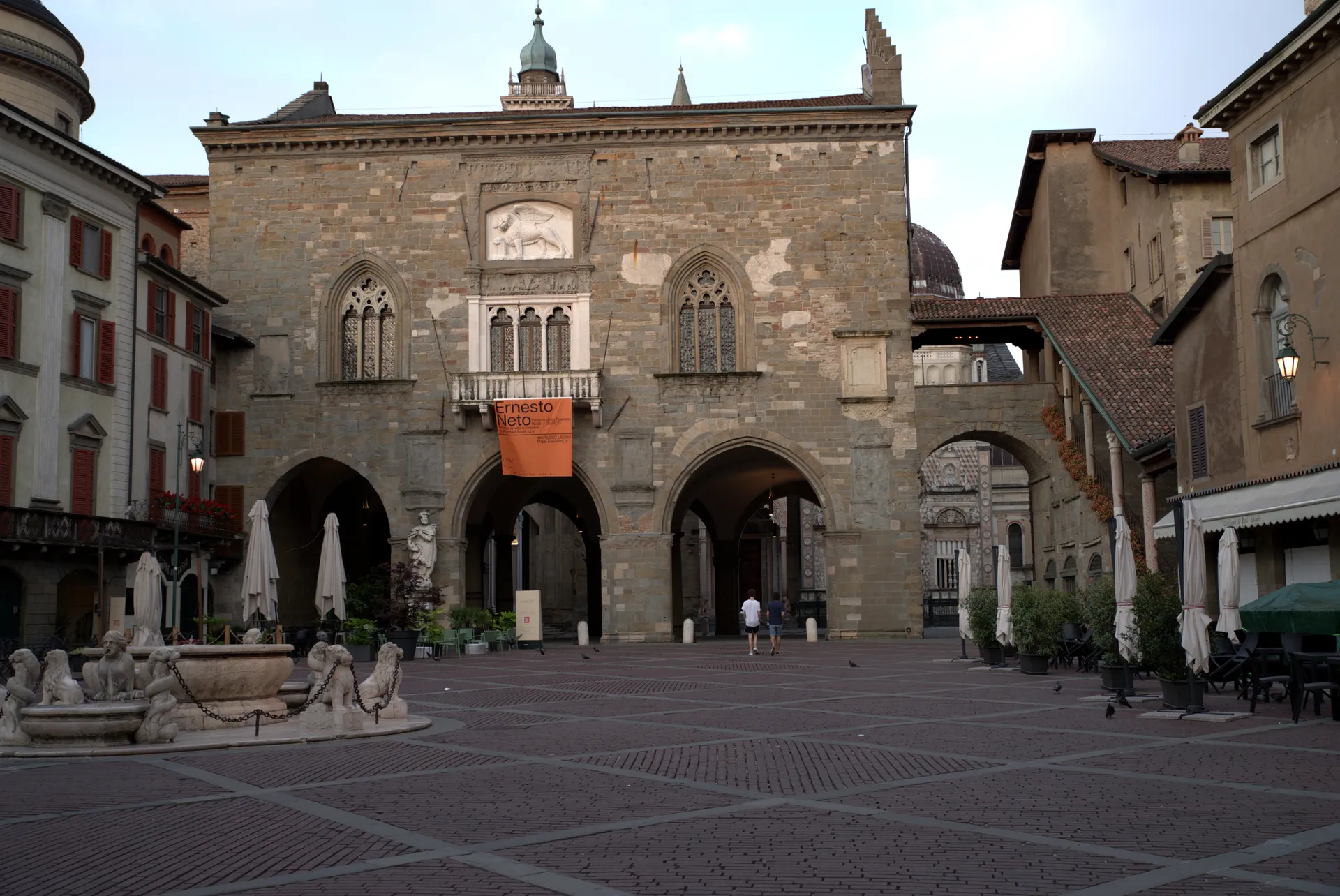
Bergamo offers a rare mix: a stunning UNESCO-listed old town, an easy pace, quick access to the Alps and lakes, and a low-cost airport on your doorstep. It is calmer and cheaper than Milan while keeping big-city links close. The trade-offs are a smaller international scene, a nightlife that leans quiet, and Po valley air quality that dips in winter. English is workable but not universal, so a little Italian smooths daily life. Weigh these points below. The thing this city has that few of its neighbours do is two towns for the price of one. The upper town is a walled Venetian hill city, listed, cobbled and closed to traffic, and the lower town is a functioning provincial Italian city with a university, a hospital, tram lines and ordinary rents. They are four minutes apart by funicular. Almost everywhere else makes you choose between the postcard and the plumbing. The costs against it are concrete ones. Winter air on this plain is genuinely bad, the international community is small and mostly Italian-speaking, and the big city down the road pulls away exactly the age group a newcomer would want to meet. Set those against a listed hill town with a supermarket at the bottom of it.
- Pros: beautiful UNESCO Citta Alta and walkable centre
- Pros: major low-cost airport (BGY) minutes from town
- Pros: close to the Orobie Alps, Lake Como and Lake Iseo
- Pros: safe, clean and noticeably cheaper than Milan
- Cons: small nomad community and quiet nightlife
- Cons: Po valley winter air quality is only moderate
- Cons: everyday English is patchy outside tourist spots
Who Bergamo Is For
Bergamo suits the nomad who prizes calm, culture and quick escapes over a big party scene. If you love historic streets, good Lombard food and being an hour from Milan yet minutes from the mountains, it fits beautifully. Frequent flyers benefit from the low-cost airport, and outdoor types get the Alps, lakes and cycling on tap. It is less ideal for those craving a large, ready-made expat crowd or a lively late-night culture, since the community here is modest and social life is more local than international. Bring some Italian, a taste for slow living, and you will feel at home quickly in this underrated Lombard city. A practical plan: take a flat in the lower town within five minutes of the funicular, use the upper town as the place you walk in the evening, and buy the monthly transport pass on day one. Six months from September works well, catching the autumn, the Christmas season and the spring, and missing the worst of both the August heat and the February air. Anyone flying often should live on the airport side of the city, which halves the transfer. And learn enough Italian to have a conversation, because English here thins out fast beyond the university.