Cost of Living in Valdivia
Where this figure comes from. No cost survey covers Valdivia, so the $1,100 a month above is our own estimate rather than a measurement. On 416 of our 999 city guides the figure is built from a published Numbeo basket, a one-bedroom rent in the centre plus one person's monthly costs without rent, converted to USD; this city is not one of them. How we source everything.
Budget around $1,100 a month as a solo remote worker in Valdivia, which is good value for Chile, the most expensive country in South America. A one-bedroom apartment runs roughly $350 to $550, kept reasonable by a large student population. Groceries are moderate and Chilean wine is very cheap. The costs that surprise people are heating and electricity, since the winters here are long, wet and cold and buildings are often poorly insulated, and firewood or gas through five months is a genuine expense. Eating out is reasonable and the local craft beer scene is affordable. Fibre runs about $25 to $40 a month for fast speeds, among the best value on the continent, and a coworking desk $100 to $170. Firewood and gas through the winter are the line that catches people out, adding $60 to $120 a month between May and September in a poorly insulated flat, and insulation is the first thing to ask about when viewing. Student demand sets the rental market, so a flat found in December costs less and goes slower than the same one in March.
Where to Work in Valdivia
Chile has the best digital infrastructure in South America and Valdivia shares it, with fast fibre widely available in the city at reasonable prices and reliable mobile coverage. The Universidad Austral is the city's largest institution and gives it a substantial academic and research population, which supports a small coworking presence and a professional network unusual for a city this size. Power is reliable. For ordinary remote work the connectivity is a genuine strength and one of the practical arguments for choosing Chile over its neighbours. The university also means the city keeps a student rhythm, so demand for flats peaks in March at the start of the academic year. Chile sits three or four hours behind GMT depending on daylight saving, which gives a workable European afternoon and a full overlap with North America, and is one of the better time zones on the continent for transatlantic work. Chile's national fibre rollout has reached even small southern cities, which is why the connectivity here beats most of the region's capitals. Anyone comparing Chilean cities should know that the fibre and the mobile coverage here are effectively the same as Santiago's, which is not true of the region's other countries.
Getting Around Valdivia
Valdivia is compact and the centre along the river, the market and the university are all walkable or a short bus ride. Local buses are cheap and frequent. The river itself is part of the transport network, with boats running down to Corral and the coastal forts. Long-distance buses connect north to Santiago in about eleven hours and south to Puerto Montt in three. The nearest airport is at Pichoy, twenty minutes out, with flights to Santiago. A car helps for the coastal reserves and the Andes but is not needed in town. The boat down the Rio Valdivia to Corral and the seventeenth-century Spanish forts at Niebla and Mancera is the classic outing and takes most of a day. The Oncol park and the coastal rainforest are about an hour west by road. The Kunstmann and Cuello Negro breweries are both a short drive out and are working operations rather than tourist stops.
Sorting transport? Book an airport transfer, or compare car rental on Auto Europe and QEEQ.
Visas for Valdivia
Chile grants most Western nationals ninety days visa-free on arrival, extendable once for a further ninety days. There is no dedicated Chilean digital nomad visa, though a temporary residence permit for people with independent income exists and Chile has generally been open to longer stays. Argentina is over the Andes and Peru far to the north, so an overland reset means a long journey. Chile enforces agricultural import controls strictly at every border, and declaring food correctly matters, since the fines are substantial and applied without discretion. Anyone planning to stay past the second ninety days should start the residence process early, since Chilean immigration has had substantial backlogs. Chile's agricultural controls are enforced by beagle at the airport and the fines for an undeclared apple run to several hundred dollars, which is applied to tourists as readily as to anyone else. The extension is applied for online rather than in person.
Best Time to Visit Valdivia
December to March is the summer and the only reliably dry stretch, with daytime temperatures around nineteen or twenty, long evenings and the rivers at their best. February is the peak, when Chilean holidaymakers arrive and the Noche Valdiviana river festival fills the city. The rest of the year is wet: Valdivia is one of the rainiest cities in Chile and the winter from May to August brings persistent rain, short days and temperatures around ten. Rain falls on roughly two days in three across the year, and the calendar here is organised around it rather than around temperature. Valdivia receives well over two metres of rain a year, roughly three times London's, and the winter rain is persistent drizzle rather than storms, which is harder to live with than the total suggests. Noche Valdiviana in February fills the river with decorated boats and is the largest event of the year. Daylight in June is barely nine hours.
Pros and Cons of Valdivia
Valdivia sits at the meeting of three rivers with sea lions on the fish market steps, German settler breweries that produce Chile's best beer, a major university, and the Valdivian temperate rainforest and the Andes both within reach. Chilean infrastructure and safety are the best in the region. Rain is heavy and frequent here, and the winter is a genuinely grey one, Chile is expensive by South American standards, English is limited, and Chilean Spanish is notoriously difficult even for competent speakers. The city was also largely rebuilt after the 1960 earthquake, the most powerful ever recorded, which is why the architecture is newer than the history suggests. The 1960 Valdivia earthquake measured 9.5, the most powerful ever recorded anywhere, and it dropped parts of the city several metres and created the wetlands that now sit inside it, which is why herons and black-necked swans are ordinary sights downtown. The Saturday feria fluvial on the riverbank is where the sea lions gather for fish scraps.
Who Valdivia Is For
South America with functioning infrastructure, at the cost of the sunshine, which suits people connected to the university or drawn to the temperate rainforest and the rivers. Spanish is a requirement, and anybody determined to acquire it here will be learning the hardest dialect there is. Sun is scarce enough here to be worth checking the rainfall figures before committing, a budget goes considerably further in Peru or Bolivia, and no established international community has taken root in the city. The forest itself draws a particular kind of visitor. Valdivian temperate rainforest exists in very few places on earth, and this city sits inside the largest surviving stretch of it. Ecology and forestry students have a specific reason to come. The Universidad Austral leads Chile in both fields, and the forest on its doorstep is why the university ended up specialising in them. Puerto Varas is the alternative: Valdivia is larger, wetter, has the university and lacks the volcano views.
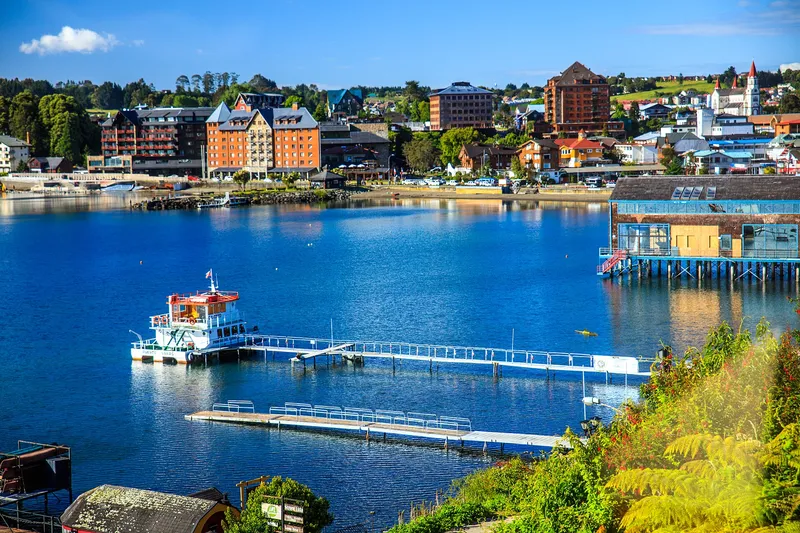
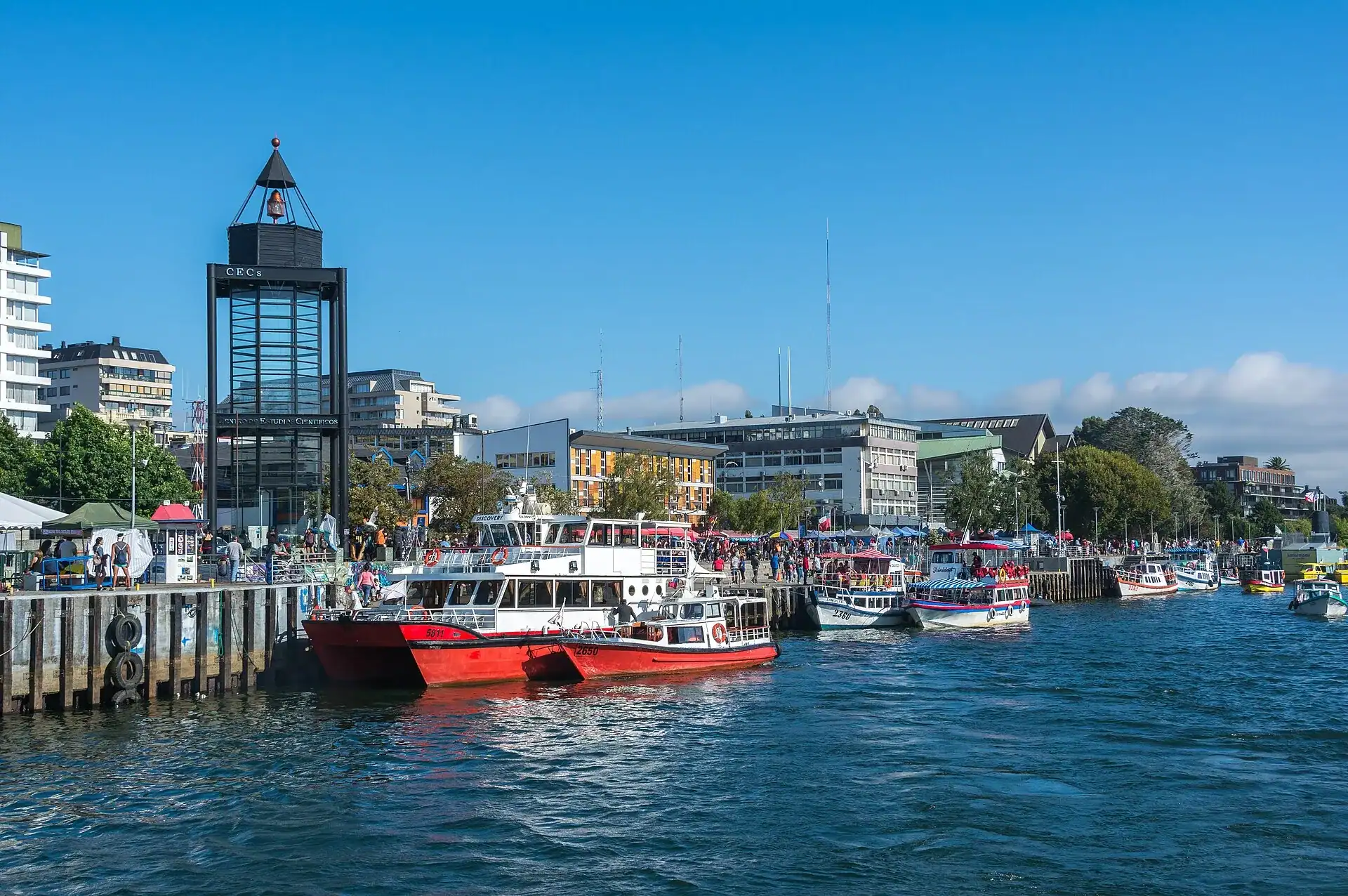 Photo: Carlos Figueroa Rojas / Wikimedia Commons (CC BY-SA 4.0)