Cost of Living in Gyeongju
Where this figure comes from. No cost survey covers Gyeongju, so the $1,200 a month above is our own estimate rather than a measurement. On 416 of our 999 city guides the figure is built from a published Numbeo basket, a one-bedroom rent in the centre plus one person's monthly costs without rent, converted to USD; this city is not one of them. How we source everything.
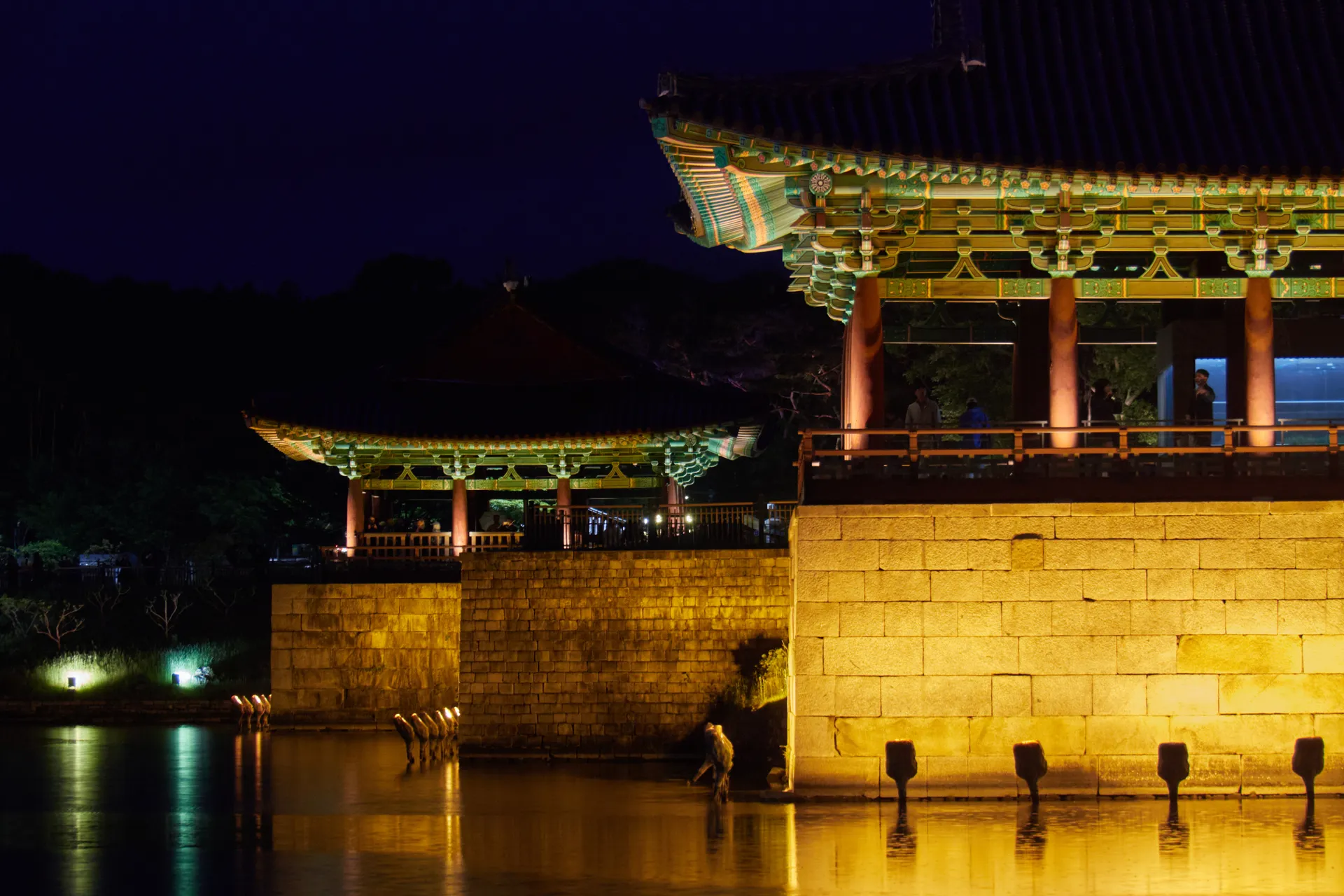
Gyeongju is one of South Korea's more affordable cities, and a nomad can live comfortably on roughly $1,000 to $1,400 a month. Being a smaller, historic city rather than a metropolis, rents run well below Seoul or Busan. A modest studio or officetel near downtown or Bomun Lake is the biggest monthly line item, followed by food and transport. Eating out is excellent value thanks to hearty Korean set meals and market stalls, and cooking at home keeps costs lower still. These figures are editorial estimates and shift with the season, since the resort district charges more during peak tourism months. The resort district was built on purpose, and that shows up in the rent. The lake east of town went up as a state tourism development in the 1970s, hotels and convention halls around an artificial shore, and it prices for weekend visitors from the industrial cities down the coast rather than for anyone living here. The downtown side, around the market and the station, is an ordinary provincial town and charges like one. Worth knowing too that the discount sits in the length of the lease: a year signed directly with an owner beats a few months through an agency by a wide margin in a market with this little competition for tenants.
- Rent: a small studio or officetel roughly $450 to $650 a month, cheaper on longer leases
- Food: local Korean meals from a few dollars; a weekly market shop is inexpensive
- Transport: city buses are cheap, and a bicycle covers most sights for free
- Extras: fast internet, a cafe habit, and occasional KTX trips add modestly to the total
Where to Work in Gyeongju
Gyeongju leans on cafes rather than dedicated coworking spaces, which are scarce in a city this size. The upside is superb, reliable fast internet almost everywhere, so a laptop and a quiet corner go a long way. Chain and independent cafes around the downtown Seongdong area and near Daereungwon offer strong wifi, power sockets and long opening hours. Many riverside and lakeside cafes around Bomun Lake are pleasant for focused mornings, though busier at weekends. If you need a proper desk and meeting rooms, you may end up hopping on the KTX to Busan. For most solo remote workers, a good apartment plus a rotation of cafes is plenty. The city carries better facilities than its size would suggest, for a reason only a year old. It hosted the APEC leaders' meeting at the end of October 2025, which delivered a convention centre, upgraded hotels and a round of public investment that a small provincial city would never otherwise see. The neighbours account for the rest. Ulsan and Pohang hold the country's heavy industry, both under an hour away, and much of what looks like small-town infrastructure is really there for people who work in them and would rather live somewhere quiet.
Getting Around Gyeongju
Gyeongju is compact and calm, and getting around is refreshingly easy. The historic core is genuinely walkable, with the tomb mounds, Cheomseongdae and Wolji Pond clustered close together. Cycling is the local favourite: flat roads and dedicated paths link most major sights, and bike hire is cheap and widespread. City buses connect downtown with outlying temples such as Bulguksa and the Bomun Lake resort area, though services can be infrequent, so check timings. Taxis are affordable for longer hops or late evenings. For intercity travel, the KTX from Singyeongju station reaches Seoul in about two hours and Busan in roughly half an hour. Where the high-speed trains actually stop is what trips arrivals up, because it is not in the city. The station sits several kilometres out in open country, a bus or taxi links it to the centre, and those links finish earlier in the evening than the trains do. The old station in the middle of town closed to passengers at the end of 2021, so directions pointing you there are out of date. For the outlying temples it is the timetable rather than the distance that constrains a day, and most people settle on a hired bicycle for the flat inner ring with the mountain sites taken as separate half-day trips.
Sorting transport? Book an airport transfer, or compare car rental on Auto Europe and QEEQ.
Visas for Gyeongju
South Korea suits short and medium stays well. Many nationalities can visit visa-free for tourism for up to 90 days, giving a few months for scoping out the city; 22 countries and territories, including the US, UK, Canada and Australia, need no K-ETA electronic travel authorisation until 31 December 2026, while other visa-free passports register for one online first. For longer remote work, South Korea's F-1-D workation visa, piloted from 2024, became a permanent category on 30 June 2026. It is for people employed by a company outside Korea, and its income floor is a multiple of Korea's gross national income per head: Gyeongju is outside the capital region, so applicants aged 18 to 34 need one times GNI, about $36,400 a year, and applicants 35 and over, or anyone bringing family, one and a half times, about $54,600. Permits run a year at a time up to three years, long enough to settle into Gyeongju properly rather than visa-hop. A national scheme aimed squarely at places like this is worth knowing about. There is now a regional visa that trades residence rights for settling in a designated population-decline area, with a faster route to permanent residency attached, and North Gyeongsang is among the provinces it targets; the province has stood up its own foreign-community department to handle the arrivals. This is not the remote-work route, and it suits somebody meaning to settle rather than pass through.
Best Time to Visit Gyeongju
Gyeongju has a humid subtropical climate with four distinct seasons, so timing matters. Spring, roughly April, is the postcard moment, when cherry blossoms line the roads around Bomun Lake and the tomb mounds. Autumn, from late September into November, is arguably the best all-rounder: crisp, clear days, golden foliage and comfortable working temperatures. Summer is hot, humid and includes a rainy monsoon spell, which can make midday sightseeing sticky. Winter is cold but usually dry and quiet, with far fewer tourists and lower prices, ideal if you prefer calm over crowds. For a balance of pleasant weather and lively sights, aim for spring or autumn. One recent event belongs in any honest account of this place. On 12 September 2016 a magnitude 5.8 earthquake struck just outside town, the strongest ever instrumentally recorded in the country, cracking tiles and walls across the heritage sites in a nation that had not thought of itself as seismic. On the calendar proper, arrange a stay around the blossom: the roads circling the lake carry one of the best-known displays anywhere here, and the marathon run among them in early April books out the whole city weeks in advance, so plan months ahead or come once it has passed.
Pros and Cons of Gyeongju
Gyeongju is a rare kind of nomad base: a whole city that doubles as an open-air history museum, wrapped around fast internet and Korean levels of safety and order. It rewards people who want calm, culture and nature over nightlife and a big scene. The trade-offs are real, though. The nomad community is tiny, English is very limited, and evenings are quiet, so this is not a place to build an instant social circle. Weigh what you value: deep focus and a beautiful, low-stress setting, or the buzz and convenience of a larger, more international city. The phrase museum without walls is doing something specific. Silla ruled from here for the better part of a thousand years, but what survived is archaeological rather than architectural: grass-covered royal tombs, an observatory, foundations, and a museum holding what came out of the ground. The nine-storey wooden pagoda is a field of stone bases. That is a different experience from a standing old town, and whether it sustains three months depends on whether you enjoy reading a landscape or need to look at one. The other half is demographic: this is a shrinking city in a province officially classed as depopulating, which is why it is cheap, why it is calm, and why almost nobody in your age bracket is here.
- Pros: excellent fast internet; very high safety; low cost of living; extraordinary history and culture on your doorstep; walkable and cycle-friendly; easy KTX links to Seoul and Busan
- Cons: very limited English; almost no nomad community; quiet nightlife; few dedicated coworking spaces; infrequent buses to outlying sights; hot, humid summers
Who Gyeongju Is For
Gyeongju is for the focused, culturally curious nomad who treats a city as a place to live rather than a party to join. If you crave history, you will be spoilt: this was the Silla capital for nearly a thousand years, a museum without walls. It suits writers, researchers, remote workers on deep projects, and anyone who recharges through quiet cycle rides past ancient tombs and temples. It is a poor fit for those who need a buzzing nomad scene, easy English or lively nights out. Come here to slow down, work well and soak up one of Korea's most remarkable historic landscapes. Autumn is the season to commit to, and it is a generous window: the light stays low, the crowds thin out and the working temperature holds until the cold sets in. Take a flat on the downtown side rather than by the water, which is quiet on a weekday and priced for weekends. The bicycle is not a tourist gesture: the inner ring of tombs, the observatory and the pond genuinely are a cycling city, and the bus timetable for everything further out will otherwise run your day. And arrive with some of the language rather than intending to pick it up, because beyond the ticketed sites you will not find much signed in a second one.